Living At A Share House Opens Doors To The Local Culture And Community

Moving to another country is a big step in anyone’s life. It can be stressful to think about find accommodation, work, friends in a foreign country, and mix in the lifestyle there.

Many foreigners who move to another country, prefer to live with people to avoid getting lonely. Sharing an apartment with flatmates is also comparatively cheaper than renting a studio apartment by themselves. However, when moving to another country, it can be difficult to find people who are willing to co-rent an apartment.

Fortunately, countries like Japan, South Korea, and Taiwan offer share houses, to ensure the comfort of the moving foreigners. They are suitable accommodation for people that wish to co-rent a space and want to save money on buying furniture and appliances.

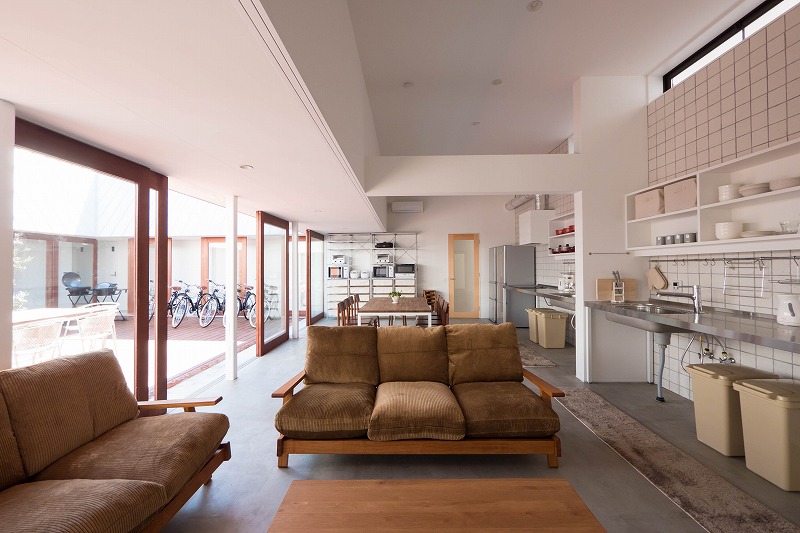
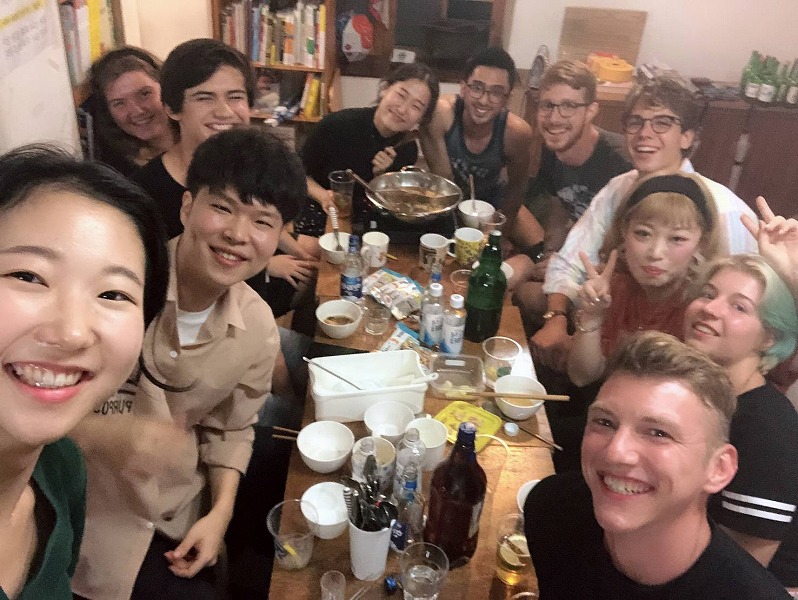
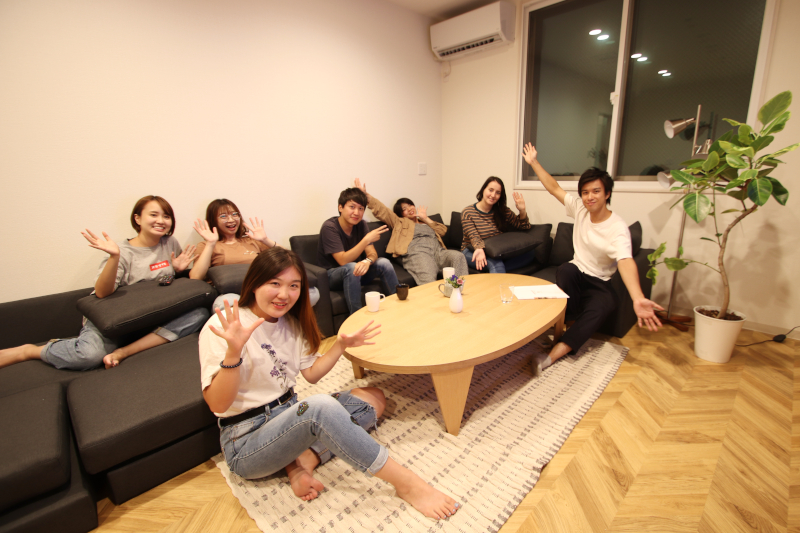
Share houses are rental places with private rooms and shared spaces like the kitchen and dining area. People from different backgrounds live together at a share house and learn from each other. Share houses are quite popular amongst young people with a penchant for exploring the new and exciting.

Local Friends And Acquaintances
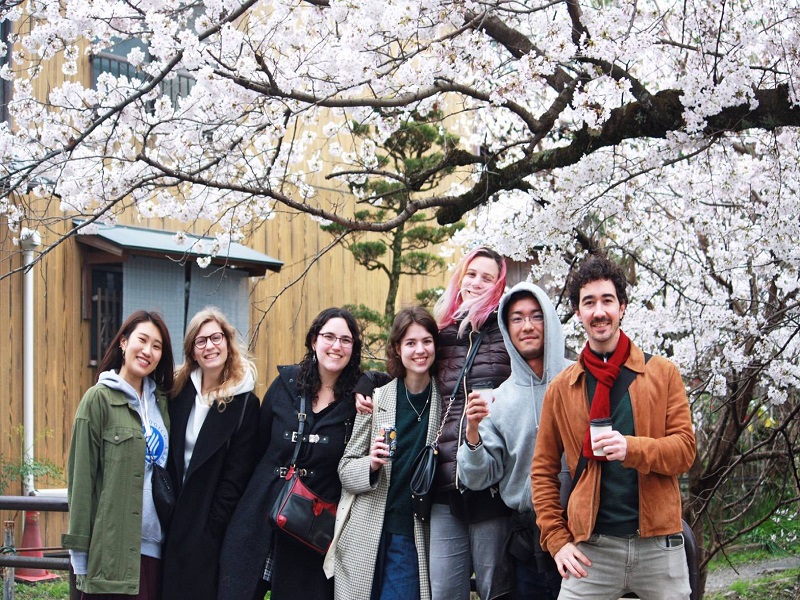
In some countries, people are apprehensive when talking to foreigners and are less likely to be polite or helpful. It can be difficult to become friends with the local people in such a country. Sometimes the only friends and acquaintances that a foreigner makes are people from work. A limited social life and a feeling of not belonging can leave you frustrated and sad.

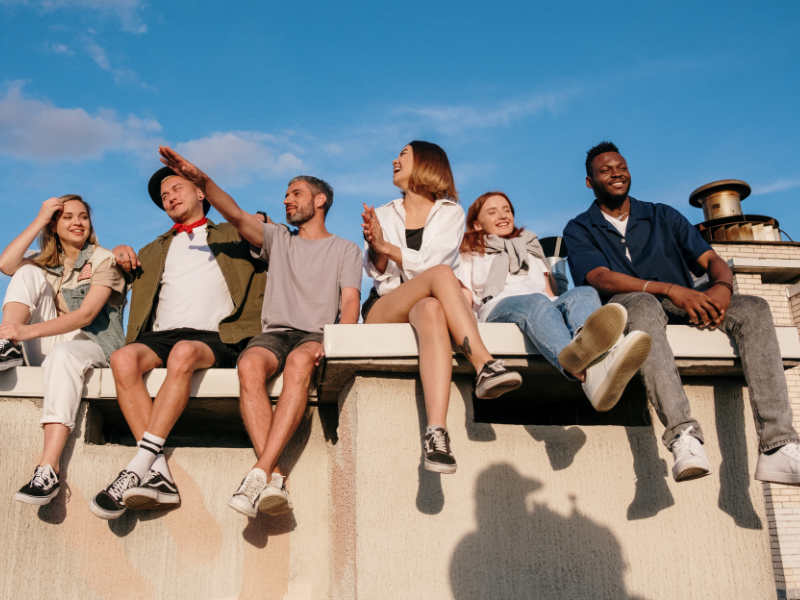
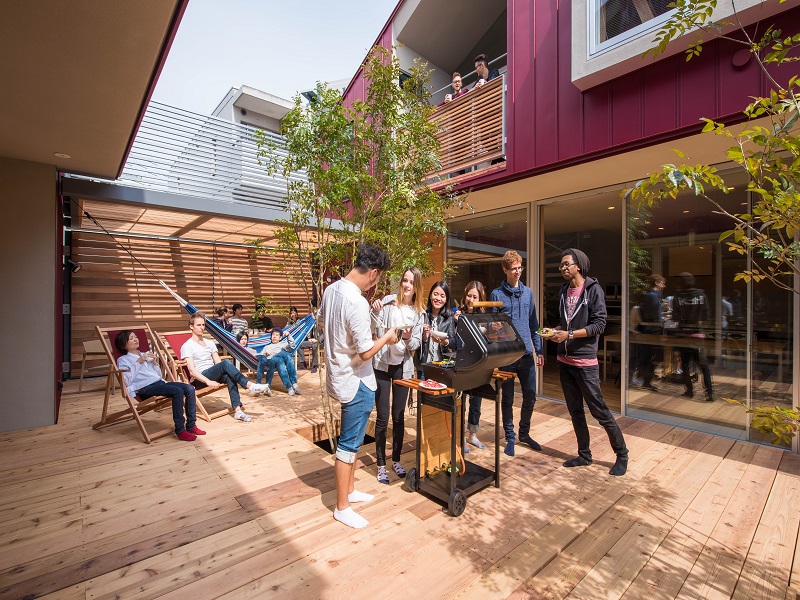
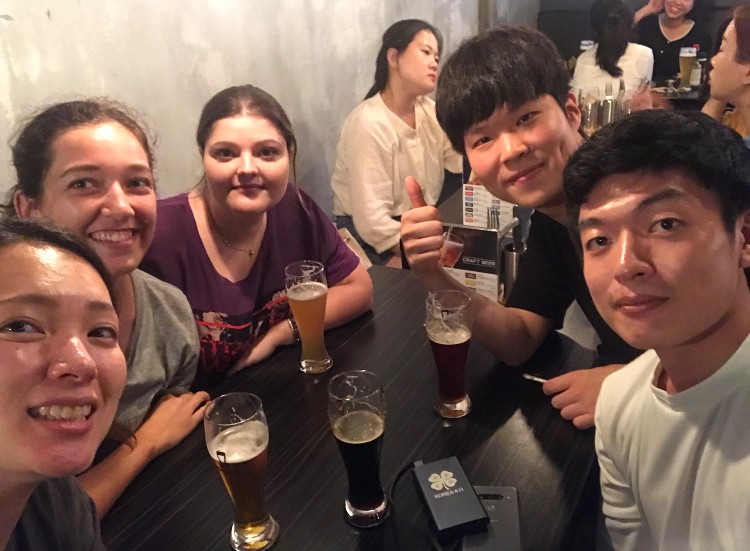
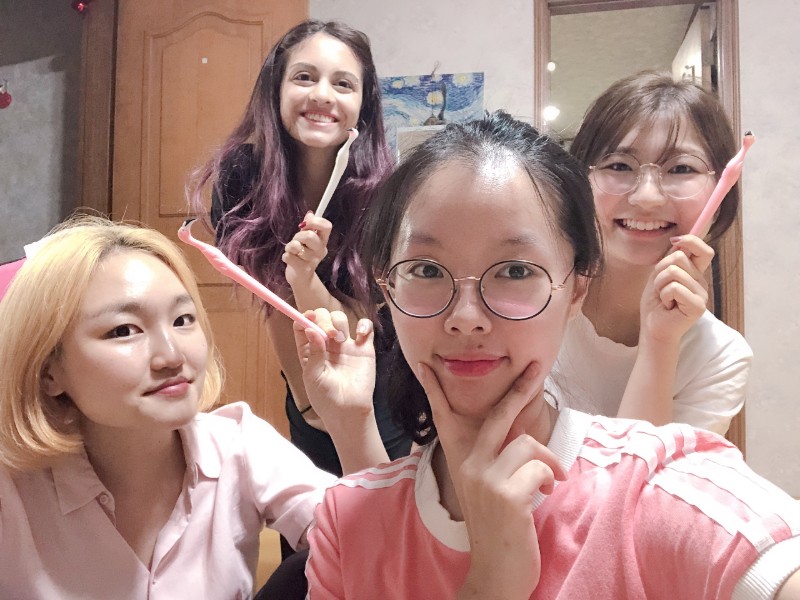
When living at a share house, you get an opportunity to interact with both non-citizen residents or expats and the local people of the country. You will be meeting these people in the shared spaces of the house like home theatre, living room, kitchen, etc. and are likely to become friends if you have similar personalities or interests. This is how you can end up making friends in the local community.

Being friends with locals can expose you to the local culture and community. They will open doors to freely explore the country during your stay.

Local Customs And Basic Communication
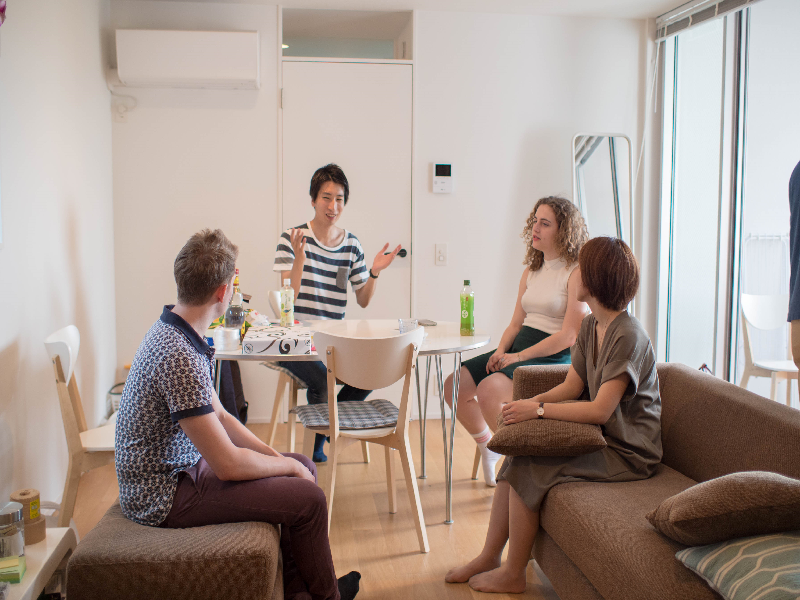
One reason why the locals are apprehensive of foreigners is that they feel that their customs are misunderstood and disrespected by those who don’t share them. When you live with the locals or become friends with them, you can observe their customs and learn them. The way that the locals speak, greet, and the topics that interest them vary from country to country. From your local housemates, you can learn these customs and communicate efficiently.

You will also be able to learn their table manners and eating etiquette. Whenever visiting a restaurant or eating lunch with colleges, you will be able to earn bonus points for following local etiquettes and can prevent feeling like you don’t fit.

For example, In Japan, people greet each other by bowing. It can either be a small nod or a deep bend. Greeting with a deep bow, it is seen as a sign of respect.

Similarly, in Taiwan, you are expected to sit with your hands on the front or in your lap, as opposed to spreading them and taking up space. Spreading your legs while sitting somewhere and obstructing the way is also considered impolite by the people.

Festivals And Seasonal Events
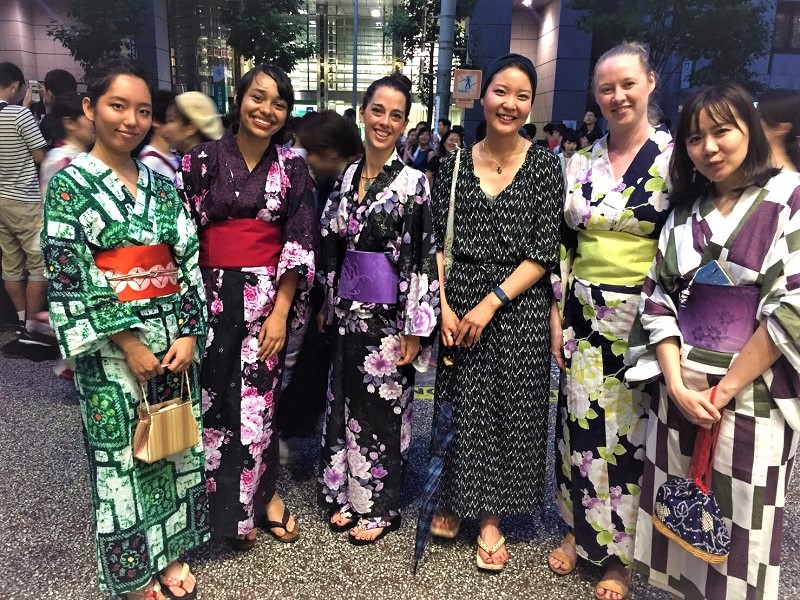
The festivals and seasonal events celebrated in various countries are different, even New Year is celebrated differently in most countries.

Festivals and seasonal events are epitomes of cultural activities, food, clothing, entertainment. It is a privilege to experience cultural gatherings of communities on their celebrated occasions.

For example, Pingxi Sky Lantern Festival and Biennial Butterfly Beauty Festival are two festivals that can only be witnessed in Taiwan. Similarly, Seollal or Lunar New Year’s Day and Chuseok are very enthusiastically celebrated in South Korea.

When sharing a house with locals, you can ask them to let you accompany them to festivals and events. You can ask them about the activities conducted and why people celebrate a particular festival. It will not only increase your general knowledge of the place and help you feel included but will also open your eyes to a world you had never known before.

And who knows, maybe some of your housemates will invite you home, to experience celebrating the festival the local way with their families.

Local Foods
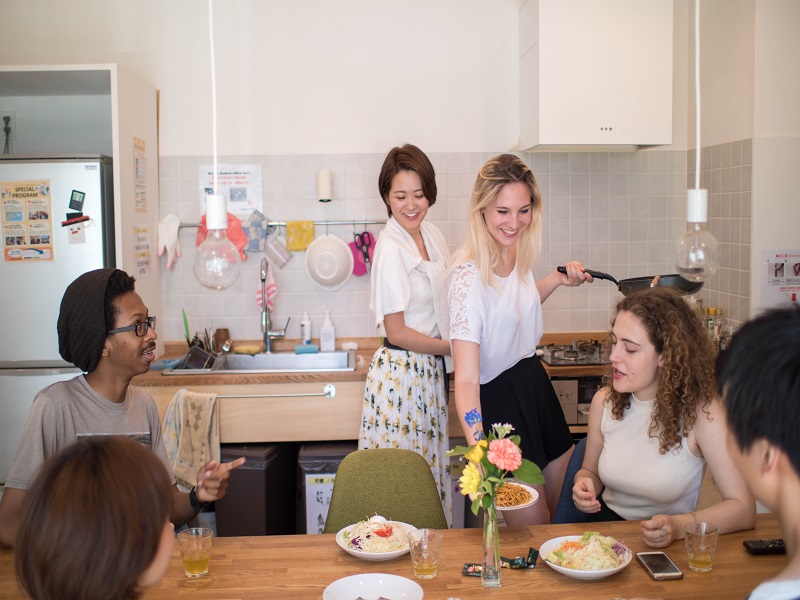
Countries with rich culinary histories have given some recipe or dish to the global food market, that is obsessed over by many. The Chinese have the credit for noodles and dumplings, the Mexicans have their tacos, the Americans eat hamburgers, the Japenese have given the world Sushi, and the South Koreans have made Kimchi and Bulgogi famous. However, are these the meals that the local Mexican, American, or Japanese people consume every day? No, they are not.

While these foods are popular, they are not what the locals eat daily. For example, when moving to Japan, you will find many restaurants that serve multiple types of Sushi. But when you live with a Japanese local, you will be able to eat ramen, gyudon beef bowls, dashi soup stock, fish, and rice cake, amongst other local dishes. Similarly, A local in Taiwan will be able to introduce you to Zong Zi, Oyster Omelet, Minced Pork, etc.

Living with local people will enable you to observe and experience their eating habits. Every culture has some easy to make soul food or some traditional dish that is not sold at restaurants and diners.

When a local housemate at your share house cooks their traditional food, it will be culturally authentic and not modified to make it five-star. It will taste like home and is the best way to expose yourself to the local way of living.

Local Language
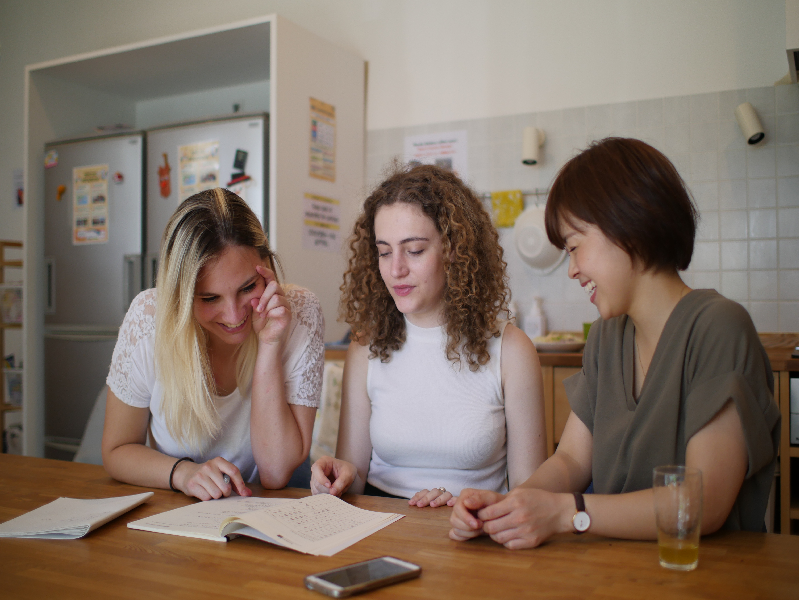
In some countries, it can be difficult to make friends and navigate around the city if you do not know the local language. In some countries, the names of shops, lanes, and train stations are often written in the local language. You can learn how to reach from office to home and from home to office and can interact with most people in English, but if you need to visit the local clinic or shop, you will find it difficult to communicate your needs. There can be misunderstanding and confusion when trying to understand each other.

At such a time, having a local friend or housemate can be a blessing. Not only can they accompany you for your doctor’s appointment, but they can also help you learn how to write, read, and speak the local language if you plan to stay in the country for longer.

When someone in the group is unable to understand the local language, people often unintentionally end up excluding them from the conversation. Foreigners experience such situations in countries like Japan, China, Taiwan, India, and South Korea. For example, people in these countries prefer to speak in Japanese, Mandarin, Taiwanese Mandarin, Hindi, and Korean. Someone who doesn’t the local language may feel different and left out.

Regular conversations with native speakers of a language are the best way to get fluent in speaking a language. In no time, you will be able to understand the talk between your local colleagues and reply to them, if you are sharing the house with a native speaker.

Deeper Understanding Of National Character And Values
It is easier to learn the customs and language of a country, but quite challenging to understand their values, perspectives, and lifestyle. The way of living in the West and the East are very different. While individualism and independence are cherished in the West, in the East local communities are valued more. Whereas, in the Asian Continent, many countries are passionate about family values, culture, and religious beliefs.

Understanding the culture and perspective of local people is very essential to understanding their lifestyle and priorities. When living at a share house with the local people, you will be able to get a better idea of the local values. Do people respect the elderly? Are patience and punctuality considered essential virtues in the country? Do people often discuss the climate, is it associated with certain traditional myths? When living with a local person, you will learn a lot about the way of thinking of the locals of the country.

This will make it easier for you to converse with them. You will also be able to understand them instead of judging the way they live. This will make you a better human and will enhance your personality.

Local Information
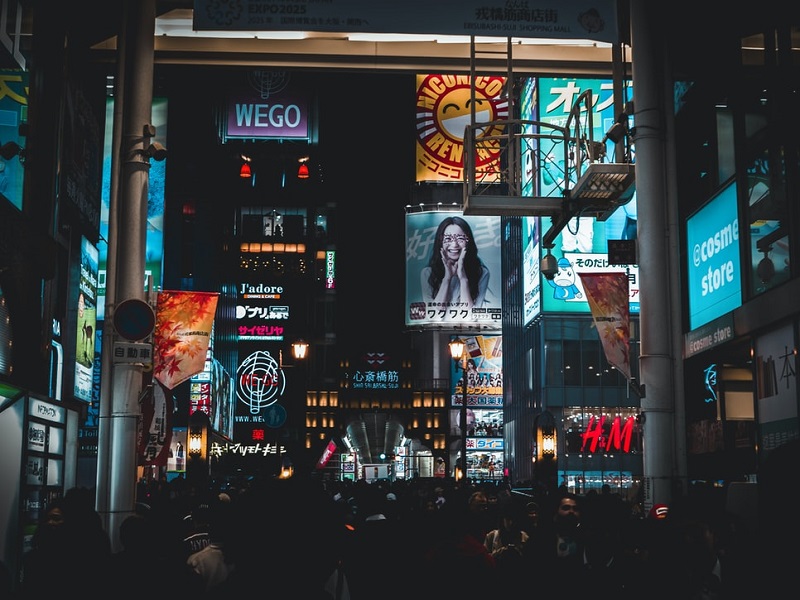
Every country has some areas most visited by the locals. They serve the best local dishes and provide cheap shopping opportunities in such areas. With local friends from your share house by your side, you will be able to take your sightseeing and exploring to the next level. You can avoid tourist destinations and activities and live the way locals do.

If you’re moving to Japan, Taiwan, or South Korea and wish to move into a share house, you can reach out to us at BORDERLESS HOUSE. At share houses by BORDERLESS HOUSE, we have an equal ratio of foreigners and local housemates, to ensure that the foreigners are exposed to the local culture and community.
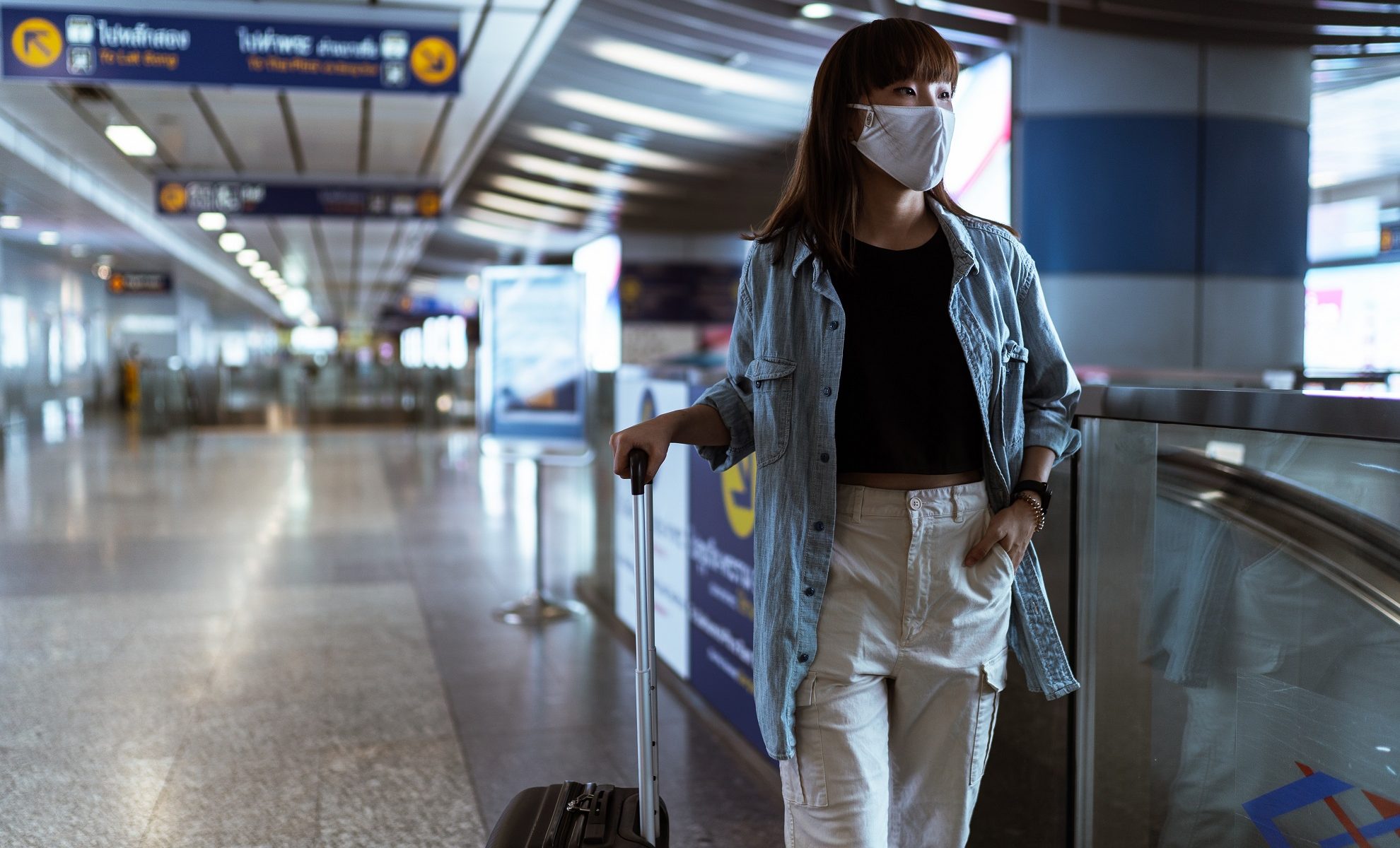
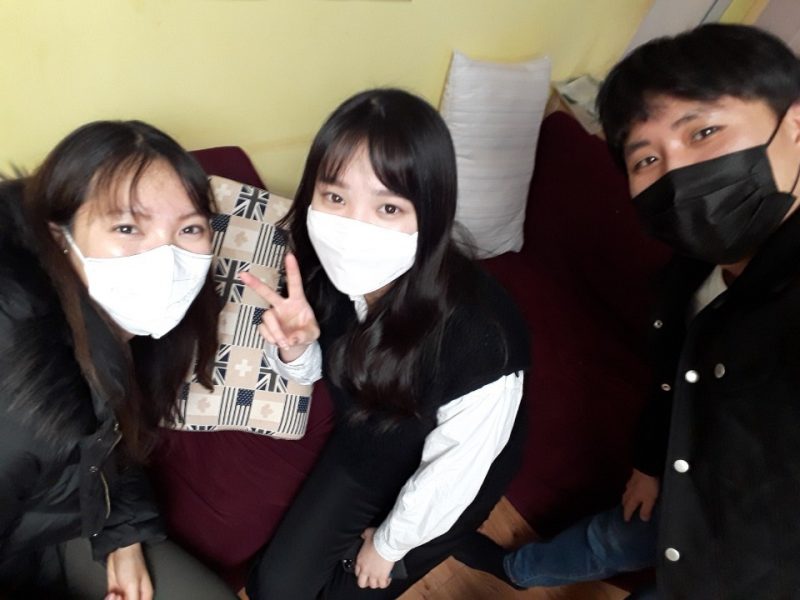
【Quarantine Interview】 The experience from the arrival to the 2-weeks quarantine

Hello! This is Borderless House.

COVID-19 situation is still bad around the world but how are you spending your time in your country?

In Korea, even in this situation, there are lots of people who start their new life after 2-weeks quarantine after arriving from other countries. This time, we did an interview to one of our tenants who arrived from Japan to Korea and experienced 2-weeks quarantine before moving in to Borderless House.

We asked these questions to Ms.N from Japan!
Hope her experience and information helps your if you are planning to come to Korea!

1.The reason you could decide to come to Korea in this situation
2.How did you choose your quarantine place?
3.Any trouble in the airport?
4.How was the transportation from the airport?
5.How was the self move in to the quarantine room?
6.What did you eat while quarantined?
7.Any tips for the 2 weeks?

(↓ Staffs and Ms.N)

1.The reason you could decide to come to Korea in this situation

Staff: COVID-19 is still expanding around the world but wasn’t it a big decision for you to come to Korea in this situation?

Ms.N: Some part, yes. But originally I was planning to come to Korea for working holiday from last March and I needed to postpone so I really wanted to come for a long time.  After considering the way, I decided to get a student visa instead of waiting for the working holiday visa.

Staff: I see, you changed the way to come here. I’m very happy to hear that you could come here finally!

2.How did you choose your quarantine place?

Staff: I guess there are some ways to decide the quarantine room but in your case, how did you decide?

Ms.N: I was planning to live in Borderless House and then I found the information about the quarantine room which Borderless House provides. So I just decided to use it. I could contact to the staff in Japanese so it was good point for me.

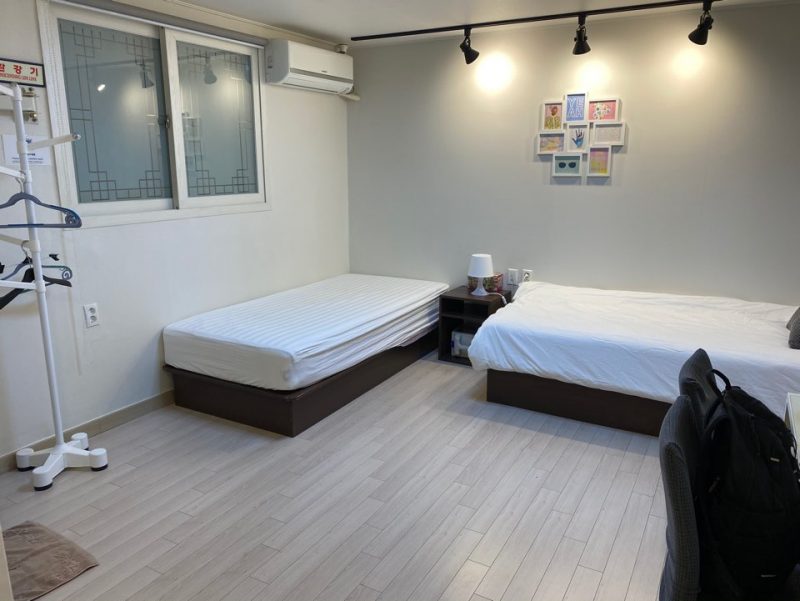
(↓ The room which Ms.N stayed for quarantine.)

3.Any trouble in the airport?

Staff: Wasn’t the process at the airport complicated? Were you able to enter to Korea smoothly?

Ms.N: I was able to proceed all process without any problem better than I expected. There was no staff who speaks Japanese but I could manage to communicate in Korean.

Staff: That’s fantastic!

4.How was the transportation from the airport?

Ms.N: There were two ways, bus or taxi. When I told my address to a staff, there was a bus which will go to my destination area and will depart soon so I just took the bus. My arrival time was evening so I didn’t go to have the PCR test on the day. On the next day, the bus came to my quarantine place again and took me to the place where I could have the test and took me to my place again after the test.

5.How was the self move in to the quarantine room?

Staff: When you move in to the quarantine by yourself without meeting any staff, wasn’t there any difficulty?

Ms.N: No, I already received a manual book for self move in so I could just follow the information and move in without any problem!

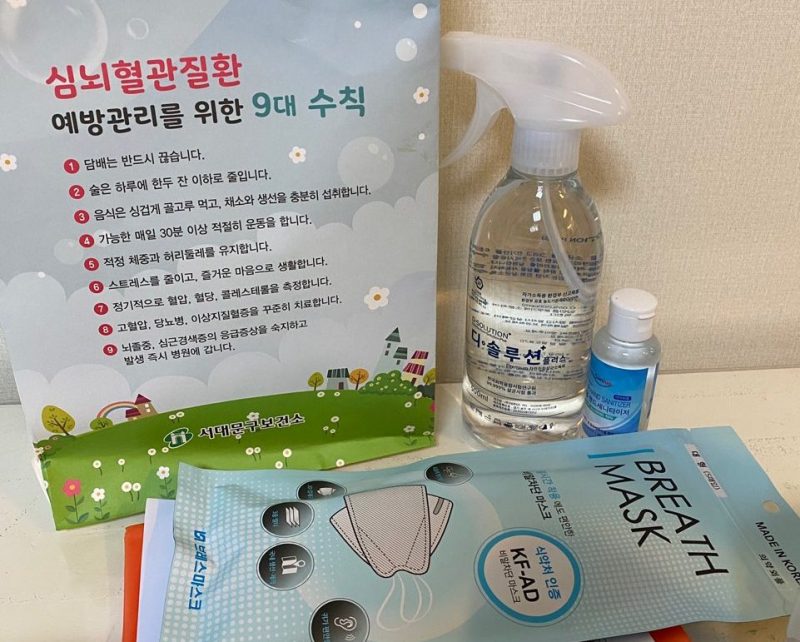
(Most important goods, masks and sanitizer!)

6.What did you eat while quarantined?

Staff: In the 2 weeks, you cannot go outside at all but how did you prepare your meal and what did you eat?

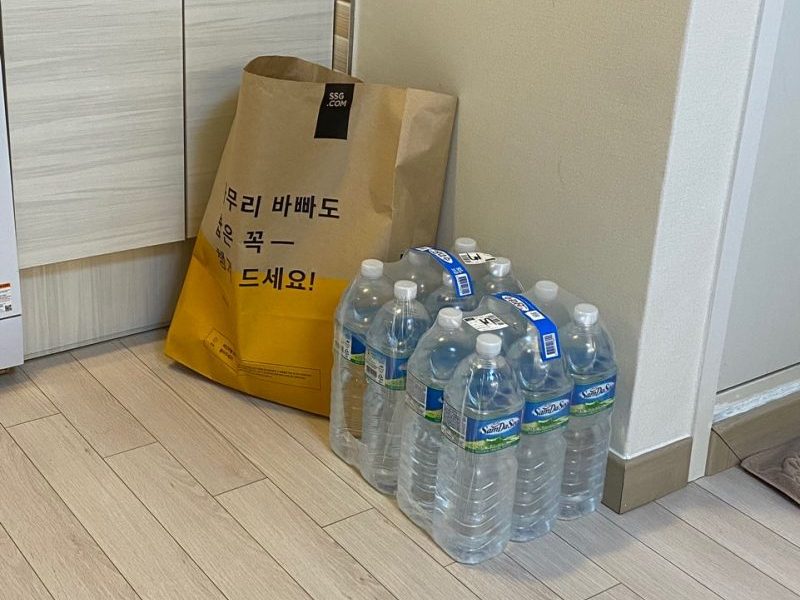
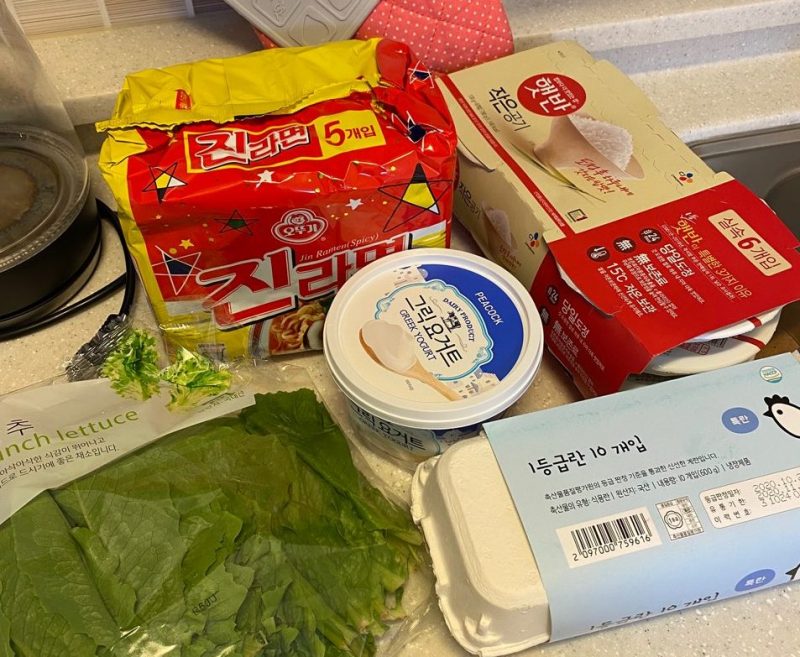
Ms.N: I asked a staff to prepare some water bottles and food in the room in advance. I also bring some food from Japan and then I used delivery application a few times. I could use the credit card which I made in Japan.

(↓Water and food prepared in advance in the room)

7.Any tips for the 2 weeks?

Staff: To be honest, it is a bit hard to imagine the life in the quarantine room for 2 weeks but how was it actually? How did you spend your time there?

Ms.N: Originally I like spending time in my own room so I enjoyed watching dramas and youtube videos. Sometimes I felt boring and move around but it was fine.

Staff: Was there anything that you were careful?

Ms.N: It was easy to sleep late at night, or almost morning and wake up afternoon. So if you want to have a healthy life,  it is better to set alarm or decide to sleep at a fixed time intentionally.

Staff: Oh, that’s true. If there is any plan to go outside for 2 weeks, I think I also become like that. Thank you for telling me the real life of the quarantine life!!

Ms.N: My pleasure. Thank you!

After the interview

How was this interview? I guess there are lot of people who are still seeing the timing for going to Korea but hope this information helps you!

Borderless House Seoul is community share house in which Korean people and people from various countries live together and enjoy international exchange in Korea.

We are waiting for your coming to Korea!

If you need any information about our share house room, please feel free to contact us! →HERE

MOVE TO JAPAN | Cost of Living in Tokyo

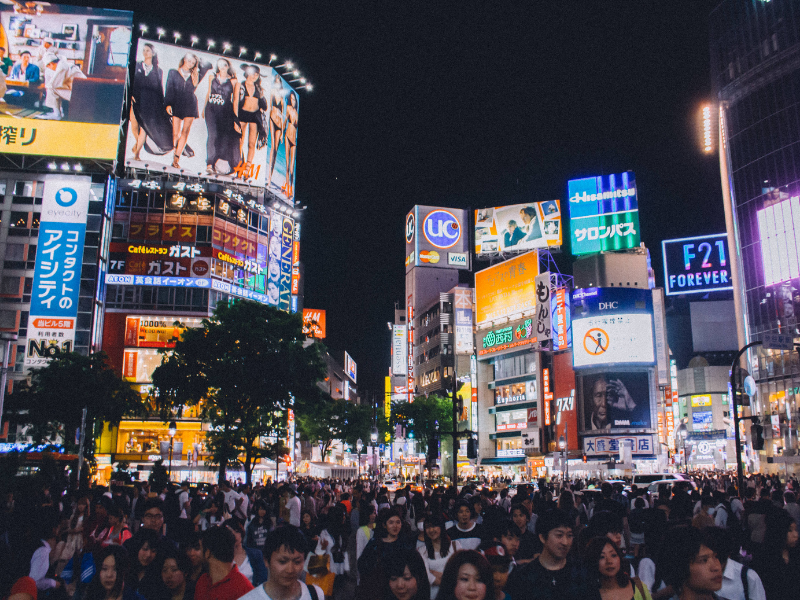
The capital city of Japan, Tokyo, is a busy city booming with business in recent years. This lively city is a mix of ultramodern as well as traditional lifestyles. One can see both skyscrapers and historic temples in this city.

Being the capital city, Tokyo is equipped with all facilities that one might need. They are proud of the top-class amenities they provide to their residents, which are by far better than what the western world has seen. However, the luxuries and modern lifestyle come at a high cost that makes Tokyo one of the costliest cities to live in for foreign nationals. The city attracts a large number of foreigners from around the world who come here for well-paid jobs.

If you are planning to move to Tokyo for work, then there are certain things you should know about the costs of living. Japan is one of the most expensive places to be in, and Tokyo is always in the top ten list of most expensive cities in the world. Hence, one should be aware of the costs they need to incur in order to live a decent life in Tokyo.

Accommodation Costs

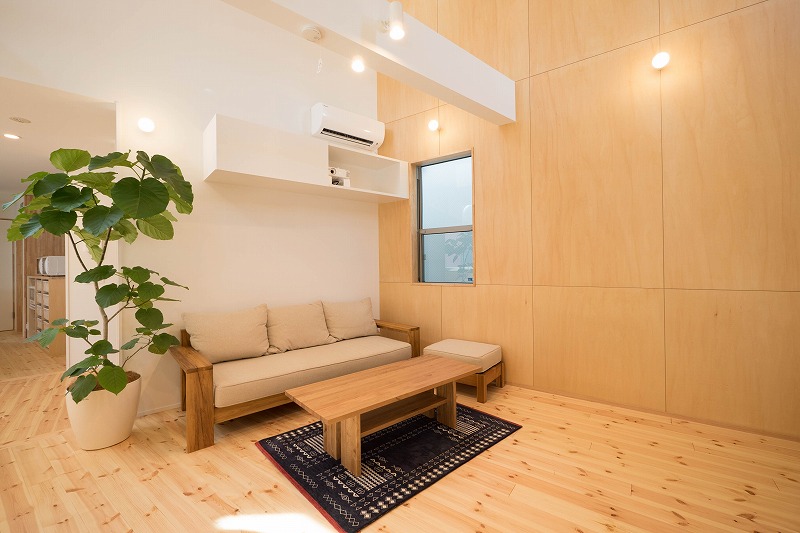
*This picture is KITASENJU2 HOUSE

If you have a steady job in Tokyo, then paying for the house should not be too tough. There are multiple options for you to choose from based on your financial status. You might not be able to rent or buy a house the minute you move into the city. So, you should definitely know the alternatives that are available for you. Lately, as represented by BORDERLESS HOUSE, the living style of house sharing has become popular among foreigners and local young people. If you are considering moving to Tokyo, you may consider house sharing as one of your accommodation options.

Hotels and Hostels

Hotels are great places to be in for the first few weeks or a month before you can find a nice home for rent. Tokyo is filled with hotels at various rates. If you are visiting the city for business purposes and your stay is a short one, you can go to the business hotels or budget hotels which will cost you somewhere in the range of 8000 to 10000 yens for a room.

Hostels or dormitories are also quite popular among the students and young people with new jobs in the city. The bedroom and bathrooms are usually shared, and each resident gets a small locker for keeping the belongings safe. This will cost you less than hotels. 1500 to 4000 yens is the average price range for per person in such accommodations.

Japanese cities are known for their traditional low-cost accommodations called Minshuku. These are small spaces with a bed in the Japanese style, and you also get a one-time meal here. These are also cheap and costs between 4000 to 10000 yens for a single person.

These are the cheap options and can be your accommodation for a short time in Tokyo.

 *This picture is SHINAGAWA-OIMACHI1 HOUSE

Renting a House in Tokyo

Living in a hotel cannot be a permanent option if you plan to stay for a few years or months. So, in this case, it is always better to look for a house on rent. The prices can vary depending on the type of accommodation you choose for yourself. The prices also differ from one location to another within the city.
The rents are quite high in this expensive city and can take up a large chunk of your salary. 50000 to 70000 yens is the average rent of a small one-bedroom apartment in the country. For the same size apartment in Tokyo, you might have to pay 100000 yens. This rent does not include utilities or furnishings. Hence, it is evident that the overall cost of living will be pretty high.
Rents will include costs such as security deposit, real estate agent fees, advance rent, maintenance cost, key money, and utilities.
If you are willing to stay at the center of the city with easy access to public transportation, then the costs are definitely higher as compared to accommodations in the suburbs of Tokyo. A 900 square feet apartment that is well furnished can cost close to 200000 yens for a month in the heart of the city, while the same apartment will cost you 110000 yens a month away from the main city.

If you are single and prefer a smaller space, the size of a studio then you have to pay 120000 yens a month if the location is a good one. You can rent such a well-furnished studio apartment in 92000 to 95000 yens a month in the suburbs or less busy parts of the city.

Such conventional apartments might be costly for most newcomers. Hence, Japan has got the Gaijin houses or the Guesthouses for your rescue. These are inexpensive options that provide you with all the basic amenities. The rooms may be available on share or as private spaces. Most foreigners prefer these over renting expensive apartments. Many of these properties also have the “foreigners only” policymaking things easier for the expatriates.

Owning a House in Tokyo

From the rents, we can conclude that owning a house in this city is an even costlier affair. So, if you feel you have saved enough and are going to stay in the country for long, then you can definitely look forward to owning a house in Tokyo.
This is a much less sought-after option for foreign nationals, owing to the high costs and other legalities. For the permanent residents, the costs will be high even for a small space if the location is the city center. The cost is as high as 1,177,250 yens per square meter in the main area. In the suburbs, the costs are between 500,000 to 800,000 yens per square meter.

Cost of Food

Japan is an island, and therefore, they do not have many cultivations of their own. Most food items are exported from the outside, and therefore, the costs are also quite high. Living in Tokyo, one needs to plan well on the expenditure on food. If you opt for the traditional Japanese items like seasonal vegetables, seafood, and soya beans, then your food costs will be considerably less. The local markets, supermarkets are perfect for daily grocery shopping.
You can also enjoy full meals at restaurants in Tokyo. In cheap restaurants, the average cost is around 500 to 1000 yen. For the expensive restaurants, the costs are somewhere between 1000 to 3000 yen. On the whole, one’s average monthly food costs can go up to 40,000 yen in Tokyo.

Transportation Costs

Transportation is a need of every individual. Tokyo boasts about having a great public transportation system that connects almost all parts of the city. The commuters can always opt for the train passes that allow them to travel to and from home and office/college for several months. As a foreigner, you can avail some discounts when purchasing the rail passes in Tokyo.
Public buses and taxis are also available in every part of Tokyo. Cycling is quite a common means of transportation in Tokyo and also in other parts of Japan. There are cycle parking slots near every railway station. This is the cheapest option and is perfect when traveling short distances. Transportation costs in Tokyo will be around 11000 yen in a month. The costs may vary depending on the distances one travels and the mode of transport chosen.
Owning a car is an expensive affair in Tokyo. The gasoline costs are 150 yen for every liter, which implies you have to incur a huge cost on a monthly basis. Insurance costs, bi-annual inspections, parking fees, and automobile tax are mandatory in Japan when owning a car. Therefore, using public transportation is a much better and cost-effective option.

Electricity, Gas, and Water Costs

The basic utilities are a cost every individual has to incur. In a month, the average cost for the utilities is around 10000 yen, which includes 4000 yen for electricity, 3000 yen for gas, and 2000 yen for water. When renting a house, these costs are not included in the rent amount. However, the guesthouses or Gaijin houses include such costs.

Connectivity and Household Goods

A mobile phone, subscription plans, and internet facilities are absolute necessities in today’s world. Mobile subscription plans can range between 2000 to 6000 yen per month. The internet charges are 2500 to 4000 yen on average. Therefore, connectivity costs are under 10000 yen for a month.
Household goods such as furniture, television, refrigerators, micro-ovens are available from national as well as international brands. Online services like Amazon are also available. While foreign products are pricey, the local products are available at affordable rates. If you rent a well-furnished home, then you can do away with these individual costs.

Conclusion

The cost of living in Tokyo is surely high, and hence monthly expenses must be planned smartly. While the costs listed above are the basic expenses every individual needs to bear, the living costs may differ from one to another depending on the lifestyle. Entertainment, clothing, learning a language, and other such similar activities are some added costs that can also be a part of the living cost in Tokyo.

Why Are Sharehouses The Best Shelter Option When You Are Starting Life In Abroad?

In the present world, borders and boundaries have become fluid. These lines that mark and enclose an area to represent a city, country, or continent, and which primarily only exist on paper are in the present world not as rigid as they used to be earlier. Instead, in the present moment, these boundaries have become porous to allow people to move in and out of a country. This sits true for the borders and boundaries of almost all the countries or continents around the globe.

The Earth presently has become a global space, and all the cities and countries have become a part of its chain. Whether it is for studies or managing businesses, every year we witness people moving across borders. Because of this, it has become a natural occurrence to find citizens of different nationalities living together in a country they were not born or brought up.

But if you have ever traveled overseas, then you would know that living in a new country is not a very pleasant experience especially during the initial days. It is so because when you go to a new place you usually miss your old friends and family, and the previous surroundings terribly. Plus, when you move to a new country you feel like a stranger, and thus, it becomes difficult to blend in.

Mixing-in in a new country is not as easy as it may appear in the first place. We say so because when you go to a new place, you usually don’t know much about the culture or tradition of that place. And because of this, you always feel anxious and stressed in your new surroundings. You are always on your toes observing how other people are behaving so you would not mistakenly do that would hurt or disrespect the sentiments of the natives.

Thus, in such a time when you have freshly moved into a new country, it is considered a good idea to live in a share house. Doing so will help you in many ways. Wondering how that works? Well, in that case, read our next section to find out your answers.

How are share houses helpful in starting a fresh life in a new country?

A sharehouse is a big property that is offered on rent to tenants where many strangers share the same roof. In a share house, you can rent a single room for yourself or you can rent a room that houses 3 to 4 people in total depending upon your needs and requirements. This place is a top shelter choice for people, especially for those who have freshly shifted to a new country because-
It helps you in understanding alien customs.

As we have already established, when you move to a new country, chances are that you will be unfamiliar with its customs and traditions. This can make you anxious while adding to your stress levels. Also, there is this probability that if you did something wrong because of your unfamiliarity with the local customs that the natives find offending or insulting, then you might feel even more alienated and alone. Thus, for this reason, it is a safe choice to live in a share house at least for the initial days because there you are bound to come across many people who will be interested in international exchange.

When you will live with them, such people will help you in learning more about their local culture, while at the same time they will also try to understand your traditions. This healthy exchange will make your life significantly easier. So, if you want to know about the local customs and traditions of a place, its food, its manners, etc. in a friendly way without wasting much time, then share houses should be your top priority while seeking shelter.

It is a borderless accommodation

When you move to a new space how fluently you can speak their local language plays a very important role in deciding the ease with which you will blend in your new surroundings. So, for example, if you have moved to Japan for your further studies and you can fluently speak and write Japanese, then this will probably mean that you will find it easier to navigate Japan as compared to someone who doesn’t even understand Japanese. It is so because when you don’t understand the local language of a place, you find it hard to explain to people your queries or emotions.

Now, in such a scenario, it is wise to find a share house in your new country because in share houses you can probably find residents who are familiar with your language. In this way, your common language can help you in befriending people and it can also help you in learning the local language quite easily. We, BORDERLESS HOUSE, make language exchange easy for you by offering on our website the information about the nationality of its residents. You can even opt to talk to the residents of the share house while requesting a preview of the property.

It offers you easier access to common knowledge

When you shift to a new country, other than the customs, traditions, and language of that place there are many other things that you ought to learn about your new home town. These things include information on the common practices of the new place, knowledge about local shops and convenience stores in your locality, and awareness about the norms of living in that place such that your safety is not threatened.

Living in a share house can help you in gaining easy access to such information. It is so because when you are sharing a roof with other people you are bound to interact with them. In your conversations, you can come across the above-mentioned info without even requesting for the same. In opposed to this, if you opt to live alone in a new country, then acquiring such information may take some time.

Thus, these are some reasons because of which living in a share house should be your preferred choice. Living here can help you in settling-in easily.

What Is A Sharehouse?

A sharehouse is a rental space where people who are living independently, gather to live together. Except for private rooms, all other spaces are shared with fellow tenants. The shared spaces include the lounge area, where tenants can interact with one another, the kitchen, where they can prepare a variety of cuisines and meals, and the bathroom.

Share houses are mainly occupied by similarly aged (young and middle-aged) independently living locals or foreigners who have moved to Korea. Share houses appeal to this group of people due to the diversity, comfort of living, and fun that they offer to its tenants.

Popularity Of Share Houses

The increasing focus on shared spaces in television dramas and the collective generational desire to interact with new people and explore new things has led to the popularity of share houses in east Asia.

The Share House Culture

Different companies provide sharehouses with different themes, aiming to bring like-minded people together. Some shares houses are based on similar interests like sports, while there are some share houses that are only for girls or for single mothers, etc.

When living at a share house, one can learn about local culture, taste authentic local food, understand the local lifestyle, and make friends with local residents. BORDERLESS HOUSE is one of the leading share house companies in Japan, South Korea, and Taiwan, as they offer a variety of multicultural shares houses.

After co-living for a period of time, and in some cases even sharing a room, housemates leave their sharehouses with strong friendships with individuals from various countries across the globe.

Share House v/s Room Share: The Better Rental

When moving to another country, most people go for the conventional choice of a rental accommodation i.e. leasing an apartment or sharing a rental house. While the cost of a rental is divided between flatmates in a shared rental, the overhead costs and the money spent during the first month of leasing can empty your pockets.

A rental apartment has to be furnished, the monthly bills for electricity, gas, internet, and water have to be paid, and the cost of repairs, if any, must be shouldered by the flatmates.
By contrast, when renting a space in a share house, the tenants all pay a monthly rent and maintenance fee, and the management details are all handled by the sharehouse company.

A rental apartment or room is generally shared by people who either are friends or have previously decided to group together for the purpose of leasing the space together. While living with someone you already know may sound more comfortable, it leaves little space for learning. If you and your roommates are all foreigners, then it will be increasingly difficult for you to immerse yourself in the local way of living.

What Kind Of Personality Fits Share House Life well?

1. An open heart

Obviously, a share house constitutes communal spaces, which means you’ll share your space with your housemates who come from everywhere around the world. Everyone has their own different backgrounds, personalities and experiences, so, an open heart and mind are important for anyone considering staying in a share house.

2. People who love to make new friends!

Communication is one of the main concept points of BORDERLESS HOUSE. Most of our tenants expect to be placed in an environment where tenants are willing to communicate and interact to each other! So, make an effort not to hide away in your room, and instead, join your housemates, enjoy your time together, and make it memorable!

3. Maintain house cleanliness and environment with other housemates

A clean and comfortable environment requires all the housemates to work on maintaining it together. In BORDERLESS HOUSE, all tenants will need to take turns to do the housework together!

BORDERLESS HOUSE

BORDERLESS HOUSE is an International share house company with 122 share houses and 1285 rooms available for rent in Japan, Korea, and Taiwan. BORDERLESS HOUSE caters to a large number of tenants every month. These tenants are from around 50 different countries and come to the share house with their own cultural knowledge to impart and a lot to gain from other housemates.

The ratio of locals and foreigners in a share house depends upon each share house company. The resident ratio between locals and foreigners at BORDERLESS HOUSE share houses is equal. This guarantees foreigners an opportunity to interact with locals and learn the culture, language, and traditions of the country.

The essence of a share house by BORDERLESS HOUSE is to create a multicultural space, where borders do not matter- where people from different countries across the world live together and share experiences. Residents teach and learn from each other, and become lifelong friends.

The Benefits Of Staying At A BORDERLESS HOUSE

● When you move to another country, you come across a lot of new and unexpected things. The food, the lifestyle, the language, the culture, and people’s perspectives are all new and strange at first. While some people find it easy to adapt into new spaces, others might have trouble interacting with people and making friends. Living together under the same roof, provides an immediate community of friends and a great environment for people to start talking.

● When living together for an extended period, housemates can learn each other’s culture and way of living. Interaction with people from different cultures helps you broaden your perspectives and learn new things about human nature.
Living with locals can help you learn the culture and folklore of the country. You can even celebrate local festivals, i.e. Chinese New Year, Seollal, and Shogatsu with local people!

● If you have moved to either Japan, Korea, or Taiwan for the long term, then knowledge of the local language will certainly come in handy. With the help your local housemates, you can simplify your life by learning the local language. Knowing the local language will help you better navigate around the country and take a step towards being accepted as a resident of your new country!

● When living at a share house, you can benefit from the advice and knowledge of your local housemates. Once you become friends, you can visit popular local restaurants and bars together. If you need to buy something, they can recommend the best shops in the area, or even accompany you to one. Basically, when living in a share house, you will never feel alone despite being in a foreign country.

● While there are many social benefits of living at a share house, it is also economically beneficial for people who are living alone. The monthly cost of staying at a share house is generally cheaper than that of a private apartment. Apart from the rent and maintenance fee, the tenants are not expected to pay for additional facilities like the internet, water, gas, etc. In some cases they can share the cost of cooking with other tenants and save money while making friends.

● Considering that a lot of people are housed together, share houses generally offer better and smarter house appliances. Some share houses even offer home theatres and fitness studios.

● To make the life of tenants at the share house easier, share house companies have dedicated house management staff to oversee the maintenance of the share house. From broken appliances to leaking pipes, every big and small maintenance job is handled by the company staff so that the tenants of the share house have one less thing to worry about.

BORDERLESS HOUSE is located in many different cities, including Tokyo, Seoul, and Taipei, amongst others. These houses are located in areas that are nearby to local markets, stations, and other regularly visited places to ensure maximized convenience and ease of living for the tenants.

文化活動|大稻埕漫遊:穿著旗袍品茶、品香更對味

說到國際交流,除了夜市、小籠包、珍珠奶茶,你還知道台灣有什麼充滿在地文化的東西,可以推薦給外國朋友嗎?其實台北大同區的大稻埕、迪化街商圈,是一個充滿文化底蘊的舊城區,各種百年歷史的建築、特色小吃、景點都聚集在這個地方!

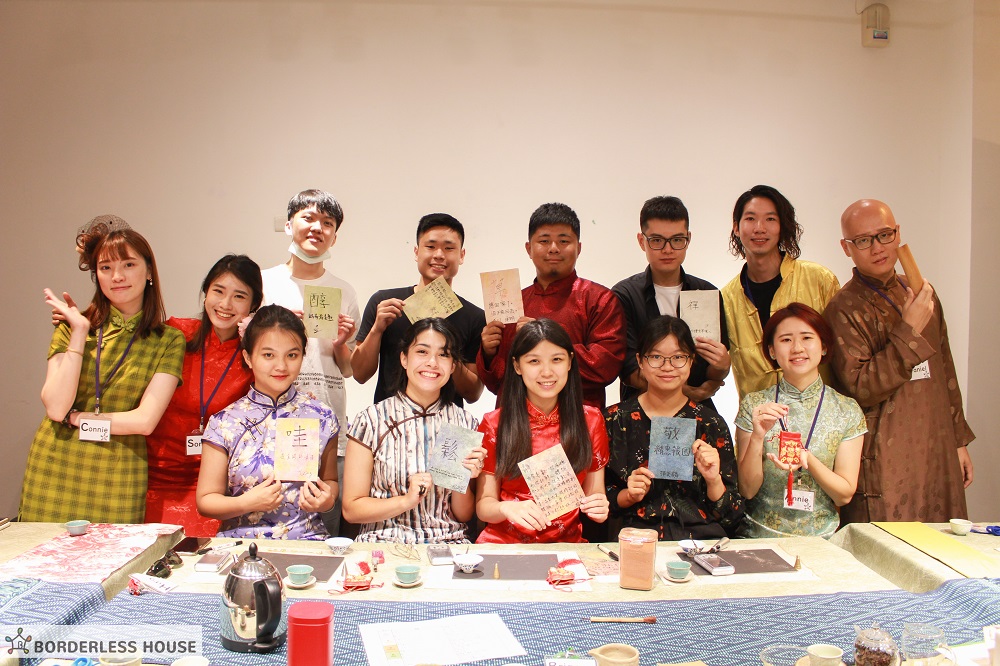
睽違了兩年,趁著最近國內旅遊正夯,我們再次著外國朋友來到了大稻埕,和我們一起老街漫遊,體驗在地台灣味!這次除了穿旗袍,還有品茶、品香的活動,快來看看吧!

(不要忘了滑到文章最下方,看活動影片喔!)

貳零年華:體驗1920年代的旗袍風采

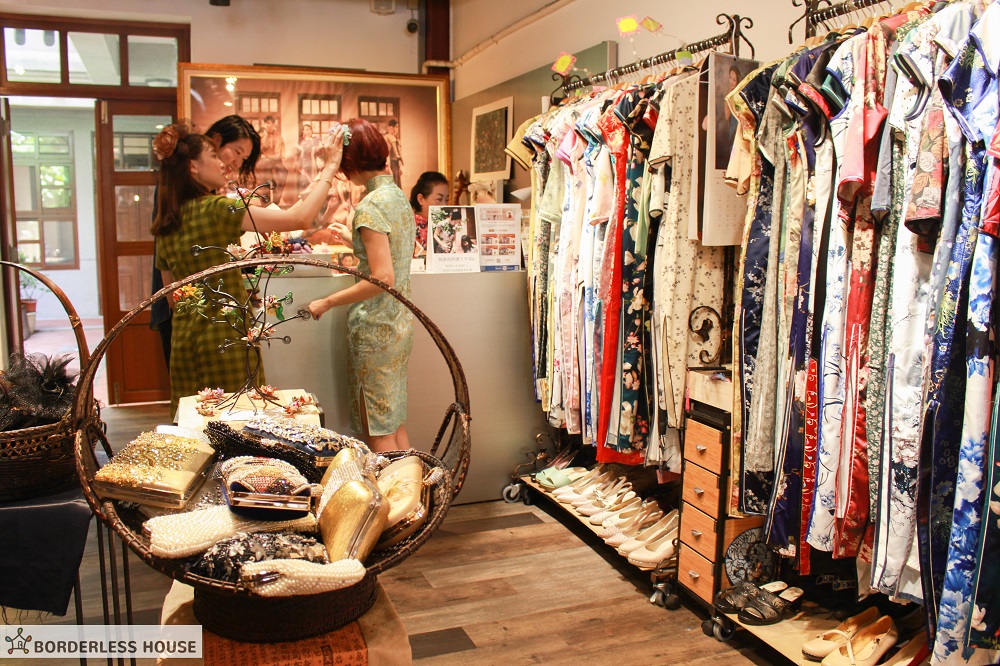
林阿姨的旗袍店「貳零年華Salon 1920s」,收藏了非常多1920年代的服飾和配件,而二○年代正是大稻埕最為繁華的美好年代,林阿姨的旗袍店名,就是這樣而來的。

走進店裡會發現林阿姨對旗袍的熱愛及用心,從店內的裝潢到陳設,都充滿了復古優雅,挑選旗袍的過程中,林阿姨也會根據每個人的需求,提供不同的搭配建議,替大家挑選最能凸顯自身氣質的旗袍穿搭。

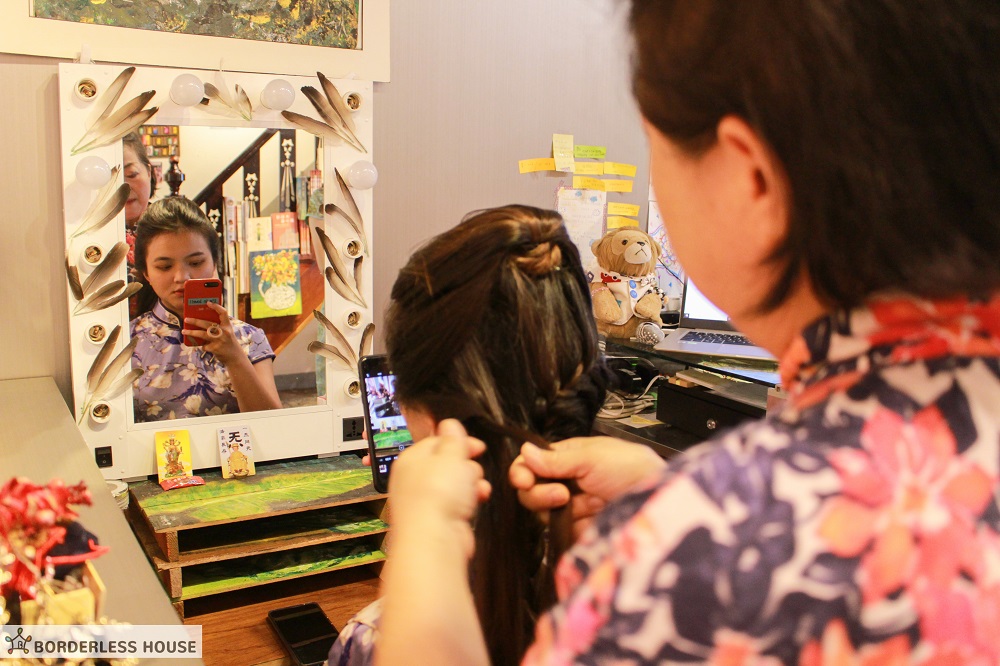
除了旗袍以外,妝髮的搭配也十分重要,如果希望裝扮更有完整性,也可以請林阿姨幫忙梳妝,經過阿姨的巧手,只需要短短的5-10分鐘,就能完成非常典雅的盤髮喔!

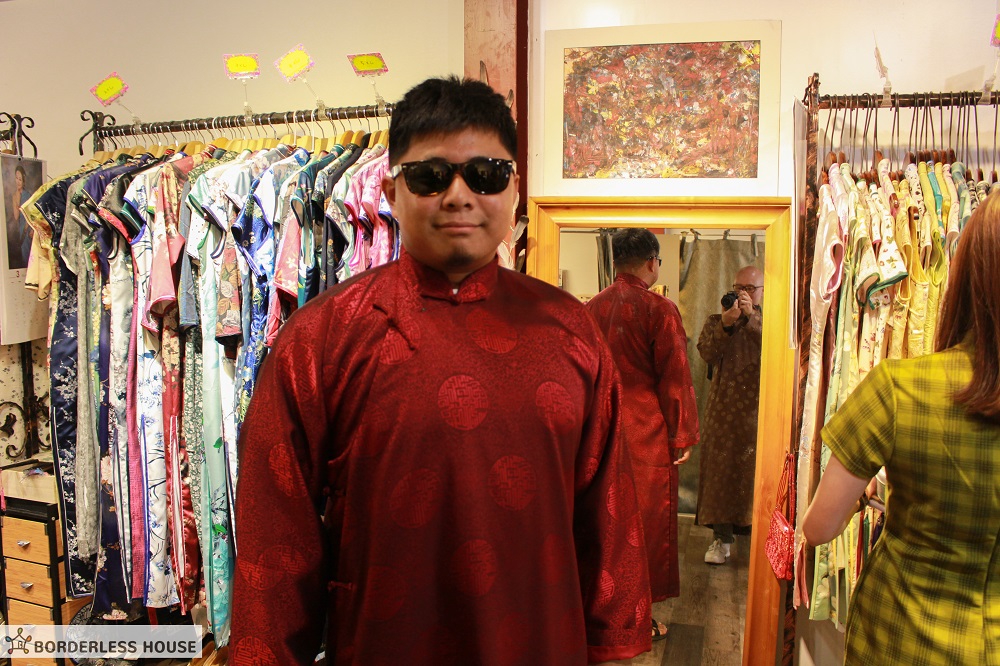
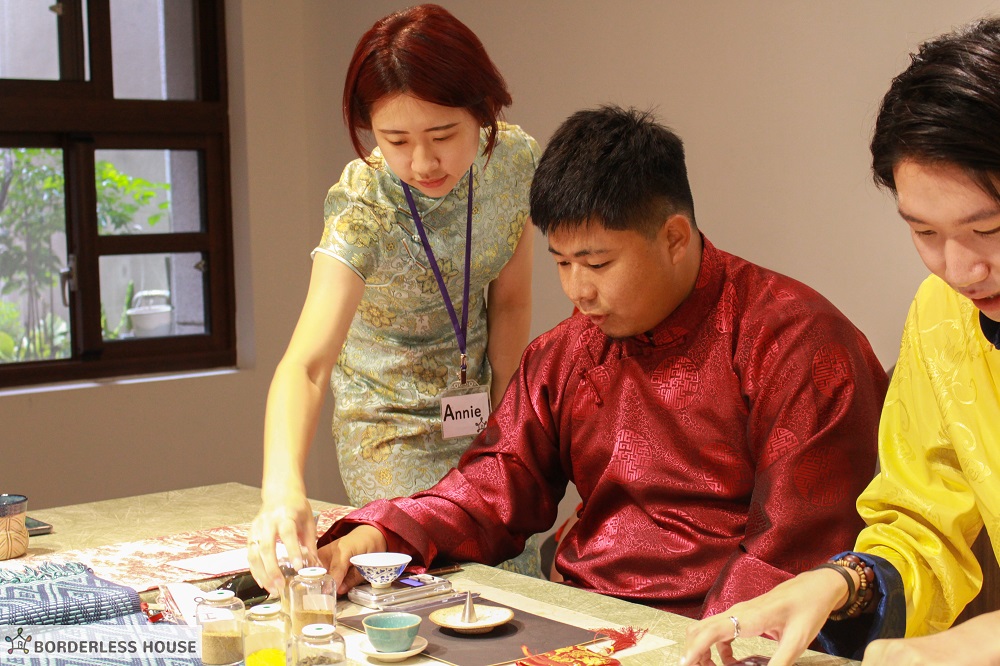
雖然阿姨的店主打旗袍體驗,但也有部分是提供給男生的長袍選擇喔!
我們的日本室友Hiro換上長袍後,完全是員外啊!

品茶:富有層次及內涵的茶文化

換上旗袍,梳妝完成後,就準備要進行今天的第一個項目「品茶」囉!
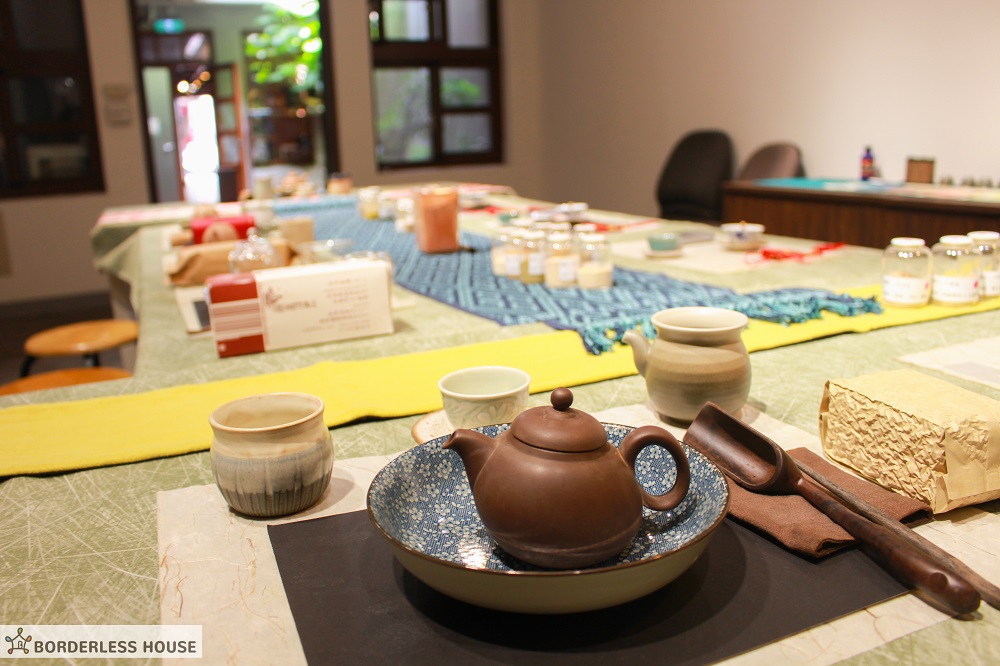
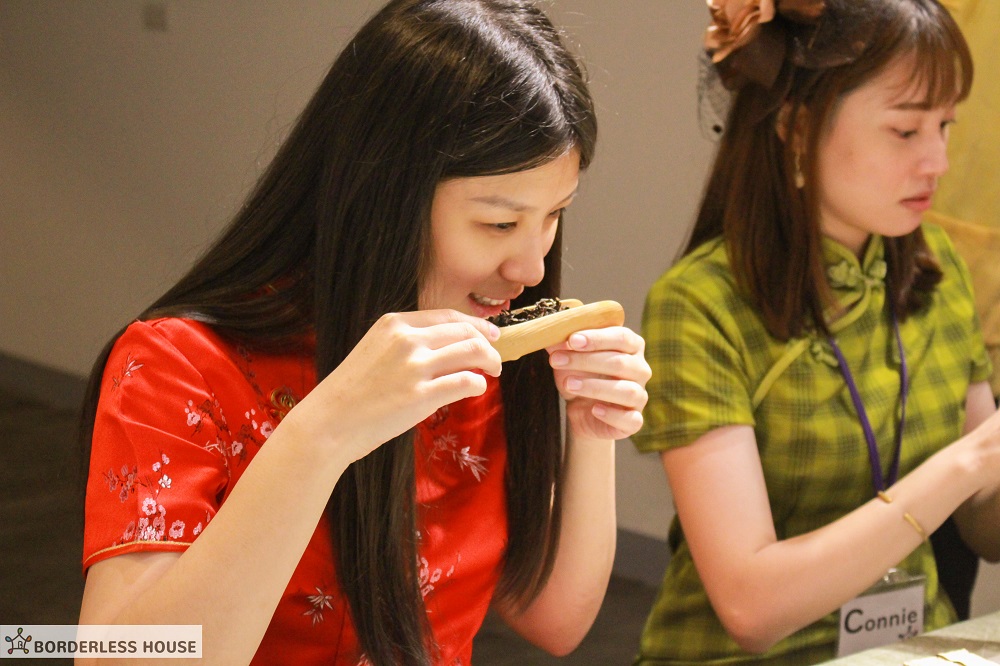
林阿姨準備了幾種不同的茶葉,手把手帶著大家從聞香、沏茶、品茶,一步一步泡出好茶。

首先開始的,是林阿姨大手筆分享的1920年的「正山小種」,這可是產自福建,一斤上萬元的老茶葉喔!經過了年份的洗禮,茶葉也自然吸收了周遭環境的味道,帶著一種木質老建物的氣味,大家笑稱這是阿嬤家的味道。

其他還有像是帶著俠女的氣質的「鐵觀音」,氣味十分強而有力,而「東方美人」則是因為沖泡後色澤艷麗,香氣獨特,百年前被英國女王品嚐後,就賜名了東方美人。

而大家最喜歡的茶葉是「白茶」,一種未經過發酵及烘培的茶葉,沖泡前聞起來就像秋天的落葉,沖泡後則是帶有一種蔬菜的香氣,非常特別。

整個品茶的過程,我們一邊喝茶,吃著小點心,聽著林阿姨分享每種茶葉的由來、製程及故事,大家都十分投入。

品香:勾起記憶的嗅覺體驗

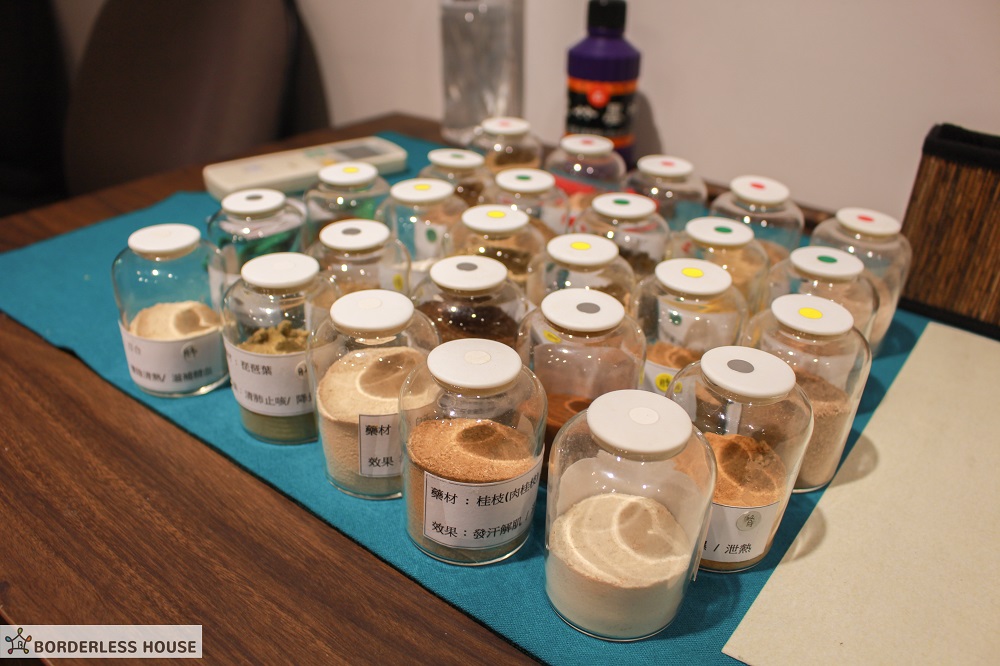
接在品茶之後的是「品香」活動,林阿姨準備了20幾種不同的天然香粉,每種都對應到了人體的心、脾、腎、肝、肺,大家可以根據每種香氣的功效,對應自己想要改善的部分,挑選出自己喜歡的香氣做調和。

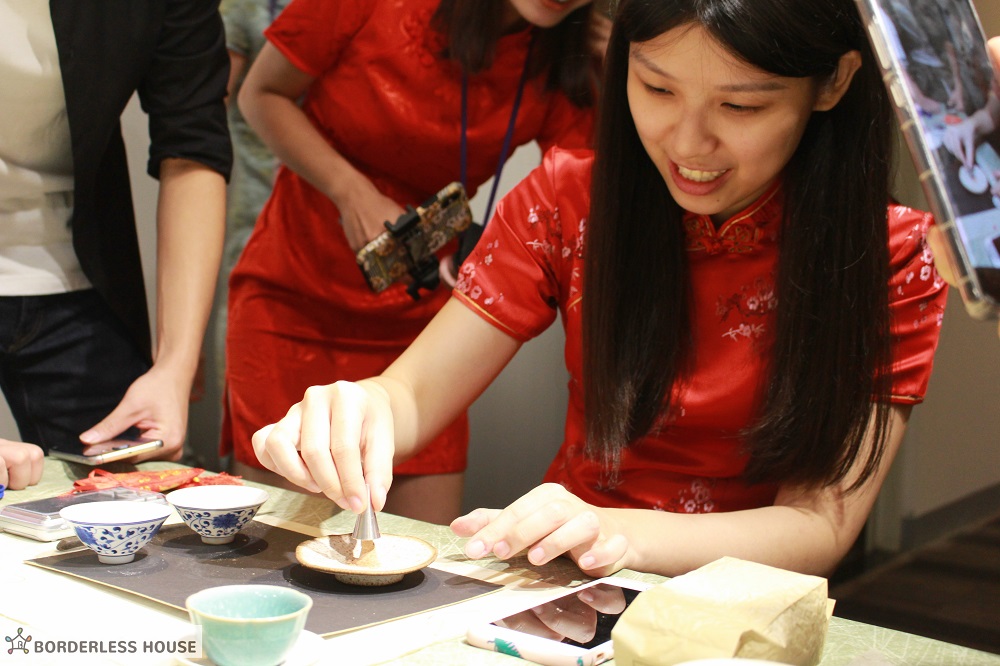
首先林阿姨已經替大家準備好了專業的調香工具,大家依據自己的喜歡的香氣,挑選出共0.5克的香粉,其中0.2克裝進香囊中,可以隨身攜帶,而剩餘的香粉需要再加入0.2克的龍柏粉,混和以幫助燃燒,最後將香粉裝進模型中壓緊,製成香錐。

這個看似簡單的步驟其實十分需要技巧,施壓的力道不能太輕,否則香錐無法成形,而施壓的力道太重,則可能造成香錐無法從模型中取出,或是不易點燃喔。

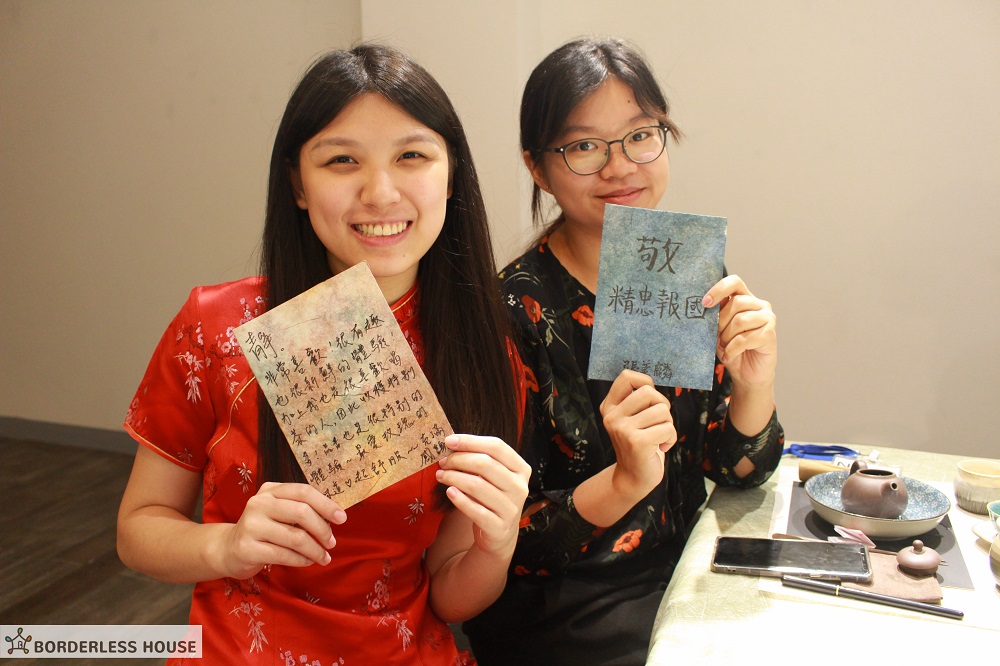
大家七手八腳的互相幫忙,終於完成了每個人的香錐囉!最後我們輪流點燃自己調製的香,和大家分享、交流,並根據自己所調和出來的香氣,寫下一個對應的文字,敘述自己對這個香氣的感受。

有人認味香氣帶給他放鬆的感覺,也有人說香氣的味道,讓他想起了在日本家鄉的童年時光,每個人的感受都十分不同,非常有趣。

帶著外國友人,一起探索老街風華!

經過一個上午品茶、品香體驗後,大家都收穫滿滿,外國室友們也覺得非常有趣呢!其實大稻埕曾經是北部最重要的貿易港口,也是最為繁華的商圈之一,至今已經有百年的歷史,許多紅磚洋樓、巴洛克式建築都被保留了下來,走進大稻埕就像踏入了時光機一般。

而現在的大稻埕經過重新規劃後,除了有原本的老字號南北貨商行、茶行、中藥行,也新進駐了許多文青小店、咖啡廳,非常值得大家去走走逛逛!如果有外國朋友來到台灣旅遊,更是一個不容錯過,充滿在地台灣味的景點喔!

最後合照一張,大家就準備吃午餐囉!大稻埕有許多老字號的美食、小吃,就讓大家各自挑選自己喜歡的餐廳,填飽肚子為下午的大稻埕導覽補充體力吧!我們下回見!

活動影片紀錄

同場加映:

不只是住宿!BORDERLESS HOUSE 活動回顧

波波暑期換宿 – 替室友辦個活動吧!

【New Campaign】Don’t be nervous! Your First Korean Friend is waiting!

Draw on your future in Korea with your First Foreign Friend 🙂
You will have fewer worries and more expectations!

Are you worried about what the Corona situation in Korea is like , what it would be like to live in Korea , and live in the Borderless House?

Thank you for visiting the Borderless House even as the country ‘s immigration restrictions have been made due to the Covid -19.

Borderless House thought about how we could help those who are looking for Korea even in difficult situations.

“When we go abroad, what will make our minds comfortable?”

The biggest help was a friend.

A friend who can ask questions before go,
A friend who will be greeted for the first time as soon as I arrive in Korea ,
A friend who can hang out in Korea.

Borderless will introduce such a friend for the first time.

Ask your first Korean friend about the Korean situation and draw on your future in Korea.

You will have fewer worries and more expectations!

What is ‘My First Foreign Friend’?

It is a program that Borderless House will match you and foreign (Korean) friend to each other in advance before you move in. 

Who are we looking for? 

• New tenants who have decided to move in

ex) New moved Foreign + Korean current tenant
      New moved Korean + Foreign current tenant


A resident living in Borderless House can match a new Korean resident , so please apply comfortably!

You either meet your first foreign friend and be someone ‘s first friend ! 

What is the difference between the existing language exchange program? 

The language exchange program is that focuses on matching Language Exchange partners to share Language needs.


My First Friend program ‘s purpose is to improve the quality of language and cultural exchange experiences.

It is an active matching program that attempts to overcome the situation where it is difficult to guarantee the quality of the global community due to the current Corona situation.

Benefits for My First Friend participants

1.
“I ‘m not afraid to go to Korea!”

Ask your friend! 

– What’s the status of Corona in Korea?
– Where do I see the information about the area I will move in ?
– Where do I buy masks in Korea?

2.
“I ‘m not lonely while I ‘m in quarantine in Korea”

you can play online with your first friend!
If you meet later, plan where you will go and what you: -) 

3.
Borderless House supports your relationship!
Build a lot of memories with your first!

• If you send us a certified shot, the Borderless House will buy the coffee!

• If you two are leading a house meeting with other housemates, Borderless House will buy pizza!

How do you participate? 

Decide to move in> Ask Borderless staff > Matching with tenants
(It may take time to match, depending on the number of applicants. Even if you move in after applying, the matching will proceed normally)

• Apply ㅣ tenant @ borderless-house. com
• Visit the Online Borderless Hosue ㅣ https://www.borderless-house.kr/kr/all/


Then, Borderless would like your attention to be very much appreciated 🙂 

【Online House Tour】 You can check the house in advance even from abroad!


Hello everyone, this is Ayako from Borderless House Seoul.
I hope all are doing well and staying safe.

Today, I would like to share a great service that Borderless House Seoul has been started for the people being interested in our share houses!


We are pleased to announce that we are currently conducting an Online room-viewing! (*Only for common space.) We provide this service to all people who need to see the house before making an decision for reservation. 

Generally, before deciding on which house to move in, many people wish to take a look at the actual property first in order to make the best decision. However, sometimes it’s difficult if you are still abroad or in different cities or too busy to visit, etc. We hope this service helps you a lot!

What is Online room-viewing?

Online room-viewing will be conducted via Skype, KakaoTalk or LINE. Our staff will use video chat to show you around all the common spaces in the house, such as living room, kitchen, bathroom, and laundry space, etc. You will have the opportunity to see how the current condition in the house that you are interested in looks like.

Online room-viewing usually takes about 40 minutes. We will show you the details of the house environment first, and after that, we will also give you some time for questions. Of course, we will offer you all the information that you may need.

What is good about Online room-viewing?

Online room-viewing allows you to do it from anywhere around the world.

Moreover, you will have the chance to speak with the current residents and ask them any questions that you might have or anything that you are curious about. They would be very happy to share their personal experiences with you and give you an idea of how the share house is like.

Online room-viewing is not just convenient but through the real-time look would also be helpful for you in making a decision.

How to apply for Online room-viewing

● If you already decided the house you would like to see.

1. Send us a “Room viewing” request form from our web page of the room/house you are interested in.

2. We will arrange the date and time of your online room-viewing with you.

3. On the day of Online room-viewing, our staff will show you the house via Skype, KakaoTalk or LINE whichever you prefer.


● If you have not decided the house you would like to see.

1. Send us an “Inquiry” form. Our staff will email you and give you house suggestions based on your preferences and conditions.

2. Pick the house that you like and send us the “Room viewing” request form from our web page.

3. After we receive the form, we will arrange the date and time of your online room-viewing with you.

4. On the day of Online room-viewing, our staff and one of the residents will be showing you the house via Skype, KakaoTalk or LINE whichever you prefer.


Even though we don’t have the chance to visit the house in person, I believe by having a real-time house tour would also help you find the best house in Seoul!


Check our share houses in Seoul. -> Click here!

If you would like to have further information or if you have any questions, please feel free to contact us. -> Click here!

Living At A Share House Opens Doors To The Local Culture And Community

Moving to another country is a big step in anyone’s life. It can be stressful to think about find accommodation, work, friends in a foreign country, and mix in the lifestyle there.

Many foreigners who move to another country, prefer to live with people to avoid getting lonely. Sharing an apartment with flatmates is also comparatively cheaper than renting a studio apartment by themselves. However, when moving to another country, it can be difficult to find people who are willing to co-rent an apartment.

Fortunately, countries like Japan, South Korea, and Taiwan offer share houses, to ensure the comfort of the moving foreigners. They are suitable accommodation for people that wish to co-rent a space and want to save money on buying furniture and appliances.

Share houses are rental places with private rooms and shared spaces like the kitchen and dining area. People from different backgrounds live together at a share house and learn from each other. Share houses are quite popular amongst young people with a penchant for exploring the new and exciting.

Local Friends And Acquaintances

In some countries, people are apprehensive when talking to foreigners and are less likely to be polite or helpful. It can be difficult to become friends with the local people in such a country. Sometimes the only friends and acquaintances that a foreigner makes are people from work. A limited social life and a feeling of not belonging can leave you frustrated and sad.

When living at a share house, you get an opportunity to interact with both non-citizen residents or expats and the local people of the country. You will be meeting these people in the shared spaces of the house like home theatre, living room, kitchen, etc. and are likely to become friends if you have similar personalities or interests. This is how you can end up making friends in the local community.

Being friends with locals can expose you to the local culture and community. They will open doors to freely explore the country during your stay.

Local Customs And Basic Communication

One reason why the locals are apprehensive of foreigners is that they feel that their customs are misunderstood and disrespected by those who don’t share them. When you live with the locals or become friends with them, you can observe their customs and learn them. The way that the locals speak, greet, and the topics that interest them vary from country to country. From your local housemates, you can learn these customs and communicate efficiently.

You will also be able to learn their table manners and eating etiquette. Whenever visiting a restaurant or eating lunch with colleges, you will be able to earn bonus points for following local etiquettes and can prevent feeling like you don’t fit.

For example, In Japan, people greet each other by bowing. It can either be a small nod or a deep bend. Greeting with a deep bow, it is seen as a sign of respect.

Similarly, in Taiwan, you are expected to sit with your hands on the front or in your lap, as opposed to spreading them and taking up space. Spreading your legs while sitting somewhere and obstructing the way is also considered impolite by the people.

Festivals And Seasonal Events

The festivals and seasonal events celebrated in various countries are different, even New Year is celebrated differently in most countries.

Festivals and seasonal events are epitomes of cultural activities, food, clothing, entertainment. It is a privilege to experience cultural gatherings of communities on their celebrated occasions.

For example, Pingxi Sky Lantern Festival and Biennial Butterfly Beauty Festival are two festivals that can only be witnessed in Taiwan. Similarly, Seollal or Lunar New Year’s Day and Chuseok are very enthusiastically celebrated in South Korea.

When sharing a house with locals, you can ask them to let you accompany them to festivals and events. You can ask them about the activities conducted and why people celebrate a particular festival. It will not only increase your general knowledge of the place and help you feel included but will also open your eyes to a world you had never known before.

And who knows, maybe some of your housemates will invite you home, to experience celebrating the festival the local way with their families.

Local Foods

Countries with rich culinary histories have given some recipe or dish to the global food market, that is obsessed over by many. The Chinese have the credit for noodles and dumplings, the Mexicans have their tacos, the Americans eat hamburgers, the Japenese have given the world Sushi, and the South Koreans have made Kimchi and Bulgogi famous. However, are these the meals that the local Mexican, American, or Japanese people consume every day? No, they are not.

While these foods are popular, they are not what the locals eat daily. For example, when moving to Japan, you will find many restaurants that serve multiple types of Sushi. But when you live with a Japanese local, you will be able to eat ramen, gyudon beef bowls, dashi soup stock, fish, and rice cake, amongst other local dishes. Similarly, A local in Taiwan will be able to introduce you to Zong Zi, Oyster Omelet, Minced Pork, etc.

Living with local people will enable you to observe and experience their eating habits. Every culture has some easy to make soul food or some traditional dish that is not sold at restaurants and diners.

When a local housemate at your share house cooks their traditional food, it will be culturally authentic and not modified to make it five-star. It will taste like home and is the best way to expose yourself to the local way of living.

Local Language

In some countries, it can be difficult to make friends and navigate around the city if you do not know the local language. In some countries, the names of shops, lanes, and train stations are often written in the local language. You can learn how to reach from office to home and from home to office and can interact with most people in English, but if you need to visit the local clinic or shop, you will find it difficult to communicate your needs. There can be misunderstanding and confusion when trying to understand each other.

At such a time, having a local friend or housemate can be a blessing. Not only can they accompany you for your doctor’s appointment, but they can also help you learn how to write, read, and speak the local language if you plan to stay in the country for longer.

When someone in the group is unable to understand the local language, people often unintentionally end up excluding them from the conversation. Foreigners experience such situations in countries like Japan, China, Taiwan, India, and South Korea. For example, people in these countries prefer to speak in Japanese, Mandarin, Taiwanese Mandarin, Hindi, and Korean. Someone who doesn’t the local language may feel different and left out.

Regular conversations with native speakers of a language are the best way to get fluent in speaking a language. In no time, you will be able to understand the talk between your local colleagues and reply to them, if you are sharing the house with a native speaker.

Deeper Understanding Of National Character And Values

It is easier to learn the customs and language of a country, but quite challenging to understand their values, perspectives, and lifestyle. The way of living in the West and the East are very different. While individualism and independence are cherished in the West, in the East local communities are valued more. Whereas, in the Asian Continent, many countries are passionate about family values, culture, and religious beliefs.

Understanding the culture and perspective of local people is very essential to understanding their lifestyle and priorities. When living at a share house with the local people, you will be able to get a better idea of the local values. Do people respect the elderly? Are patience and punctuality considered essential virtues in the country? Do people often discuss the climate, is it associated with certain traditional myths? When living with a local person, you will learn a lot about the way of thinking of the locals of the country.

This will make it easier for you to converse with them. You will also be able to understand them instead of judging the way they live. This will make you a better human and will enhance your personality.

Local Information

Every country has some areas most visited by the locals. They serve the best local dishes and provide cheap shopping opportunities in such areas. With local friends from your share house by your side, you will be able to take your sightseeing and exploring to the next level. You can avoid tourist destinations and activities and live the way locals do.

If you’re moving to Japan, Taiwan, or South Korea and wish to move into a share house, you can reach out to us at BORDERLESS HOUSE. At share houses by BORDERLESS HOUSE, we have an equal ratio of foreigners and local housemates, to ensure that the foreigners are exposed to the local culture and community.


Living At A Share House Opens Doors To The Local Culture And Community

Moving to another country is a big step in anyone’s life. It can be stressful to think about find accommodation, work, friends in a foreign country, and mix in the lifestyle there.

Many foreigners who move to another country, prefer to live with people to avoid getting lonely. Sharing an apartment with flatmates is also comparatively cheaper than renting a studio apartment by themselves. However, when moving to another country, it can be difficult to find people who are willing to co-rent an apartment.

Fortunately, countries like Japan, South Korea, and Taiwan offer share houses, to ensure the comfort of the moving foreigners. They are suitable accommodation for people that wish to co-rent a space and want to save money on buying furniture and appliances.

Share houses are rental places with private rooms and shared spaces like the kitchen and dining area. People from different backgrounds live together at a share house and learn from each other. Share houses are quite popular amongst young people with a penchant for exploring the new and exciting.

Local Friends And Acquaintances

In some countries, people are apprehensive when talking to foreigners and are less likely to be polite or helpful. It can be difficult to become friends with the local people in such a country. Sometimes the only friends and acquaintances that a foreigner makes are people from work. A limited social life and a feeling of not belonging can leave you frustrated and sad.

When living at a share house, you get an opportunity to interact with both non-citizen residents or expats and the local people of the country. You will be meeting these people in the shared spaces of the house like home theatre, living room, kitchen, etc. and are likely to become friends if you have similar personalities or interests. This is how you can end up making friends in the local community.

Being friends with locals can expose you to the local culture and community. They will open doors to freely explore the country during your stay.
Local Customs And Basic Communication

One reason why the locals are apprehensive of foreigners is that they feel that their customs are misunderstood and disrespected by those who don’t share them. When you live with the locals or become friends with them, you can observe their customs and learn them. The way that the locals speak, greet, and the topics that interest them vary from country to country. From your local housemates, you can learn these customs and communicate efficiently.

You will also be able to learn their table manners and eating etiquette. Whenever visiting a restaurant or eating lunch with colleges, you will be able to earn bonus points for following local etiquettes and can prevent feeling like you don’t fit.

For example, In Japan, people greet each other by bowing. It can either be a small nod or a deep bend. Greeting with a deep bow, it is seen as a sign of respect.

Similarly, in Taiwan, you are expected to sit with your hands on the front or in your lap, as opposed to spreading them and taking up space. Spreading your legs while sitting somewhere and obstructing the way is also considered impolite by the people.

Festivals And Seasonal Events

The festivals and seasonal events celebrated in various countries are different, even New Year is celebrated differently in most countries.

Festivals and seasonal events are epitomes of cultural activities, food, clothing, entertainment. It is a privilege to experience cultural gatherings of communities on their celebrated occasions.

For example, Pingxi Sky Lantern Festival and Biennial Butterfly Beauty Festival are two festivals that can only be witnessed in Taiwan. Similarly, Seollal or Lunar New Year’s Day and Chuseok are very enthusiastically celebrated in South Korea.

When sharing a house with locals, you can ask them to let you accompany them to festivals and events. You can ask them about the activities conducted and why people celebrate a particular festival. It will not only increase your general knowledge of the place and help you feel included but will also open your eyes to a world you had never known before.

And who knows, maybe some of your housemates will invite you home, to experience celebrating the festival the local way with their families.

Local Foods

Countries with rich culinary histories have given some recipe or dish to the global food market, that is obsessed over by many. The Chinese have the credit for noodles and dumplings, the Mexicans have their tacos, the Americans eat hamburgers, the Japenese have given the world Sushi, and the South Koreans have made Kimchi and Bulgogi famous. However, are these the meals that the local Mexican, American, or Japanese people consume every day? No, they are not.

While these foods are popular, they are not what the locals eat daily. For example, when moving to Japan, you will find many restaurants that serve multiple types of Sushi. But when you live with a Japanese local, you will be able to eat ramen, gyudon beef bowls, dashi soup stock, fish, and rice cake, amongst other local dishes. Similarly, A local in Taiwan will be able to introduce you to Zong Zi, Oyster Omelet, Minced Pork, etc.

Living with local people will enable you to observe and experience their eating habits. Every culture has some easy to make soul food or some traditional dish that is not sold at restaurants and diners.

When a local housemate at your share house cooks their traditional food, it will be culturally authentic and not modified to make it five-star. It will taste like home and is the best way to expose yourself to the local way of living.

Local Language

In some countries, it can be difficult to make friends and navigate around the city if you do not know the local language. In some countries, the names of shops, lanes, and train stations are often written in the local language. You can learn how to reach from office to home and from home to office and can interact with most people in English, but if you need to visit the local clinic or shop, you will find it difficult to communicate your needs. There can be misunderstanding and confusion when trying to understand each other.

At such a time, having a local friend or housemate can be a blessing. Not only can they accompany you for your doctor’s appointment, but they can also help you learn how to write, read, and speak the local language if you plan to stay in the country for longer.

When someone in the group is unable to understand the local language, people often unintentionally end up excluding them from the conversation. Foreigners experience such situations in countries like Japan, China, Taiwan, India, and South Korea. For example, people in these countries prefer to speak in Japanese, Mandarin, Taiwanese Mandarin, Hindi, and Korean. Someone who doesn’t the local language may feel different and left out.

Regular conversations with native speakers of a language are the best way to get fluent in speaking a language. In no time, you will be able to understand the talk between your local colleagues and reply to them, if you are sharing the house with a native speaker.

Deeper Understanding Of National Character And Values

It is easier to learn the customs and language of a country, but quite challenging to understand their values, perspectives, and lifestyle. The way of living in the West and the East are very different. While individualism and independence are cherished in the West, in the East local communities are valued more. Whereas, in the Asian Continent, many countries are passionate about family values, culture, and religious beliefs.

Understanding the culture and perspective of local people is very essential to understanding their lifestyle and priorities. When living at a share house with the local people, you will be able to get a better idea of the local values. Do people respect the elderly? Are patience and punctuality considered essential virtues in the country? Do people often discuss the climate, is it associated with certain traditional myths? When living with a local person, you will learn a lot about the way of thinking of the locals of the country.

This will make it easier for you to converse with them. You will also be able to understand them instead of judging the way they live. This will make you a better human and will enhance your personality.

Local Information

Every country has some areas most visited by the locals. They serve the best local dishes and provide cheap shopping opportunities in such areas. With local friends from your share house by your side, you will be able to take your sightseeing and exploring to the next level. You can avoid tourist destinations and activities and live the way locals do.

If you’re moving to Japan, Taiwan, or South Korea and wish to move into a share house, you can reach out to us at BORDERLESS HOUSE. At share houses by BORDERLESS HOUSE, we have an equal ratio of foreigners and local housemates, to ensure that the foreigners are exposed to the local culture and community.