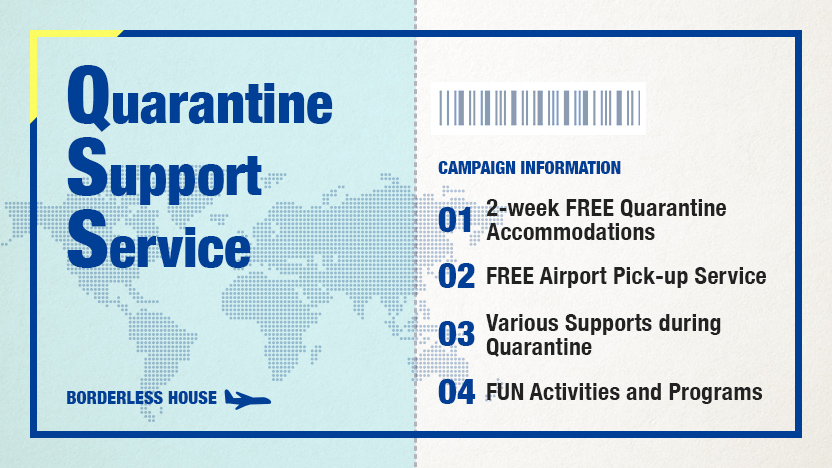
【Reasonable Quarantine】 Staying in Korea through quarantine with reasonable price and easy way!

Hello, this is Borderless House Seoul.

Currently (July 8th, 2020) in Korea, it is required to be quarantined for 2 weeks for all people landed from other countries as a countermeasure against COVID-19. People from other countries have to be quarantined at their home or the place which government prepared for 2 weeks and it is not allowed to use a common facility like Goshiwon or students ‘dormitory (with certain exceptions).

Borderless House is a share house and tenants share living room and bathroom so we also ask our new tenants to move in after 2-weeks quarantine.

Arranging the quarantine place and every meal for 2 weeks cost a lot and it is a big burden.

So, we decided to launch a new special service which you can reserve an accommodation for quarantine and our share house at the same time!

Detail of the New Service

You can reserve the place for quarantine together when you reserved a room in Borderless House. We try to find a room which has full options. We help you from the arrangement of the one room for quarantine and moving in to our share house in total!

Supports for Quarantine

We support some food like instant noddles and also some water before you do quarantine. Commission fee includes this support and help all before you do quarantine.

The support includes …

-Quarantine room rent and utility fee
-Preparing basic food in the room in advance
-Explanation how to move to quarantine room
-Support of the shopping during the quarantine

* What is “Preparing basic food in the room in advance”?
Before your arrival, our staff can prepare some basic food like some bottle of water and instant noodles in the room

* What is “Support of the move in to the quarantine room “?
When you move in to a room for quarantine , our staffs can not meet you so we will provide a information book which helps you to move in by yourself .

* What is “Support of the shopping during the quarantine”?
Korean government had been providing food or daily needs for the people who are quarantined for free but now they do not . Therefore, people need to bring food by themselves or purchase online or ask someone to go buy and deliver. We provide the manual how to use “emart Mall”(Korean internet shopping site) and support your purchase by online. You can make payment directly on the web page by using your credit card .

Some types of Rooms

Amount of room for 2 weeks depends on the type of rooms and location .
Our partner company will tell us what they have based on your arrival date .
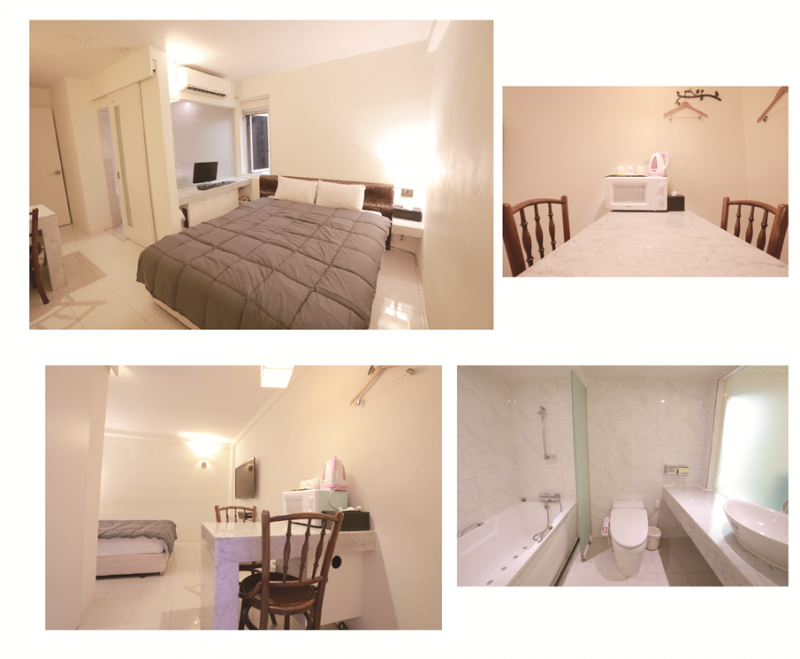
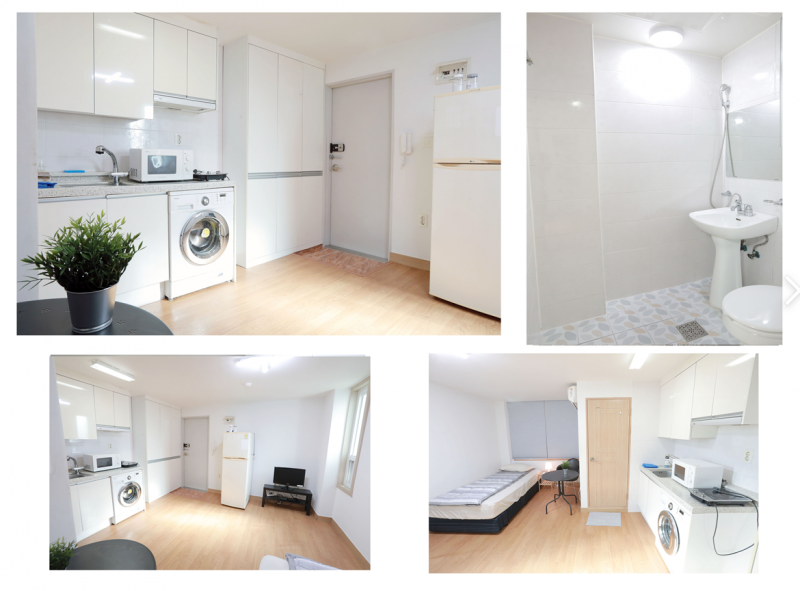
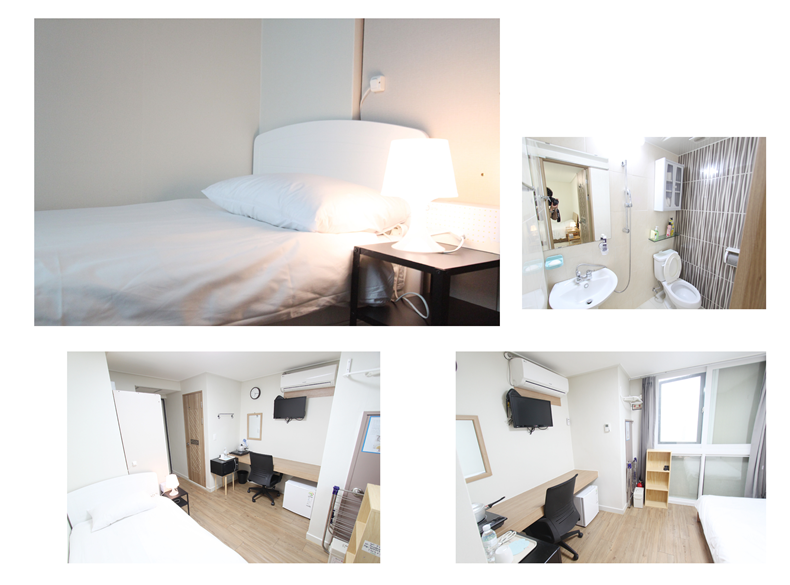
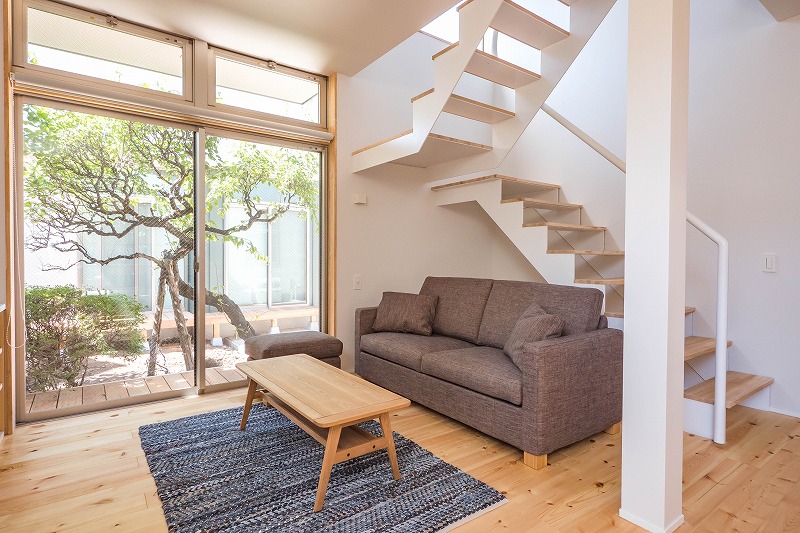
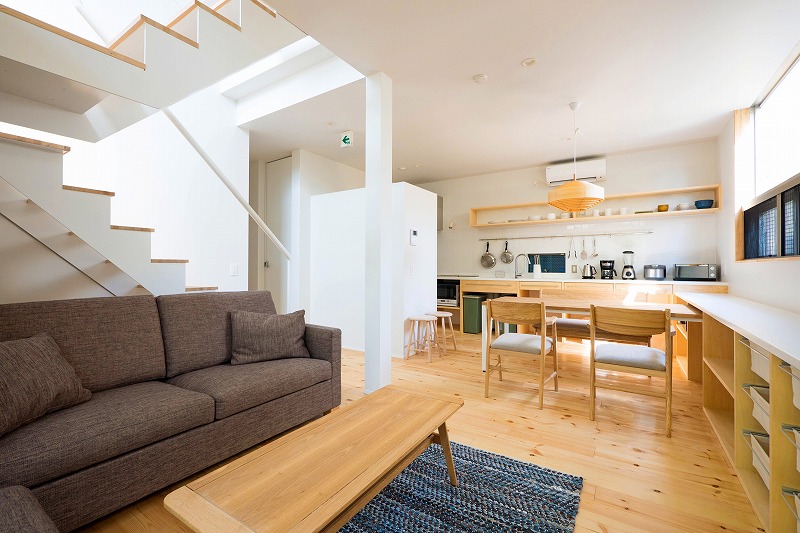
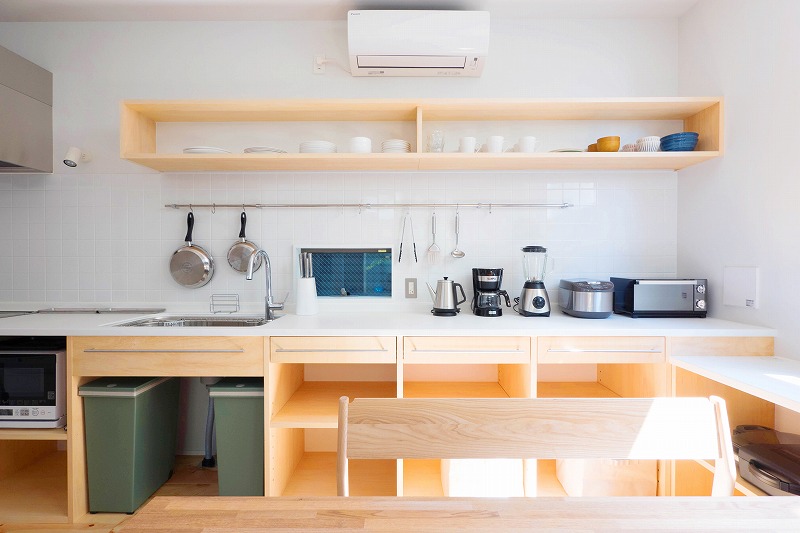
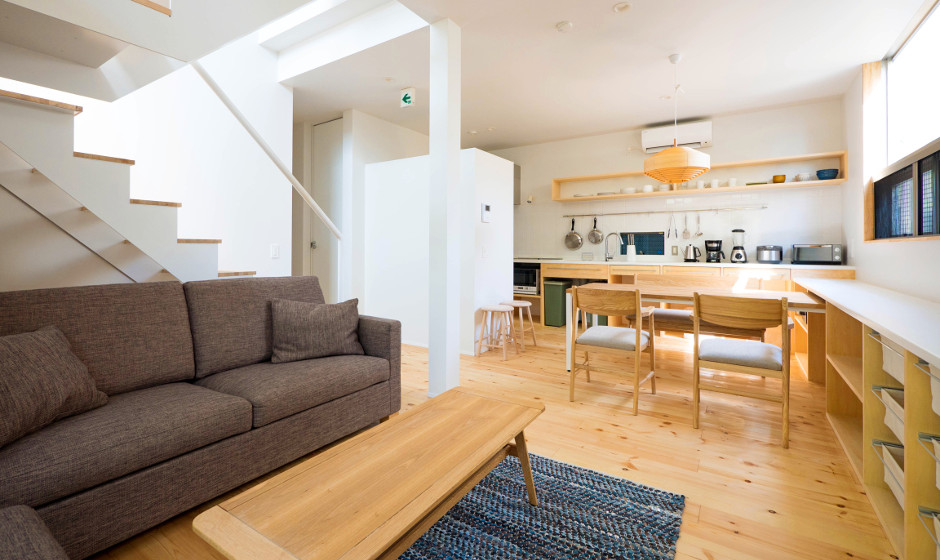
<Basic facilities>
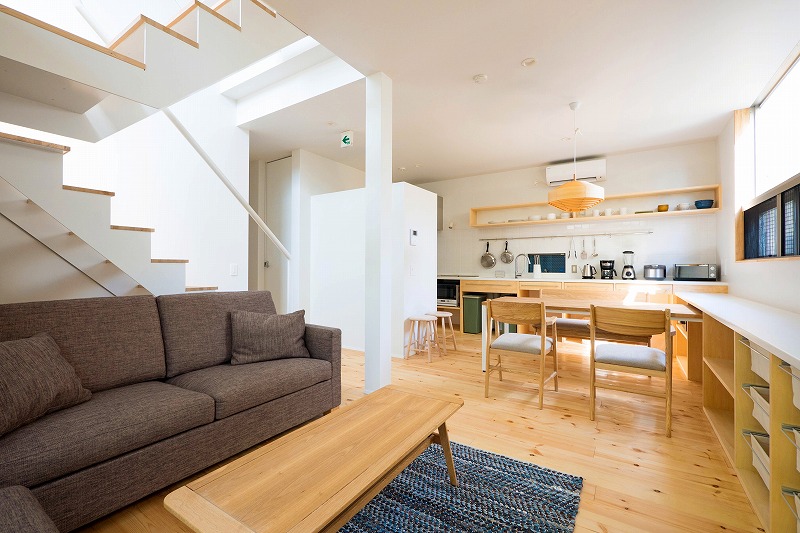
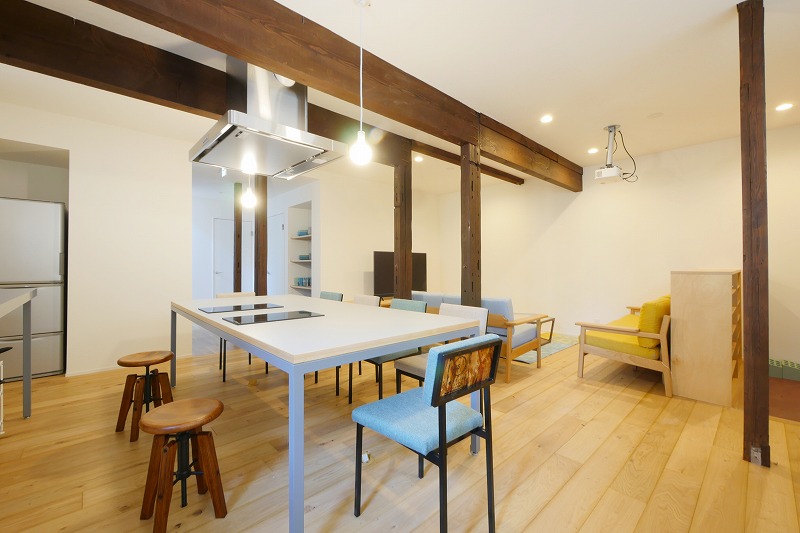
Microwave, IH stove, Fridge, Pot, Plates, Cups, Chopsticks, Detergent, TV, Double bed, Toilet, Towel * 4, Wi-Fi, AC One-time laundry service
※ some rooms does not have a kitchen washing space or washing machine but the room itself has large space and some rooms have the washing service .

* These photos are for images, so the actual furniture arrangement and the floor plan might be changed.

* These are located in Sinchon or Ehwa Women ‘s University area (Seoul metro Line.2)

How to Reserve

1. Reserve a room in Borderless House
2. Confirm the details with a staff through Skype talk
3. Transfer deposit, management fee and quarantine fee by wire transfer
4.  If the quarantine room is not available, we suggest different type of the room
5 . Receive the self check in manual for the quarantine room
6. Check in to the quarantine room
7. After 2 weeks, meet a staff and move in to Borderless House

* If you cancel after No.4, cancellation fee 200,000 won will be charged.

Check in & out

Borderless House staff can not see you face to face when you arrive since all people from other countries have to be quarantined. We will send you the instructions about check in and out in advance, so please read it and check in by yourself.

If you have any trouble when you check in , please contact to us through Kakao Talk.
Kakaotalk ID : borderlesshouse

Time of the Check in & out

Please move in after 2 pm and move out after 12 pm.

Cancellation

* When you cancel your reservation for the quarantine room
The cancellation fee 200,000 won will be charged. We will deduct 200,000 won from the quarantine fee you paid and refund the rest .

* When you cancel your reservation for the room in Borderless House
If you cancel the reservation from the day you receive the confirmation mail to 8 days prior to your move-in day, cancellation fee 300,000 won will be charged and we will refund the rest of money you paid. If you cancel the reservation from 7 days to your planned move-in date, deposit, management fee, first month ‘s rent and utilities will not be refunded .

(Please burden bank transfer fee at your expense)

FAQ about the room

How much do I need to pay for this service?

For the quarantine and commission fee,
-Quarantine fee is different and it depends on a type of rooms . When you share the date to arrive in Korea , we start finding a room for your quarantine and inform of the amount of a room as soon as we find.

-Commission fee for Borderless tenants is 150,000 KRW. This includes the support of some water and instant noodles before you arrive for a few days.

-Commission fee for those who just need a room for their quarantine is 300,000 KRW. This includes the support of some water and instant noodles before you arrive for a few days.

For the rest of days,
We share how to order the groceries or the others by online and they are usually delivered in front of the door within 3 days.

-About the way to transfer,
We always suggest ‘Transferwise‘ as it is the fastest and easiest system.
Please check the link below.

Do you prepare a contract?

We prepare the contract and send it to you by PDF file. We will leave the real one in the room.

How should I answer when I ‘m asked about the quarantine room when I enter Korea?

We will give you a contact information of Borderless House Staff or the owner of the quarantine house. When you are asked about the quarantine place, please call to us.

FAQ about quarantine

Can not I really go out even one step from the room while quarantine?

It is strictly prohibited to go out except for having the test at the health center .
There were some cases that some people continuously went out from the quarantine room and got restrained and deported (Not only by the information from GPS application but CCTV or credit card record also can tell where you are.) Please do not go out during the quarantine period for sure .

How should I go to the quarantine room?

There are buses and taxis only for people from other countries at Inchon Airport so please use them. We will tell you the details.

Is it possible to use delivery service?

You can use the delivery service at the quarantine place but please receive stuff without meeting with the delivery person face to face.

FAQ about the shopping support

How much budget would be enough?

It depends on the person but most of people prepare 200,000 won for it. If your original budget was not enough, you can add and pay later.

If you have any question, please feel free to contact us! → HERE
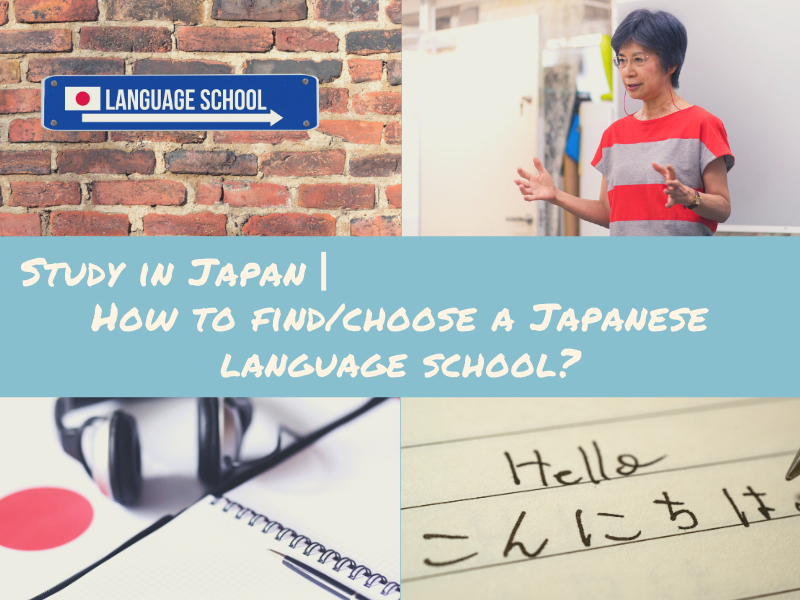
Study in Japan ▏How to choose a Japanese language school?

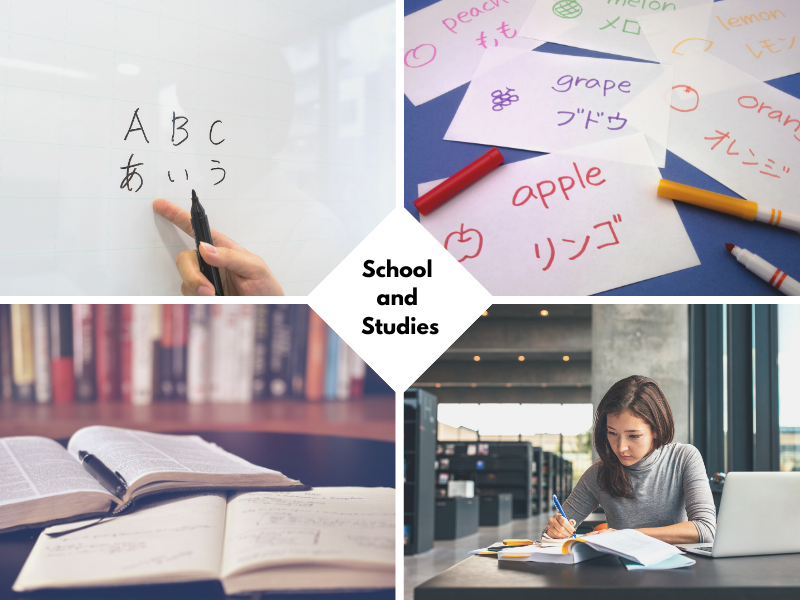
To learn a language on your own, and to learn it by having to use it every single day in the lands it has been forged in, is as different as night and day. Or more fitting with our beloved country in the east, like kanji and katakana.

Going to Japan and learning a wholly unique language like Japanese, can have many deep-rooted goals and inspirations for the future. Whether it is about joining a global super conglomerate with branching offices scattered all across the world, wanting to dive deeper into the isolated but rich history of samurai, shoguns, Daimyos, and Emperors, wishing to learn the engineering secrets behind the state of the art robotics, or earthquake-proof skyscrapers, dreaming to visit the Inspiration behind your childhood animes.

There is no “one right” answer to learn Japanese. Japan has so much to offer no matter what your reasons for visiting are. Be it Pop culture, Technology, Music, Cinema, History, Nature, or Linguistics. Many of you might initially come for one reason, but decide to stay for an entirely new one! And to truly know a place and its people, you need to be able to communicate with them, and English won’t cut it.

That is why joining a Japanese Language school is such a fantastic option. There, you will learn Japanese and only Japanese, from day one. And though it might sound scary at first, they do it in an incredible way where you feel your satisfying progression from the first minute you enter the school.
And I will try to help you think about what you might want to consider and look into before you start looking into the Study abroad agencies in your country, to make the process easier.

Some of the biggest factors in my decision-making were the following: location, what was my purpose for studying? culture, socializing, or is it academic? learning style/speed and how big is the size of the classes?

Let’s try to go through these things and get some ideas of what you would prefer.

Where Do You Want to Study?

Location is a very important part of the selection process. If you are going to dedicate a lot of time and resources to go somewhere, making sure it’s somewhere you will enjoy, is always a great investment.

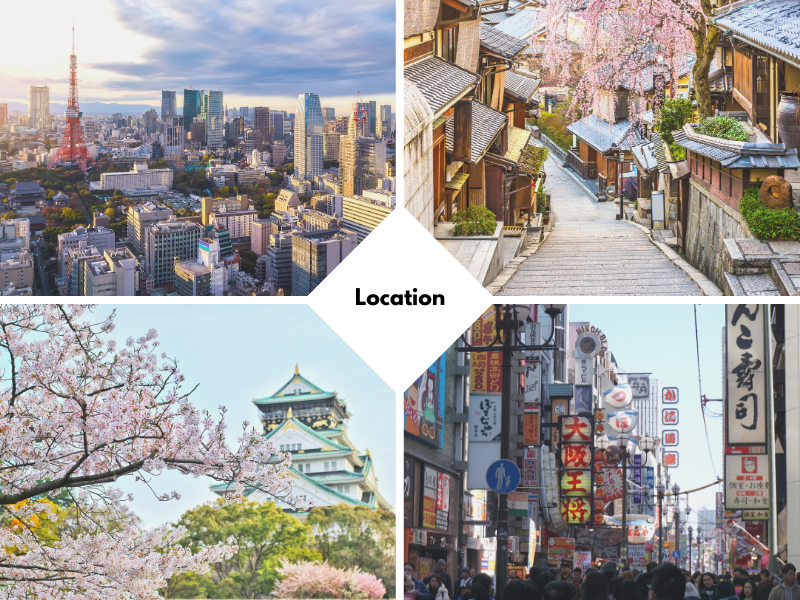
With Japan being a country of roughly 378 square kilometers, you can find anything from the snowy plains of Hokkaido, sprawling mountain ranges of Nagano, Buzzing city-life of Tokyo and Osaka, open fields of Sendai, to the almost tropical climate of Okinawa and Kyushu.

While many choose the language school based on the city they plan to eventually go to university or work in, many also choose it based on aspects like climate, population, attractions, pastime activities, the accessibility to travel to other locations from that city, or even that the environment is closer to what you are used to from back at home.

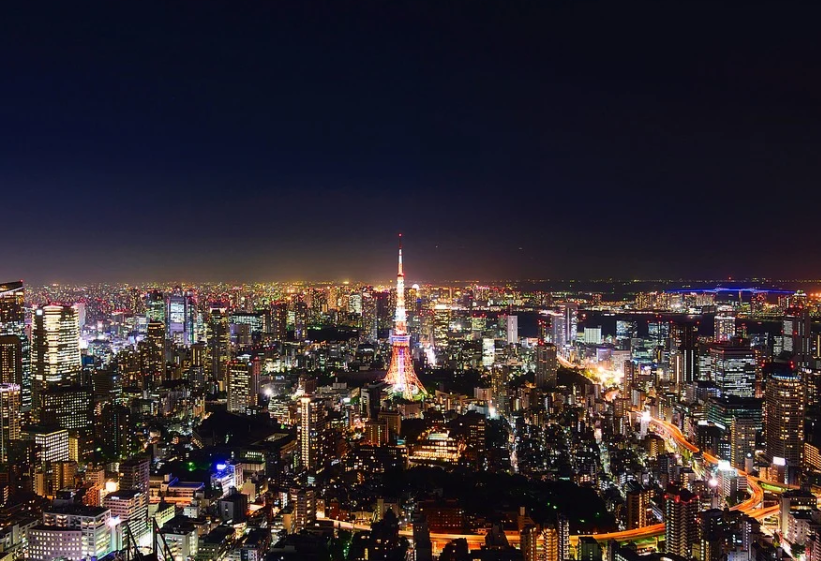
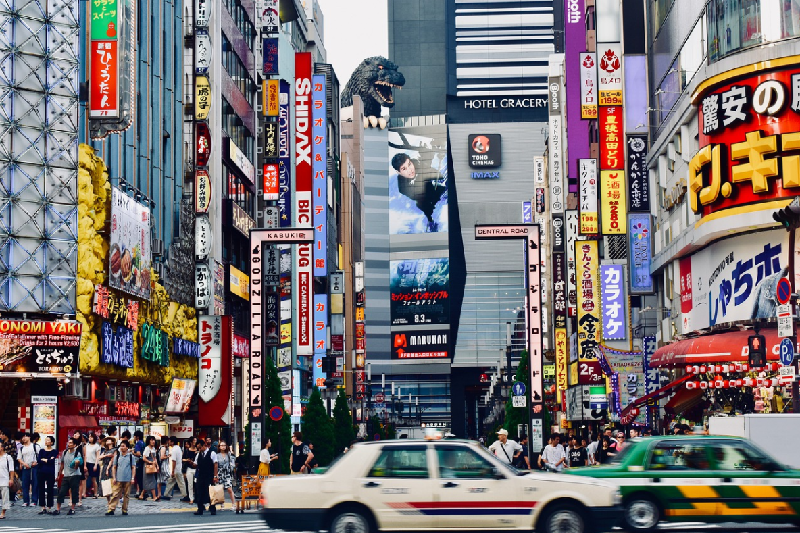
We all know the colorful and bright views of Shibuya, Shinjuku, and Akihabara. Central Tokyo is a perfect location for those who love an endless amount of activities, technology, life, and opportunities to find connections and work. But what outside of Tokyo have Japan to offer?

While all the big cities will give you a similar big city lifestyle, filled with bars, restaurants, museums, shopping malls, and arcades, every city in Japan has its own unique style and tradition. My experience in Fukuoka, for example, was completely different from my friend’s in Osaka. So why not read up about what the different famous cities in Japan can offer?!

Kyoto, the old capital filled to the brim with history, Fukuoka, home of the Yamakasa festival, Hakata ramen, and for all fans of K-pop, a short boat trip away from South Korea, Sapporo, a more rural city that turns into a snowy wonderland during the winter. There is a city for everyone!

The point is since many of these cities often have many different options of Japanese language schools, you might as well go somewhere you feel that your soul is more drawn towards!

How Do You Want to Study?

Well then, what about the school and the studies themselves?
The most common terms used for the two different teaching styles are Asian style and Western-style. Because Many foreign students living in Japan are from China and Korea, their own language is so similar to Japanese, they can skip much of the basics and go at a faster pace and much more focus on Kanji and difficult vocabulary.

While for Western Languages, so far distant from Asian, are too different to give us an advantage. So westerners often have to start from the ground level and work up at a more gradual speed. And many go to Japan and learn without the direct intent to reach academic levels. Therefore they study at a much more casual rate. That’s where the terms Asian Style, and Western Style originates.
Western Styled schools also tend to have smaller classes. They roughly aim for a maximum of 8-10 students per class. This makes it easier for the students to interact with the teacher and each other. Because of this, there is very little confusion, since you can always make your question heard, either to the teacher or ask for tips from the ones sitting next to you.

It is important to know what your end goal with your studies will be. Is your goal to push hard and enter the university or business level Japanese and know all the Kanji’s needed to fully understand any task or information given to you? Or do you wish for a slower speed, but with more focus on the daily life of Japanese and culture? Focus more on making friends than business opportunities?

So it’s up to you if you feel like you prefer a slower, but more personal and social study experience, or if you want to focus on reaching your goal as efficiently and fast as possible.

Where Do You Want to Live?

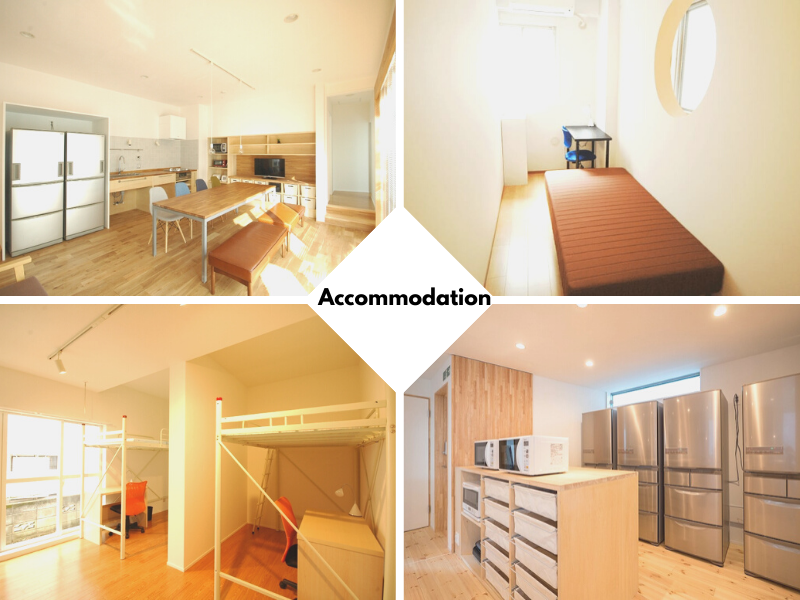
Another topic worth taking some time to think about would be accommodations. Of course, the Agency or school you have contact with will help you organize everything. But ask yourself what type of accommodation you want, will help you immensely.

And since many travels to Japan to learn the culture and people, living by yourself in an apartment will start to feel a bit isolated. That is why options like International Share Houses are great alternatives. You will both get to live and interact with Japanese people every single day, cooking traditional food together, being able to practice Japanese daily, and making friends for life. In addition to living with other Westerners who you can talk to regarding your studies, lifestyles, and problems your Japanese roommates might not be able to relate to.

So take some extra time to think about where you want this magical time to take place. And when you actually have started your studies, being forced to study at a pace much too slow for you to reach your goal, or being so fast you get too stressed to enjoy the world around you, can really ruin the magical journey you have chosen to partake in.

Any serious Japanese language organization cares deeply about all of their students and will give you any and all help they can in regards to accommodations, rent, phones, and sim cards, transportation, helping you create a Japanese bank account for longer stays, and anything else you might need help with.

What’s keeping You From Planning?

While, of course, there are many, many more things to consider, research, and ask in regards to choosing a school, these topics are what I and most of my fellow students felt were the main deciding factors we had in common. Because when you finally do get to live and study in Japan, it will be a time you will never forget, so it is important to be in an environment you can enjoy both in and outside of class to the maximum.

Whether it’s the Study abroad agency or the school you already have selected, it’s never wrong to ask any question that might arise. They are there for you, so don’t be shy about wanting to make your dream as perfect as you can.

Entering Japan During COVID-19▏Mandatory Preparation before Departure (Mar 29th, 2021)

COVID-19 has had a significant impact on travel. This blog is to provide updated and relevant information for foreign nationals who are going to enter Japan from aboard, including all the mandatory preparations before departure.

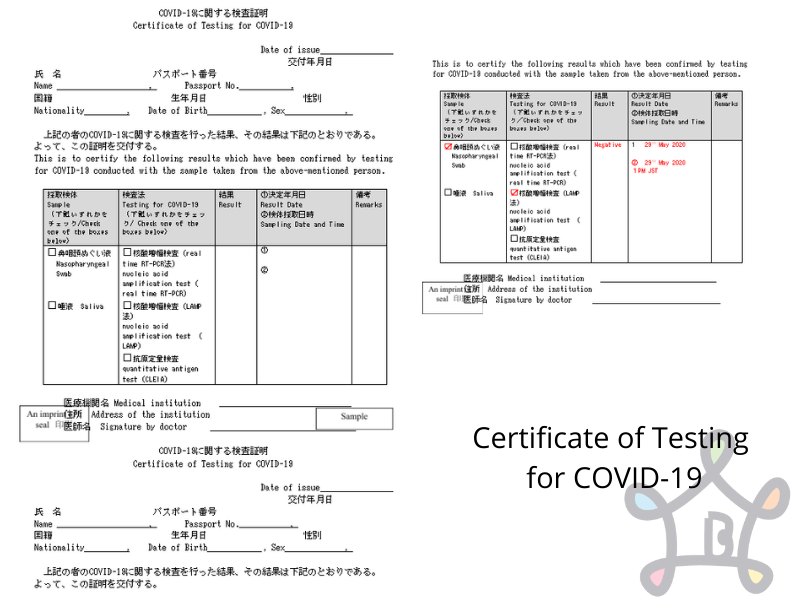
(1) Certificate of negative PCR test result within 72 hours before departure

The PCR test must be performed at a hospital in your country, and the test must be taken within 72 hours before the flight takes off (holidays will be counted as usual).

Required information in the result report (must be in English)
① Name, passport number, nationality, date of birth, gender
② Testing method and test results
③ Time of the test (to confirm if it is within 72 hours before the scheduled takeoff time)
and date and time of inspection results, date and time of delivery of inspection certificate
④ Name of medical institution and doctor’s name, address of the medical institution, the seal of the medical institution, and doctor’s signature
⑤ All the information must be written in English.

You can check the details of the Certificate of Testing for COVID-19 for the entry or re-entry of foreign nationals and download the specified format form for PCR test from here: http://www.moj.go.jp/isa/content/001337717.pdf

This is the official format from the Japanese government, so you can take them directly to your doctor to fill out.

(2)Submission of a Written pledge

The written pledge has to be submitted by people with a new visa. It usually requires a company, a specific organization, or a school to guarantee the submission of information and an estimated itinerary to the government and to comply with the company’s and school’s regulations.

The main contents of the Written pledge

1.Refrain from taking public transportation (trams, cab taxis, buses, domestic lines, shinkansen, long-distance ferries, etc.)

2. 14 days for self-quarantine, and go out as little as possible for non-essential purposes.

After signing the pledge, foreigners who violate the regulations will be subject to mandatory restrictions on entry and visa cancellation.

Feel free to download the Written pledge from here: https://reurl.cc/KxD3On

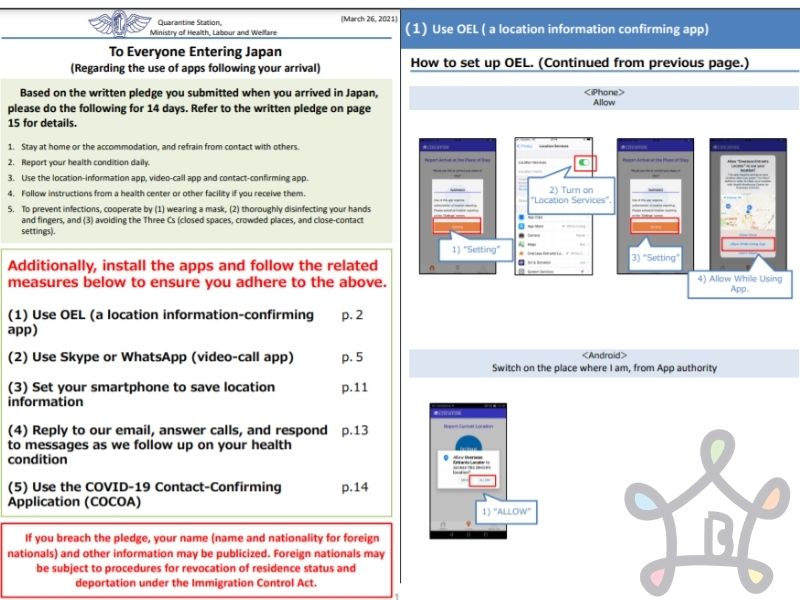
(3) Download the designated app beforehand

It will take at least 3 hours to enter Japan if you did not download the App beforehand.
If you cannot set it up or download it with a smartphone, you need to rent one at the airport. After renting one, you must also download the designated app and set it up. before you leave the airport.

From March 18, all airport arrivals will be subject to a mandatory inspection of the app.

You will receive a paper after entering the country, so be sure to complete all the steps early. Make sure the email address is the same as the one on the Written pledge, and try to see if you can receive it beforehand. (The contents may vary, but they are generally the same)

You can check here for the Apps settings from here: https://www.mhlw.go.jp/content/000755137.pdf

(4)Respond to the questionnaire

Open this link to check the details before entering the country and follow the steps to fill out the form. https://arqs-qa.followup.mhlw.go.jp/#/

Click “Japanese” in the Language section to switch to other languages.

There will be a QR code after filling out the form, so please take a screenshot (recommended) or print and save it beforehand.

It is recommended that you fill out the form before the flight!

For the next article, we will be giving you detailed immigration procedures at the airport, please stay tuned. We hope to see everyone arrive in Japan safe and sound!

How is a share house different from a guest house?

A guest house is similar to a hotel room. Guests check-in and stay for some days then go back to where they were. The guesthouses also do not have all amenities. They will provide you with basic facilities like a bathroom, kitchen, and toilet.

In a share house, a rent agreement is signed between the tenant and the property holder or anyone who is renting the property. Sharehouse comes with amenities that you require to live comfortably. In many cases, there will be a TV, washing machine, toilets, bathroom, and more. In share houses, you also have the freedom to exchange rooms upon request.

A sharehouse provides you with the comfort and warmth of a home. The people you live with are there because they wanted to connect with more people, like you. So you all live like a big group of happy friends.

What sharing space you will be sharing in a share house?

In the share house, you will be sharing almost everything with other tenants except your own room. You will share the living area, toilet, bathroom, kitchen, and other amenities provided to the share house.

So living in a share house will require some teamwork. You will need to divide chores so that one person doesn’t end up doing it all. You need to take care of this place as your home because it is your home for the time till you are there. There will be no one to tell you what to do what not to do. It is up to you to live in harmony and not create problems for other tenants.

*Picture is BORDERLESS HOUSE OMORI2

Why is it better than renting any other place?

Let’s say if you are in Japan for more than a month and you want to rent a place what will you do? You will look for an agency to get you a rental apartment. First, you will have to pay the agency a fee then you will be asked for some advance fee for security then there will be a rental fee and maintenance fee, and service fee. Whereas if you chose a share house you will not have to give so many fees. There will be only a one-time fee before you start living in the house and then a monthly fee depending upon how long you will be staying.

*Picture is BORDERLESS HOUSE OMORI2

Tips to live in a share house

Socialize: You might not want to jump into the conversation right away after meeting your new share housemates. But do not hesitate or feel awkward everyone there is new to each other and they all are trying to get to know each other better.

Work together and communicate: sometimes you might have conflicts with your housemates due to different living habits etc but try to remember it is hard for everyone. Do not feel irritated or annoyed try to calm down and talk on easy terms. Try to understand what you both are saying and communicate in a rational way with each other. The best way to avoid conflicts is to always keep yourself open up to talk.

Benefits of Staying at a Share House

● The best advantage of living in a share house is that you get to live in a home-like place on an affordable budget. The share house fee is straightforward and there are no hidden fees.

● Like we said it will be a home-like experience so you will get almost every needful appliance at a share house. There will be no need for you to buy anything to start living at a share house. All of our share houses are fully furnished.

● Living in a shared house gives you a chance to expand your social circle and experience new things. In a diverse environment, you will meet locals and people from all over the world. You can learn languages and culture and immerse yourself in a new culture faster. You will gain deep experiences of living in Japan and understand the values, perspectives, and lifestyle of Japan better.

*Picture is KYOTO-KAMIGAMO HOUSE

How To Start A New Life In Japan?

Now that 2020 is over and done with, it is time for new beginnings. To be honest, most of us are relieved and feeling like some heavy burden has been lifted off our shoulders with the end of 2020. People are associating a feeling of solace with the end of 2020 because this year has been full of anxiety and unsettling surprises for all of us, to say the least.

So, even if we don’t know if 2021 will be any better, we are certainly hopeful. Many people who were feeling lost in the last year are also looking for new ways to re-start life in 2021 with zest. And what better to begin life anew than by relocating to a new place?!

Moving to Japan

To say that life has been hard during the last few months would be an understatement. Therefore, in 2021 many people are planning for new beginnings by moving into new spaces and exploring new options. Now, for such people moving to Japan is an exciting prospect. In between its love for new technology and modern cities and its respect for ancient culture, Japan is an alluring destination. The cuisine here is pleasantly delicious, and the beautiful quiet destinations that are tucked away in the lap of Mother Nature in Japan are purely enticing for anyone who wishes for new beginnings.

But with that said, it needs to be mentioned that relocating to Japan is not easy. With its popularity and zeal for life, not everyone gets a chance to build a life in Japan. However, armed with the right knowledge and the courage to make correct decisions, one can increase his chances of finding a new life in Japan. Thus, to aid those who are serious about beginning anew in Japan, we have created a guide through which you can learn everything about starting a new life here. Have a read?!

Beginning a new life in Japan

Here is all you need to know about making a new life in Japan.

Legal requirements

If you are planning on relocating to any country, the first thing that you would need to know is the legal requirements of procuring a visa. Now, in the case of Japan, fortunately, these legal requirements are quite simple. Japan is one of those few countries that follow an almost identical visa process for everyone regardless of the matter whether you are an American, British, or Australian. So, all you have got to do is to apply for a visa at the closest Japanese Embassy or Consulate General in your country along with these documents

- Your passport
– Your Photograph
– Your visa form
– A certificate of Eligibility, original and a photocopy

Now, procuring the first three items on this list must be simple. However, if you are hearing this term, the Certificate of Eligibility for the first time, then you are not the one to be blamed. In simple words we can define this document as a certified letter that you will need to get from a Japanese person, typically your employer, suggesting that he guarantees to support you financially for the time you will be staying in Japan. Now, in case, you are a student who is moving to Japan to complete your studies, the letter will have to come from someone at the School or University that you will be attending. Once you submit all these documents to the Embassy, your legal obligations should be met.

Cost of living

If you are considering moving to Japan for beginning a new journey, then there are certain factors about living here that you must consider. One such factor is the cost of living in Japan. Now, the cost of living in Japan is radically high. You can thank the location of this country for this scenario. Japan is an island nation that is surrounded by water on all sides. As a result, most of the stuff here is not grown but imported from other nations. This is why the cost of food and drinks in Japan is higher than that of other countries. 

Now, if you are moving to Japan and you plan on eating out, then you must know that the dinner meal here consisting of food items like a noodle, curry, and hamburgers, costs about 500 to 1000 yens. However, if you chose to dine-out at an average restaurant, then you should expect your expenses to increase to somewhere between 1000 and 3000 yens. So, only if you believe you can afford these expenses should you move to this nation. 

Finding a Job

To procure your visa and to sustain yourself in Japan, you will need to find a job. Now, getting a job in Japan is not very easy since most companies here like to offer employment opportunities to the native people in Japan. The reason is simple, the natives are fluent in Japanese, and they don’t need training in Japanese customs and culture. However, that doesn’t mean that all the doors are closed in Japan for foreigners. 

So, if you are a foreigner who wishes to live in Japan and you have command over your English, then you can begin your life here by scoring the job of an English teacher. The demand for English teachers is high in Japan at all times, so if you have teaching skills, you can apply for this job. Another option for you can be to search for work in Japan in the IT field. This sector is always hiring good prospects from abroad to work with, given that these people have considerable knowledge about their field. Borderless House also provides Housing and Career Support Program which helps you to find jobs in Japan.

Find a home

Of course, when you relocate to a new apace, one thing that makes it to the top of your priority list is finding a suitable home for yourself. Now, in Japan, if you are living in one of the big cities like Tokyo or Osaka, then affording a house in such areas is a challenging prospect, to say the least. The rates of properties in these posh localities are so high that even renting a flat here is a big deal. However, we do have one solution for you, the BORDERLESS HOUSE.

Yes, BORDERLESS HOUSE is a place that offers tenants, both foreigners and natives alike, space to stay at minimal rent. The pros of living in such a place far outweigh the cons. In here you get to afford a shelter at minimal rent, you get an opportunity to stay and learn from natives the customs and language of Japan, you get an easy-go at making friends, and you incur fewer expenses for additional facilities like the internet, water, gas, etc. since you are sharing costs with so many people. Now, BORDERLESS HOUSE is starting a new campaign to offer shelter at discounted rates to individuals who are beginning their new lives in Japan from April. So, if you are relocating, then this is something you must check-out.

※Picture is BORDERLESS HOUSE OMORI2

Fix-up your insurance

The healthcare costs in Japan are too much to bear for an ordinary person. Thankfully, the Japanese government has taken this into account and designed a healthcare system that is largely geared towards its people. So, while it is the responsibility of people to carry their insurance, it falls upon the government to see that everyone gets access to the insurance services through a universal healthcare insurance system. The prices of these insurance services are determined by the Japanese government.

So, in some cases, like that of parental care or screening and exams, if you need healthcare assistance, then 70% of the costs of your treatment will be borne by the government while you will be responsible for the rest of 30% of the amount. Thus, if you are planning on starting a new life in Japan, then it is advisable to get healthcare insurance. Doing so will save you from bankruptcy if someday you happen to need healthcare services.

Learn the language

If you are starting a new life, then you would want the people around you to treat you as an ordinary person, like somebody who is one of them. However, this becomes difficult when you are a foreigner who is not privy to the customs and traditions of the land and who doesn’t understand their language. Thus, to truly feel like one of them, you will need to learn about their customs and language. 

For doing this, living in BORDERLESS HOUSE provides a great opportunity. It is so because when you live in BORDERLESS HOUSE with other natives, you get a better chance of observing the Japanese people closely. Staying around them 24*7 makes it easier for you to soak in their language and traditions. 

Conclusion

Beginning your life anew is not easy, and if you are considering moving to Japan to start new, then all this can feel a little overwhelming. However, if you will follow our suggestions and advice, you should be fine. So, all the best!

Moving to Japan- Here is Everything You Need to Know Before Finalizing Your Move

Today, the world stands as an interconnected place where people living at different geographical locations stand no more divided by the physical borders. It is true that residents living in different countries still foster different beliefs and unlike experiences, but the internet and mobiles have done a lot to bring people close to each other and to eradicate the differences. The nations have realized the importance of working together and are thus, contributing to make this world an interlinked global space.  

New opportunities for trading and business are also opening up as a result. Many countries that require manpower are enticing ex-pats by providing good packages and windows to prosper. Following this, large scale migrations have taken place in the past few years. Japan is one country that is benefitting from these changing norms. 

Japan is a popular destination among people who desire to move to a new place. The reason behind this has mostly to do with the country’s fast-paced growth. Now, Japan is a country that is rapidly climbing the growth ladder. People here are working innovatively and diligently to make the world a bustling, growing, and pleasant place. The delicious food that is native to this country adds more to its appeal. The traditions and customs that are respected and practiced here to this day also work in its favor. 

So, if you are also one of those people who are quite fascinated by this country and would like to know some more about it before deciding whether you want to move here or not, then you will find this article useful. So, are you ready? Well then, come, let’s start! 

What do you need to know about Japan? 

Every country has its own norm and culture that you are expected to be familiar with it in order to glide into the lifestyle of that region easily. So, if you are seriously considering migrating to Japan, then here is a list of things that will do you good to know well in advance.  

The cost of living in Japan 

Before moving to any new place, one of the few things that people must consider is the cost of living. Now, the cost of living in a place can broadly be described as the amount that you will be spending in meeting the basic necessities upon living there. 

The cost of living in Japan is very high. One can understand this by the mere fact that Japan is considered one of the costliest places to live in the whole world. On an average basis, the monthly cost of living here is about 2500 to 2700 USD. The reason for this is the fact that Japan is an island country and is surrounded by water on all sides. As a result, a lot of stuff is imported in Japan, which makes a living here so expensive. 

Transportation cost

If you are about to move to Japan, it makes sense to know about the transportation rules and regulations followed here. In Japan, despite the high cost of living, transportation fares are not unreasonable. Most of the people here prefer using the metro or buses as means of commutation. The metro charges about 1.50 USD, while traveling through the bullet train makes you 185 USD lighter. 

However, if you are not up for using the efficient public transport in Japan, then you can obviously use your own vehicle to commute between places. Japan drives on the left side of the road, and the signage here can be found in English or Romaji. International driving permits are allowed here, and the driver could use it in Japan for up to one year. 

English or Japanese 

Upon visiting the country and interacting with the local clan, you will see that the Japanese people are very warm and welcoming. The natives here are really polite, and they are very accepting of others. However, one issue that you might face here is related to language. If you are migrating to Japan and do not have proper command over your Japanese, you can find it challenging to navigate your way here. You can find English signage and announcements, but it is not the general norm in Japan except for at major tourist destinations. Most natives here do not speak English, and some are simply shy to interact in a foreign language. However, in big cities like Tokyo, you can always spot University students who will be happy to help you. 

Safety concerns 

No one wants to live in a dangerous place where their life or the life of their family members is in peril. Hence, it is a wise decision to be sure about the safety of a place before migrating. Now in terms of safety concerns, Japan is one of the best places to build a life. The crime rate here is very low, albeit, a large population. However, despite its low crime rate, one must bear in mind that Japan cannot be precisely termed as safe because of the natural calamities that this country witnesses. Every few years, the nation faces one disaster or other, but progressive work is being done in this department too. 

Renting costs 

In Japan, owning a property can make you rich. The renting expenses here are unusually high, especially when we are talking about big cities like Tokyo. However, there is one visible solution that you can use to solve your renting problems, that is sharehouses. Yes, sharehouses or borderless houses are spaces where people who belong from different countries share accommodation. Here you can rent a place to live at minimal costs. Generally, you are required to deposit 30,000 yen to make a reservation at the borderless house. However, at present, there is this autumn campaign under which no key money needs to be deposited. Another advantage of living here is that in Borderless House share houses, you find a friendly ambiance. Since both natives and foreigners live here under the same roof, therefore, forming bonds becomes relatively easy in sharehouses. 

*Picture is from BORDERLESS HOUSE OMORI2

Education costs 

Education is the foundation of one’s character. If children have access to education and they are taught well in schools, then the chances are that they will develop into good humans. However, if education is not accessible because of some restrictions or high costs, then it can harm the growth of a country. The Japanese government and people understand this simple fact, and thus, they have developed a committed and robust education system. Both the native and foreign children here are provided free education leaving the parents to only worry about the cost of uniforms and other such small expenses. However, if you are not willing to send your children to public schools, your costs can range anywhere between 2,000,000 JPY to 2.3 million JPY annually. 

Social etiquettes 

Japan takes its social etiquettes very seriously; therefore, it will do you good to do research before you go out and about. Living in a borderless house can aid you in learning Japanese social etiquette and much more in a short time. However, for the time being, here are some basic things that you would need to know before settling in Japan. 

For one thing, before visiting Japan, you may want to know about the greeting etiquettes. In Japan, the traditional manner of greeting requires one to bow down before another person. This would mean bending at your waist level while keeping your back straight. It is essential to note down here that the lower status person bows down first and more deeply compared to the elder. 

Another thing about the Japanese etiquettes is that it is generally considered disrespectful to wear outside shoes inside homes or temples in Japan. The general custom is to change your shoes in favor of the inside slippers provided by the hosts. In many hotels, a separate set of slippers is offered to go to the washroom, which you must remember to not wear outside of the toilets. 

In Japan, people traditionally use chopsticks to eat their food. Upon eating outside, you might come across many places that do not provide any alternative. Thus, it might do you some good to learn eating with chopsticks, and honestly, it’s not that hard. However, when you are using chopsticks, you might want to keep in mind a couple of things. You should never rub your chopsticks against each other to rid them of the residue. Such behavior is considered rude. Also, when you are done eating, you should never leave your sticks sticking into the bowls as that signifies a funeral. 

Finding work

Finding a job in Japan is not exactly a difficult task, at least not as hard as it used to be a couple of decades ago. Presently, if you own a University degree and you have a refined skillset, then finding work in big cities like Tokyo is not impossible. One thing that can probably help you get hired in Tokyo as a foreigner is your command of Japanese. If you are proficient in the language and can speak it well, it should probably work to your advantage. 

Now BORDERLESS HOUSE provides Housing and Career program that helps foreigners to land a job in Japan successfully while living in an international share house with locals. Join the 

So, these are some crucial facts about Japan that you must be aware of if you are considering moving here. 

 Have a good day! 


What to do in Japan in December?

Covid-19 has sure been a bewildering and eye-opening event for the whole world. The present year, as a result of it, has been nothing short of a surprise. People have been confined to their homes and industries have been forced to shut down in order to prevent the spread of the virus. Some of the strongest economies were bought to their knees by the deadly Covid-19 virus. But gratefully, things are improving now, and the world is opening up slowly. Japan is also steadily recovering and the travel restrictions are uplifting gradually.

As of now, the government in Japan has allowed international travel for those people who own a business or residence visa. There have been talks in the media about opening the borders of Japan for tourists before the spring season sets in. But, till then, for those of you who are planning on visiting Japan on business trips this year, here are some tips on what you can do while you are in Japan. Hope you have a great time!

What you shouldn’t miss if you are in Japan in December?

Winters in Japan are one of the best times to visit this nation. During the end of the year the widespread winter illuminations, the eagerness to welcome a new year, the first snowfall, and the start of the ski season set people in a great mood. The crisp air of the winters and the white-mountain tops popping against the azure backgrounds make the scenery of Japan even more picturesque. So, if you are someone who gets an opportunity to visit Japan during this season, then here is what you can do to make the most of your trip!

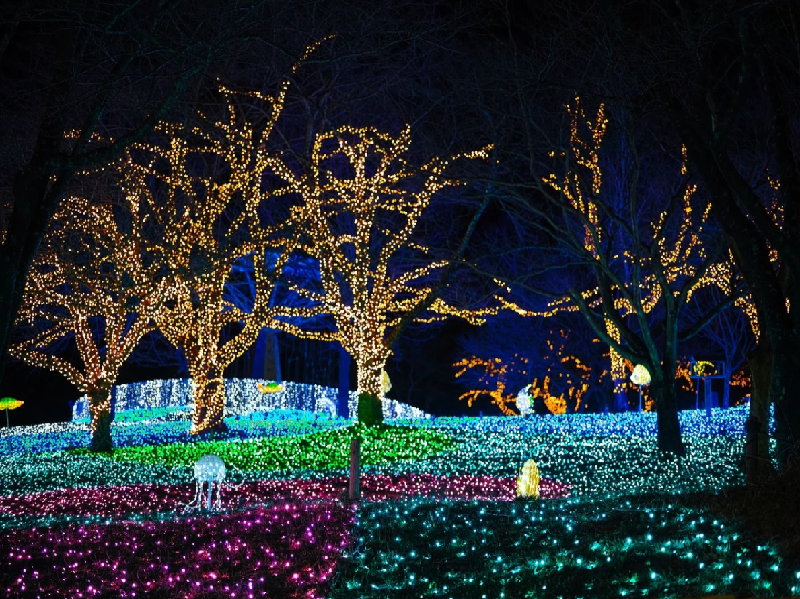
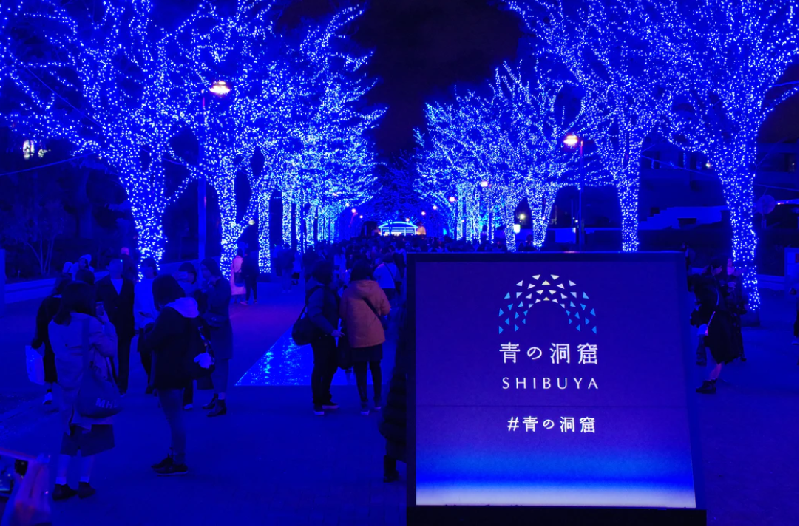
Winter illuminations
The winter illuminations in Japan, which take place during the month of December, increase the beauty of this place manifold. Donned in pretty lights, the grounds and stadiums in Japan look absolutely stunning in winters. This event is, without a doubt, the country’s one of the top attractions. So, if you get a chance to attend this event, you should definitely not miss the opportunity. These events are held all across Japan and you can visit either any of them or all of them as you please. They are generally held until after New Year’s.

Fireworks
Maybe the Japanese people have got something for lights! While they excel themselves every year with winter illuminations, they are also great at surprising the visitors with lit-up night skies. In December, Japan makes a lavish display of its fireworks. You can track most of these displays all over Tokyo. So, if you have a thing for fireworks, you can either attend the Shiodome Lights Display that runs from November to February or you can go to the Midtown Christmas Event nearby Roppongi station that begins on November 15.

Christmas celebrations

Since Christmas is primarily a western celebration it is not observed in Japan with as much zeal as it receives in the US or UK. However, one can still witness people greeting each other on Christmas eve. Most people in Japan put up the decorations and go on romantic dates, but gift exchange is not a priority among Japanese people. So, if you are expecting a Christmas turkey or maybe a Christmas cake, I will say you are setting your hopes too high.

Ramen Expo
For those of you who are self-proclaimed food lovers, we have a surprise, the Ramen Expo in Osaka. Every year in Japan, in Osaka this month-long event is organized. Held on every weekend of December, the expo brings together about 40 noodle vendors at one place. What is great is that they charge no admission fee to enter the premises. So, if you have a foodie in you, what more are you waiting for?!

Snowboarding
For those of you who love the adrenaline rush, here is another treat, which is snowboarding. Japan is one of the best locations to enjoy snow sports and snowboarding is one of the main attractions. Every year many foreigners visit Japan to especially enjoy snowboarding. You can find several world-class resorts in Hokkaido or Hakuba. Many resorts are accessible from Tokyo also.

Skiing 
Skiing is one of the favorite outdoor activities of people in Japan. While heavy snowfalls don’t arrive till late December, most of the skiing resorts are up and functioning by mid of December. Even if there is not much snowfall by then, you don’t have to worry because the resort staff compensates for it by using artificial snow. Now, you can’t let the weather ruin your fun, can you?! Plus, another advantage of visiting the skiing resort is the hot baths. Most of the skiing resorts
in Japan function as hot spring resorts as well. The ones that are not, generally, have a selection of onsen bathing spots nearby. After a long day of skiing, the hot bath relaxes your body and calms your mind. They are absolutely fun and something that no one should ever miss!

Chichibu night festival
Chichibu is a traditional night festival that is celebrated in Japan every year. Anyone who is interested in traveling to the Chichibu shrine that is located in Chichibu city, approximately 90 minutes away from Tokyo city can participate in this festival. The celebrations begin on 1 st December and last for 6 days. You can visit the Chichibu shrine any day during this period, but attending this parade that is organized with massive floats and fireworks on 3 rd December is greatly recommended.

Namahage Festivals


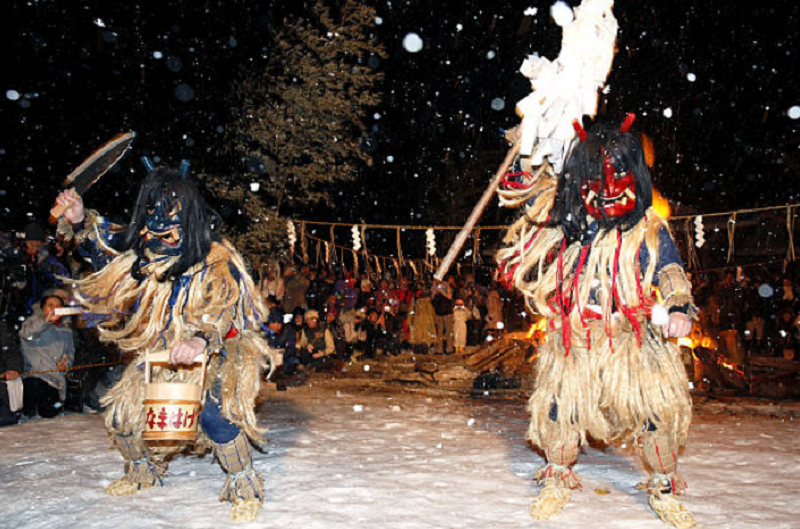
If you are in Japan and you would like to attend something that is unique and traditional, then the Namahage Festival will delight your spirit. This distinctive festival that is held in Oga City, Akita Prefecture on New Year’s eve is something that you would have never witnessed before if you have come to Japan for the first time. In this festival, you will come across performers dressed as Namahage, who is a demonic boogeyman in Japanese folklore, who will dance and glower to entertain the audience. You can also enjoy a little dance and some
good music to make the evening a fine experience. So, that is all about the events that you can enjoy if you are in Japan in December. Tip: Do check in with the organizers if you are planning on attending any of these events. Due to Covid-19, the schedules may have changed or the events may have certain restrictions.

What to eat if you are in Japan during winters?

If you are in Japan during the cold winters, then we will advise you to try the traditional food of Japan, to make the most of your experience. After all, how can you claim to know Japan, if you haven’t enjoyed its local food?
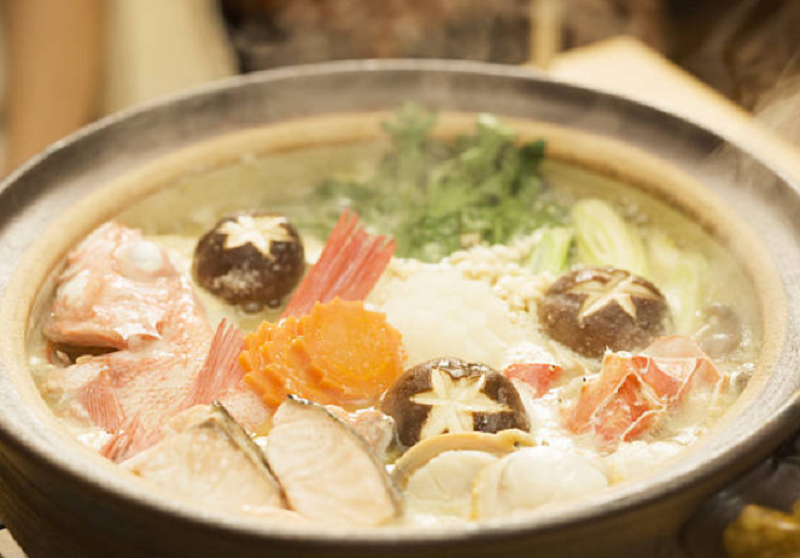
Now, on that note, tasting the local dishes of Japan, of course, means trying a variety of dishes. However, our personal recommendations are hot pot dishes. These are called Nabe in Japanese. They are prepared with multiple ingredients and are available in various kinds of flavors. Sukiyaki and Shabu Shabu are the other two popular winter seasonal dishes of Japan that you can try.

Where to stay if you arrive in Japan during December?

Now, because of Covid-19, finding a place to stay in Japan is not easy. After all, all the travelers who arrive in Japan during these times have to undergo a 14-day long quarantine period, before which they are not even allowed to use public transport. But you don’t need to worry about that, because we at Borderless Houses have started a campaign to offer shelter to travelers free of charge during the quarantine period. Here is more about that campaign.
*Picture is BORDERLESS HOUSE OMOTESANDO1

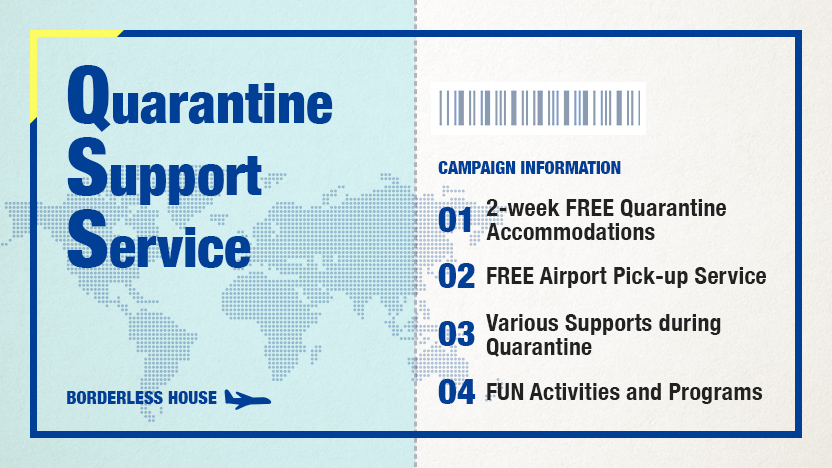
2-weeks free stay
If you arriving in Japan and you need a place to stay during your quarantine period, then call us and forget all about your accommodation issues. At the borderless house, we are offering our customers a 14-day stay free of cost. Just contact us and make your reservations.

Airport pick-up service
Because until the quarantine period is over, the travelers are not allowed to use public transport, therefore, at our sharehouse, we are arranging transportation for our customers. All you need to do is to inform us about your plans and we will have your driver ready at the airport gate.

Support services
At our sharehouse, you will have our staff at your service who will explain to you all about using food delivery services. We will also inform you about the various apps that you can use in order to meet your daily necessities.

Fun activities
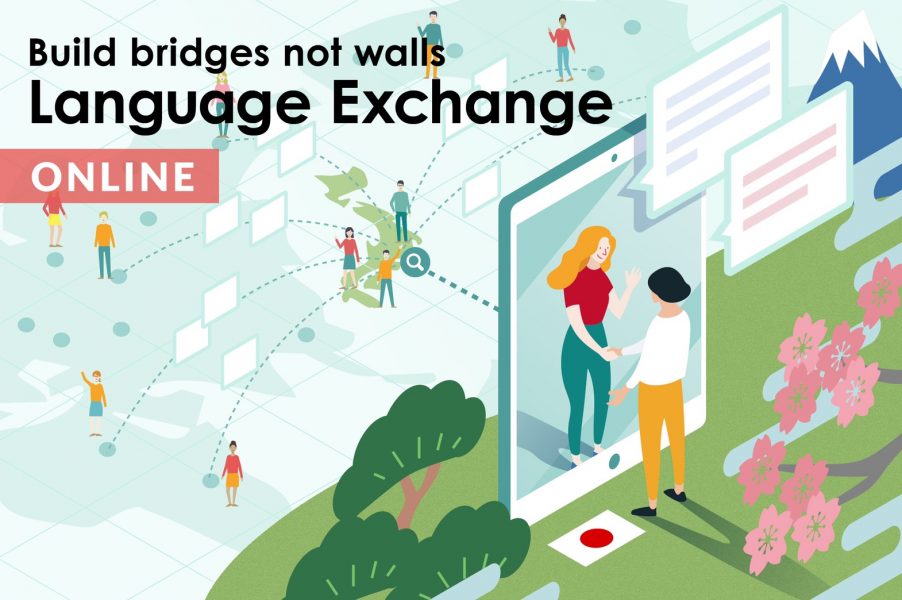
In order to ensure that you don’t get bored during your quarantine period, we have also organized virtual meets, language exchange programs, and online club activities with other flatmates. After all, we can’t let you die of boredom, can we?!

Conclusion

So, if you have your bags packed and your tickets booked for traveling to Japan, then call us at the Borderless House to arrange your stay. Have a happy and safe journey!

What Are The Present Quarantine And Travel Restrictions In Japan?

Traveling to any place in the current year has been really tough, especially when we are talking about international journeys. Most countries in the world are switching between coming out of lockdown and preparing for the second round of complete shutdown. The circumstances have been maddening, to say the least. Now, even after one year of battling with the Covid-19 virus, the end appears nowhere in sight. As a result, the common man is stuck between dealing with his fear of catching the deadly virus, and risking his business and finances if he decides to stay where he is. Japan has been no exception to such problems.

Like every other country, the people in Japan have also been bracing tough situations. The borders were sealed here in order to protect its population from Coronavirus. But with time and vigilance of people, the situation in Japan has changed for the better. The borders are now slowly being opened, and the flights to international destinations have begun to take off.

Presently, Japan has permitted business traveling from certain countries in Asia and Oceania. It has recently lowered the travel restrictions for Australia, China, Singapore, New Zealand, Vietnam, Brunei, Thailand, etc. Traveling, for tourists, however, is not allowed as of now, but there have been reports that the Japanese government is considering opening it in time for Olympics, that is before the spring season descends in Japan. So, if you are also preparing for traveling to Japan and would like to know about the quarantine norms and traveling restrictions here, then here is some information that you may find useful. Come, let’s plunge in!

What are the travel rules in Japan?

Like other countries, Japan also imposed restrictions on traveling to control the spread of Covid-19 in the country. However, on October 30, Japan relaxed its impositions and allowed people from certain countries to enter its border for business purposes. What this means is that, now, travelers from other countries can come to Japan if they have a business or residence visa.

According to news, Japan is also considering opening up the tourist industry and allowing people to come to Japan on a tourist visa. However, no official statement has been released by the government on this issue until now.

Are the Airlines back into action in Japan?

Since the travel restrictions are uplifting and domestic as well as international traveling is allowed now, therefore, airlines are more or less back in action in Japan. However, if you are planning a trip to Japan, we will recommend you to check Japan’s embassy page to get a better idea about which flights and airlines and functional there.

Is Japan out of lockdown?

With governments all over the world asking people to stay vigilant and reminding them that the danger is not over yet, there has been no certainty in any part of the globe. Many countries in the past months that were out of lockdown have witnessed another phrase of total shutdown following a hike in the number of reported cases. Japan is no exception to this bizarre scenario.

The government in Japan has taken a decentralized approach to deal with this instability. They have chosen to let the regional governors decide what is best for their region. Some people are not happy with this approach as they feel that the government in this way is not upholding its responsibility, but others are viewing the decision in a positive light. The highlight, as of now, in Japan, is the reopening of Tokyo where the most number of cases were detected. The region has been opened, however, with certain restrictions in place.

What are the safety measures in Japan?

In order to keep its people safe, Japan has followed the advice of WHO and opened its borders cautiously. Even when there are no restrictions regarding stepping out of the house in Japan, there are certain guidelines that people need to follow. Here are some safety measures that the people and institutions here have taken to control the spread of the virus.

  • All the places where people gather like offices or supermarkets in Japan have installed hand sanitizers to promote people to sanitize frequently.
  • Most restaurants, cafes, or bars where many people come and go have spaced out tables and put a cap over the number of people that can be present there at one time.
  • Gyms and shops have followed the guidelines by medical clinics and are checking the temperature of all people who are entering their premises.
  • Maintaining proper distance no matter where you are is mandatory.
  • Wearing masks at all times whenever you step out of the house is compulsory for people.

  • The stay arrangement

Usually, if you are looking for a place to stay in Japan during your quarantine period, any hotel will charge you about 70,000 to 1,00,000 yens, but now, at our borderless house, we are offering our customers the opportunity to reserve a room with us free of charge. What is even better is that by booking your quarantine stay with us, you won’t have to look for a place yourself. Thus, in this way, you will have one less thing to worry about.

  • Pick up service

Another problem when you reach Japan is that here you won’t be allowed to use public transport, not even cabs from the airport until you have completed your 14 days long quarantine period. But by booking your room with us, you can say goodbye to this worry. It is so because once you have booked your reservation with us, your stay will be our responsibility, and getting you to reach your room will also be on us. As soon as you will land in Japan, we will arrange your ride and a driver will wait for you outside the airport to drop you at your quarantine destination.

  • Various supports

Since after coming to Japan you will be living in quarantine, therefore, upon arriving here, arranging for the necessities can become a problem. Therefore, to help our quarantine residents at the borderless house, our staff will inform them about various food delivery services and other apps through which they can order necessities. In Japan, we also follow a systematic way of separating and throwing garbage, about which, our staff will let you know. In case, you have any other queries, you will have our people at your assistance to resolve your problems.

  • Fun activities

Now, 14 days is a pretty long time. Staying alone during that time with nothing to do can drive anyone crazy. Therefore, at our borderless house, we have made arrangements to keep you entertained so that your quarantine period is fun and interesting. Upon booking your stay with us, we will get you in touch with future housemates before you come to the sharehouse so you can know them better. After you arrive, we will arrange for you online language classes to brush up on your Japanese, online sessions to meet other people who share similar interests as you, and online club activities to keep you engaged. At our borderless house, we are all set to make the time fly for you.

So, these are some benefits that you can avail of by booking your quarantine stay with us when you are in Japan.

What are the tips for safe travel in Japan?

Once you are free to travel to Japan, here are some safety tips that you must follow to avoid catching the virus.

  • Make sure that every time you step outside of your residence in Japan, you carry your mask and a hand sanitizer. You can find these both in any supermarket or departmental store.
  • If you want to keep as much distance as possible when you are traveling by train, consider using green cars.
  • If you have to visit some popular destination, consider going there early in the morning or during the afternoon when they are about to close, to avoid the rush.

So, this is all about the travel restrictions which you should know about before visiting Japan. Safe travels!

What Is A Sharehouse?

A sharehouse is a rental space where people who are living independently, gather to live together. Except for private rooms, all other spaces are shared with fellow tenants. The shared spaces include the lounge area, where tenants can interact with one another, the kitchen, where they can prepare a variety of cuisines and meals, and the bathroom.

Share houses are mainly occupied by similarly aged (young and middle-aged) independently living locals or foreigners who have moved to Japan. Share houses appeal to this group of people due to the diversity, comfort of living, and fun that they offer to its tenants.

In the 1990s, with the increase of the foreigner population in Japan, people were introduced to a new accommodation medium called ‘gaijin houses’ or ‘foreigner houses’. Share houses are the modern version of a gaijin house. Today, these houses have become multicultural environments, providing shared spaces for locals and foreigners to interact with one another.

Popularity Of Share Houses

The increasing focus on shared spaces in television dramas and the collective generational desire to interact with new people and explore new things has led to the popularity of share houses in east Asia.

The Share House Culture

According to a 2015 study, 1.75% of Japan’s population consists of immigrants. Some of these immigrants are foreigners who have moved to the city for work, education, or travel. With the growing population in metro cities, accommodations in Japan are getting harder to find and more costly. Sharehouses offer a fully-furnished space for independently living locals and foreigners, providing both a cost-effective and a multicultural option.

Different companies provide sharehouses with different themes, aiming to bring like-minded people together. Some shares houses are based on similar interests like sports, while there are some share houses that are only for girls or for single mothers, etc.

When living at a share house, one can learn about local culture, taste authentic local food, understand the local lifestyle, and make friends with local residents. BORDERLESS HOUSE is one of the leading share house companies in Japan, South Korea, and Taiwan, as they offer a variety of multicultural shares houses.

After co-living for a period of time, and in some cases even sharing a room, housemates leave their sharehouses with strong friendships with individuals from various countries across the globe.

Share House v/s Room Share: The Better Rental

When moving to another country, most people go for the conventional choice of a rental accommodation i.e. leasing an apartment or sharing a rental house. While the cost of a rental is divided between flatmates in a shared rental, the overhead costs and the money spent during the first month of leasing can empty your pockets.

A rental apartment has to be furnished, the monthly bills for electricity, gas, internet, and water have to be paid, and the cost of repairs, if any, must be shouldered by the flatmates.
By contrast, when renting a space in a share house, the tenants all pay a monthly rent and maintenance fee, and the management details are all handled by the sharehouse company.

A rental apartment or room is generally shared by people who either are friends or have previously decided to group together for the purpose of leasing the space together. While living with someone you already know may sound more comfortable, it leaves little space for learning. If you and your roommates are all foreigners, then it will be increasingly difficult for you to immerse yourself in the local way of living.

What Kind Of Personality Fits Share House Life well?

1. An open heart

Obviously, a share house constitutes communal spaces, which means you’ll share your space with your housemates who come from everywhere around the world. Everyone has their own different backgrounds, personalities and experiences, so, an open heart and mind are important for anyone considering staying in a share house.

2. People who love to make new friends!

Communication is one of the main concept points of BORDERLESS HOUSE. Most of our tenants expect to be placed in an environment where tenants are willing to communicate and interact to each other! So, make an effort not to hide away in your room, and instead, join your housemates, enjoy your time together, and make it memorable!

3. Maintain house cleanliness and environment with other housemates

A clean and comfortable environment requires all the housemates to work on maintaining it together. In BORDERLESS HOUSE, all tenants will need to take turns to do the housework together!

BORDERLESS HOUSE

BORDERLESS HOUSE is an International share house company with 122 share houses and 1285 rooms available for rent in Japan, Korea, and Taiwan. BORDERLESS HOUSE caters to a large number of tenants every month. These tenants are from around 50 different countries and come to the share house with their own cultural knowledge to impart and a lot to gain from other housemates.

The ratio of locals and foreigners in a share house depends upon each share house company. The resident ratio between locals and foreigners at BORDERLESS HOUSE share houses is equal. This guarantees foreigners an opportunity to interact with locals and learn the culture, language, and traditions of the country.

The essence of a share house by BORDERLESS HOUSE is to create a multicultural space, where borders do not matter- where people from different countries across the world live together and share experiences. Residents teach and learn from each other, and become lifelong friends.

The Benefits Of Staying At A BORDERLESS HOUSE

● When you move to another country, you come across a lot of new and unexpected things. The food, the lifestyle, the language, the culture, and people’s perspectives are all new and strange at first. While some people find it easy to adapt into new spaces, others might have trouble interacting with people and making friends. Living together under the same roof, provides an immediate community of friends and a great environment for people to start talking.

● When living together for an extended period, housemates can learn each other’s culture and way of living. Interaction with people from different cultures helps you broaden your perspectives and learn new things about human nature.
Living with locals can help you learn the culture and folklore of the country. You can even celebrate local festivals, i.e. Chinese New Year, Seollal, and Shogatsu with local people!

● If you have moved to either Japan, Korea, or Taiwan for the long term, then knowledge of the local language will certainly come in handy. With the help your local housemates, you can simplify your life by learning the local language. Knowing the local language will help you better navigate around the country and take a step towards being accepted as a resident of your new country!

● When living at a share house, you can benefit from the advice and knowledge of your local housemates. Once you become friends, you can visit popular local restaurants and bars together. If you need to buy something, they can recommend the best shops in the area, or even accompany you to one. Basically, when living in a share house, you will never feel alone despite being in a foreign country.

● While there are many social benefits of living at a share house, it is also economically beneficial for people who are living alone. The monthly cost of staying at a share house is generally cheaper than that of a private apartment. Apart from the rent and maintenance fee, the tenants are not expected to pay for additional facilities like the internet, water, gas, etc. In some cases they can share the cost of cooking with other tenants and save money while making friends.

● Considering that a lot of people are housed together, share houses generally offer better and smarter house appliances. Some share houses even offer home theatres and fitness studios.

● To make the life of tenants at the share house easier, share house companies have dedicated house management staff to oversee the maintenance of the share house. From broken appliances to leaking pipes, every big and small maintenance job is handled by the company staff so that the tenants of the share house have one less thing to worry about.

BORDERLESS HOUSE is located in many different cities, including Tokyo, Seoul, and Taipei, amongst others. These houses are located in areas that are nearby to local markets, stations, and other regularly visited places to ensure maximized convenience and ease of living for the tenants.


We are a customer-oriented rental share house company and provide free special programs for our tenants.

House Exchange Program: We are an international company. When a tenant from BORDERLESS HOUSE is traveling to another country or city, where another BORDERLESS HOUSE is located, then they can stay at one of our other houses without any additional charges. This exchange can last for a week or even a month! The tenants can arrive in a new country, meet local people at the sharehouse and benefit from their knowledge of the city. Who knows, they might even find someone to take them sightseeing!

Language Exchange Program: The Language exchange program enables foreign tenants to learn the local language from other local tenants at our share houses.

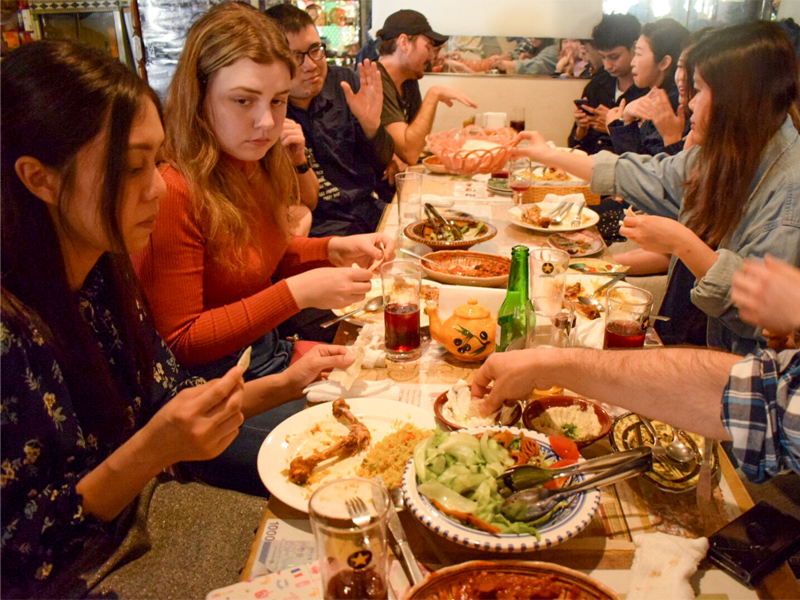
BORDERLESS Diners: Every once in a while, there is an international cuisine gathering for our tenants. This gathering is a place for tenants to get to know one another and enjoy delicious delicacies together.

BORDERLESS events: These events are organized for the occupants of multiple share houses to come together. This way, the tenants have a wider networking platform, and can meet new local and foreign BORDERLESS HOUSE residents for a fun time!

All the programs and features offered by BORDERLESS HOUSE are created with the focus of erasing borders at the forefront. Our goal is to create culturally enriched spaces for independently living people in respective countries.

If you’re looking for a share house rental either in Japan, Korea, and Taiwan, you can reach out to us at BORDERLESS HOUSE.

How Can You Find Work in Japan – Tips and Suggestions

Well, finding a new job at any place is always a dreadful experience. You are never sure of your qualifications and are always worried if you will fit the bill in the companies you have applied to. And if you are searching for a job in a new country altogether where you have not been born and bought up, this difficulty level shoots up many stories. It is so because, in a foreign place, you are not sure about the job market, you don’t know the rules and trends of being hired, and of course, no one could recommend you to some bigshot organization. 

In such circumstances, it becomes exceedingly tough not to feel scared. Finding work in a country where all the rules you have been accustomed to being thrown straight out of the window is an overwhelming experience. Thus, today we will discuss some essential work tips that you may find useful in bagging a job. So, if you are ready for the lessons, shall we begin? 

What are the requirements for working in Japan?

If you talk to people, especially those who belong to the educated class and come from over-populated or small countries, you will find that many of them have considered migrating to a new country at least once in their lives. The reasons could be numerous, like finding better work opportunities, the sake of a better lifestyle, exploring new places, etc. For such people, finding work before migrating to a new location or soon after making a move is of crucial importance to sustain themselves.  

Thus, to help people who have either moved to Japan or are considering moving to Tokyo to secure a job, here are some critical details. 

University Degree

Japan does not follow the same rules and regulations as the US or UK where immigration is concerned. Therefore, if you are considering moving to Japan shortly, then there are some specific immigration laws that you must be aware of. One such rule is that if you want to immigrate to Japan, then in order to get the regular work visa, you will need a University degree. Not the college, but the University degree getting which takes about four years in the US and three years in the UK. This is the law, and if you are serious about finding work in Tokyo, then you will have to adhere to this rule.  

Move to Japan

After talking to the hiring managers who are recruited at good companies, we gained some useful insight. In our chat about foreign job seekers, we discovered that according to the hiring managers, foreign candidates who are already in Japan have more chances of finding employment in Tokyo as compared to foreigners who are living outside of the country. It is so because a failed overseas hiring proves very costly to a company. When an organization employs a foreigner from outside of Japan, they will need to assist the employee in getting to Japan, finding a residence here, training him, etc. And after all, if the candidate does not fit the profile, then all the time and money spent on him will go to waste. 

Therefore, a more suitable option is to hire a foreigner who is already living in Japan. So, you can manage to find work in Tokyo by moving to Japan before you start looking for your dream job. You can initially sustain yourself by living in a sharehouse where you will be paying minimum rent and by getting hired as an English teacher. Then slowly and steadily, you can work towards finding a suitable job opportunity for you. If you are currently searching for jobs and career opportunities in Japan, feel free to check Jooble

Use a resume photo

Before applying for a job at any place in Tokyo, you should make some effort to familiarize yourself with the application format that the job candidates must adhere to. For instance, you should know that in Japan, the work norm requires the job applicant to send his photo along with his cover letter. That is what the HRs are used to seeing. It helps them in putting together your personality and skillset with your face. It aids them in making a decision. Therefore, if you are likely to approach a company for work, make sure to include a professional-looking headshot of you in your application. Doing so will make it difficult for the hiring manager to ignore your CV. 

Find an Internship

If you are not keen on working as an English teacher to sustain yourself in Japan for the initial months, you should probably find yourself an internship in Tokyo. Now some of you might be wondering how that would help. Well, the answer is that finding an internship will help you in building a network. In a foreign nation, where you have no one who knows you and can recommend you to an organization, gaining some experience and getting an opportunity to be mentored can be very useful. 

However, you should know that in Japan, the paid internships are more or less paid by the interns. The basic idea is that in an internship, you get a chance to work with a company for about eight months in exchange for a place to stay and a learning experience. So, maybe think hard before making your choice. 

Creating a network

Well, networking with the right people is the key to landing your first, second, third, and even the nth job in Japan. Knowing the right people can reduce your struggle, and it can help you attain your goals quite quickly. Now, one way of networking properly is to join a professional group in Tokyo. Living in a sharehouse where you will live with other native Japanese people can also help form friendships. You can maybe even participate in the after-work drinking culture in Japan. Going out to the bars with professional and industry groups will get you noticed and employed. 

Prepare for the interview

It is needless to say that all the networking and degrees won’t land you a job in Tokyo unless you leave a positive impression in the interview. Therefore, preparing for the interview is essential. Now how can you do this? Well, you can ready yourself for the hour by learning about the basic customs of Japan as well as by polishing off your Japanese. You can also try to talk to some people who are already in jobs to know about the general questions that are asked by the interviewer. This will boost your confidence and increase your chances of being hired. 

Now, living in a borderless house can help you in achieving this. By residing here, you will probably find yourself speaking in Japanese and learning Japanese customs. Your mates there can also help in preparing for the interview by sharing with you their interview experience. 

Polishing your language

Unless you are finding a job in the IT sector where the number of IT languages you know would matter more, I suggest you become proficient in the Japanese language. Or else you may find it difficult to get employed. But how much fluent do you need to be in your Japanese if you want to be hired? Well, in order to satisfy the hiring managers, you can write the Japanese Language Proficiency Test (JLPT). All the companies in Tokyo use this standardized test to judge the language proficiency of a foreign candidate. You will need to pass level 2 of this test which comprises five levels where level 1 is considered the toughest. 

Boards and cover letters

When applying for a job, most people go about applying everywhere because they feel that the more places they try, the better their chances of getting hired. But it is not valid. When applying for a position at a company, you must be clear about your goals. You should know if this is what you want, or else you are just going to make your resume and cover letter sound very generic, so it fits all, or you may even end up committing some silly mistake. 

Secondly, while writing your cover letter, you should not go overboard with ‘me.’ Remember, it is not what you will get out of this job that will interest the hiring manager but what you will bring to the table that will grab his attention. So, instead of rolling with what your dreams and aspirations are about your job, write about your skills and work experience to give an impression that you are a good match. 

If you’re not fluent in Japanese and still learning it, you can have a native Japanese translator translate your cover letter. Japanese has four alphabets: Hiragana, Kanji, Romaji, and Katakana. So for those just starting to learn Japanese, it can be a struggle to write a coherent cover letter that will get the attention of your employers. You might consider working with a specialist in professional Japanese translation to ensure that the translated document will be accurate and your meaning conveyed properly, as it is easy for the context of a message to go “lost in translation.” As mentioned, no one likes to read generic cover letters. You can write freely in your native language by translating your cover letter.

Conclusion

If you are in Tokyo looking for your dream job, then there are certain norms that we have talked about that you will have to follow. If you observe the advice we have compiled in this complete guide to finding employment in Japan, you will definitely land a job in Tokyo in no time! All the best!