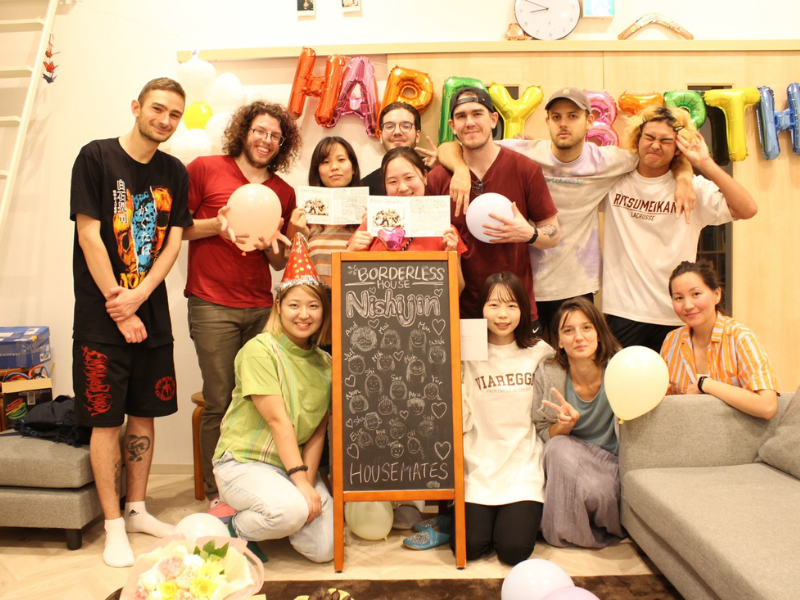

“Cultural Exchange Every Day!?” A Revealing Glimpse into the Daily Life of an International Share House!

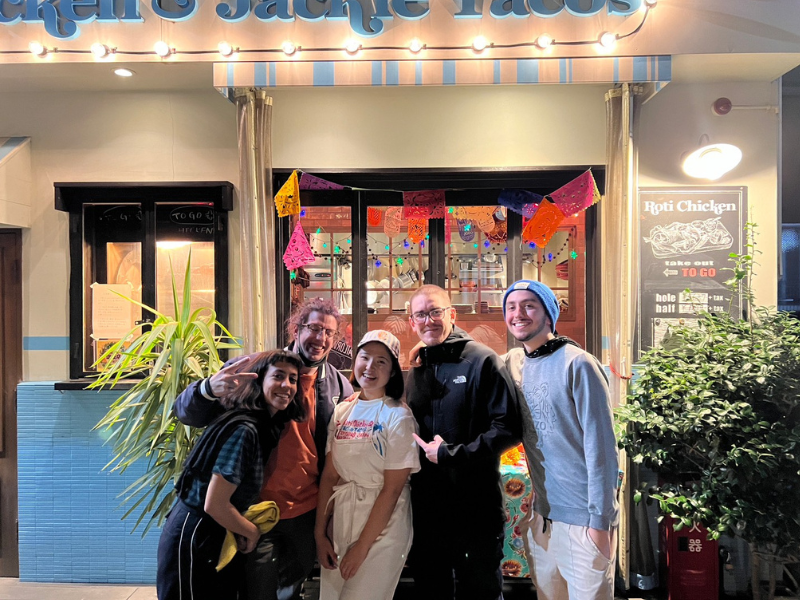
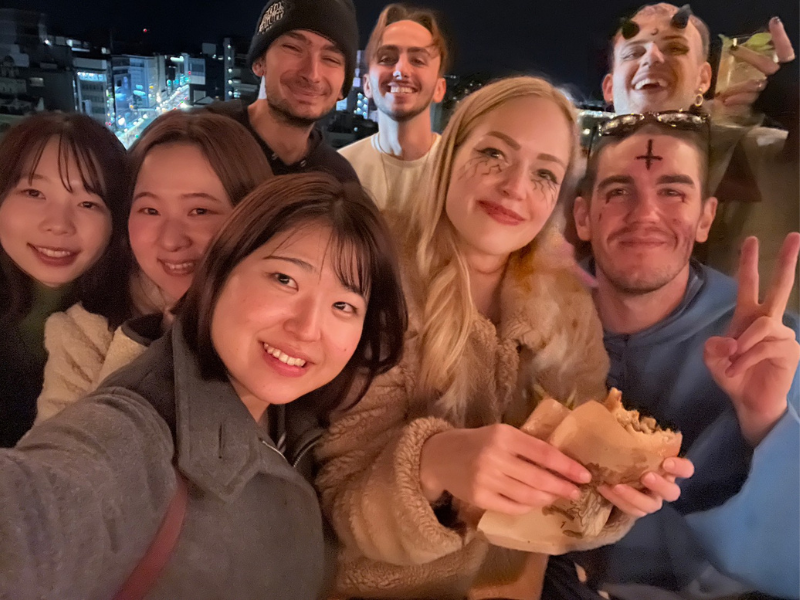
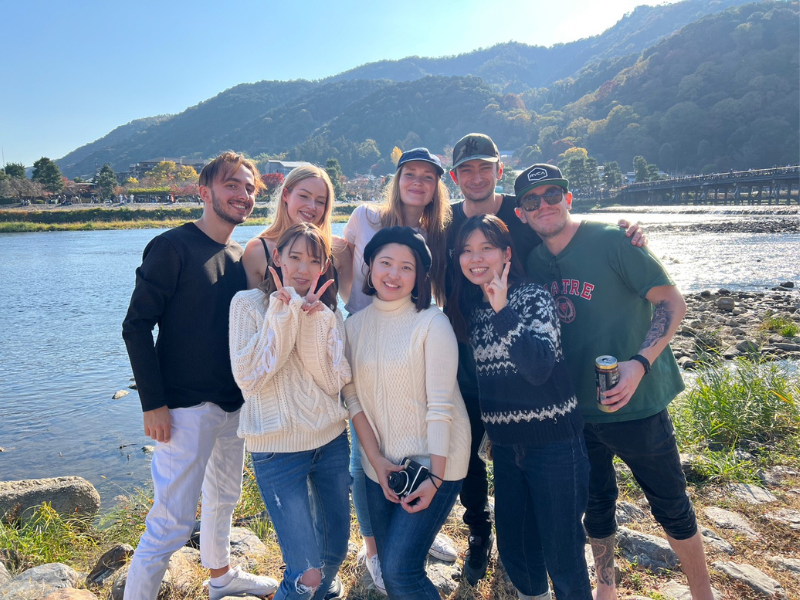
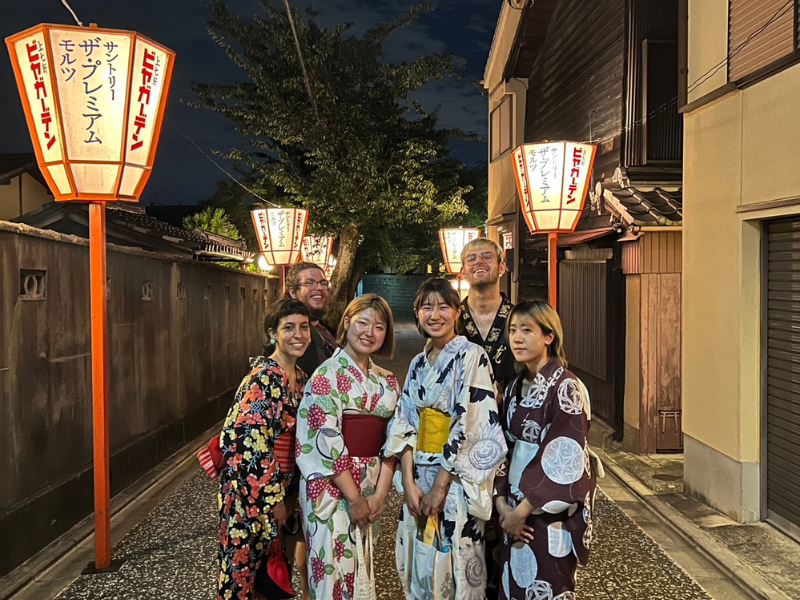
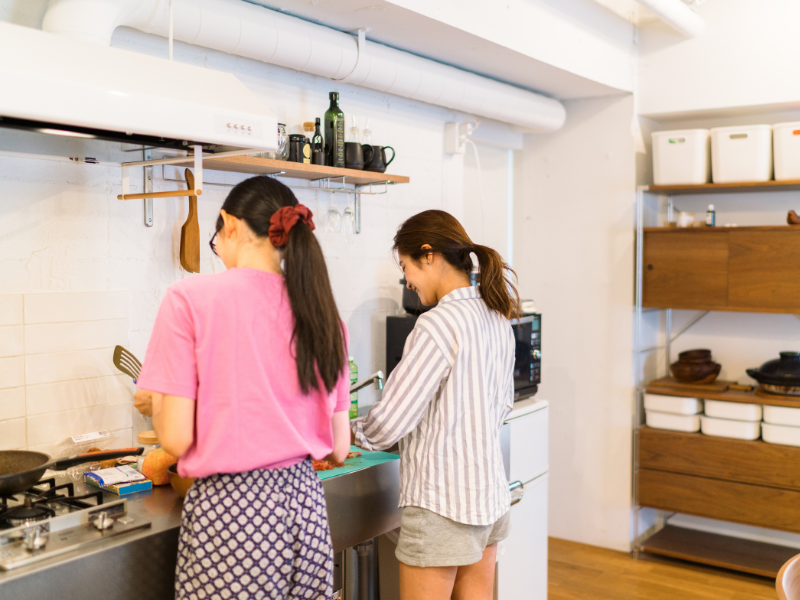
Hello! I’m Koko, an intern at BORDERLESS HOUSE. One of the strengths of BORDERLESS HOUSE, a multicultural share house, is that you can experience different cultures while staying in Japan! Because we are particular about the ratio of Japanese to non-Japanese tenants, you will definitely be able to enjoy language and cultural exchange with multicultural friends from all over the world.

HOWEVER, I’m sure many of you have questions like these:

“Does BORDERLESS HOUSE offer enough opportunities to get close to international housemates?”
“What is it like to live with both foreigners and local Japanese?”

And I’d like to say, YES.

So today, I want to write about “the daily life in BORDERLESS HOUSE” to prove it! In this article, I will introduce the usual daily life of each share house, as well as the lively house parties and amazing trips! I’m certain that this blog will give you a better understanding of the Borderless House Community, not only for Borderless House residents but also for our future tenants.

Read this article with imagining your bright future in BORDERLESS HOUSE with global housemates;))

Borderless House Exclusive Events – Highlights of April 2023!
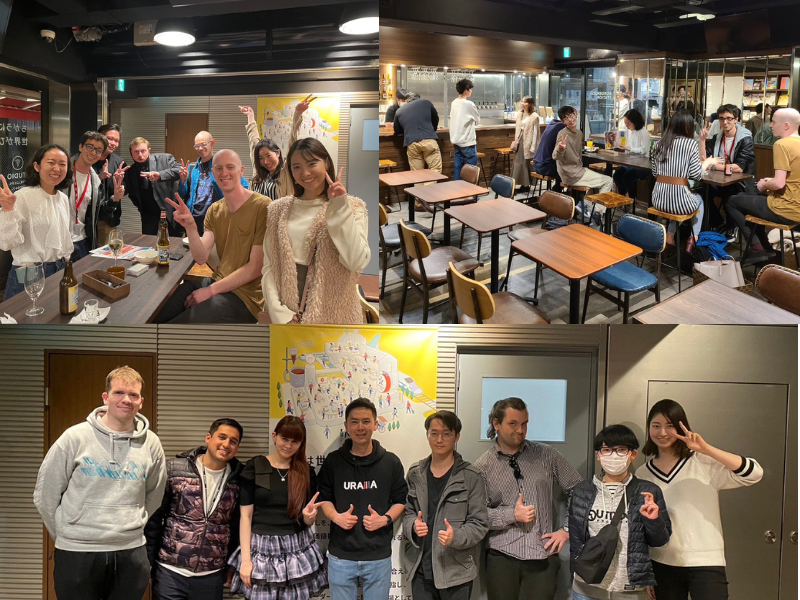
April is always an exciting and bustling month for us at BORDERLESS HOUSE, and this year was no exception. We were thrilled to welcome a diverse group of new tenants from various corners of the globe to Japan! In this blog post, let’s take a moment to recap the vibrant events that took place in April and celebrate the beginning of their extraordinary journey with us!

BORDERLESS STATION

At BORDERLESS HOUSE, our commitment to fostering multicultural connections extends beyond our share houses. We are proud to introduce “Borderless Station” , a vibrant community space and restaurant located on the first floor of our office in Asakusabashi. Borderless Station offers a unique culinary experience, bringing together flavors from around the world, along with a range of multicultural events. In this blog post, I will highlight two exciting events that recently took place at Borderless Station!

  • Language Exchange
    This event provides an opportunity for our tenants to learn and practice foreign languages while enjoying the company of friends from different cultural backgrounds. It’s an event where language barriers fade away, and meaningful connections are formed.

  • BH Night
    BH Night is another remarkable event that recently took place at Borderless Station, and it was a resounding success! We offered our tenants a chance to enjoy delectable food and drinks at discounted prices. The positive response to this event has encouraged us to make it a monthly gathering, open not only to our tenants but also to non-tenants. We invite everyone to join us and experience the joy of BH Night!

Celebrating New Connections and Cherished Memories Together
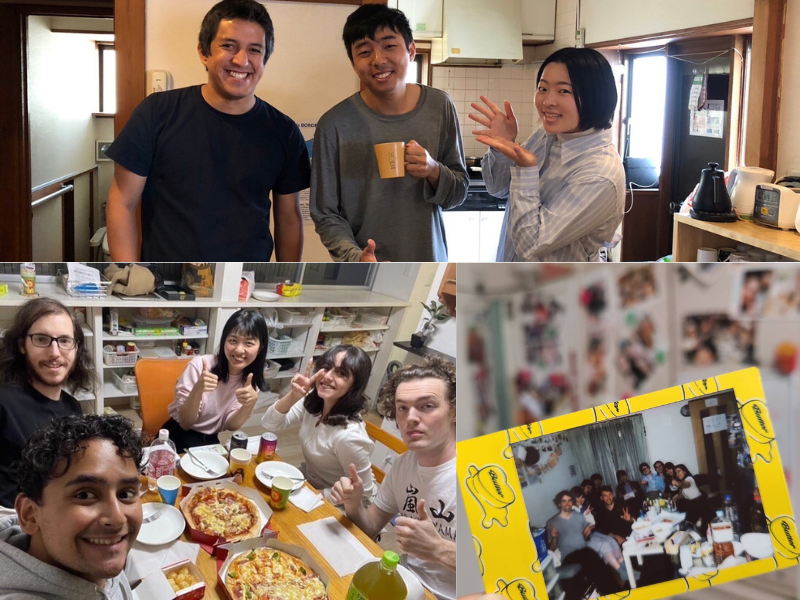
Welcome and Farewell Party
This April, we welcomed a whopping 80 new residents from all over the world. The “Welcome Party” is a big event to welcome new housemates! This event is a great way to build a new friendship.

As the saying goes, “All good things must come to an end,” and so it was with April. Alongside the excitement of welcoming new members, we also faced the bittersweet task of bidding adieu to our beloved tenants. The “Farewell Party” was an occasion tinged with nostalgia and mixed emotions, and our tenants celebrated the beautiful memories they had shared.

Meeting the Best Housemates in Japan! The Everyday Life of one of our Share Houses
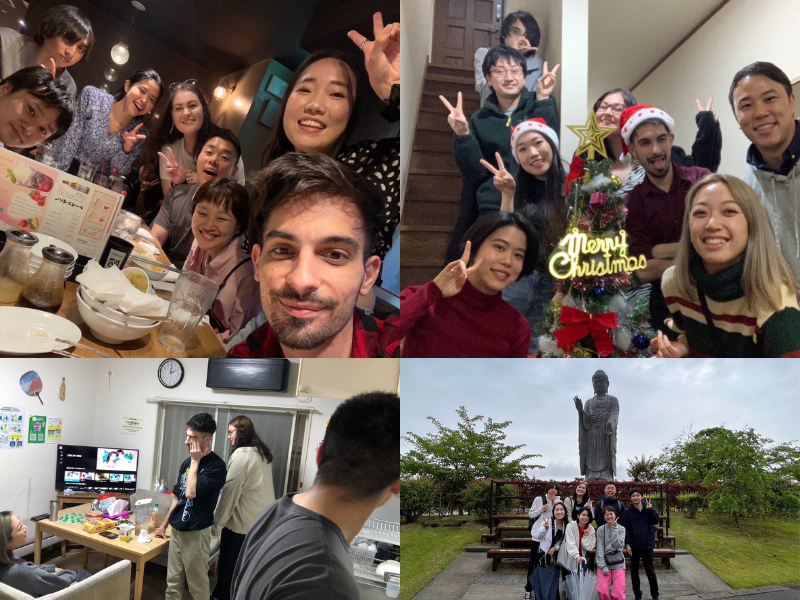
The tenants residing in this share house have formed strong bonds of friendship. They joyously marked the Christmas season by adorning a petite Christmas tree and donning Santa costumes! Additionally, they sometimes went out together for yakiniku – Japanese BBQ!

Sometimes, the tenants have trips together. This photo captures a moment from their visit to Ibaraki, which is the hometown of one of the tenants. Moreover, during the “Golden Week” holiday, they embarked on a collective trip to Hakone!

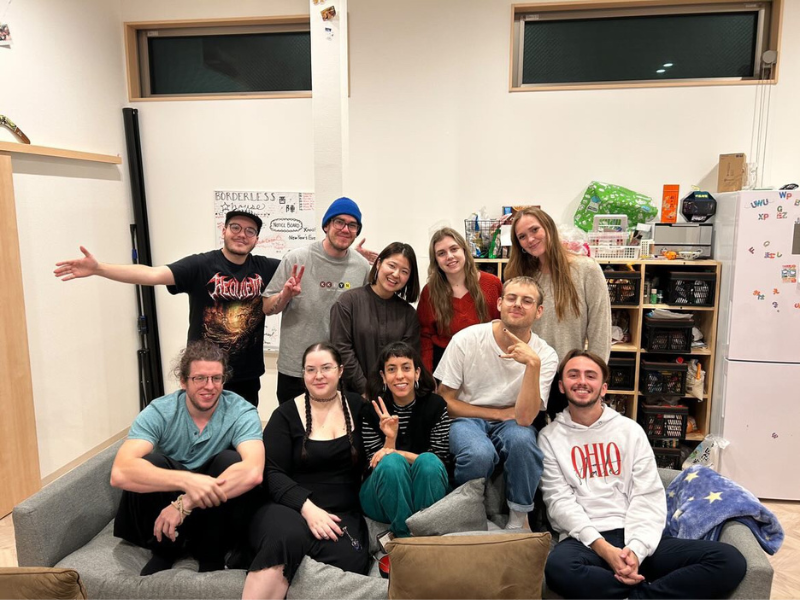
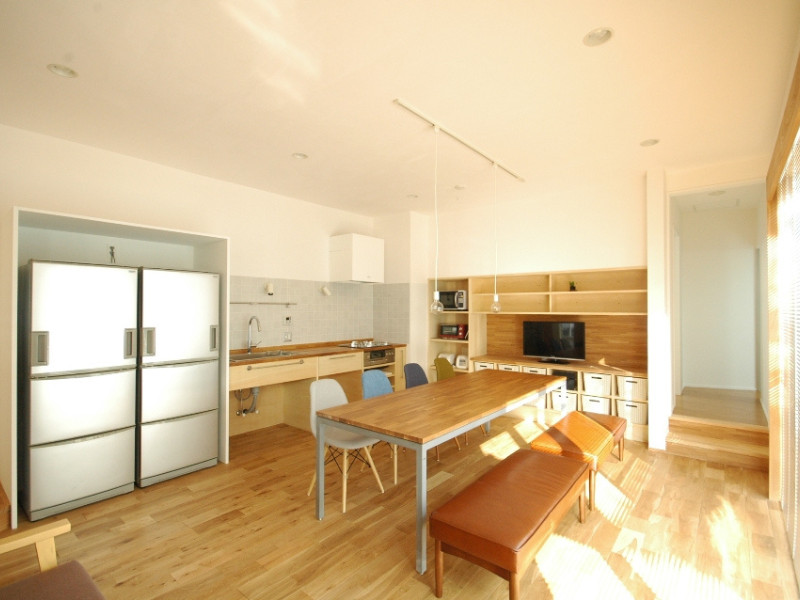
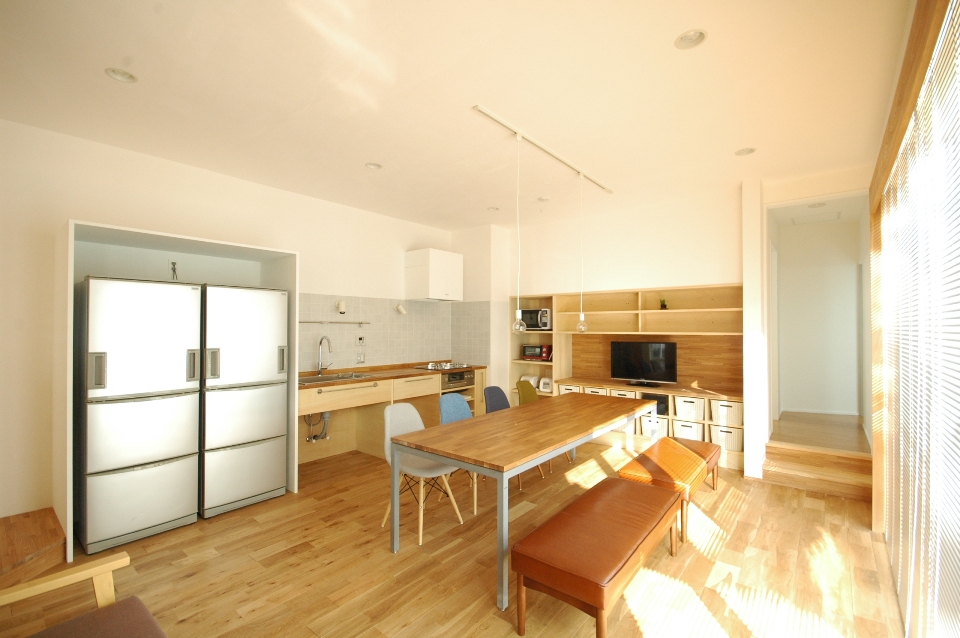
The living room, where everyone gathers, is a great hub for tenants to interact with their housemates. They can build a warm bond like a family there.
In fact, a resident of this share house expressed, “I am genuinely grateful to be a member of this community, and I am glad that I came to Japan.” at her farewell party.

Utilizing Your Passions and Skills! “Tenants-Initiated Events”
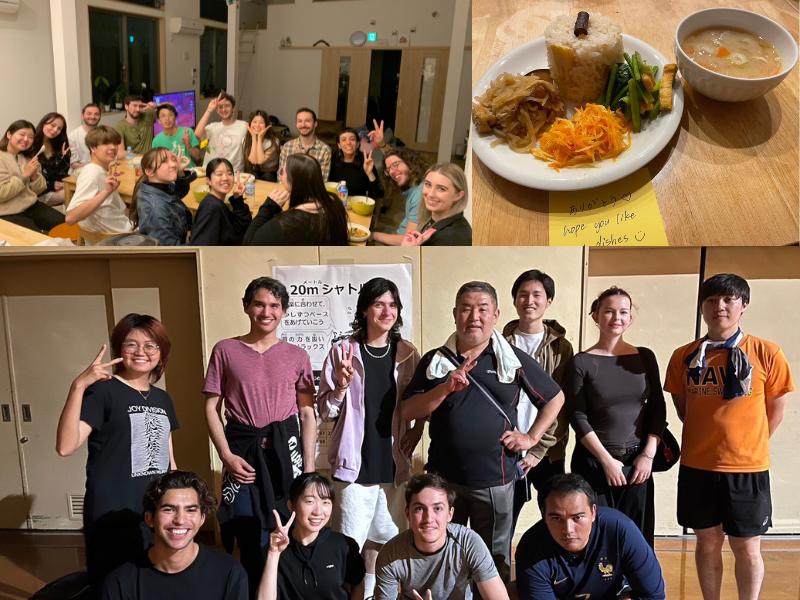
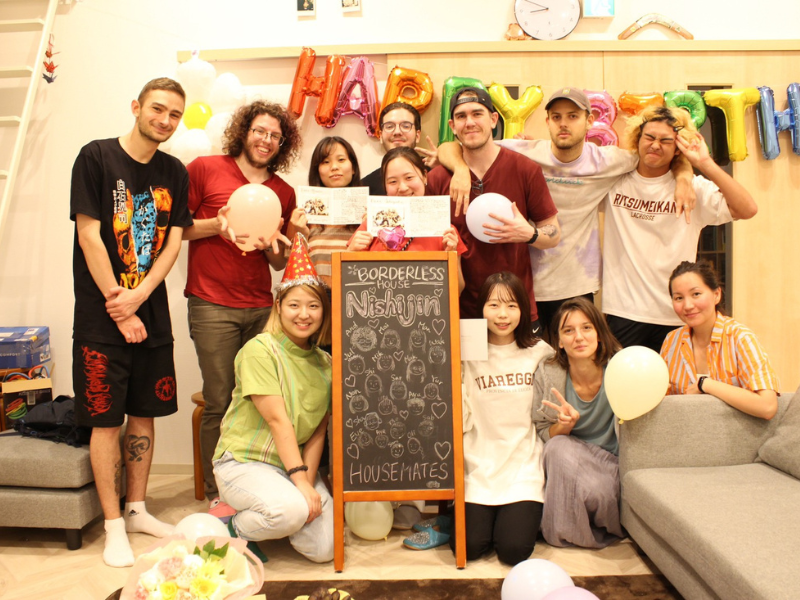
The Slow Food Diner at BORDERLESS HOUSE Kyoto-Nishijin
Our tenant Miko, who calls herself “sloth”, started the slow-food diner! This event was planned for the purpose of spending more time with her housemates and encouraging them to try cooking or try Japanese cuisine.

She also has an interest in the slow food movement, local consumption, agricultural issues, and dieting. The healthy food prepared based on such knowledge gave her housemates a great opportunity to interact with others and think about “diet”.

Badminton Event at BORDERLESS HOUSE Kyoto-Kinugasa
BORDERLESS HOUSE Kyoto-Kinugasa is a large and lively share house with 23 tenants from 12 different countries. This time, I want to introduce its badminton event! Playing badminton in the spacious gymnasium looks a lot of fun:) Enjoying sports together with your house mates is sure to bring you closer together!

Do You Know the Unique Party that Showcases Japan’s Charm!? “Everyday Life at BORDERLESS HOUSE in Kyoto”
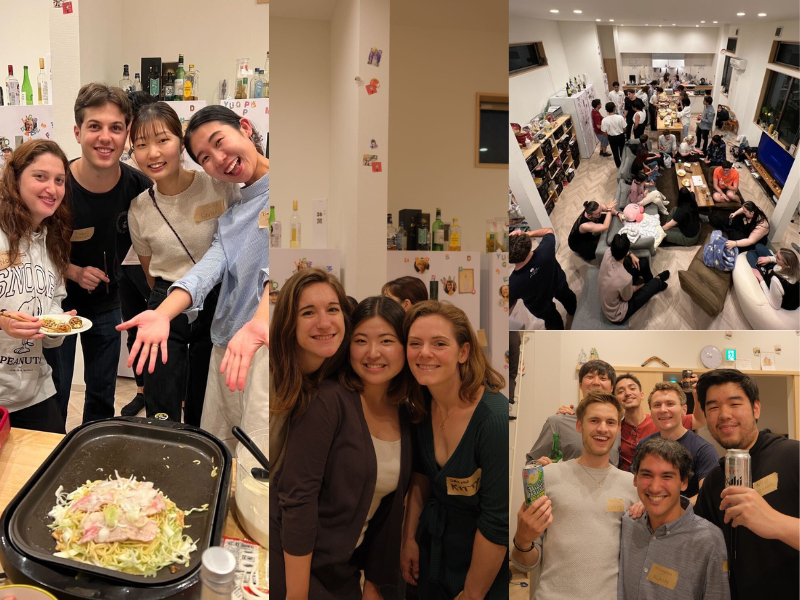
The last part of this blog post is about the enchanting daily life at our three share houses located in the picturesque Kansai area: BORDERLESS HOUSE Kyoto-Nishijin, Kyoto-Kinugasa, and Kyoto-Saiin2!

Takoyaki and Okonomiyaki Party at Kyoto-Nishijin & Kyoto-Kinugasa Share Houses
Takoyaki and Okonomiyaki Party” is one of the popular events among BORDERLESS HOUSE tenants! Gathering around the hotplate, tenants experienced the unique food culture of Japan. With their favorite drinks in hand, everyone enjoyed good conversation and food.

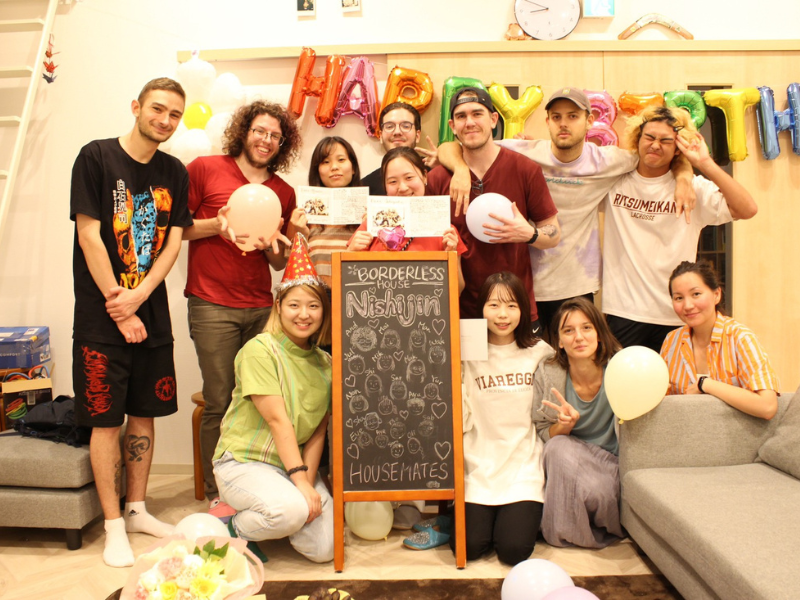
As you can see from this photo, it turned out to be a very large-scale and lively party. The spacious living room of BORDERLESS HOUSE Kyoto-Nishijin, which is a large-scale share house, was filled with participants! It was a great opportunity for tenants to meet new people and share a good time.

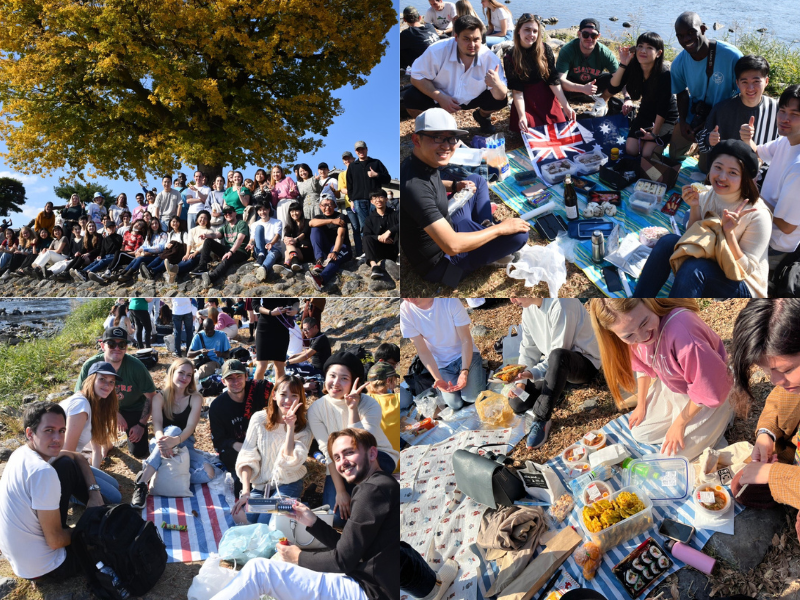
BBQ at Lake Biwa – BORDERLESS HOUSE Kyoto-Kinugasa

Under the refreshing blue sky, the tenants of BORDERLESS HOUSE Kyoto-Kinugasa enjoyed a barbecue! With the large Lake Biwa in the background, everyone is smiling for the camera, and you can tell how close they are.

The weather was perfect, and everyone’s excitement was at its peak! The food grilled with the help of all the tenants was even more delicious than usual!
The instant photos capturing the memories of the barbecue will surely become cherished treasures.
A Trip to Lake Biwa – BORDERLESS HOUSE Kyoto-Saiin2

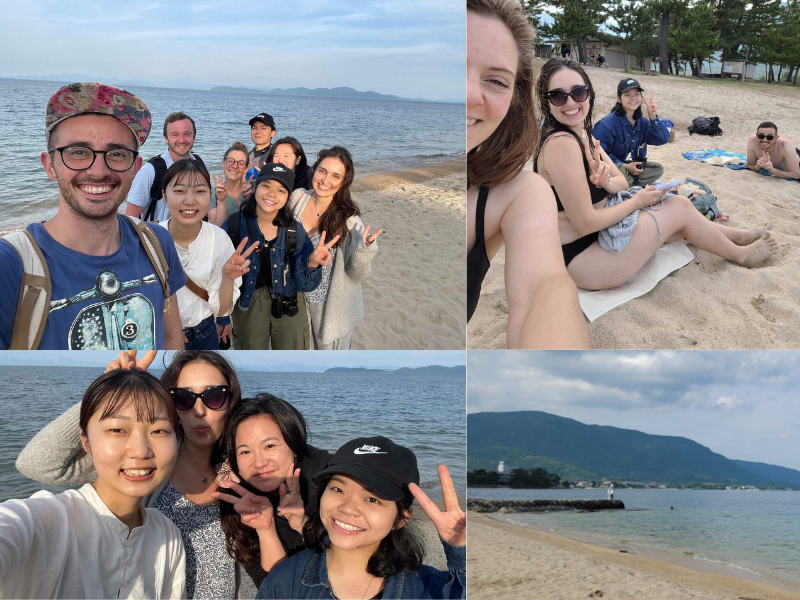
The tenants of BORDERLESS HOUSE Kyoto-Saiin2 also visited Lake Biwa together! Weekends are the best time to get to know each other! Exploring nearby shops together or going sightseeing allows you to share a special experience with your housemates. The tenants relaxing on the sandy ground around the lake look as if they are at the beach! The beautiful scenery of the lake must have become a memorable experience for the tenants.

BORDERLESS HOUSE is a multicultural share house that allows you to experience a global everyday life alongside friends from all around the world.

If you’re…
– Feeling anxious about living alone in Japan
– Looking to improve your Japanese skill on a daily basis
– Desire to connect with people worldwide in a “real” way and meet a new version of yourself

BORDERLESS HOUSE is the perfect fit for you. Join our community and discover new encounters that will lead to a new you!

Check the availability of rooms right now by clicking the link below!
Share Houses in Tokyo
Share Houses in Kansai

Furthermore, we regularly post updates about daily life at BORDERLESS HOUSE on Instagram. Please follow us to stay connected:)

Borderless House Official Account [English Version] (@borderlesshouse.jp)
Borderless House Official Account [Japanese Version](@borderless_house_jp)
Borderless Station (@borderlessstation)

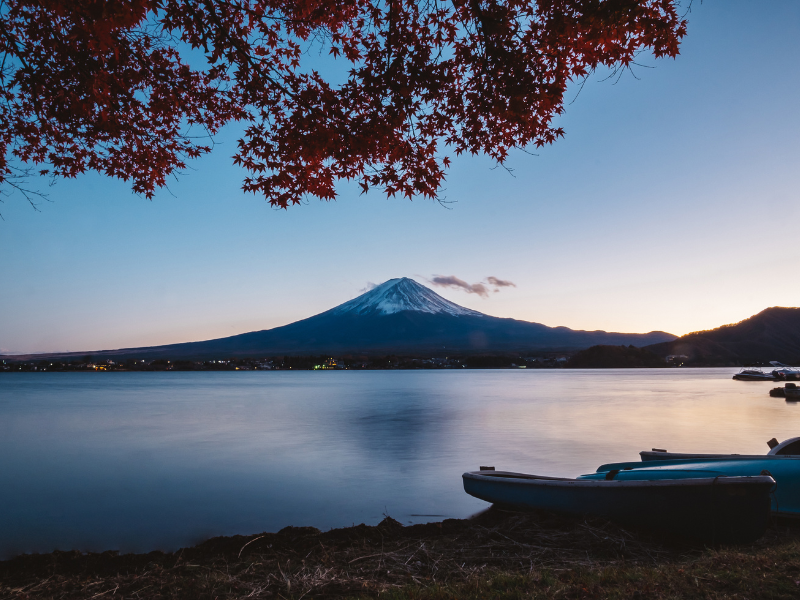
From Hiragana to Kanji: A Guide to Learning Japanese & Special Discount for Japanese courses!

Japanese is an incredibly fascinating language to learn. With its unique writing system, rich cultural heritage, and fascinating grammar, it’s no wonder that so many people are interested in learning the language. But where do you begin? With three writing systems to learn, Japanese can seem daunting. However, with the right resources and approach, learning Japanese can be a fun and rewarding experience. In this guide, we’ll take you through the basics of learning Japanese, from the hiragana alphabet to kanji characters. We’ll give you tips on how to stay motivated and how to practice speaking and writing the language. So whether you’re planning on traveling to Japan or just want to explore a new language, this guide will help you get started on your journey to learning Japanese.

Why learn Japanese?

Japanese is a unique and fascinating language that is spoken by more than 127 million people worldwide. Learning Japanese can open up a whole new world of opportunities, both personal and professional. For example, if you are interested in Japanese culture, such as anime, manga, or traditional arts, being able to speak and understand Japanese will allow you to fully immerse yourself in these activities and gain a deeper appreciation for them.

On the other hand, if you are a business professional, knowledge of Japanese can give you a significant advantage in the global marketplace. Japan is the third-largest economy in the world, and many companies are seeking professionals who are fluent in Japanese and can navigate the business culture there.
In addition to cultural and professional opportunities, learning Japanese can also be a fun and rewarding experience. Japanese is a beautiful language with a rich history and vibrant culture. By learning Japanese, you will gain a new perspective on the world and build connections with people from different backgrounds.

Hiragana, Katakana, and Kanji – What’s the difference?

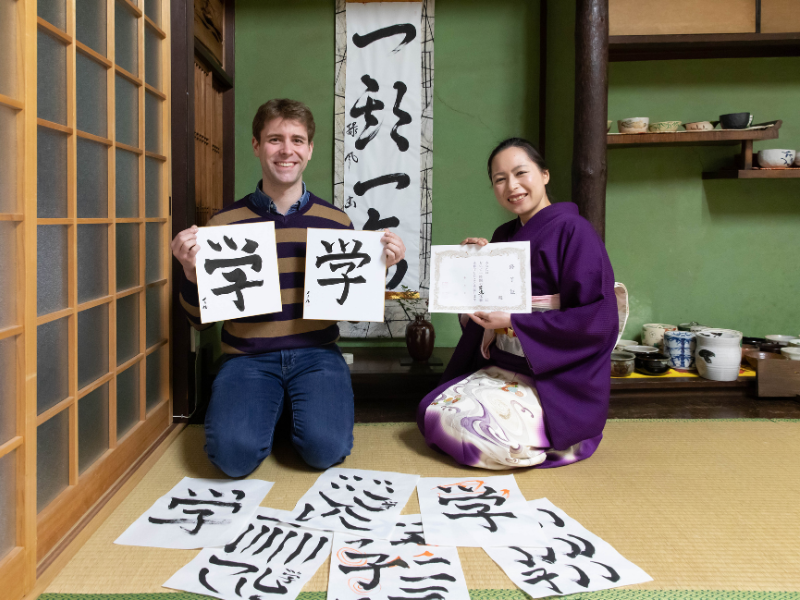
When learning Japanese, it’s important to distinguish between the three writing systems: Hiragana, Katakana, and Kanji. Hiragana and Katakana are both phonetic alphabets, whereas Kanji is based on Chinese characters.

Hiragana is the first writing system that Japanese children learn in school. It is used to write native Japanese words, particles, and verb endings. Hiragana consists of 46 characters, each representing a unique sound in Japanese. Hiragana is usually written in cursive style and is the most basic writing system in Japanese.

Katakana is the second phonetic alphabet used in Japanese. It is used to write foreign words, foreign names, and scientific words borrowed from other languages. Katakana consists of the same 46 characters as Hiragana, but it is usually written in a more angular style. It’s important to note that sometimes the same word can be written in both Hiragana and Katakana, but they may have different meanings.

Kanji, on the other hand, is based on Chinese characters and is the most complex writing system in Japanese. Kanji is used to write nouns, verbs, and adjectives. Each Kanji character represents a concept or idea, and many have multiple readings and meanings. There are thousands of Kanji characters, but Japanese students typically learn around 2,000 characters by the end of high school.

In conclusion, understanding the differences between Hiragana, Katakana, and Kanji is crucial when learning Japanese. By mastering these writing systems, you’ll be well on your way to fluency in the language.

How to master Hiragana

Hiragana is the first alphabet system you should master when learning Japanese. It’s a phonetic script that consists of 46 characters, each representing a specific sound. The best way to learn Hiragana is to use a combination of memorization and repetition techniques.

Start by downloading a Hiragana chart and studying the characters. Then, practice writing each character over and over again until you can confidently write them from memory. Flashcards are also a useful tool for memorizing Hiragana.
Another effective technique is to practice reading and writing Hiragana in context. You can do this by reading simple Japanese texts, such as children’s stories, and practicing writing out the Hiragana characters you see. This will help you remember the characters in a more natural way.

Finally, it’s important to review your progress regularly. Set aside a few minutes each day to practice writing and reading Hiragana. As you become more comfortable with the characters, you can start practicing writing and reading simple Japanese sentences. With consistent practice and dedication, you’ll be able to master Hiragana in no time and move on to learning more complex aspects of the Japanese language, such as Kanji.

How to master Katakana

Katakana is one of the three Japanese writing systems, along with Hiragana and Kanji. It is used to write loanwords from other languages, foreign names, and onomatopoeic words. In order to master Katakana, you need to start by memorizing the basic characters. This can be achieved by dedicating a few hours a week to practicing the characters through drills or flashcards.

Once you have memorized the basic characters, it’s time to start practicing reading and writing. You can do this by reading Katakana words in newspapers, magazines, or online articles. You can also practice writing Katakana words by hand, such as writing out menus or creating your own flashcards with Katakana words.

As you continue to practice Katakana, it’s important to pay attention to the nuances of the writing system, such as the elongated vowel sounds and small characters used to modify sounds. By mastering Katakana, you’ll be able to read and write many loanwords and foreign names used in the Japanese language, which will greatly improve your overall proficiency.

How to learn Kanji

Learning Kanji is a big hurdle for many people who are trying to learn Japanese. Kanji is a set of characters borrowed from Chinese, and it is used in the Japanese writing system to represent words and ideas. There are over 2,000 Kanji characters, and each has its own meaning and pronunciation. This makes learning Kanji a daunting task, but it is essential if you want to become proficient in Japanese.

One of the best ways to learn Kanji is to break it down into manageable chunks. Start by learning the basic strokes and radicals that make up the characters. You can then move on to memorizing the characters themselves. It is important to practice writing each character while also learning its meaning and pronunciation.

Another useful method for learning Kanji is to use flashcards. There are many apps and websites that offer digital flashcards, but physical flashcards can also be effective. Flashcards allow you to study the characters in small doses, which can help with retention.

Reading Japanese texts is also an effective way to learn Kanji. As you read, you will encounter new characters and words, and you can use context to help you understand their meaning. You can also use a Kanji dictionary to look up unfamiliar characters.

Finally, it is important to be patient and consistent when learning Kanji. It takes time to memorize all the characters, but with regular practice and study, you can make steady progress. Remember that learning Kanji is an important step toward becoming proficient in Japanese, so don’t give up!

Tips & Tricks for Learning Japanese

Learning Japanese can seem like a daunting task, but with some tips and tricks, it can be a fun and rewarding experience. Here are some ways to make the process easier and more enjoyable:

1. Immerse Yourself – Surround yourself with the language as much as possible. This includes listening to Japanese music, watching Japanese TV shows and movies, and speaking with native speakers. If your plan is to study Japanese in Japan, Borderless House is a place where residents are 50% of Japanese and 50% from foreign nations, so you can live and interact with Japanese locals on a daily basis!

2. Practice Daily – Consistent practice is key to learning any language. Try to set aside a few minutes each day to study and practice Japanese.

3. Use Apps & Language Learning Websites – There are many language learning apps and websites available that can help you learn Japanese. Some popular options include Duolingo, Lingodeer, and Memrise.

4. Learn the Basics First – Start with the basics of the language, such as hiragana and katakana, before moving on to more complex topics like kanji.

5. Take a Class – If you prefer a more structured approach, consider taking a class. Many community centers and universities offer Japanese language classes. For the online course, IMARI JAPAN offers lessons that are produced by an experienced native Japanese language teacher. 

6. Practice Writing – Writing in Japanese can help you remember vocabulary and grammar rules. Practice writing simple sentences and gradually work your way up to more complex writing tasks.

7. Make it Fun – Learning a language should be fun! Incorporate games, quizzes, and other fun activities into your Japanese learning routine.

By using these tips and tricks, you can make learning Japanese an enjoyable and rewarding experience. With consistent practice and dedication, you’ll be on your way to mastering this beautiful language.

BORDERLESS HOUSE TENANTS ONLY▏Special Discount for Japanese courses! 

BORDERLESS HOUSE is partnering with IMARI JAPAN to offer our tenants who want to learn Japanese affordable Japanese online lessons!

Imari is a licensed teacher with 6 years of teaching experience, born and raised in Japan. She is passionate about languages and education, she is also interested in learning about different cultures and has traveled to almost 20 countries. Currently, she is a full-time content creator creating educational, fun-to-learn Japanese content for podcasts, YouTube, and Instagram.

The online lessons are teaching casual and formal Japanese to learners of all levels! Please feel free to check here for the detailed price and information. 

-Discount to Borderless House tenants!-
・5% discount
 Once a week for 3 months (12 lessons)
 Twice a week for 3 months (24 lessons)
 Once a week for 6 months (24 lessons)
・10% discount
3 times a week for 3 months (36 lessons)
Twice a week for 6 months (48 lessons)
・15% discount
3 times a week for 6 months (72 lessons)

*The lesson will be conducted using Google Meet.
*In the class, students will use an original textbook created by IMARI JAPAN. They will create personalized text that is suited to students’ level and share slides with you as you learn!

Conclusion and next steps

In conclusion, learning Japanese can be both fun and challenging. However, with the right tools, resources, and dedication, it is definitely achievable. Remember to start with the basics, such as Hiragana and Katakana, before moving on to more complex characters like Kanji.

Additionally, immerse yourself in the language as much as possible. Watch Japanese movies, listen to Japanese music, and practice speaking with native speakers when you can. This will not only help you improve your language skills but also give you a better understanding of Japanese culture.

As the next steps, consider finding a language exchange partner, joining a language learning community, or taking a formal class. There are many resources available online and in person to help you continue your Japanese language journey.

Remember that learning a language is a marathon, not a sprint. Take your time and enjoy the process. With consistent effort and practice, you will be able to read, write, and speak Japanese fluently in no time. Ganbatte (good luck)!

We hope this guide to learning Japanese has been helpful for those interested in starting their language journey. Japanese is a beautiful and complex language with a rich cultural background, and we believe that learning it can be a rewarding experience. Whether you are just starting out or have been studying for a while, we hope that this guide has provided you with valuable insight and tips to help you succeed. So, let’s start with “Konnichiwa” (hello) and keep practicing until we say “Sayonara” (goodbye) to this blog post!


Tenant’s Interview ▏ I have a new family and more supporters in my life!

We had an interview with one of our tenants at Borderless House, Nonoka-san, who has been living at our Nishijin House in Kyoto for almost one year. Nonoka-san is a second-year university student studying sociology. She usually volunteers as a sightseeing guide in Kyoto.

From the interview, we hope to show you what life is like at an international share house for our tenants, and hope you get a feel for the environment and community of Borderless House!

My fondest memories are of ordinary, everyday life


-Why did you choose to live in a share house?

When I started living alone in Kyoto for college, I thought it would be nice to live in a share house. I thought about the international dormitory at my university, but I decided to stay at BORDERLESS HOUSE because I could have relationships not only with classmates from my university, but also with students from other universities, workers, and a wide range of people.

-What is the best thing about living in BORDERLESS HOUSE?

There are too many to mention, but birthday parties and trips were a lot of fun, but I think it’s daily life.

I think the most important thing for me is that I have a new kind of family. In this family, regardless of age or gender, we are able to share our specialties, complement each other, and have a good time together.

Since I am a university student now, I worry a lot about my future and career path, but there are people here, such as who have work experience and others who have lived and worked overseas for a long time, so I can consult with people from all walks of life.

“Cleaning” was the hardest part of living in a share house, but now ..

-What was the hardest part of living in a share house?

I think it’s “Cleaning”. When I first came here, there were no cleaning rules or systems, so I decided I had to create one. I made some cleaning rules with my housemates who were living with me at that time, but it was difficult to coordinate the different levels of cleaning, how far one should go, what is not clean enough, etc., because everyone has a different way of thinking,

It was very difficult to get everyone to make it a habit, but now everyone has a sense of attachment to the house by cleaning it together, and I think that’s great because the house is basically kept in a clean state.

I think I would have friends in any country I go to now!

-Did you have any goals before you moved in? Did you achieve it?

It was very simple: I want to improve my English and to make many friends from all over the world.

Yes, I did! I had experience studying abroad in high school, but I think my English has improved even more since moving here. I think my English has improved to the point where I can talk about all kinds of things, not just academic topics, not to mention other trivial things. I also made more foreign friends, and I think I have more than 200 international friends now so I think I would have friends in any country I go to now.

There is no other community where such a wide variety of people gather!

-Message to those who want to live in a BORDERLESS HOUSE

I think there are so many different kinds of people at BORDERLESS HOUSE that there is no other community where such a wide variety of people gather. It is also a great opportunity to experience new values, so I highly recommend it!

Also, living with other people and jumping into a new environment can be a very difficult hurdle, and it takes a lot of courage, but once you get in, it’s not like your world will change 180 degrees, but it certainly will, so if you’re not sure, you can arrange a room viewing first with Borderless House and come to talk with the tenants at the share house. (to get a feel for the atmosphere!)

Meeting housemates from diverse backgrounds and living with them has gradually changed Nono’s world! Thank you very much for sharing your story with us!

▶ Check more: Tenant’s Interview ▏Living in a Share House while Experiencing Working Holiday in Kyoto

▶Check more: 【Tenant’s Story】Sharing times together as a big “family” is the best cure for loneliness during quarantine

Celebrate Christmas & New Year together! – BORDERLESS HOUSE EVENTS

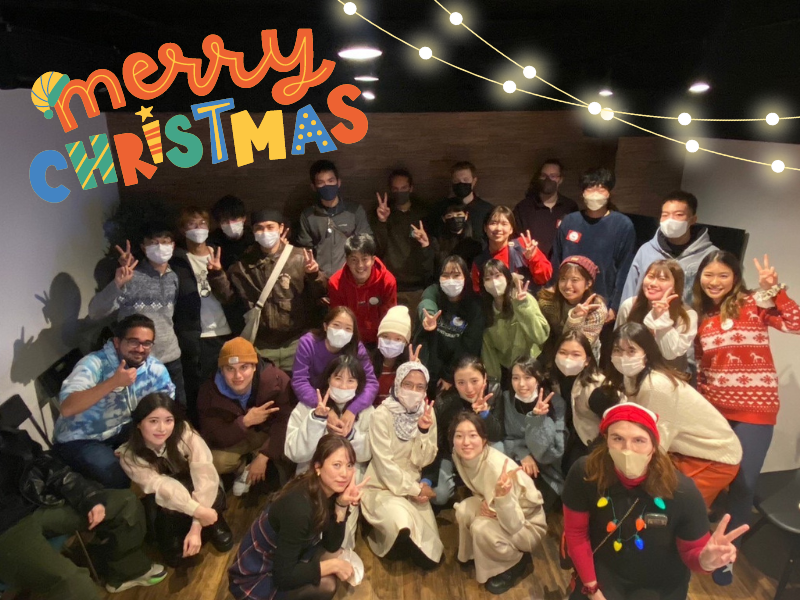
When it comes to celebrating holidays, there is one group of people we celebrate with more than anyone else: our friends and family. Christmas and New Year are the most important celebrations of the year and it is a time when we all come together, catch up, share stories, and spend time together.

However, if you are living abroad, it can be difficult. But don’t worry! International share house – BORDERLESS HOUSE is like a big family with tenants from many different countries, and we’ve celebrated these holidays together! It was really fun and a great way to meet new friends – and of course, share some great times, memories, and food! So let’s take a look at the recap of Borderless House events for Christmas & New Year!

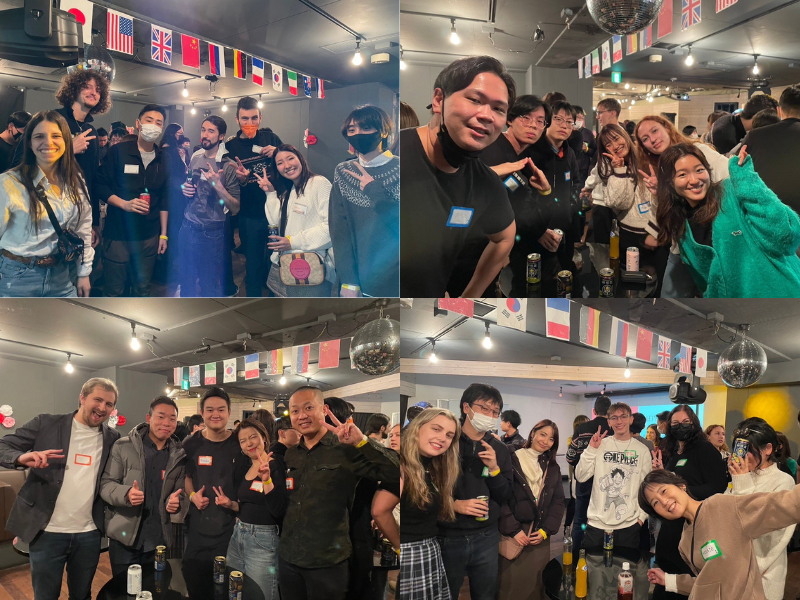
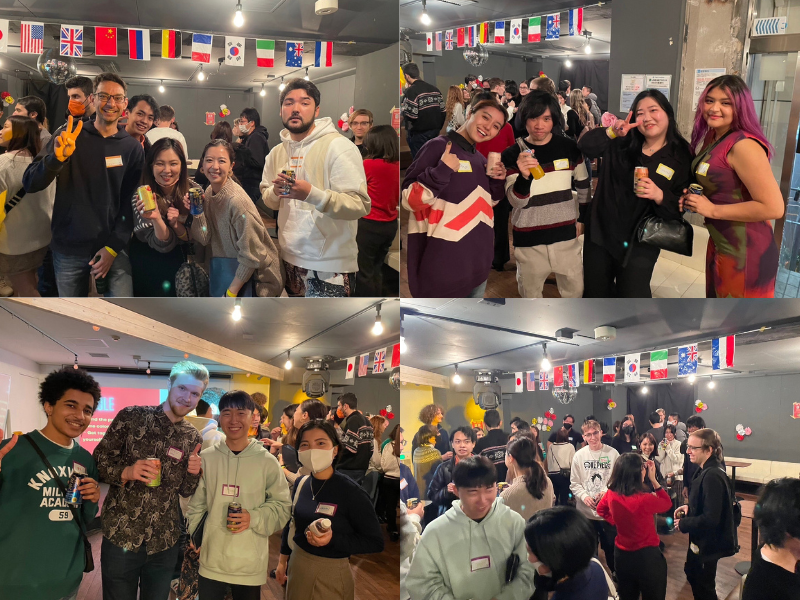
2023 New Year Party – Tenants from 40 different share houses celebrate New Year together!

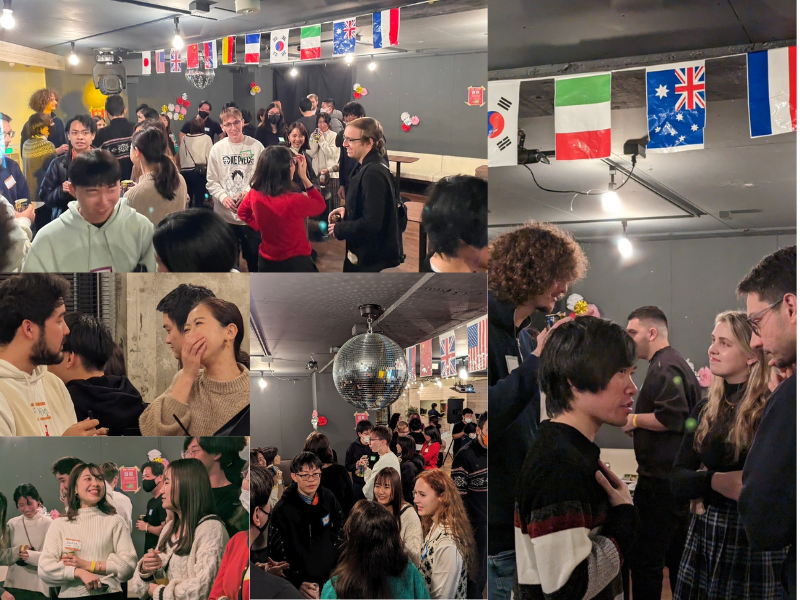
Due to COVID-19, we haven’t been able to hold any events that gather everyone together for almost 3 years, so we were extremely excited to see many of our tenants from 40 different share houses coming to this party! Because being able to build a warm and friendly community among the share houses where everyone can be friends, learn new cultures and languages, and share and experience life together is BORDERLESS HOUSE‘s mission and goal!

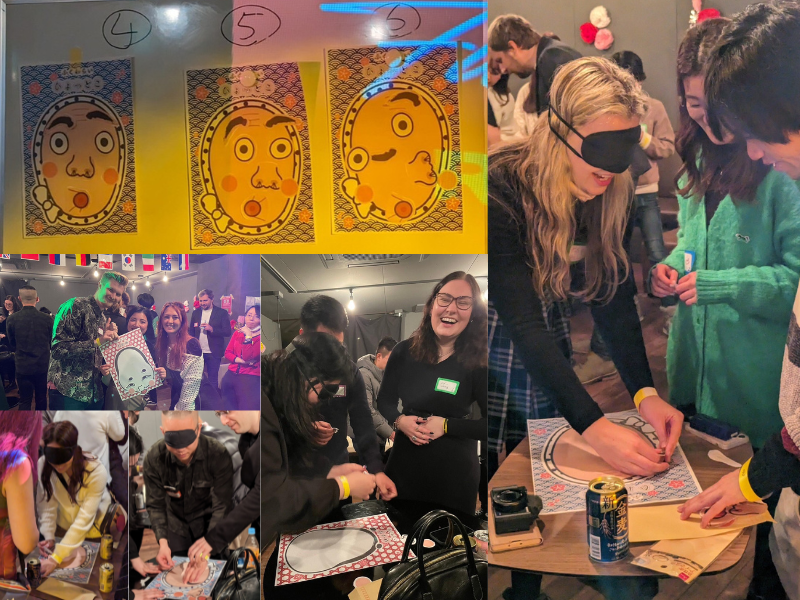
We played some funny games together; Borderless House also prepared gifts and rewards for our tenants!

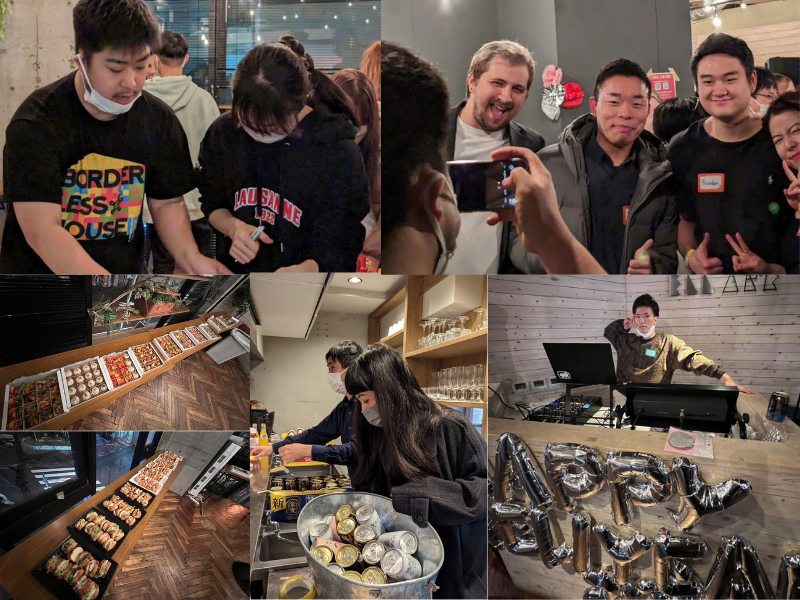
Of course, there were a lot of food and drinks, and our staff was a DJ!

Everyone had a great time just chatting and talking to new friends, or catching up with old friends! Some of the tenants even continued the fun and went to an izakaya, nightclub, and pubs for the second parties afterward!

2023 is the beginning of a new chapter. We hope everyone has a joyous 2023, bursting with fulfilling and exciting opportunities!

Christmas Party and More International Events in 2022 held by BORDERLESS HOUSE

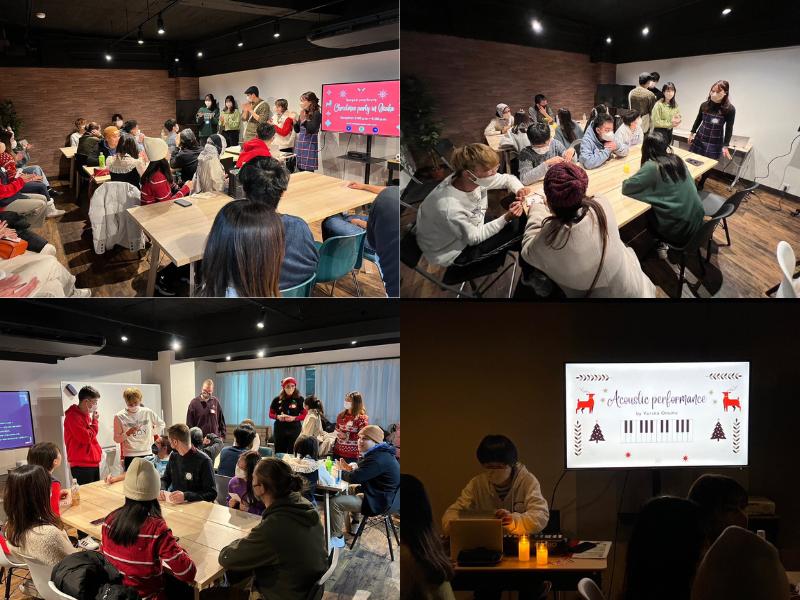
We had 2 small gatherings with our tenants in Osaka and Kyoto. Our tenants from 11 different share houses exchanged Christmas presents, and enjoyed the shows performed by our tenants!

Seasonal Events – Visit famous tourist spots and enjoy beautiful autumn leaves in Japan

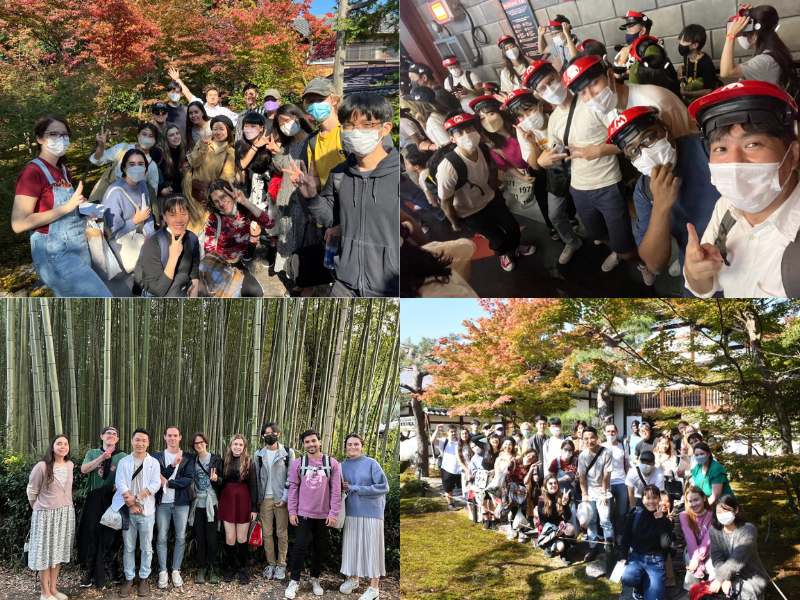
Japan has many shrines and temples, gorgeous natures, gardens and palaces, and other must-visit spots and attractions. We also hold events that our tenants could visit these places together, to gain wonderful experiences with the people from this multicultural community! Last year, we went to Arashiyama, Nintendo world, Bamboo forest, temples and shrines, and Japanese matsuri together!

We also have picnics and indoor/ outdoor sports events from time to time where our tenants can enjoy good relaxing times and meet people who share the same hobbies! 

If you want to join BORDERLESS HOUSE big community and enjoy all kinds of events with us! Check the links below ☺

▶Share Houses in Tokyo
▶Share Houses in Osaka, Kobe, Kyoto

Japan Working Holiday Guide▏Work and Travel in Japan! All you need to know

If you’re considering a holiday or travel in Japan, a lot of what you will be facing will be a new experience for you. This blog is for those looking for information about getting started and what you should know before applying for a Working Holiday visa in Japan!

Content Outline:
•  What is a Working Holiday Visa?
•  Who can Apply for a Working Holiday Visa in Japan?
•  How to Apply for a Working Holiday Visa?
•  What jobs can you do with Working Holiday Visa? How to find jobs?
•  Accommodation options during Working Holidays in Japan

What is a Working Holiday Visa?

A working holiday visa allows young people to spend their holidays in Japan whilst working to supplement funds for their travel and stay. The goal is to deepen mutual understanding by providing opportunities to understand the culture and lifestyle of Japan!

The maximum period of stay in Japan on a working holiday is one year. And the period of stay cannot be extended. If you would like to extend your stay after the working holiday expires, you will have to change to another visa.

Who can Apply for a Working Holiday Visa in Japan?

Here are some general requirements:
•  Age: 18 to 30 years old (25 in some cases) on the day of your application
•  Be a citizen of the following 26 countries: Argentina/ Australia/ Austria/ Canada/ Chile/ Czech/ Denmark/ Estonia/ France/ Germany/ Hong Kong/ Hungary/ Iceland/ Ireland/ Lithuania/ Netherlands/ New Zealand/ Norway/ Poland/ Portugal/ Republic of Korea/ Slovakia/ Spain/ Sweden/ Taiwan/ United Kingdom
•  Have a valid passport
•  Have a return ticket or proof of having enough money to buy one.
•  Proof of sufficient funds to cover expenses for the first few months (Required amounts vary from country to country )
•  Be in good health
•  Have no criminal record.

Please note, everyone only enters Japan on Working Holiday Visa one time!

For further detailed information, please check the official website of the Japan Ministry of Foreign Affairs: The Working Holiday Programmes in Japan

How to Apply for a Working Holiday Visa?

First, you should check the Embassy of Japan or the Consulate-General of Japan’s website for your country. You will find country-specific requirements from there.

Below are the general procedures:

•  Fill in an Application Form
•  Provide the requested documents: valid passport, ID picture, resume, the outline of planned activities in Japan, the written reason for applying for a Working Holiday in Japan, proof of a return ticket, and sufficient funds to support the beginning of the stay, medical certificate
•  Submit the application to the nearest Embassy or Consulate of Japan in your country of residence

What jobs can you do with Working Holiday Visa?

There is only one occupation prohibition regarding what job you can do with the working holiday vise, which is – working in “entertainment” industries is NOT allowed. Such as bars, clubs, pachinko, etc.
The most common/ typical jobs for foreigners to do in Japan include:
•  Service & Hospitality: Restaurants, cafes, fast food chains, hotels and sales in the shop
•  Seasonal Jobs: Ski resorts, farms, factory work
•  Teach Languages: English teaching is the most popular

Usually, basic Japanese language skills are required, especially when you’re looking for jobs, it’d be very helpful if you have higher Japanese levels.

How to find jobs

Here are some websites that have foreigner-friendly jobs that allow working holiday visa holders to apply:
•  Guidable Jobs 
•  We Xpats Jobs 
•  Mach Baito 
•  Arbeit EX アルバイトEX 

If you are already in Japan, you can also visit Employment Service Centers for non-Japanese job seekers:
• Tokyo Employment Service Center for Foreigners 
• Osaka Employment Service Center for Foreigners 
• Nagoya Employment Service Center for Foreigners 
• Hello Work 

Accommodation during Working Holiday in Japan

With a Working Holiday Visa, you can stay in Japan for up to one year. If you are planning to go to different regions in Japan during your working holiday, you will have to find accommodation that offers a “short-term” contract, as well as a place is fully-furnished.

Considering short-term stay and fully-furnished, living in a share house can be the best option for you. For example, the minimum stay of BORDERLESS HOUSE is one month, and you can adjust your contract term flexibly. Each house and room are all furnished and equipped with all the appliances you may need, so you can easily move in just with one suitcase. When you move out, you also don’t need to worry about the disposal of the furniture.

Moreover, in all the share houses of Borderless House, there are 50% of Japanese residents, and 50% from foreign nations, so you will have a lot of chances to practice your Japanese on a daily basis. Your Japanese housemates can also help you to practice for job interviews or check the Japanese resume for you!

Working in Japan ▏What is Shukatsu? Job hunting in Japan

Hi, I am Aisha from jimomin.work! Working abroad might be challenging!
Japan is facing the social issue of an aging population and a low birth rate. Consequently, there is a high demand for skilled workers from both local and international companies in Japan.

Process of Shukatsu for university student

Shukatsu 就活 is a Japanese term, short term for shūshoku katsudō which means job hunting. During this time, university students look for full-time jobs before their graduation. One of the unique characteristics of the Japanese job-hunting process is that companies hire new graduates, therefore, most of the students have a job contract when they graduate.

Typical Process of Shukatsu:
1. Find out what you want to do
2. Research on companies
3. Participate in job fairs/job seminars
4. Send entry sheet and/or resume to companies
5. Take written exams and/or SPI tests
6. Interviews (Groups and/or individuals)
7. Wait for the result

The problem faced by foreigners when looking for a job in Japan

One of the biggest problems faced by foreigners when looking for a job in Japan is the language barrier. Many are unfamiliar with the Japanese recruitment system as company explanations and processes are conducted in Japanese. Alongside the language, people also struggle with manners during their job-hunting period. For instance, it is preferred to wear a black suit when going to a job fair or an interview. Even after entering a company, many struggles with “Keigo” or respectful language and business etiquette.

Advice & Suggestions

This does not mean you should give up. But how can you work in Japan? The first would be improving your Japanese language skills, ideally having above Japanese N3 level.
Another way is by consulting with recruiters, preferably those who will guide foreigners. Jimomin.work is one of the employment support services (就職支援サービス). We support foreigners looking for jobs in Japan, matching them to a suitable company for free. For instance:
● Jimomin.work has a FREE Japanese Business Course which will help in becoming familiar with terms used in business
● Help in preparing resumes and interviews
● SNS accounts that share shukatsu information
● Host matching events where job-seekers can find companies who are looking to recruit foreigners. Our previous event had a matching rate of 100%!
● Lastly, one of the obstacles, is SPI tests, and frequent interviews are not required when applying through jimomin.work!

Conclusion

Job hunting can be long and tiring, especially when there is a language barrier. However, you are not alone! There is always help via consulting your career center in your university, recruitment companies and even asking your senpais! You can also talk freely to jimomin.work as well!

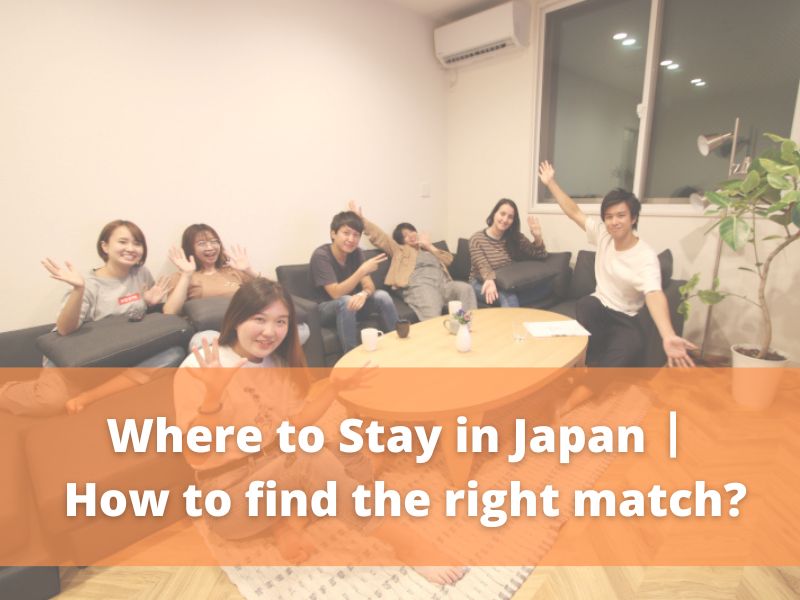
Where to Stay in Japan ▏How to find the right match?

Moving to a foreign country can be very daunting. First, you have to find a realtor, maybe one that speaks your language so you’re not struggling with the language barrier. Then you may also have to decide where you want to live, and factor in budget, lifestyle, and what you’re looking for in an accommodation, all of which you might even be done from far overseas.

To resolve your concerns about “where to stay in Japan?“, “how do I find the right match?”, we would like to introduce BORDERLESS HOUSE to you!

Brief introduction of BORDERLESS HOUSE

Many people may think sharehouses are noisy and inconvenient, but that’s certainly not the case! The right sharehouse might actually provide you with peace of mind and solve many of your problems.

At Borderless House, our share houses not only are full of people eager to make friends, but thanks to a multicultural staff, it’s also very stress-free to find the right place to stay. Borderless House staff are quick and responsive, with multiple language support. So staff can help you choose which house best suits what you’re looking for during your time in Japan, and make the reservation process extremely stress-free. It’s even possible to reserve a room within as little as three days!

Merits of choosing to stay at a share house in Tokyo as foreigners

People may travel to Tokyo for many different reasons, so is a share house right for you?
One really wonderful aspect of living at a sharehouse is how quickly you can meet people and make friends. Naturally, you’ll have the chance to learn a lot about many foreign cultures and do a lot of language exchange. And, because Borderless House residents are made up of both Japanese and foreign residents, this also means you have a great support network to help you with many different aspects of living in Japan.

There are over 40 Borderless Houses in Tokyo alone, in various neighborhoods and with their own unique traits. We have picked 5 featured share houses for you, let’s take a look!

BORDERLESS HOUSE HONKOMAGOME1

Borderless House Honkomagome1 is a new house located in the Ueno/Asakusa/Akihabara area of Tokyo, with ten private rooms! It is also very conveniently located to train lines such as the Tokyo Metro Namboku line and JR Yamanote loop line. These stations are within five minutes away. For anyone who works in areas like Ikebukuro or Shinjuku, a quick fifteen-minute train ride makes commuting very easy.

There is also a very convenient shopping area located not too far away from the house, with supermarkets, drug stores, and bookstores. This Yanaka-Sendagi neighborhood is full of history, once serving as a gateway to old Tokyo, Edo, along the Nakasendo Highway. Today there are also many houses that once served as residences for feudal lords.

One such historic location is the Rikugien Garden, located very nearby. Not only does this offer you a place to get away from the city at times and enjoy some greenery, you’ll also have a great front-row seat to the seasons changing, such as sakura in spring and autumn leaves in fall. Enjoy lovely walks with your roommates any time of year!

BORDERLESS HOUSE ROPPONGI1

For those who really want to live right in the center of Tokyo’s exciting city life, Roppongi1 share house is a great choice! Roppongi is known for being a hotspot for new and exciting shopping, museums, and events.

Roppongi is called a city-within-a-city, because of the interconnectedness of its buildings. There are whole residential, shopping, and business areas around the station, full of stylish shops and cafes to explore. It’s also a great area for events like live music and nightlife, and Roppongi is famous for its stunning view of Tokyo city’s skyline.

The nearest station to the sharehouse is Roppongi station itself, meaning you’re right on the Toei Oedo and Metro Hibiya lines. Shibuya is 7 minutes away, and Shinjuku is only 9! It’s hard to beat that sort of convenience to the most lively areas of Tokyo.

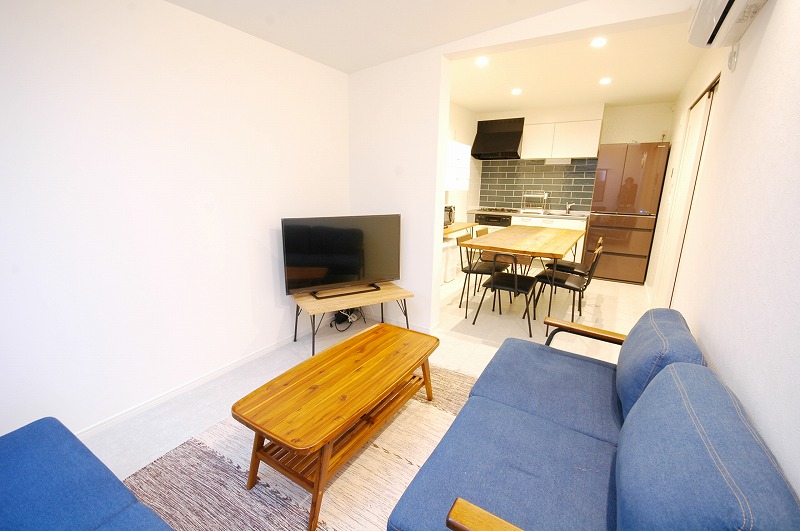
Roppongi1 share house has sixteen private rooms, meaning there are plenty of opportunities to meet other people. The living area has a stylish kitchen and lots of space for hanging out with the rest of your share mates.

BORDERLESS HOUSE SHINAGAWA-OIMACHI2

Shinagawa is known for being a mostly business district, but for locals living in the area, there are a surprising number of unique things to do and see. If you like day trips, there are even direct trains to Yokohama, and Shinagawa is right on the Tokaido Shinkansen line, going directly to Kyoto and Osaka!

Borderless Shinagawa-Oimachi2 share house is located only a few minutes away from sights such as the Shinagawa Aquarium and Shinagawa Temple. The aquarium especially is popular for dates, and appears in many dramas!

There are also unique museums such as the Archi-Depot Museum, for anyone interested in architecture, and Senkakuji Temple is a historic testament to the famous story of the 47 ronin. This is an area rich with history.

The sharehouse itself is located in a quiet neighborhood, without sacrificing convenience. Located close to a major train station like Shinagawa, it is very surprising to find rooms are so wide and spacious. Because the house has less than ten tenants, it’s a peaceful sharehouse that lets you grow close to your flatmates in a relaxed atmosphere. Enjoy the hominess of this house, and quiet chats in the comfy living room, while still having plenty of privacy in your own room.

BORDERLESS HOUSE KUGAHARA1

Kugahara Station is on the Tokyu Ikegami Line in Ota Ward, Tokyo. With direct access to Kamata in 8 minutes and Gotanda in 17 minutes, it is convenient for commuting.

Denenchofu, an upscale residential area, is located nearby, but Kugahara has the most reasonable rent in Ota Ward. It is a quiet residential area with excellent public safety, making it a safe place to live for both single people and families.

An old-fashioned shopping arcade stretches from in front of the station, and it is full of unique individual stores and convenient shopping for any of your daily needs, with supermarkets open until late no matter what time you arrive home. It is a town where you can relax when you come home without the noise of the city.

A short walk away is the natural beauty of the Tama River, creating a relaxing break from urban living whenever you need a little nature. Wide open spaces are hard to find in Tokyo proper, but at Kugahara you’ll find that’s not the case at all.

Borderless Kugahara share house has a lovely open concept, with lots of airy light and wood features. The rooms are also very wide and spacious, with very big windows and a wrap-around balcony.

BORDERLESS HOUSE KIKUKAWA1

Kikukawa1 share house is located in a very popular area of Tokyo, with its location close to the famous Tokyo Sky Tree. With Asakusa only 6 minutes by foot and access to the Toei Shinjuku Line from Kikugawa station, you’ll always have places to go and things to do! Stores and restaurants are all very nearby, making it an extremely convenient location. Akihabara and Ueno can also be easily reached by bike.

Nearby attractions include the Museum of Contemporary Art and the Edo Tokyo Museum. It’s also very close to Ryogoku Kokukigan National Sumo arena! The Sumida and Otani rivers are also very nearby, meaning you have a few lovely quiet areas to hang out not too far away. The Sumida River is particularly famous in spring for cherry blossom viewing!

In spite of its convenience, the house itself is located in a quiet area and has a very cozy atmosphere. With only six tenants total, it’s a great choice for those who want to come back at the end of the day to a nice quiet house. There’s even a lovely rooftop balcony to hang out on the third floor. And then if you ever want to have a more lively get-together, there are two other sharehouses nearby, making it easy to meet up for more fun!

Lastly

Sharehouses at their best give you the opportunity to live comfortably and conveniently, and also provide valuable opportunities to meet and talk with other people. Just like Tokyo is an incredibly varied metropolis with all manner of people and neighborhoods, Borderless House share houses are very varied as well! No matter what you prefer, there is certainly a house with the right personality for you. Contact us now and we can help you find the right match!

Make friends in a foreign language: Making mistakes is the key to getting comfortable!

Hello! My name is Reimi and I currently live in Japan. Like many of you, I fell in love with Japan a long time ago, and so living here is like making a dream come true. But of course, there are all sorts of obstacles to overcome when it comes to living in a foreign country or learning a new language. Given the chance to write about it, I wanted to write about the difficulties and rewards of learning Japanese. Saying you want to learn a foreign language is definitely easier said than done; you’re not alone in struggling, but it can be so worth it! 

YOUR REASON

What brings you to Japan?

The answer to this question might be different for each person, of course. Some people move to Japan for work, some come for school. Some have always wanted to visit, interested in the things that make Japan unique, like scenery, art, or food. Some want to learn Japanese or make friends in Japan. Some even come to Japan and end up never leaving! There are even programs that allow one to travel extensively and stay in foreign countries for an extended period of time with accommodation provided, such as work holidays or internship programs.

No matter what one’s reasons are, however, the fact remains that moving to a foreign country gives one a chance to learn about a new culture and learn a new language. They say that travel can teach you about yourself, expanding your horizons and challenging yourself in unfamiliar situations, so imagine how much more you’ll learn when you live somewhere entirely new.

EXPECTATION VERSUS REALITY

Myself, I’ll have been living in Japan for almost five years total. For most of that time, I came as a student, so making friends was definitely something I was looking forward to. Plus, at the time I moved, I had just barely graduated high school and I had never lived apart from my family, so there were always concerns that I would be isolated without a network as I had back home. I would be fending for myself for the first time – and in a foreign country where I barely spoke the language no less! From the start, I was too excited to think of anything but finally being in Japan for the long term, but my family held a lot of apprehensions about a young woman living alone in a foreign country.

But honestly speaking, if I had to choose one thing, the scariest thing about having moved to Japan is speaking Japanese. There are still times I worry that my language ability is not enough when I am nervous about being able to convey to the other person the things I am thinking. Or that I’m going to misunderstand or be disrespectful.

For a younger me, this was actually really terrifying. I would think to myself: How can I become friends with someone when we don’t speak the same language? Why would they like me when I can’t tell them about myself? When I can’t understand them? When I’m constantly making mistakes?

But as I’ve gotten more comfortable living in Japan, the more I realize that that way of thinking is entirely wrong. As scary as it is, and especially how difficult it is, I think one of the most important things I’ve learned is that making mistakes is the key to getting good.

No one does anything perfectly from the start. No one can automatically play piano without hitting a few wrong notes or ride a bike without falling a few times. Learning a language is no different. Language learning shouldn’t be treated as a one-time test where you are either fluent or you’re not. Learning how to speak a new language and getting comfortable with it will take time. You need to ‘break in’ so to speak.

The easiest way to do this is to simply use it, mistakes and all. Every mistake I have made while learning Japanese makes it easier as well to remember the correction, which in turn gives me the feeling that I’m really improving, even if it’s little by little. And sometimes too, the mistakes I make are the very reason I make friends. Sometimes it’s someone catching an error and generously correcting me, or sometimes it’s a little slip of the tongue that makes us laugh, humor transcending language in a way that needs no translation.

We learn from our mistakes.

When I first moved to Japan, of course, I heard a lot more Japanese than I had in America. I had gotten used to the convenience store routine (‘do you need a bag?’ ‘would you like this warmed up?’ ‘do you have a point card?’), and I could tell which ingredients I needed at the grocery store. But compared to when I first came to Japan, my speaking ability had barely improved at all.

The issue was this: I was not actually speaking Japanese!

AN IMPORTANT WAKE UP CALL

All of my friends spoke English. I didn’t have a tv and didn’t even try to read books in Japanese. There were events at school that I did not join, thinking I didn’t speak enough Japanese to be of any help or have any fun. In other words, I was a foreigner living in Japan, without really living in Japan. In other words, I had found myself in the “foreigner bubble” where I was not using Japanese in my life.

Naturally, it’s easier to express yourself the way you want to express yourself when you are using your mother tongue. And no surprise, it can be easier to “click” with another person when you don’t have to first surpass the hurdle of understanding what the other person is saying.

But I think that being able to speak fluently is completely different from being able to communicate, and your language ability will have nothing to do with it!

Every time you speak you are improving your language skills, polishing things like pronunciation, vocabulary, and grammar. Just like riding a bike, practice makes perfect!

CREATING THE RIGHT OPPORTUNITIES

So maybe the next question is, how do I start to speak more Japanese? Of course, maybe it’s a little strange to start striking up a conversation with the cashier at the register. But there are many ways to find people in social settings and the more you open yourself up to meeting new people, the more friends you’ll find you’ve made!

Here are a few suggestions:

● You can join clubs and sports meetups to find people with similar hobbies. Sharing similar interests means you already share that common ground!

● Striking up a conversation with someone in a bar or restaurant is another great way to practice and sometimes these spontaneous conversations are extremely good practice because the topics can be diverse. There’s no pressure or goal, it’s just a few folks having a good time over food and drinks!

● If you’re in Japan for school or work, you might be in a great spot to meet people! There are always student activities, like group circles or hangouts. And you can also take advantage of working with the same people every day to strike up conversations in passing or use Japanese in more formal settings. Who knows, maybe you’ll become friends naturally?

● There are also language exchange apps like Hellotalk and HiNative. I’ve met lots of people through these apps, and the best part is that these are people who share the same desire as me: to get better at speaking their chosen language.

Sharehouses! No surprise, sharehouses are great for learning languages! They’re a little like the best of all worlds; they bring together people with similar goals: making friends and learning more about other cultures. Borderless House in particular hosts lots of great events that give tenants a chance to kick back and have fun with one another, so you can really take advantage of the Borderless House’s support network and Borderless Mates network. Another great aspect of sharehouses is that you’re forced to really communicate with each other to live together happily and peacefully. You’ll learn more about other people’s values, unique perspectives, backgrounds, and what inspires them. And better yet, because you live together, it’s only natural that you can become closer a little at a time, day by day.

What do you think?

IN CONCLUSION

Truly, it wasn’t until I made a concerted effort to step out of my comfort zone that I felt my language ability starting to improve. And as my language ability began to improve, Japanese also started to become more and more fun and making friends became easier. Even now, I still make plenty of mistakes, but that’s not a bad thing at all. It’s important to remind yourself that everyone starts somewhere, even you, with your native language, and look at you now!

Perhaps you haven’t yet had the chance to visit, but you’d like to experience Japan for yourself! If you’ve found this page, maybe that day is sooner rather than later. Good luck!

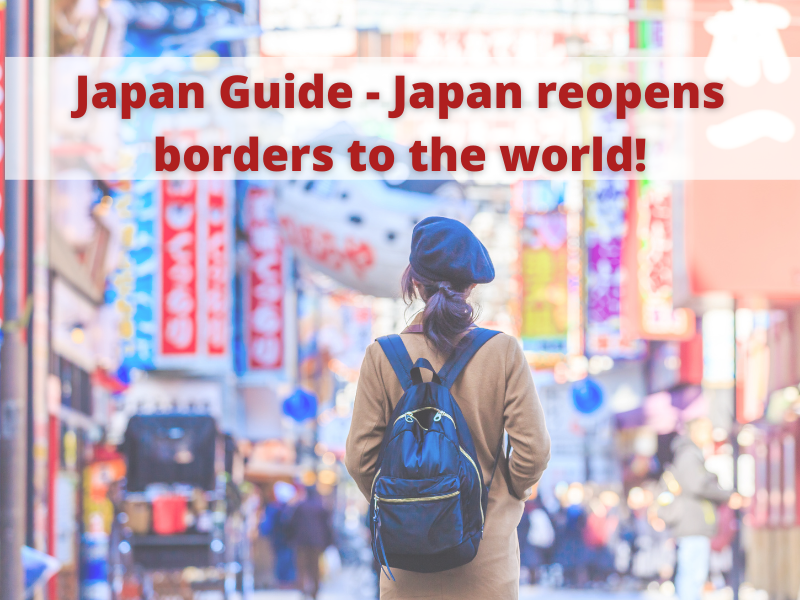
Japan Guide│Japan reopens borders to the world!

This is it! After almost three years, Japan finally fully opened its doors to all visitors, including foreign tourists and other arrivals on October 11th, 2022. Short-term visitors will no longer be required to apply for tourist visas as well as with no need to book tours through travel agencies. It’s exciting news for all Japan lovers who have been waiting for visiting or coming back to Japan! 

In this guide, we will be introducing what you need to know before you visit Japan during the post-pandemic. *Please note, the last update of the following information is on October 13th, 2022. Please be sure to check the latest information through Ministry of Foreign Affairs of Japan website regarding entries of international travelers. 

Entering Japan│What to prepare?

Triple-vaccinated travelers are able to freely visit Japan, without any restrictions and are subject to the same conditions as before the Covid-19 pandemic.

If you have NOT been vaccinated with WHO-approved vaccines at least three times, you will need to submit your negative result from a COVID-19 test taken within 72 hours prior to departure. Check here for the certain testing methods and certain requirements of the vaccination certificate that Japan recognizes.

And this is the only requirement remaining. 

Travel etiquette in Japan during post-pandemic

Even though it is not against the law to take off your mask outdoors while not talking with others, the majority of people in Japan still continue to wear masks in public spaces in order to prevent infections or spreading the disease. It is good to stay cautious and protect everyone, not only just Covid-19 but also flu or other viral diseases, especially during winter times.

Also, most of the public indoor facilities, such as hotels, restaurants, stores, and museums require visitors and customers to sanitize their hands upon entrance, and usually, there will be hand-sanitizing liquid placed at the entrance, so please be cooperative and show consideration toward others by following those rules. 

FAQ of Entry to Japan

Q1. Will I need to book a guided tour?

No, you can travel as an independent traveler. 

Q2. Will I need to be vaccinated to enter?

No. But if you have not received at least three shots of a vaccine recognized by the WHO, you need to obtain a certificate confirming the negative status of a COVID-19 test taken within 72 hours prior to departure for Japan from your country of origin.

Q3. Do I need to quarantine? 

No. Travelers to Japan will no longer be required to quarantine upon arrival.

Q4. Do I need to wear a mask?

Yes. Though the government relaxed its guidance on mask usage, Japanese people still continue to wear masks while going out, especially while riding crowded trains or buses, and entering restaurants and hotels.

Q5. Are there any Apps that I need to download beforehand?

Japanese government recommends using “Fast Track” to speed up the entry procedures at the airport before entering Japan. Also, download the “MySOS” app and register your account and password, and then you can submit your passport, vaccination certificate, and other documents that are required for entry. 

BORDERLESS HOUSE hopes you enjoy your travel experience to the fullest in Japan!

Safe travels!

Is Living In A Shared Room Right For You? Pros and Cons & Tips of Smooth Living With A Roommate

When you’re looking for new accommodation, one of the first things you’ll have to decide is whether you want to live with roommates or not. While there’s nothing wrong with living alone, it can get lonely sometimes! So, if you like being surrounded by people more than being alone, living with roommates can be a good option for you!

Some people become lifelong friends with their roommates, while some people struggle with getting along with their roommates due to incompatible lifestyles. There are many pros and cons of living with a roommate, so we’ve made this guide for you to help you make your decision. Meanwhile, giving you some tips on living with housemates or roommates to avoid conflicts. 

Social Considerations of Living with Roommates

Roommates can be a great experience as you have someone to share your life with and hang out with. However, as you share a living space with others, it can be tricky when you need some time alone. So here are the pros and cons for you to consider from the social aspect. 

Pro: Opportunity to make new friends & Always have friends around

Since you’ll be living with your roommates, this can lead to an intimate and lasting bond. It doesn’t necessarily mean you’ll become best friends, but when you get lonely or need someone to talk to, having roommates can be very nice. You can also have movie nights, dinners, holiday parties, or just spend a random Thursday night with them!

Con: Lack of privacy & Sacrificing personal space

Though it’s nice to always have someone around you, on the other hand,  it means you need to make some sacrifices on your personal space, because your bed may be the only place you can have your own privacy; or you will need to wait till your roommate is not around, so you can enjoy the space your own. All in all, if you need a lot of privacy or space alone, living with a roommate may not be a suitable option for you.  

Financial Considerations of Living with Roommates

Money is usually one of the main factors for most people deciding where to live. As moving to a new country, rental expenses can be a weight on your shoulders. Here are some financial advantages of living in a share house or share room with roommates : 

Pro: Shared rooms are much cheaper!

Depending on the location you’d like to stay and your circumstances, you may not be able to afford to live on your own where you want. Living with a roommate can help you save money on rent, meanwhile, you can have a better chance to live in a much nicer location with affordable and reasonable rent. Sometimes, you can even save money on food and other expenses too by sharing them with your roommates.

Con: You can’t decorate the entire room however you want
When you live alone, you have total control over everything that goes on in your room. However, when you live with roommates, you can only decorate and keep your personal style within your own spaces. 

Lifestyle Considerations – Tips for Smooth Living with Roommates 

Lifestyle can be the most important and tricky part when you live with roommates, since you may have different standards for cleanliness, different living habits, conflicting schedules, etc. As it’s an unavoidable factor you will face when you living with others, we’ve collected some handy tips for you for a smooth living with roommates.

Roommate Agreements & Share Responsibilities

A mutual agreement can be very helpful when you live with roommates. Keep it in mind that you all share responsibilities around your shared space. Set ground rules that cover the basics together, and talk through each of your expectations, habits, and routines together, such as cleanliness standards and rules, morning and bedtime routines, daily schedules, etc. Establishing standards and common ground that you all agree to will help you avoid difficult confrontations in the future. Here are some essential tips you need to know to enhance your shared living experience.

Communication & Keep an Open Mind

Communication is key when living or spending time with others. Try to open yourself up and communicate anything that your roommate should know about you. When issues arise, try to bring up the issue in person, instead of texting or leaving a note, to avoid leading to miscommunication and frustrations. If something is bothering you, have a conversation with your roommate as soon as possible before it grows into a bigger conflict. You can take time to make a plan and think through how you can express yourself, and when communication happens,  be sure to listen for understanding as well.

Understand the Difference & Be Considerate 

It’s important to understand that everyone is from different backgrounds and was raised differently. Realizing, it can save you a lot of frustration you may have when you live with others. Your roommate’s living habits and lifestyles can not be exactly the same as your own, so try to talk to each other and find a way to meet in the middle, especially if your differences can cause conflicts. At the same time, be considerate and take your roommate’s feelings into consideration before jumping to conclusions or making decisions.

There’s no crystal ball to see whether living with roommates is going to be a positive or negative experience. Be sure to weigh all the pros and cons, get yourself prepared, and use the tips for a better and more successful living experience in a share house or a shared room.