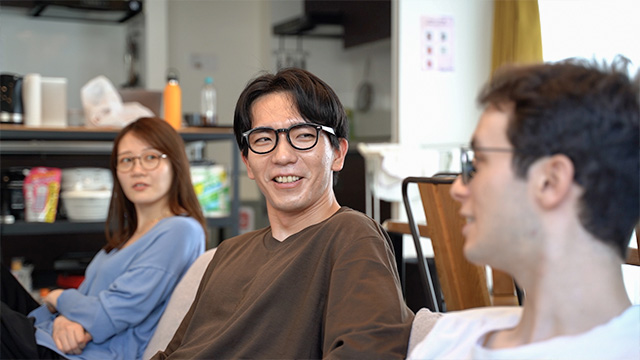
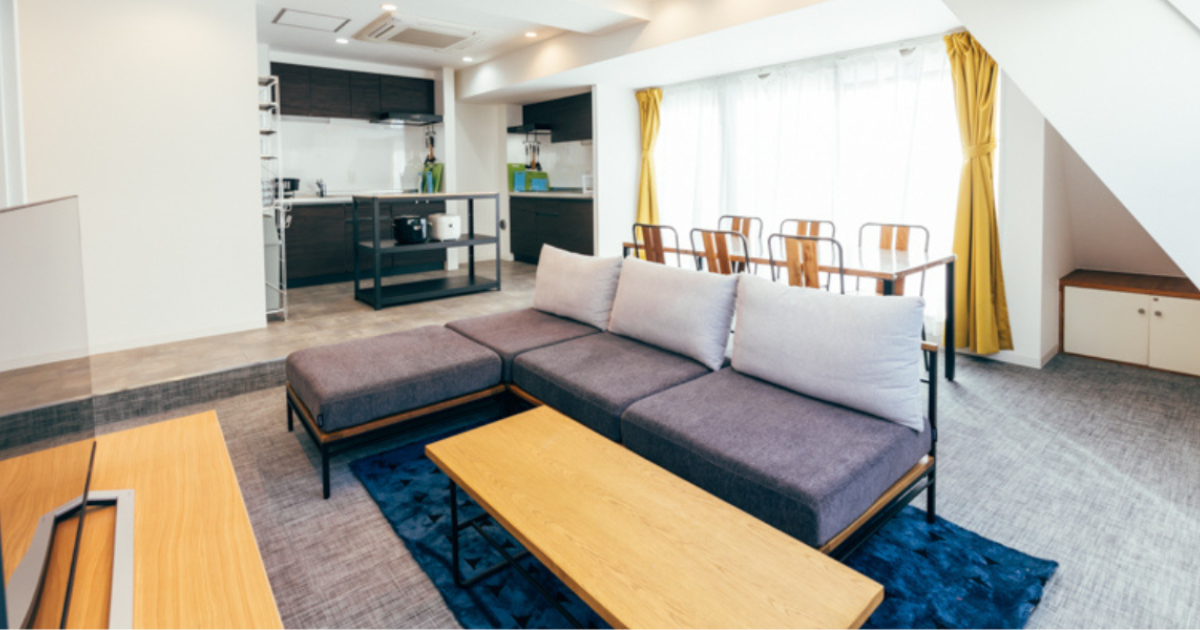
【台北共居生活】大安4宜蘭一日遊:六國室友的國際交流 share house 日常

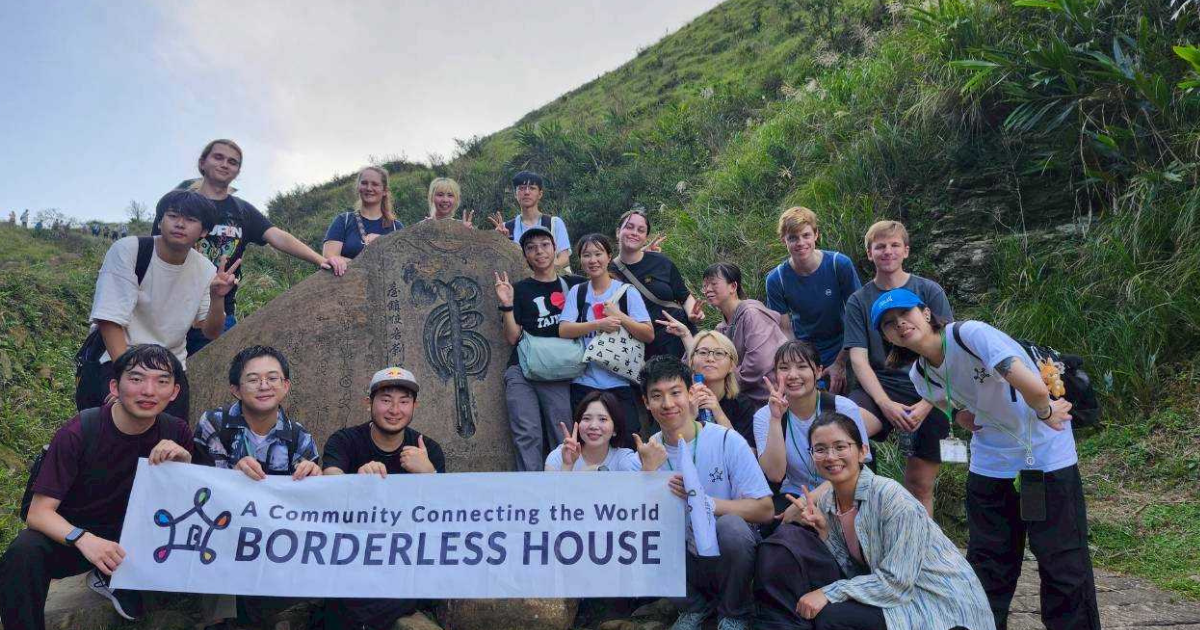
Borderless House 大安4 的室友們最近在週末安排了一場充實的宜蘭一日遊,從溫泉放鬆到在地美食,再到下田體驗,留下了滿滿回憶!
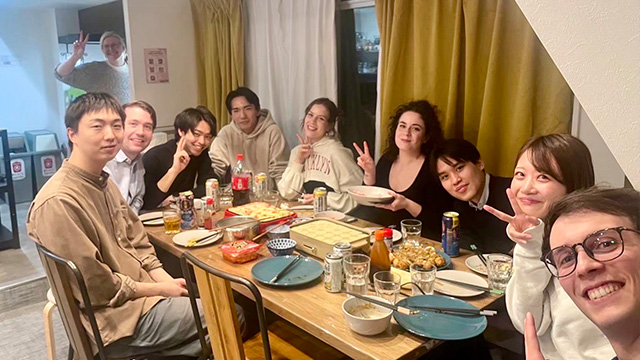
平時就互動熱絡、喜歡交流的他們,也透過這次旅行讓彼此的距離更加拉近,展現出充滿活力與溫度的 SHARE HOUSE 生活。

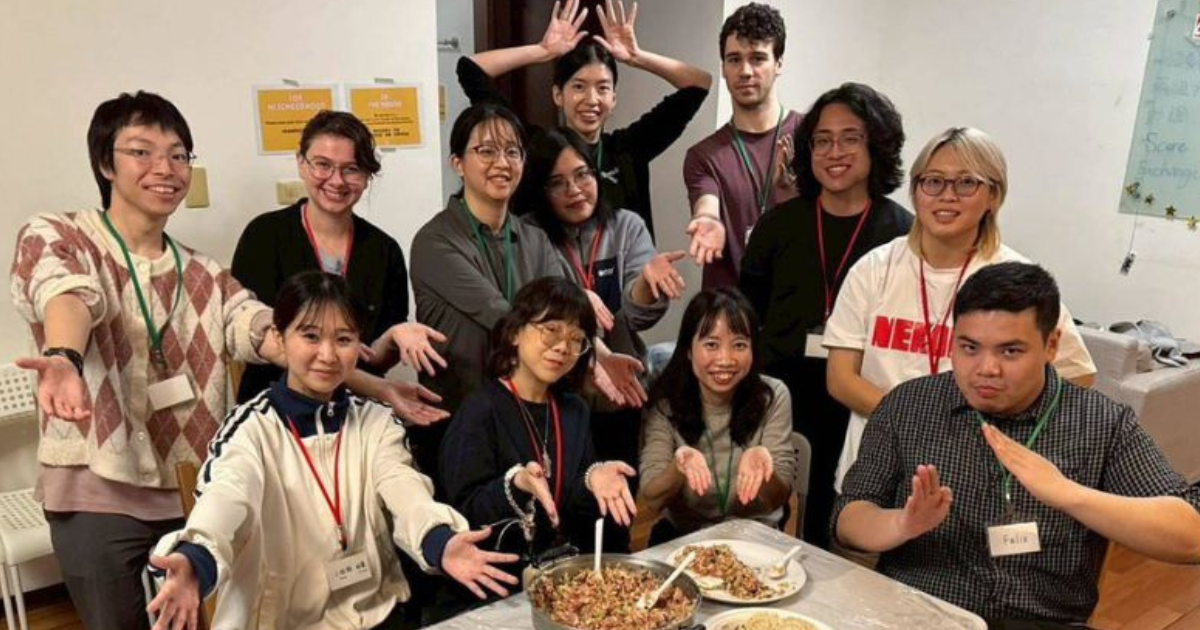
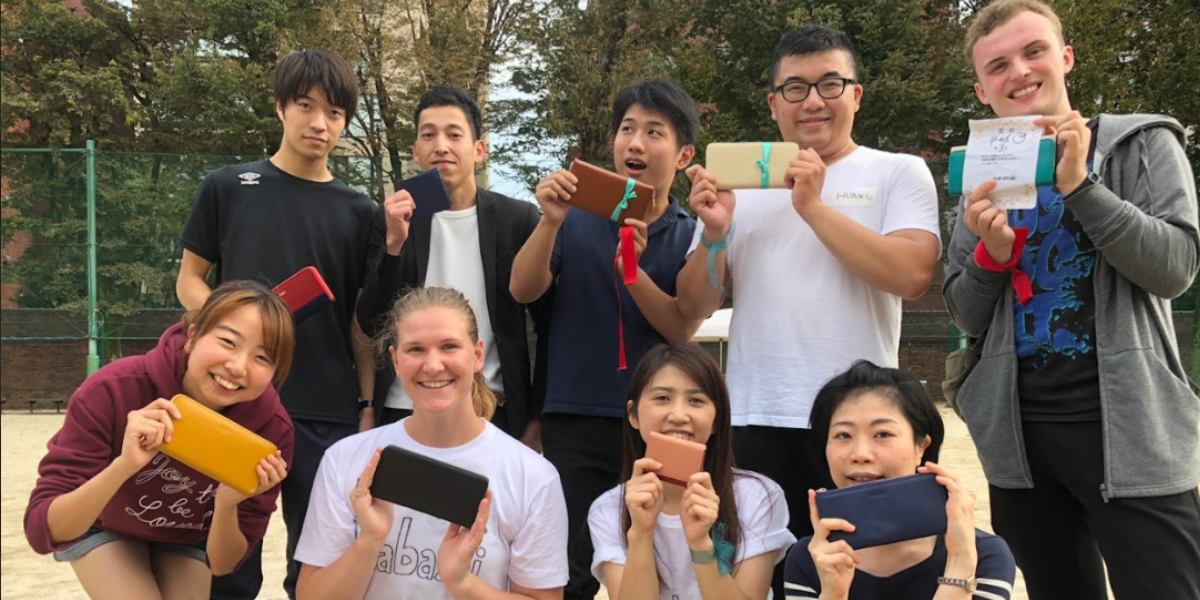
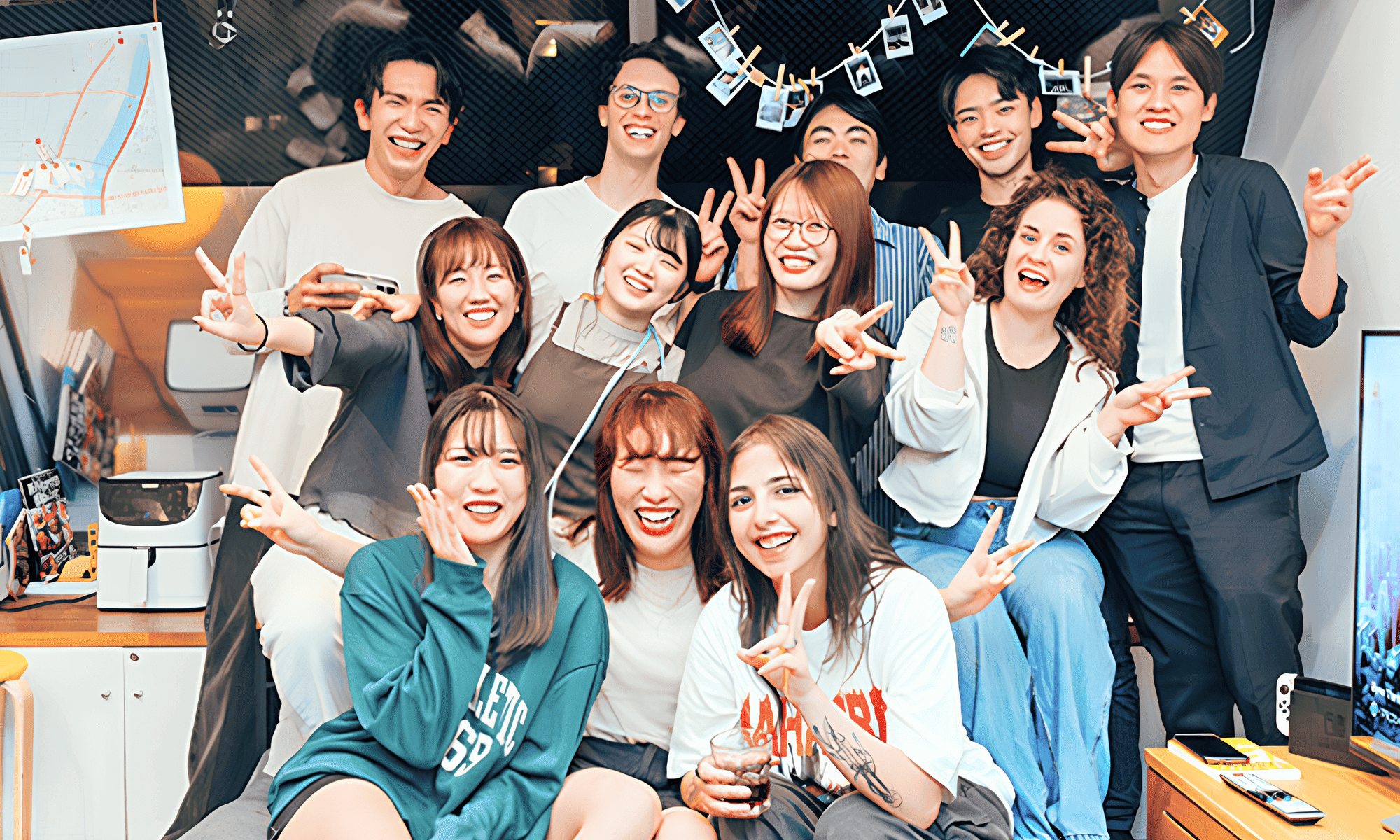
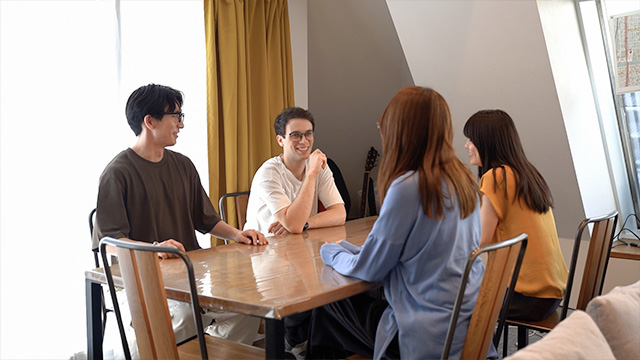
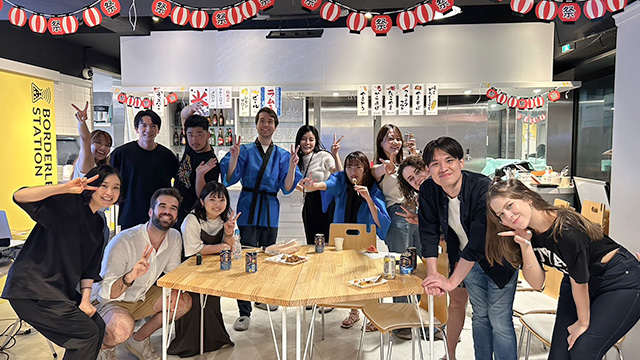
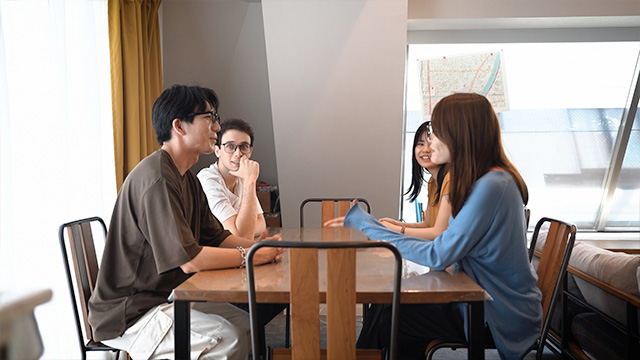
這次的旅程中,成員來自美國、法國、日本、韓國、菲律賓與台灣,也有房客特別邀請家人、甚至是曾經一起住在大安4的夥伴一同參與,讓這次的宜蘭行更加熱鬧溫馨。不同文化背景的大家聚在一起,讓這趟旅行成為了展現多元連結的國際交流體驗。

一起來看看他們這趟旅程的精彩遊記吧!

台北出發!從共居到旅行:礁溪溫泉與悠閒時光

那天一早,室友們帶著興奮的心情集合出發,準備來一趟溫馨的宜蘭小旅行。抵達礁溪轉運站後,微涼的空氣與輕鬆的度假氛圍,讓大家迅速從日常切換到旅行模式。

上午的第一站來到礁溪溫泉公園森林風呂,在綠意環繞的環境中享受溫泉時光,讓人徹底放鬆。有室友分享,這是他的首次溫泉體驗,直呼「真的很舒服」,特別是和平時一起生活的室友們一同泡湯,感覺就像一家人一樣。

泡完溫泉後,接著來到礁溪市區隨意走走,邊逛邊吃,享受悠閒的節奏。

跨文化餐桌饗宴:外國室友的台式大灶雞初體驗

中午大家一起到餐廳享用宜蘭必吃美食「大灶雞」,有些外國室友是第一次看到整隻雞端上餐桌,覺得非常新奇,忍不住拍照紀錄,也有人笑著問:「這該怎麼吃?」後來由台灣房客主動幫忙分食,讓外國室友順利嘗試了第一次的大灶雞大家品嚐後紛紛露出驚喜的表情,直呼很好吃!

這個月剛好也是兩位夥伴的生日,大安4的室友們在這個時刻送上用心準備的禮物與卡片、一起為壽星們慶祝,讓用餐時光多了一份驚喜與溫暖。

國際室友的宜蘭在地體驗:瀑布散步、拔蔥DIY與夜市探索

吃飽喝足後,首先前往的是五峰旗風景區看瀑布,在自然景色中隨意走走、拍拍照,享受難得的戶外時光!

之後的重頭戲之一,是到星寶蔥體驗農場進行蔥派 DIY,成員們不僅親手製作屬於自己的蔥派,也實際下田體驗拔蔥,更貼近宜蘭的在地特色!

蔥派的製作過程中,有人是第一次自己擀麵糰,有人手忙腳亂地笑著說:「怎麼跟想像中不太一樣!」也有人意外做得很成功,過程中不時傳出笑聲,氣氛非常歡樂。對許多來自海外、初次在台北租屋生活的房客們來說,這樣的體驗也格外新鮮難忘~

晚餐時間,來到熱鬧的羅東夜市!夜市裡人潮絡繹不絕,大家一邊穿梭在各個攤位之間,一邊挑選喜歡的美食與伴手禮,把宜蘭的味道與回憶一起帶回家。

台北共居生活:跨越國界的相遇,讓國際交流走進日常

其實這天在前往羅東夜市前,有室友提議或許可以到公園散步,於是便隨興地安排了羅東運動公園走走,好似一家人一樣,大家在公園林道中漫步,就像平時在大安4一樣,大家各自聊著不同的話題,有些室友即將離開台灣,有些室友也準備要朝向下個目標前進。

在公園裡的小山丘上,大家不約而同地「登頂」。就像當時大家藉著緣分,從六個不同的國家、不同的城市來到大安4的家,並且聚集在一起。

雖然一整天的行程緊湊,但也正因如此,每一刻都顯得特別珍貴。

大家在旅途中自然交流、分享彼此的生活與故事,展現出共居生活獨有的多元與連結,也體現了 BORDERLESS HOUSE 一直以來所重視的理念:我們提供的不僅僅是學生住宿或一般的台北租屋空間,更希望透過共同生活,讓來自不同背景的人們能夠自然地認識彼此、建立連結,讓國際交流成為日常的一部分

這不只是一趟旅行,更是大安4夥伴們在台北 share house 生活中,共同留下的一段美好回憶。期待下一次,再一起出發!

想跟他們一樣擁有精彩的共居生活嗎?
點我看BORDERLESS HOUSE空房資訊

One Year In: What Life at Borderless House Sendai Actually Looks Like

On February 1, 2025, Borderless House opened its doors in the Sendai, Tohoku region for the very first time. Now, a year later — here’s what it’s really been like.

Hi, my name is Daichi Miura, and I’m a university student in Miyagi. Since August 2025, I’ve been working as a student intern helping to run the Sendai house. I haven’t lived here as a resident — I’ve been here as staff. But honestly? That’s given me a pretty unique view of how this place has grown.

This is Borderless House Sendai, from my eyes. ( I’m the one in the purple hoodie.)

Sendai’s Green City, Global Community — That’s Borderless House Sendai

Before we get into the fun stuff, let me tell you a bit about the house — and the city it calls home.

First Time in Tohoku! Premium Co-living at BORDERLESS HOUSE

The official name for the share house is BORDERLESS HOUSE SENDAI-TOHOKUDAIGAKUMAE1.

It’s a five-minute walk from Tohoku University’s Kawauchi Campus, and about seven minutes from Kawauchi Station on the Tozai Line. From there, Sendai Station is just three stops away. Getting around is easy.

(The “1” in the name is intentional — the plan is to keep growing, with a 2, 3, and more to come.)

Just 3 Stops to Sendai Station — Commuting Has Never Been Easier

The closest station is Kawauchi Station on the Sendai City Subway Tozai Line, about a seven-minute walk from the house. Several residents actually commute to offices in central Sendai from here, which gives you a sense of how easy the access really is.

Three stops to the city center. That’s it. 

What Makes Sendai So Special?

To truly introduce the unique charm of BORDERLESS HOUSE SENDAI, I first have to talk about Sendai itself. The character of this city is deeply connected to what makes living here so special.

As the capital of the Tohoku region, Sendai is its only major designated city. True to its nickname, “Mori no Miyako” (The City of Trees), you’ll find lush greenery right in the heart of downtown. The Kawauchi area, where our house is located, is surrounded by bamboo groves and trees—giving the air a peaceful, calm quality you wouldn’t expect in a city.

Sendai is the perfect “middle ground.” It isn’t a forest of skyscrapers, yet it’s far from being the countryside. This “just right” size makes daily life feel incredibly comfortable.

Adventure is always close by!
We are also lucky to be near amazing spots like Matsushima (one of Japan’s three most scenic views), Tashirojima (the famous “Cat Island”), and the world-class ski slopes of Zao. Our residents often head out on trips together to explore these gems!

Want to see our latest adventures?
Check out the BORDERLESS HOUSE SENDAI-TOHOKUDAIGAKUMAE 1 Instagram!


There is still so much to tell you, but I’ll save the rest for another time so this doesn’t get too long! ^^

Real International Exchange in Sendai!

Now that you know a bit more about the city, let’s dive into what life is actually like inside BORDERLESS HOUSE SENDAI-TOHOKUDAIGAKUMAE 1 and the amazing connections happening here!
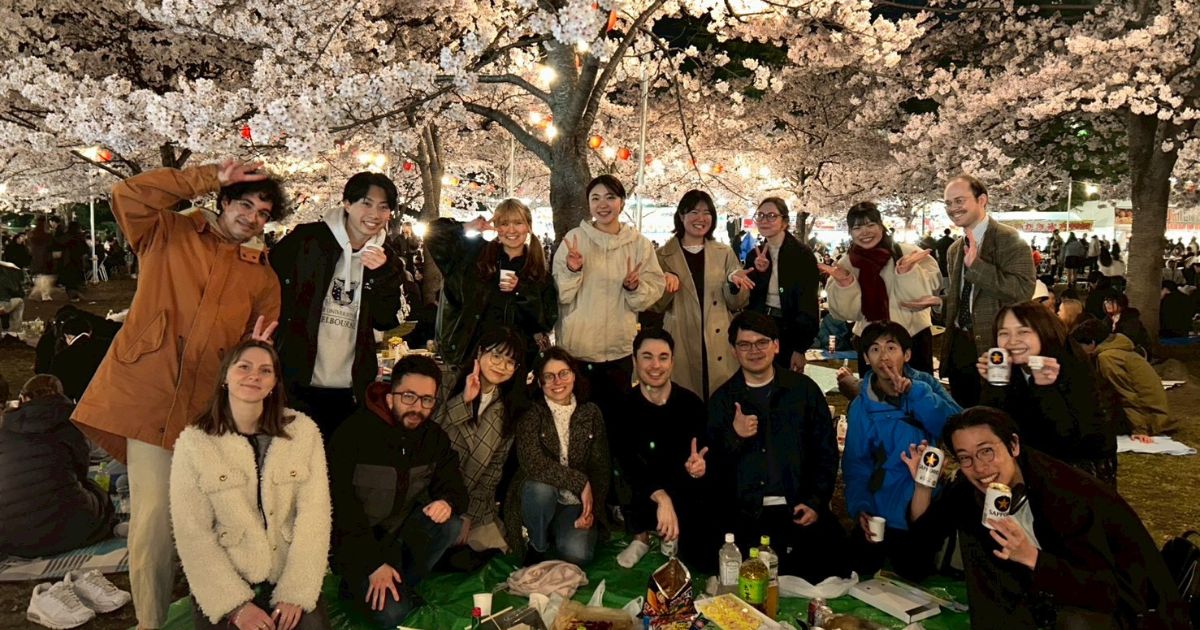

▲ A group shot from our Cherry Blossom viewing party. The night blossoms were stunning!

As of April 2026, we have over 25 residents.

While many are students from Tohoku University, our community is a diverse mix of working professionals and international students from various universities. With people of all ages and nationalities, you’ll hear a mix of many different languages—though English and Japanese are the most common.

Because our nationalities are so varied, you never know what language you might hear next! 

I once saw a student who was taking French as a second language at university spending the entire night before an exam practicing in the living room with a French housemate. It was a perfect example of the “International Exchange x Share House” lifestyle!

I still remember my first day here as an intern. Seeing people from completely different countries naturally cooking together in the kitchen made me realize: “Wow, a place like this really does exist in Sendai.

So Much Going On! A Look Back at Our Events

At BORDERLESS HOUSE SENDAI-TOHOKUDAIGAKUMAE 1, the residents are the ones who make things happen!

I’ve been involved in a few events myself, and I think the most exciting part of this house is how someone will simply say, “Let’s try this!”—and a new idea naturally comes to life.

Here are just a few highlights from the month I spent living here. I joined every single one of them, and looking back at the photos now, I’m reminded of just how much fun we had!

Community Gardening
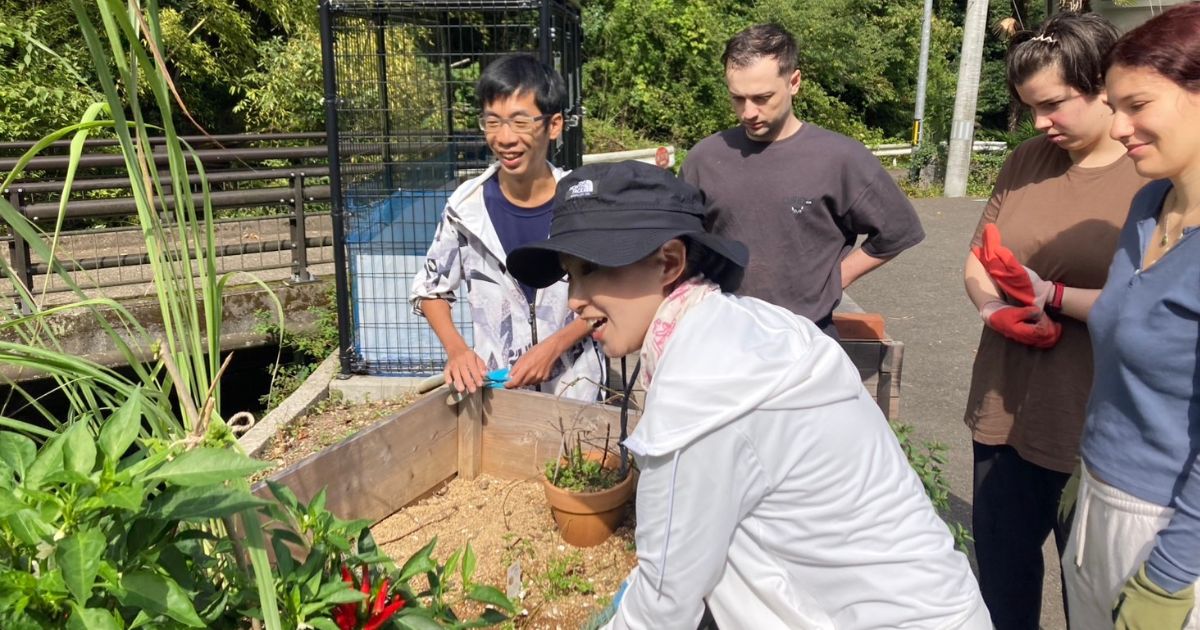
At our share house in Sendai, we are lucky enough to have our very own garden! On this particular day, we used compost gifted by our local neighbors to prep the soil for growing vegetables.

This “Community Garden” is the heart of many events throughout the year. We grow fresh vegetables during the warmer months and various herbs when it gets cooler. For us, cooking with ingredients we’ve grown ourselves is just a normal part of daily life.

As someone who loves to cook, I once made Peperoncino using a generous amount of chili peppers and parsley harvested right from our garden. I still remember the joy of hearing “Delicious!” shouted out in so many different languages across the dining table.

Sendai Bar Hopping
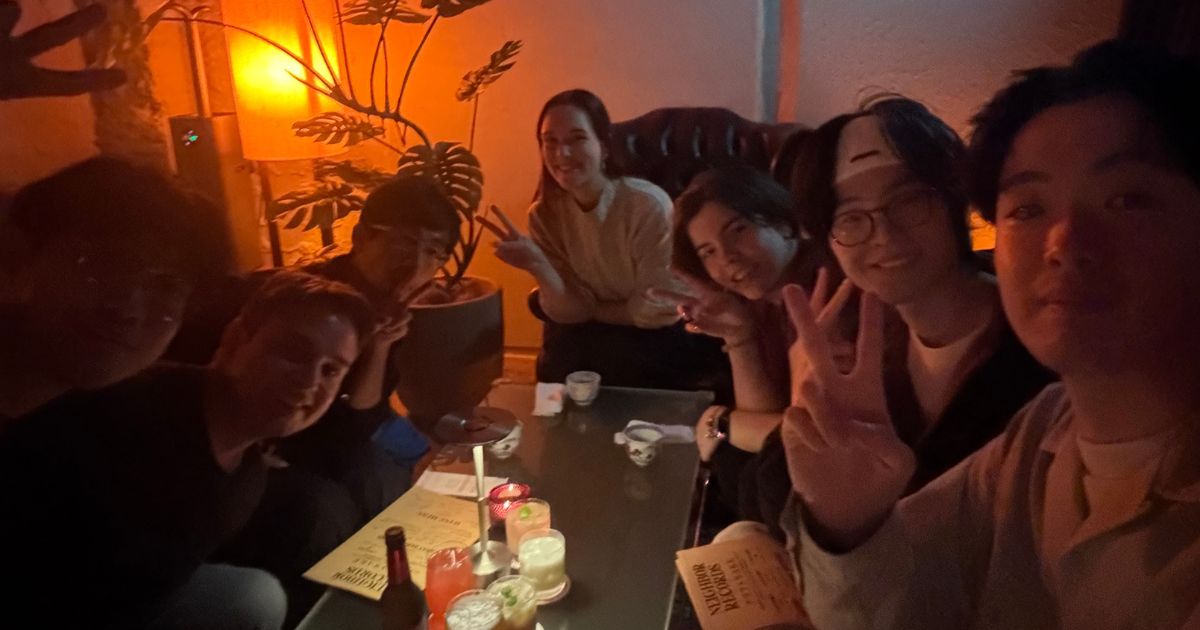
At BORDERLESS HOUSE, international exchange doesn’t just happen inside the house! As I mentioned earlier, our great access to the city center makes it easy to head out and explore the local scene.

While the legal drinking age varies from country to country, we are in Japan—so of course, everyone in our group was 20 or older! We had a blast hopping between local spots, enjoying the nightlife, and getting to know the city and each other even better.

Imoni-kai: A Taste of Local Tradition
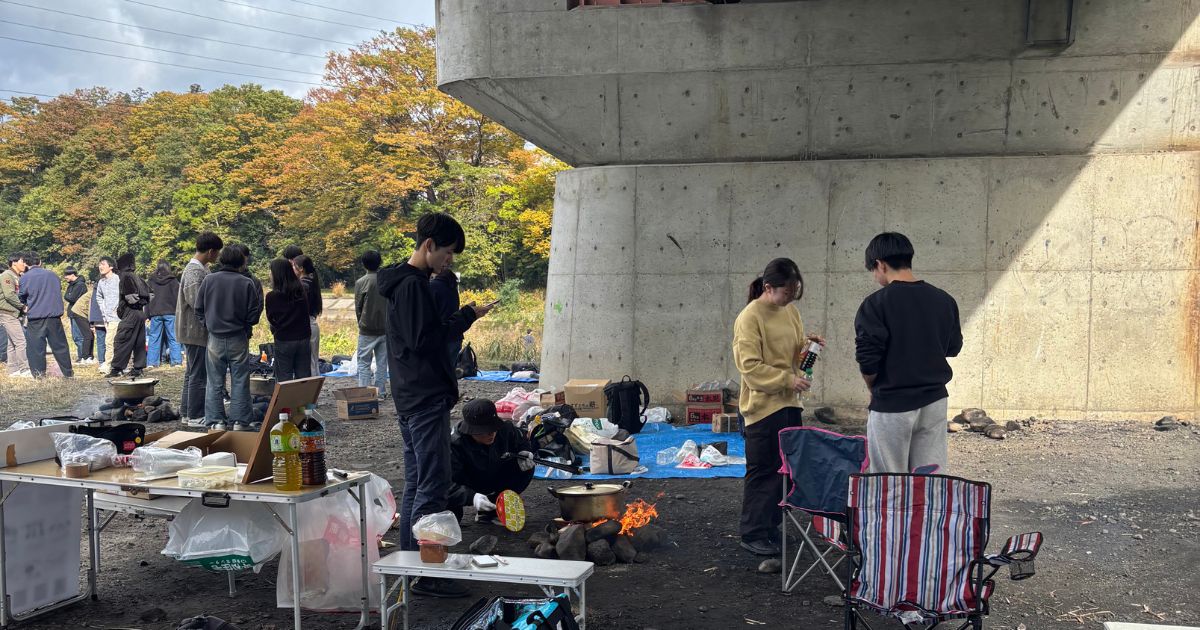
In Sendai, there is a special seasonal culture called “Imoni.” To put it simply, it’s a hearty soup made with taro roots and pork (similar to tonjiru). Every year between October and November, people gather for “Imoni-kai”—outdoor parties dedicated to making and sharing this dish.

Here is a photo of us having our own Imoni-kai by the river! Our Japanese residents took the lead, preparing everything to introduce this local tradition to our international housemates. It was such a unique sight—a diverse, multicultural group huddled together enjoying local soul food—that a local TV station even came to interview us! It’s one of my favorite memories.

Local Miyagi traditions like Imoni-kai and the Tanabata Festival are always a huge hit, especially with our international residents!

Japanese Nabe (Hot Pot) Parties
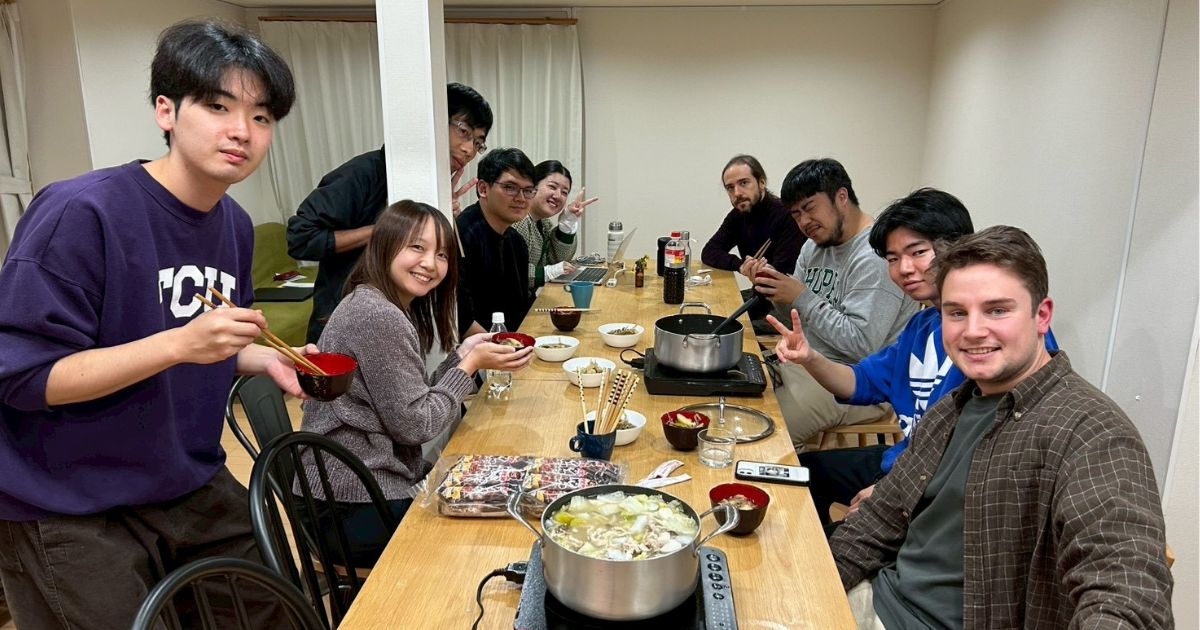
Dinner parties like this happen all the time! Being able to enjoy authentic dishes from all over the world right at your own dining table—and with close friends—is truly one of the best experiences you can only find at Borderless House.

We’ve cooked countless meals together, but there’s something unique about our Sendai community: for some reason, we have a lot of talented bakers! Our residents love making sweets, so we often get to enjoy desserts that look and taste like they came straight from a professional patisserie rather than a typical home kitchen. ^^

Real Voices: Resident Interviews from Sendai Share House

We sat down with some of our Japanese residents at BORDERLESS HOUSE SENDAI-TOHOKUDAIGAKUMAE 1 to hear about their real-life experiences!

2nd Year Student at Tohoku University (Female, 20s)

ーー Q. Did you have any worries before moving in?ーー

“To be honest, I was a little nervous because living with people from other countries was such an unknown for me. But once I moved in, I realized everyone is just so kind and fun to be around. Now, those initial fears feel like a lifetime ago!”

1st Year Student at Tohoku University (Male, 10s)

ーー Q. What have you gained from living here?ーー

I’m no longer intimidated by the idea of interacting with people from different backgrounds. My English has definitely improved, too. Gaining this confidence before I eventually study abroad has been an incredible advantage.”

Working Professional in Sendai (Female, 30s)

ーー Q. What is the biggest change you’ve felt since joining?ーー

It’s having a place where I can say ‘I’m home’ (Tadaima) and someone is there to hear it. When I lived alone, I was just returning to an empty apartment. Here, someone is always around—that sense of connection is much more meaningful than I expected.”

Looking Toward Year Two for BORDERLESS HOUSE SENDAI

SENDAI-TOHOKUDAIGAKUMAE 1 share house is still just a year old.

In this short time, we’ve heard a growing chorus of voices—not just from our residents, but from guests who visit us—saying, “I’m so glad a place like this exists in Sendai.”

As we move into our second year, our vision is to grow beyond being “just a community inside a house.” We want to become a hub that connects with students from Tohoku University and the local neighbors in the Sendai community.

“Dissolving the boundaries between the house and the local neighborhood.”
Don’t you think a community like that would be wonderful?

We look forward to sharing more about our journey and our upcoming projects right here on the blog.

Thank you so much for reading until the end! 

Thinking about starting your new life in Japan? Why not consider Sendai

Experience the perfect blend of nature, culture, and community. Discover why this city is the ideal place for your next adventure!
Explore Living in Sendai
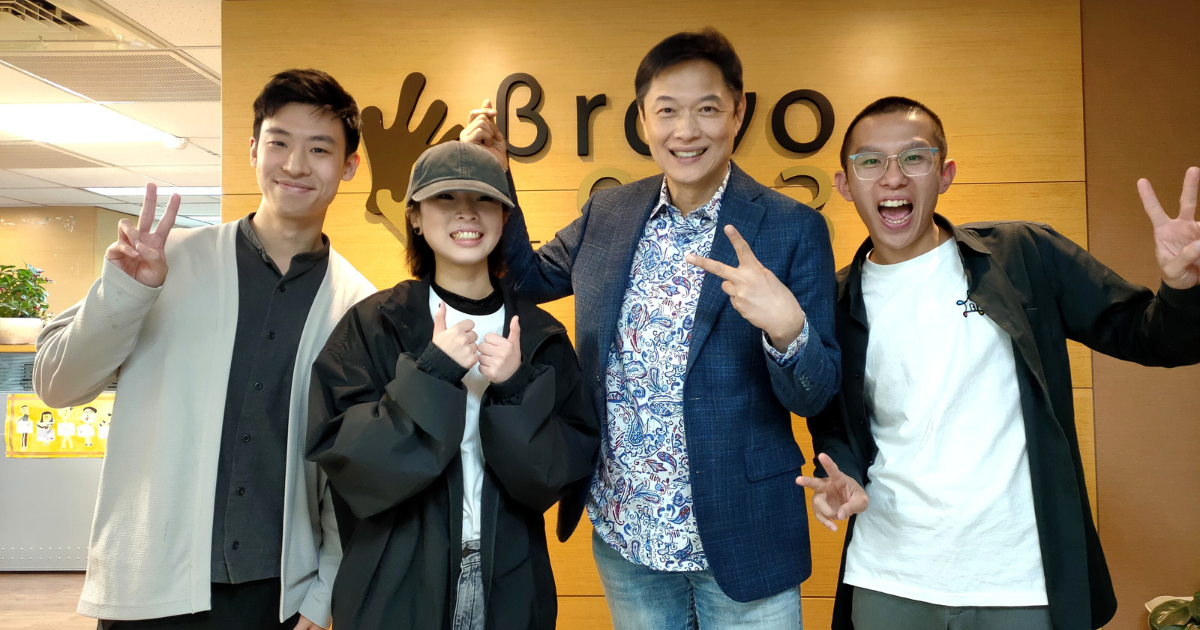
登上 Bravo FM91.3!我們如何在《趨勢大未來》分享共居理念

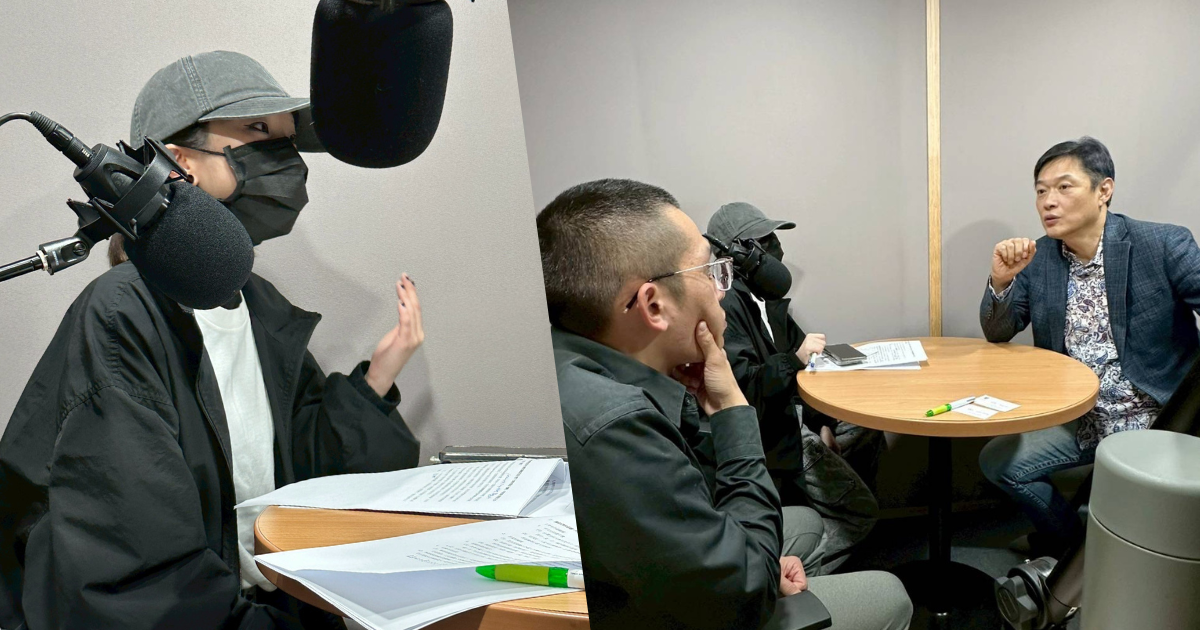
剛邁入2026年初,我們驚喜地收到來自 Bravo FM91.3 的邀請,參與廣播節目《趨勢大未來》擔任來賓,分享我們在經營以國際交流為核心的共享住宅過程中的理念與實務經驗。

在確認錄製時間並收到節目訪綱後,我們迅速完成相關準備,希望能透過這次機會,將我們最重視的理念完整地傳達給大眾。

走進電台現場:把理念說給更多人聽

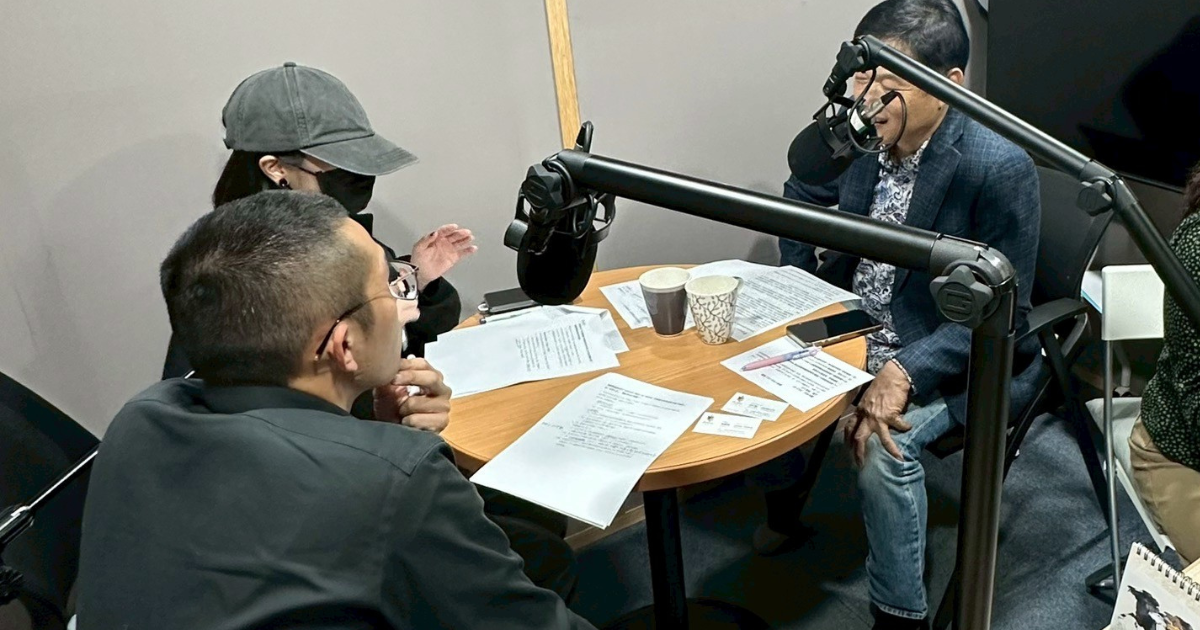
拜訪電台的日子很快地到來,本次由我們的staff Jamie 與 Dai 代表團隊前往。
抵達現場後,我們受到電台同仁熱情且友善的接待!
隨後,節目主持人李大華先生也提前來到會客室與我們交流。在得知團隊成員多由二、三十歲的夥伴組成後,他也大方分享了在團隊經營與發展上的寶貴經驗,讓我們收穫良多。

在錄製過程中,我們介紹了團隊的核心理念:在 BORDERLESS HOUSE,我們相信以國際交流為核心的共居環境,不僅能促進文化理解,也能打造一個讓來自不同背景的人彼此連結、互相學習並共同成長的社群。透過一起生活與實際接觸,能進一步消除因不理解而產生的的刻板印象。這個理念也指引我們在規劃共居公寓、舉辦活動,以及營造歡迎友善的居住氛圍時的每一個細節。

節目錄製過程十分順利,團隊成員在現場的表現也獲得主持人的肯定,並進一步討論如何將共享住宅的優勢融入行銷策略之中,讓更多人認識這樣的生活方式與其價值。

除此之外,讓我們感到充滿緣份的是,我們在現場遇到了同樣也蒞臨錄製的來賓 “基督教芥菜種會”,即使時間短暫,我們還是把握機會交流了彼此在各自領域裡耕耘的心得!

訪談之後:從經驗到反思

「越在地,越國際」—扎根在地生活與文化,創造真正有溫度的國際交流

我們深刻認同主持人口中「越在地,越國際」這句話的意義。對我們而言,真正能吸引國際交流的,並不是表面的國際化形式,而是那些來自日常生活的真實內容—包含真實的生活文化、在地的生活方式,以及有溫度的社群關係。也正因如此,我們相信共居正是「在地 × 國際」的交會點,當這些元素自然地發生在共居生活中,不同背景的人得以彼此理解與連結,國際交流也因此不再只是形式,而是融入生活之中的真實體驗。

透過這次的訪談經驗,我們更加深刻地感受到,關注國際交流與在地連結的群眾其實相當廣泛。同時也讓我們重新思考,身為社會企業,如何更有效地運用現有資源,凝聚更多力量,推動對社會具有正面影響的行動。

邀請你一起收聽我們的分享!

在本次訪談中,我們也分享了以下幾個重點:

✔️ 創立理念與社會使命 — 以共居實踐國際交流,回應種族歧視與文化隔閡
✔️ 
不只是住宿 — 打造具支持系統的共居生活
✔️ 
入居者樣貌 — 來自世界各地、不同背景領域的年輕人
✔️ 
真實故事 — 令人印象深刻的房客交流經驗與案例分享
✔️ 
共居的收穫 — 語言成長、跨文化友誼,甚至更多可能

如果你也對本次訪談內容感興趣,歡迎一起收聽我們的分享吧!

【趨勢大未來】夢想之家─走進Share House,開啟文化共居 feat. BORDERLESS HOUSE

New Year, New Connections: Reunited with 60+ Residents and Alums in Tokyo!

Can you believe we’re already one month into 2026? We hope your year is off to an amazing start!

To kick off the New Year with a bang, we hosted our “Grand Community Gathering: New Year Event 2026” in Akihabara, Tokyo, on Saturday, January 24th.

The energy was incredible! We were joined by over 60 tenants, including our current residents from all over the Tokyo area, their friends, and even our “Borderless Mates” (former residents) who traveled back to reunite with the community.

It was a day filled with laughter, warmth, and great vibes. Let’s dive into the highlights of the event!

A Night of “Welcome Back” and “Nice to Meet You!”

One of the most heartwarming parts of this event was seeing our community grow. We had a massive turnout of 60 guests, ranging from current residents and their friends to our dear “Borderless Mates” (former residents) who couldn’t wait to see their old housemates again.

The moment the doors opened, the room buzzed with energy. You could hear “Which house are you from?” and “Oh my god, it’s been so long!” coming from every corner. Even though everyone came from different backgrounds, nationalities, and careers, there was an instant sense of belonging. That’s the beauty of the Borderless House community—even if it’s your first time meeting someone, you already feel like old friends.

The air was filled with a mix of Japanese and English. We loved seeing people who were still nervous about their language skills jumping right in with big smiles and hand gestures! It was the perfect example of a truly “borderless” atmosphere—where the desire to connect matters so much more than perfect grammar.

Non-Stop Laughter! Creating “Masterpieces” with a Traditional Japanese Twist

To bring a bit of traditional Japanese New Year flavor to the party, we organized a massive game of “Fukuwarai” (Lucky Face)!

The rules are simple but chaotic: we split into teams of 6 or 7, and one blindfolded member has to place facial features (eyes, nose, mouth) on a blank face while their teammates shout out directions.

「Up! Up! Left!(もっと上!左!)」

「Noooo, not there! A little more to the right!”」

For many of our international residents, this was their very first time trying Fukuwarai. The room was a hilarious symphony of Japanese and English as teammates scrambled to guide the blindfolded “artists.”

When the blindfolds finally came off, the results were priceless. Some teams actually managed to create perfectly handsome faces, while others ended up with “abstract masterpieces” where the eyes and mouth were completely upside down!


A Lucky Start to 2026? The “¥10,000 Rent Discount” Bingo!

To wrap up the event with a bang, we held a Bingo tournament with some seriously amazing prizes! The star of the show? A ¥10,000 discount on one month’s rent!

The room was electric. Every time someone shouted “Reach!” or “Just one more number!” the whole crowd erupted in cheers (or playful groans). Even after the grand prize was claimed, the hype was so high that we added extra drink prizes on the spot to keep the energy going until the very last second.

Big congrats to our 1st-place winner!

Triple reach!! So close, yet so far!!

Beyond Four Walls: A Place to Meet a New You

A huge shout-out to our two amazing student Community Creators who hosted the event! Their fresh, high-energy MCing brought everyone together and made the whole room feel like one big team.

Living in a share house is great, but the Borderless House experience is about so much more than just the building you live in. It’s about being part of a big, global family that goes beyond your front door—connecting you with people and perspectives that will truly open your eyes to the world. We love creating these “sparks” that help your world grow!

See You at the Next One!
To everyone who joined us: Thank you for making this day so special!

And to our future residents thinking, “That looks like so much fun!” or “I wish I was there!”—we honestly can’t wait to meet you! We’re already dreaming up our next big international meetup.

As the night came to an end, we heard people shouting, “You guys have to come visit our house next!” And really, that’s exactly what this is all about. 2026 is off to a perfect start, and we’re so excited to keep bringing people together.

We’re looking forward to seeing YOU at our next event!

Thanks for coming! We can’t wait to see you at the next one!” — From all of us at the Borderless House Staff

Want to be at our next big party? Have questions about life at Borderless House?

We know that moving to a new country (or even just a new house!) is a big step, and you might have plenty of questions.

“What is the vibe of the houses in Tokyo vs. Kyoto?”
“Can I join the events even if I’m shy?” 
“Which room type—private or shared—is best for me?”

Whatever is on your mind, we’re here for you! Whether you’re curious about our upcoming event schedule or want to find a room that matches your personality, our friendly, bilingual team is ready to help you get started on your Japanese adventure.

Don’t be a stranger—let’s start your journey together!

Whether you’re curious about our events or our different room types, our friendly team is here to help you get started.
[Chat with Our Staff]

入住初期費用及附帶服務費用的調整通知

本公司為提升對房客的服務品質並簡化行政手續,決定重新調整初期費用制度及附帶服務之價格。

初期費用制度變更(保證金制度取消)

為減輕入住時的負擔並加速退房時的結算流程,我們將取消原有的「保證金制度」,改為定額的「清潔費」。
 舊制: 保證金 20,000 日圓(退房時需辦理折舊或退還手續)
 新制: 清潔費 15,000 日圓(不予退還)

※若設備毀損或有嚴重髒污,可能需額外負擔費用。
※目前已入住並繳納保證金的租客,將依據舊規定進行結算與退還。

寢具租賃費用價格調整

由於維持管理成本上升,費用將調整如下:
 調整前:9,000 日圓 含税
 調整後:12,000 日圓 含税

初期費用明細

依據新規定,入住時需支付的初期費用如下:

 ①禮金: 30,000 日圓
 ②清潔費: 15,000 日圓(不予退還)
 ③首月按日計算之租金及水電光熱費
 ④寢具租賃(僅限有需求者): 12,000 日圓
(套裝內容:棉被、棉被套、毯子、枕頭、枕頭套、床墊、床單,共7件)

※請於收到入住確定信後,於3個工作天內完成支付。

適用日期
本制度適用於 2026年3月1日(含)後 之新諮詢件及續約合同。
我們將持續致力於為各位租客打造安心的居住環境,未來也請多多指教!

如有任何問題,請聯繫 info@borderless-house.com

Living the Dream in Japan: How an International Community Becomes Family

Moving to Japan is a dream for many, but the reality of finding a home and a social circle can be daunting.

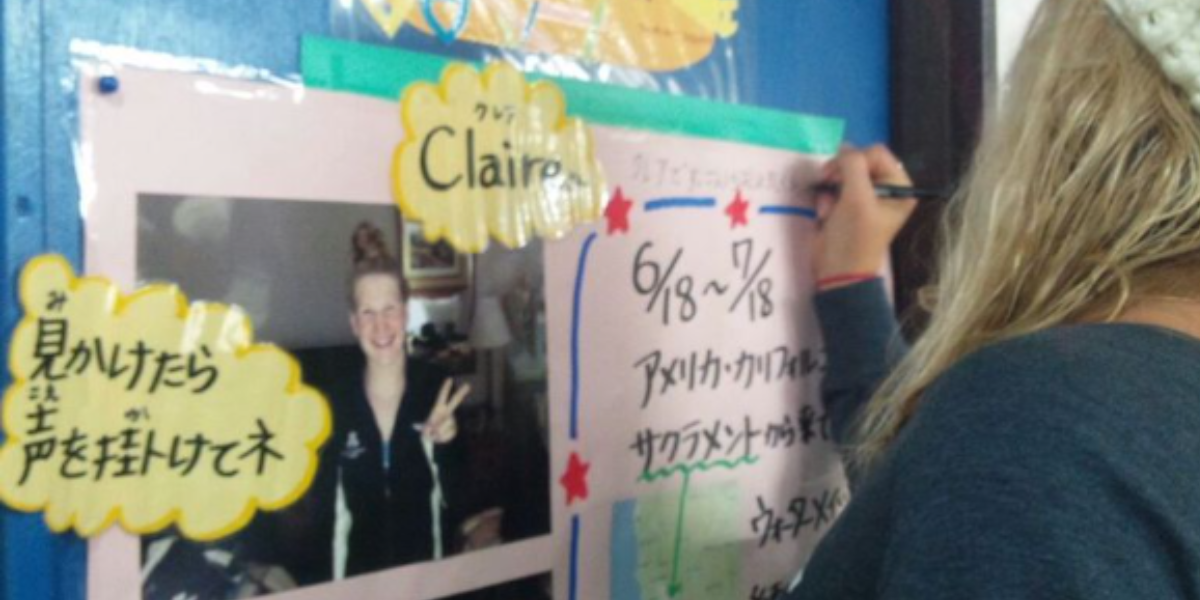
In this interview, we dive deep into the journey of Claire, a former competitive swimmer from the U.S. who moved to Tokyo in 2019. Discover how she transformed her life in Japan by finding a ‘home’ that offered much more than just a place to sleep—it offered a family.

Finding a Home (and Family) at Borderless House

 -You moved to Tokyo for work. Why did you choose a share house over a private apartment?

To be honest, I originally wanted to live alone! But I couldn’t secure an apartment near my workplace. Looking back, living alone would have been a lonely disaster. I have an irrational fear of going places by myself, and as a social person, I needed a support system.

I’ve lived in a share house in Tokyo with 14 others since August 2019. I started in a single room to have my own “quiet zone,” but once I got to know everyone, I actually moved into a shared room with one of my closest Japanese housemates. Now, she’s like a sister to me!

 -What makes the “Borderless” community different from other housing?

It’s the 1:1 ratio. Borderless House keeps a perfect balance of Japanese and foreign residents, and men and women. If I lived alone, I probably would have only made American friends. Here, I’m constantly inspired by housemates from all over the world. It’s expanded my mindset and made me a much more compassionate person.

Mastering the Language: Textbooks vs. Reality

 -You’ve had a long journey with the Japanese language. What’s your best advice for someone trying to learn?

I started with Genki and self-studied for two years while swimming, but I had no one to practice with. My advice? Go abroad as early as possible. Textbook Japanese and colloquial (daily) Japanese are totally different.

In my research job, I had to translate complex psychiatric questionnaires. I had to explain the difference between “force” and “coerce” using rudimentary Japanese to professors! But at home, my housemates taught me the slang and natural expressions that tests like the JLPT don’t cover.

-Any regrets in your language journey?

My biggest regret is quitting my formal classes after one year. Now, my speaking and reading levels are mismatched! Also, if you want to work in Japan (outside of teaching English), take the JLPT. Even if you speak well, companies want that standardized proof (N1 or N2) to give you an interview.

 -Do you consider yourself “fluent”?

For a long time, I said “No” because I’m still “illiterate” in many ways and struggle with formal Keigo. But a friend recently told me, “Claire, you express yourself articulately. That is fluency.” You don’t need to be a living dictionary to have deep relationships. If you can share your personality and emotions, you’re doing just fine.

Building a Life Beyond the Share House

 -You’re very active in Tokyo—swimming, dancing, and more. How do you branch out?

You have to find your “comfort zones” but also places that challenge you.
⏺︎Sports: I joined a local swim team. Doing something I was good at (swimming) in a new language gave me the confidence to step out of my shell.
⏺︎Hobbies: I started dance classes from scratch! It was way out of my comfort zone, but now I’m a member of the studio’s club.
⏺︎Networking: Use Meetup for language exchanges or sports. It’s intimidating to walk into a room of strangers, but remember: everyone there is looking for a friend, too.

Advice for the Future “Japan-Enthusiast”

 -What is your final takeaway for someone nervous about moving to Japan?

Can you get by with zero Japanese? Yes, absolutely. With Google Maps and friendly locals, you’ll survive. But you’ll have a richer experience if you try to learn.
Be Fearless: If there isn’t a program for your specific hobby, create one!
Don’t Settle: Don’t take a job you hate just to stay in Japan. Try to do what you love in a place you love.
Immerse Yourself: Join a community like Borderless House early. It gives you the resources and courage to reach levels of language and self-growth you never thought possible.

Interviewer’s Note: The Power of Intentional Community

Meeting with Claire, it becomes immediately clear that her journey in Japan isn’t just a story of “staying” in a country, but one of active integration.

Claire’s journey shows us that a share house is more than just a cheap room—it is a support system that helps you grow.

Here are the three big lessons from Claire’s story:
Community > Isolation: Claire originally wanted to live alone. However, she realized that having a “family” at home gave her the confidence to try difficult things, like working in a Japanese hospital or starting dance classes.

The Shared Room Surprise: Many people are afraid of sharing a room. Claire actually moved from a Private Room to a Shared Room because the bond she formed with her roommate was so strong. She found a “sister” instead of just a housemate.

Real-World Language: Claire proves you don’t need perfect “textbook” Japanese to succeed. By talking to her Japanese housemates every day, she learned how to express her true personality—something a classroom can’t teach.

If you are a professional or a student moving to Japan, Claire’s story is your roadmap. She shows that when you have a safe, international “home base” like BORDERLESS HOUSE, you can stop worrying about being lonely and start “living the dream.”

\Explore Claire’s Home in the Heart of Tokyo!/

Claire lived at BORDERLESS HOUSE Iidabashi 1. This house boasts incredible connectivity, with access to 6 different train lines and both Korakuen and Iidabashi stations within easy walking distance.

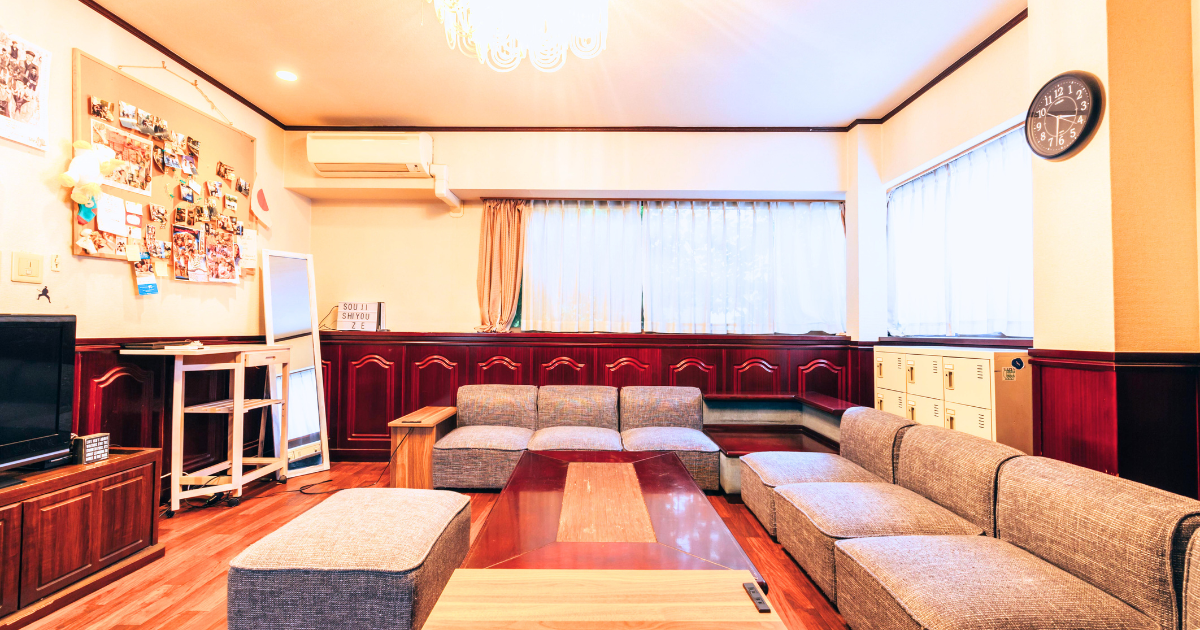
The spacious living room serves as the social heart of the home, providing a vibrant hub for interaction. It is the perfect environment for those who want to balance the convenience of city-center living with meaningful human connections.

Hungry for more real-life stories? 

Claire’s journey is just one of the hundreds of unique paths our residents have taken. Whether you are a student, a digital nomad, or a professional, there is a community waiting for you.

Check out more “Life in Japan” articles:

▶️My Experience Living in Sendai as a Foreigner: Shared House Life, Food and Hidden Gems

▶️Discover the vibrant heart of international living at Ikebukuro Oyama House!


My Borderless House Story: Why I Couldn’t Have Met Japanese Friends Without It

At Borderless House, we believe in the transformative power of cultural exchange. As a brand that encourages adventure, nothing captures that spirit better than the story of Antonin, a recent resident.

“If I hadn’t lived in Borderless House, I simply wouldn’t have made Japanese friends in Japan.”

This is the honest, candid takeaway from Antonin, a French exchange student who recently finished his stay with us in Osaka. His experience highlights the heart of what we offer: authentic connections and a true sense of belonging.

The Leap of Faith: Why I Chose Borderless House to Find Friendship in Japan

First of all, Antonin, could you please introduce yourself?

“Hello, I’m Antonin, and I’m from France. I’ve just finished a few months here in Osaka on an exchange program, and I’m heading back to France now. Since I was arriving in Osaka alone, I chose Borderless House specifically because I wanted to meet many people.”

Why did you decide to live in a share house, and what made you choose Borderless House specifically?

“My main reason for choosing a share house was to easily meet people. That was the key thing because I was arriving completely alone in Osaka. I figured it was the quickest and easiest way to build a social circle.”

“As for choosing Borderless House, I looked at several options. Your website is pretty clear and easy to navigate, and the video—the famous one—made it simple to figure out the location. That professionalism and transparency gave me a lot of trust in the company, which is why I chose to join the community.”

Adventure & Exchange: Life in the Borderless House Community

We are thrilled to hear that Antonin has been enjoying a fun-filled community life at Borderless House!

Let’s talk about life in Borderless House. What were some of the most enjoyable things during your stay?

The nicest things we did were the one-day trips around Osaka! We went to Kyoto one day and visited other places too. Plus, we often had dinner together and enjoyed some casual drinks in the living room. It created a great, relaxed atmosphere.

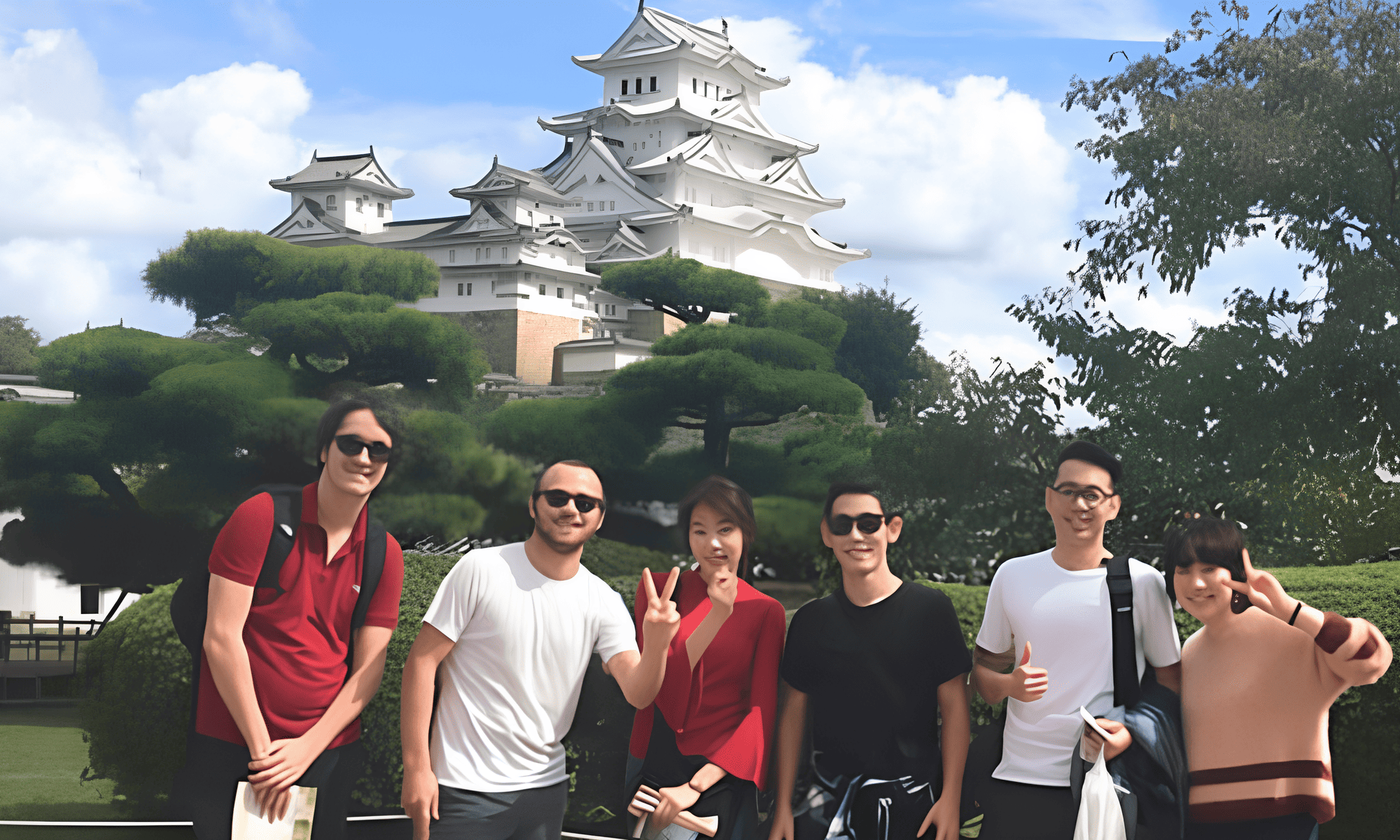
Recently, I went to Kyoto’s Arashiyama with two housemates—it was really cool. I also visited Himeji Castle with my sharemates and their friends in beautiful weather! That was pretty fun!

On the other hand, did you have any unpleasant experiences while living in Borderless House?

Ah, well… I’m joking, but one housemate seemed to be throwing a party all the time! He was inviting a thousand people; it was like a new nightclub opened here!

Oh my god! (Borderless House Note: We do have house rules that require tenants to respect and consider the quiet hours for other residents and neighbors after 8 PM.)

Haha! I’m just joking. Honestly, there are no real problems with the house. I am pretty satisfied with this place.

Beyond ‘Arigato’: Language Growth Through Community

Could you tell me more about your experience with your housemates?

We have about six or seven people from different countries in this house—two Taiwanese, three Japanese, one English, and me! It’s a truly multicultural mix, and it’s been incredibly nice to meet local people and practice my Japanese.

“n fact, before coming here, I didn’t know any Japanese words except ‘Arigatou’ (Thank you). I’m still a beginner, but my Japanese skill is definitely improving because I’ve been able to practice a little bit more with my housemates.

Most of the time, we were meeting in the living room, but sometimes we went out for a day trip, a restaurant, or a bar. That’s a great way of learning a language—it makes the whole experience so much more rewarding.

Bridging the Divide: The Unmatched Value of Co-Living

Antonin’s father is visiting Japan, and they are heading off on a trip to Kanazawa (Ishikawa prefecture). We wish them a safe and wonderful trip!

How do you find the experience of living together with both Japanese and international residents?

I think it’s incredibly valuable to live with Japanese people because, outside of this environment, it’s actually quite hard to connect with them. Even at university, where I see many Japanese students, it’s tough to build meaningful relationships. You might talk for a few minutes, but you don’t see them often enough to form a true bond.

I know the challenge is partly because my Japanese skills were at a beginner level, and I was mainly taking English classes with mostly European and other Asian students. That limited my daily exposure to the local language and culture.

Living here, it was wonderful to finally connect with Japanese people on a daily basis. I truly believe if I hadn’t lived in this house, I would have very few Japanese friends. The single most important reason I chose to live in a share house was having the opportunity to meet Japanese people and build those lasting friendships.”

It creates a natural, daily time to share and exchange with Japanese friends. It’s also a fantastic place for the Japanese residents to improve their English, and even a little bit of French—just a tiny bit from me! Having that continuous, informal practice is the best way to learn a language and expand your cultural horizons.”

Finally, what is your favorite Japanese word?

“Kanpai! (乾杯!)”

Ready to Start Your Own Chapter of Growth?

Antonin’s story is a powerful testament to what happens when you choose to live beyond borders. The connections he made from casual coffee chats to exploring ancient castles were the result of choosing a community designed for authentic exchange.

His journey reminds us that true cultural immersion and practical language fluency don’t happen in a classroom; they happen when you share a kitchen, plan a trip, and say “Kanpai!” to new friends from around the world.

Borderless House isn’t just about finding a room; it’s about finding your community, igniting your adventure, and accelerating your personal growth.

Don’t just dream about international exchange—live it!

\Start your international journey in Osaka!/

Check out the Tsuruhashi house where Antonin found “life-changing encounters.”

Antonin lived at BORDERLESS HOUSE Osaka-Tsuruhashi 1. It’s an unbeatable location for exploring Kansai—just 5 minutes to Namba, 6 minutes to Tennoji, and 15 minutes to Osaka Station. Set in the vibrant heart of Tsuruhashi’s famous Koreatown, this house offers a unique, multicultural atmosphere that you won’t find anywhere else.

More Resident Stories

From international students looking for local friends to expats taking their first step into life in Japan, everyone at Borderless House has a unique story. Get inspired by their journeys!

▶️My Experience Living in Sendai as a Foreigner: Shared House Life, Food and Hidden Gems
▶️Best Kyoto Accommodation for Working Holiday: Making Local Friends in a Kyoto Share House

Living a life where small discoveries and new experiences keep expanding is truly enjoyable!

“Ready to take a leap and grow personally? That’s a feeling many people share.

We interviewed a resident who joined Borderless House—our international share house—to boost their English before their Working Holiday. He started with one goal: to “use English daily and improve fast.” After living in three different Borderless Houses, did they reach their goals?

He told us that living in an international share house creates a ‘chemical reaction’ in your life. What practical English skills and new ways of thinking did they gain from this experience?

Read on for their story—from why he moved in and what life in the share house is really like, to a warm message for anyone considering joining our community.”

Boost English Skills Before Working Holiday – Experience Life in 3 Different Share Houses!

―First, could you tell us a little about yourself?

My name is Daijiro Kaneda, and I’ve been living in Asakusabashi House for six months. I currently work as a company employee in Tokyo.
I’ve had the opportunity to live in three Borderless Houses: Kichijoji 1, Kikukawa 3, and now Asakusabashi 1, with a working holiday in Australia in between.

―What made you decide to move into Borderless House?

Before my working holiday, I wanted to improve my practical English skills, so I searched for an environment where I could use English daily. Since I wanted to maximize my time in Japan by immersing myself in English, and I also wanted to downsize by getting rid of my old furniture, living in a share house with international residents seemed like the ideal choice.
Borderless House was an easy decision because of its strong focus on interaction compared to other share houses.

No More Fear of English – Feel the Growth in Practical Conversation Skills!

―How would you describe your English skills before moving into Borderless House?

Before moving in, I could only manage simple self-introductions in English. Even though I had studied through online lessons, I didn’t have many chances to interact with people from overseas, so my practical English wasn’t very strong.

―Did you notice an improvement in your English after moving in?

Yes, I definitely noticed a big improvement! Having someone to speak English with daily really boosted my confidence, especially when it comes to practical, everyday expressions.
For example, something as simple as “What day should I take out the burnable trash?” became a challenge to say in English. After moving into Borderless House, I realized there was still a lot for me to learn, but this realization became a great motivator.
Every day, I’d ask myself, “How do I say this in English?” I would take notes, look things up later, and practice. This process really helped me improve my practical English skills.

―Did you feel hesitant about using English?

Living at Borderless House helped me overcome my hesitation to speak English. I used to feel like I needed to speak perfectly, but over time, I realized it’s okay to speak even if it’s not flawless.
When I went to Australia, I felt a bit nervous at first, but I quickly adapted, thanks to the daily exposure to English while living in Japan.

―Did you do anything specific to improve your English through interactions with your housemates?

In my previous house, we would set up informal Language Exchange sessions where we’d teach each other our languages. Since many of my foreign housemates at Borderless House were also learning Japanese, it made for a fun and engaging way to improve both English and Japanese through our daily conversations.

Even though we come from different countries and cultures, the shared joys and challenges of learning a language have really brought us closer, and I find teaching and learning from each other to be incredibly fun! Even now, living in the Asakusabashi House, I continue to teach Japanese to my housemates, and it gives me a real sense of fulfillment.

A Life Full of Small Discoveries
Challenges and New Experiences Are More Fun with Housemates by Your Side!

The summer festival party was held at the “BORDERLESS STATION” on the first floor of Asakusabashi 1 House.

―Can you share a memorable experience from your time at Borderless House?

At Asakusabashi House, we rotate event leaders each month to organize house events. When it was my turn, I decided to bring the feel of a traditional Japanese summer festival to the house.
We set up a projector to show fireworks and served festival treats like shaved ice and takoyaki. It was so much fun—like being a kid again—and seeing everyone smile made it even more special. It’s a memory of summer that I’ll always cherish.

―On the flip side, was there anything challenging about living at Borderless House?

At Asakusabashi House, aside from the event leader role, we also have a cleaning leader who manages the house cleaning. When I first moved in, I casually volunteered for the position, thinking it would be easy. But it turned out to be a lot more work than I expected! (laughs). If the cleaning wasn’t done properly, the leader would get feedback and have to resolve the issue, so it kept me pretty busy.
Looking back, though, I’m actually grateful for the experience. Taking on the leader role right after moving in helped me communicate more with my housemates and get to know the house better. I realized that even challenging tasks can become fun when everyone works together.

―Were you always someone who enjoyed spending time with others?

I actually used to prefer spending time alone and wasn’t the type to enjoy doing things with others. But after moving into Borderless House, I started having more fun with my housemates, and I discovered a new side of myself.

For example, just recently, I rode an electric scooter for the first time in my life and visited a sauna—also a first—with my housemates. If I had been living alone, I probably wouldn’t have experienced these things. But with housemates, these new experiences keep coming. At Borderless House, life is full of small discoveries and new experiences, which makes it so exciting and enjoyable.

Step into a Life Full of Connections at Borderless House
– Jump In and Experience It!

―After returning from your working holiday, you came back to Borderless House and have been living in international share houses for over three years. Why do you continue to choose Borderless House?

After my working holiday, I didn’t have much furniture or savings, so returning to a share house seemed like the easiest way to rebuild my life. But the main reason I keep choosing Borderless House is the endless opportunities to meet new people.

For me, meeting new people has always been what brings about life-changing moments. My working holiday wasn’t always easy, but the connections I made have left a lasting impact on me, and I believe they’ve helped me grow.
When you’re alone, it’s harder to experience those “life-changing moments.” That’s why I want to keep living at Borderless House, where I can continue experiencing meaningful encounters with people from different cultures.

―Have you noticed any changes in how you communicate with your housemates?

Yes, my perspective on interacting with people who think differently has really evolved. I’ve become much more open-minded.
In the past, if someone didn’t act the way I expected, I’d quickly assume, “They’re just different from me,” and sometimes be a bit critical. Now, I try to understand their background. I think, “Maybe it’s part of their culture?” or “Maybe they’ve had a tough day?” It’s been a very positive change for me.

―Lastly, do you have a message for anyone thinking about moving into Borderless House?

I had never lived with anyone outside of my family before, so I was nervous too. But through meeting so many new people, I’ve experienced growth and change, and I’m truly glad I took that step.

As I mentioned earlier, meeting people can be a huge catalyst for change in your life. If you’re looking to make a change, I think Borderless House, with its vibrant community, is a great place to start.
If you’re thinking about moving into Borderless House, it means you’re probably interested in share house living. If so, don’t ignore that curiosity! You can always go back to your previous lifestyle if it doesn’t suit you, or even switch to a different house. Don’t be afraid—take the first step!

\Check out the house where this resident lives/

The resident featured in this story, Daijiro, lives at BORDERLESS HOUSE Asakusabashi 1. It’s an ideally located international share house with amazing access—just 2 minutes to Akihabara and 12 minutes to Tokyo Station. 

▶️ [Click here for more house details]

Read more Resident Interviews

At Borderless House, everyone has a unique story—whether they’re aiming to boost their English skills, preparing for a challenge abroad, or discovering new perspectives that changed their lives. If you’re curious to see more, take a look at our other interview stories!

▶️Best Kyoto Accommodation for Working Holiday: Making Local Friends in a Kyoto Share House
▶️ My Experience Living in Sendai as a Foreigner: Shared House Life, Food and Hidden Gems
Leaving Home to Find the World: A Mother and Daughter’s Share House Story

Spring is the season when many young people begin new chapters in their lives. But for parents, it can also be a time filled with both pride and worry, especially when it is time to send their child off to live on their own for the first time.

This time, we spoke with Mieko-san, a first-year university student who spent six months living in Borderless House Ikebukuro-Oyama 1, and her mother Kayoko-san.

Until then, Mieko had always lived at home. So what was it like for her to move into a share house for the first time?

We also asked her parents how they felt about letting her live in Borderless House – and how this experience unexpectedly deepened the bond between mother and daughter.

Meet the Family

Mother: Kayoko-san
A cheerful, positive mother of two who used to work at Borderless House

Daughter: Mieko-san
A first-year university student majoring in community welfare (at the time).
Stayed for six months at Borderless House Ikebukuro-Oyama 1 from September 2024.
Slightly shy but full of curiosity and a strong desire to learn.

Moving in with both anxiety and excitement, a mother’s encouragement behind her daughter’s decision

──Mieko-san, you decided to move into Borderless House during your first year of university. Did you already know that your mother was working there as a staff member?

Mieko-san:

Yes! Actually, the reason I even started considering moving in was because of my mom’s encouragement. She’s always had a strong international mindset, and that influenced me a lot. I was already interested in studying English and going abroad since high school.

At first though, when she suggested Borderless House, I immediately said, ‘Living with other people? No way, that is impossible for me!’ Maybe part of me wanted to rebel a little because it was my mom’s workplace too.

But about a year later, around the time I started university, I slowly began to feel more curious. I remember asking my mom all kinds of questions about what life in a share house was really like.

──What changed in how you both felt about it?

Mieko-san: After starting university, I began to feel a stronger desire to improve my English. I was also becoming more interested in studying abroad, and I thought it would be great to build up more practical English skills while I am still in Japan. When I talked about that at home, my mom said, ‘Then Borderless House sounds perfect for you!’

Kayoko-san: The good thing about Borderless House is that you can start living there for as short as one month. I told her, ‘If it does not feel right, you can always move out quickly, so why not just give it a try?’ I wanted her to see it as something she could experience casually, without pressure.

Mieko-san: Exactly. My mom really gave me the final push to go for it.

And honestly, the location was also a big reason. From my parents’ house, it took me about two hours round trip to get to university, but living in Ikebukuro Oyama House shortened my commute a lot. Realizing how much more convenient life would be made it easier for me to make the decision.

──Were you not nervous about moving in?

Mieko-san: Of course I was! Moving in with people I have never met before and in a different language environment made me wonder if I could communicate smoothly. Unlike reading or listening practice, conversation in English happens in real time, so I worried I might not be able to keep up with everyone.

But honestly, that was also what I was most excited about! Until then, the only English speakers I have really talked to were the ALT teachers who occasionally came to our classes, and even then it was never one-on-one for long. I was both nervous and curious to see what it would be like to live surrounded by English every day, it felt like such an adventure!

──What were you most looking forward to?

Mieko-san: Once I decided to move in, I found out that all of my housemates were older than me. Beforehand, I have looked at the self-introduction comments on the official website and saw that many of them were already working adults. I thought it would be interesting and really valuable to hear about their jobs and workplaces.

I had also been checking out Borderless House’s blog and Instagram, and I saw that there were regular house parties and events where residents from different houses could meet. I was excited to join those and experience that kind of exchange in real life!

The residents’ self-introduction comments posted on the official website.

──As parents, how did you feel when your daughter finally moved into the share house?

Kayoko-san: Honestly, I was more happy than worried. I was proud to see my daughter take on a new challenge.
Since I work at Borderless House myself, I also understood the safety and structure of the houses. If anything, it was my husband who was more concerned, he was always saying things like, ‘Make sure you lock your door at night,’ or ‘Don’t walk alone after dark!’

Even so, Borderless House share houses are very secure – each room and shower is individually locked, and most houses are located close to stations, so there is less need to walk far at night. I actually felt it was safer than her living alone in an empty apartment. In the end, I felt reassured knowing she would be coming home to a place where people were waiting for her.

A fun and inspiring life with housemates – No mroe fear of speaking English!

─It has been about six months since you moved in. How has life in the share house been so far?

Mieko-san: It is honestly been so much fun! Everyone was so friendly from the very beginning, and I quickly felt comfortable. Especially the international members. Many of them wanted to learn Japanese or become friends with Japanese people, so they were really open and approachable.

We often go out together on our days off – to cafés, pottery classes, and recently, about ten of us even went to Fuji-Q Highland!

When someone has a birthday, we celebrate with a party in the house, so it is always lively and cheerful.

Kayoko-san: And even the former housemates who have already graduated still come back to visit often, don’t they?

Mieko-san: Yes! One of my former German housemates, who had already graduated before I moved in, came back to Japan in March and visited us several times. That period felt like a non-stop party, it was so much fun!

Since it is a mixed-gender house, I was a little nervous at first about living with male residents, but everyone was so kind, mature, and considerate. They always looked out for me, so I felt very comfortable.

─ I am so glad to hear you are enjoying life there! How was commnuicating in English? Was there something you were worried about?

Mieko-san: At first, I definitely felt resistance toward speaking English. But the housemates were so kind – they would listen patiently even when my English was not perfect, and they taught me words when I did not know how to say something.
It is still far from perfect, but I no longer feel scared to just try speaking.

─ Since living in a share house, have you noticed cultural diferences?

Mieko-san: Yes, especially with food culture!

One time, someone mixed carrots into plain rice and served it, and I could not help thinking, ‘Wait… is that actually good?’

A lot of people really like Japanese food though, so we often end up eating Japanese dishes together.

Also, many of the international members do not soak in the bathtub, so the bathtub in the house was basically unused. As someone who loves taking baths, I started going alone to the nearby public bath by Oyama Station and enjoyed relaxing in a huge bath.

Growing through share house life – Even household skils improved

─ After moving in, how were cooking and cleaning handled?

Mieko-san: Our house had clear rules for dividing the cleaning duties, so everyone would rotate weekly and share the tasks.
For cooking, sometimes someone would say, ‘I am making curry, want to cook together?’ and we would make it as a group. But honestly… I was not very good at cooking for myself. I think I mostly just managed to cook rice.

I relied a lot on eating out or frozen food, so living in the share house made me realize how much I appreciated my parents’ cooking. When I go back home occasionally, I make sure to eat a lot of vegetables!

Kayoko-san: When she still lived at home, I was the type who liked taking care of everything, so I ended up doing most of the housework.

But the other day when Mieko-san came home after living in the share house, she stood up after dinner and started washing the dishes without being asked… and I was so touched I almost cried.

It made me feel like she had grown – that living in the share house helped her learn to look after herself.

Mieko-san: In the share house, we buy cleaning supplies and daily essentials using shared funds that everyone contributes to, so I became more aware of managing money for daily life.

Now I am paying for my living expenses by working part-time, so I keep a household budget and track everything carefully. It made me realize how important money management is.

How share house life changed the relationship between mother and daughter

─ During your six months in the share house, was there anything that left a strong impression on you?

Mieko-san: One time, I stayed up all night talking in the living room with my housemates who have already been working for a while, that memory really stayed with me.

Some housemates were full-time company employees, others were freelancers working independently, and some were using English every day at their jobs.

While talking with them about their past experiences, future dreams, and life goals, I found myself inspired over and over again.

There was also a moment when I opened up to a housemate about being unsure of my future path. They told me, ‘It’s never too late to figure out what you want to do. Try lots of things now, and then choose slowly.’

It felt like a ray of light shining into my life. I had always been someone who looked backward instead of forward, but that one conversation helped me move on with a more positive mindset.

Until high school, my friendships were mostly with people who thought and lived just like me. I think I lived in a pretty narrow world. But at Borderless House, I met people of all different ages, nationalities, and backgrounds – and talking with them opened my eyes to values and ways of living I never knew existed.

Thanks to the housemates I met there, I realized just how many different paths and options exist in life.

─ From your perspective, Kayoko-san, what changes did you notice in Mieko after she moved in?

Kayoko-san: She has become so much more reliable.

Before, she was quiet and shy – she hardly ever talked to boys in her class. But now, whenever she comes home, she happily tells us stories about her housemates.

I think Mieko–san herself may not fully realize it, but her perspectives have widened so much.
By living with working adults and housemates from different backgrounds, she was exposed to different values and ways of living. I feel like she now sees her future with a much more positive mindset.

─ Did your mother-daughter relationship change as well?

Kayoko-san: I think we can talk with a healthier distance now. When we lived together, I tended to do everything for her because I wanted to take care of her. Sometimes I would even nag her about small things – we would occasionally clash because we were too close.

But now, we communicate more, we message each other on LINE to check in, we go out for meals together near Oyama Station, and when she comes home, she happily tells me stories about her housemates.

Seeing her enjoy her life so much makes me think, ‘Wow… if only I had a place like that when I was her age!’”

Through her experiences, I feel like I am also learning and growing.

We are no longer just mother and daughter, we are able to speak to each other with mutual respect, as two individuals. That change means so much to me.

From Mieko-san to young people curious about Borderless House

Mieko-san: Starting something new can be really scary. It always feels safer to stay in the lifestyle you are used to.

But unless you try, you will never know and there is a whole world you would not see until you take that first step.

Through living in the share house and connecting with my housemates, I truly became more confident and forward-thinking. I discovered new things I wanted to do and new goals I never would have imagined before.

Borderless House allows you to try living there for just one month, so if you are a university student, I really encourage you to take that first small step.

A message from Kayoko-san to parents who are considering this for their children

Kayoko-san: When it comes to your child, it is completely natural to worry, no matter what kind of life they are choosing. That is what being a parent is.

At Borderless House, you can see self-introductions and community information on the website, and after applying, you can also have an online consultation. So you can ask anything that concerns you and get a clear image of what life will be like before they move in. I think that helps ease a lot of worries.

There are experiences that children can only have while they are young. And I believe sending them off, even though it is scary, allows them to grow twice as much.

So if your child is ready to take a step forward, I hope you can be the wind at their back.

\Check out the house where this resident lives/

Mieko lived at BORDERLESS HOUSE Ikebukuro-Oyama 1. With its prime location—just a 1-minute walk from the station and 5 minutes to Ikebukuro—it’s the perfect hub for students and professionals alike.

▶️ [View House Details]

More Resident Stories

From first-time solo living to life-changing global encounters, everyone at Borderless House has a story to tell. Get inspired by their journeys!

▶️ Living the Dream in Japan: How an International Community Becomes Family
▶️ My Borderless House Story: Why I Couldn’t Have Met Japanese Friends Without It


Connecting Kansai: Summer Nagashi Somen Event Fun at Kyoto Uji Share House

As the weather slowly cools down and we start to feel autumn approaching, how was your summer? Did you make fun memories – trips, BBQs, fireworks. summer festivals?

At Borderless House Kansai, residents from our Kyoto and Osaka International Share Houses gathered at the spacious Kyoto Uji House for a major cultural exchange event, including the popular Japanese summer tradition, nagashi somen (flowing noodles) experience.

About 30 residents joined this lively community event, connecting different share houses in the Kansai region. Through language and cultural exchange, everyone met new people and forged new international friendships.

Here’s a look from that memorable day!

Connecting across share houses – an event planned together with student residents

Borderless House wants residents to connect beyond the house they live in, while experiencing uniquely Japanese summer traditions. To encourage this, we regularly host international exchange events involving multiple share houses.

↑Residents planning with Borderless House Staff.

For this event, student residents took the lead in planning and organizing the entire event! From preparation to hosting, they worked together and made it happen.

Language exchange naturally happening while preparing food

About 10 residents gathered in the large kitchen of Kyoto Uji House.
They prepared food together while casually switching between Japanese and English.

Everyone worked together to prepare toppings for the somen noodles and made rice balls.

“What is this called in English?”
“Is this how you shape it?”

Conversations bounced back and forth, with Japanese and English naturally mixing – that is the Borderless House atmosphere.

Handmade nagashi-somen, time to eat!

Once lunchtime arrived, everyone gathered and the long-awaited nagashi-somen started.

Residents split into three groups:
one group to send the noodles down the bamboo slide,
one group to catch and eat them,
and one group to prepare toppings and sides.

After a while, the teams rotated so everyone could enjoy everything.

A real bamboo noodle slide! Everyone was careful not to break it as they took turns…

Every time someone skillfully caught the flowing noodles, you would hear little cheers like,
“Wow, nice!” or “Ohh!”

At one point, the bamboo slide almost broke – but even that turned into fun and laughter.

“People said things like, “I have not done nagashi-somen since elementary school!”
and “We don’t have anything like this in my country!””

What stood out the most was seeing residents from all around the world who came to Japan from different countries, completely absorbed in the activities and having fun together was truly memorable.

↑Everyone relaxing together in the tea room area

To wrap up the day, everyone gathered in the living room, enjoying shaved ice and chatting.

「What brought you to Borderless House?」
「What’s the vibe like in your house? 」

From there, the conversation naturally expanded into topics like travel and personal hobbies.

I hope that the new connections formed here, crossing nationalities and languages, will make life at Borderless House even more enjoyable.♪

We asked the student resident who planned and hosted this event how she felt afterward.

“I was nervous since it was my first time planning an event, but thanks to everyone’s help, we created an amazing Japanese summer experience together. When people thanked me afterward, it made me so happy!”

“I want to join more events where I can meet friends from around the world!”

If you felt the same way while reading this, then maybe next time, it’s your turn.

Why not join us at Borderless House and enjoy international exchange together?

Don’t just read about this excitement—live it!

It’s time for you to be the next star of your own global adventure. Why wait for “someday” when you can act “right now?” Borderless House is your gateway to the world, ready to transform your life into the most stimulating experience possible. Stop putting off your dreams. Join us, break past language and cultural barriers, and start building an unforgettable life today!

See all Share Houses in Tokyo
See all Share Houses in Osaka, Kobe, and Kyoto
See all Share Houses in Sendai

On each House Details page, you can check the current residents’ nationalities, genders, ages, and even read their self-introduction comments. Be sure to take a look!