2020’s Perfect Guide on Moving to Japan

With the growth of the internet which is responsible for virtually connecting each and every corner of the world, the opportunity to grow and prosper can now practically present itself anywhere. Your job, schooling or the decision to move near your loved ones can become the reason for your inter-county move.

But moving to a new place, especially to a new country is a big challenge. It calls for a great deal of courage and the ability to make wise decisions. Presently, there are many developing countries that are offering grand opportunities to expats and hence are enticing manpower to their land. And Japan is one such prospering nation. 

Japan is climbing on the global development ladder very rapidly.

The country is home to some of the biggest cities in the world as well as the origin point of some mouth-watering dishes.

It is full of young and vibrant minds that have worked really hard to make Japan a bustling, growing, economic hub.

But the country has still not lost sight of its roots which just makes it all the more appealing to the people worldwide.
Now, if you wish to have a look at a more detailed study of the lifestyle in Japan, then come let’s evaluate the pros and cons of moving to this nation in a little more detail.

What are the pros and cons of moving to Japan?

Japan in the past years has become a hotspot for expats because.

● The education system is remarkable
The US News and World Report recently ranked Japan’s schooling system as one of the best. So, whether you decide to send your child to the free public schools or you have planned on admitting him to a private international institution, in any case, you can rest assured that your child will receive a world-class education.

● You can easily find a job here
As mentioned earlier, Japan is a bustling economic hub. Hence, the country has many opportunities even for expats, given you have some valuable skills. Also, for those of you who are fluent in English, many Japanese schools have openings for teachers and the pay is also steady. So, if you love being around kids, then this can be your calling.

● Getting a visa for Japan is easy
Japan offers many kinds of work visas. Moreover, you can also get a temporary visa in case you are involved in some research work or in some job that is not remunerated. We are very appreciative and open to allowing foreign talents to work within our borders.
Cons
The disadvantages of moving to Japan are as follows.
● The cost of living is high
Japan since a very long time, has been on the top of the list of those places where the cost of living touches the sky. Though in the past few years efforts have been made to reduce these costs, to say that renting a home in Japan is now easy, would seem unfair.
● Absence of work-life balance
Japan has a very hard-working culture as a result of which people here often lose sight of the work-life balance. No matter what job you are in, but in Japan, you are often expected to show up early and leave late. Even taking vacations is sometimes frowned upon.
● Renting for foreigners can be difficult
In Japan, houses are lent through brokers and many of these brokers are not fluent in English. So even if you find a home in Japan that you would like to rent, it is not going to be easy to strike a deal, for some cases.

Are the locals friendly towards foreigners in Japan?

When you are moving to a new country, a major concern that surrounds you is whether or not the locals are going to behave friendly and open with you.

This factor plays a key role in deciding how you are going to feel about your new home in some time, whether you will be able to live happily there or not.

Well, we don’t know about other nations, but if you are considering moving to Japan then you will be happy to know that Japanese culture and society is very polite. The people here are very sweet and in general accepting of others. The only barrier here is language.

Yes, a majority of native people in Japan are not fluent in English or any other foreign language, and some of them feel shy to interact with foreigners in alien languages. However, if you have a command over your Japanese then everything should turn out just fine. So, if you know Japanese, then just brush up on your language skills and you may even get an invite to have dinner at your neighbors!

Which cities should be favored while moving to Japan?

If you are an expat who is about to leave for Japan then here is the list of cities that you should consider moving to-

● Tokyo
Tokyo which is both the heart and capital of Japan is a favored choice of expats who are living in this nation. It is so because the capital city has many high paying job opportunities which can help you in building a life here. However, life here can get pretty busy with more than 38 million people residing in the city.

● Nagoya
If fast and busy life is not your thing, then you should check out Nagoya where the atmosphere is pretty much laid back and quiet. You can find in the neighborhood many other expats who are making their living through vehicle manufacturing business.

● Osaka
Osaka is rumored to offer the best food choices to people. This city is the second largest in Japan and it is a little less crowded and a lot cheaper than Tokyo.
However, if these cities do not turn out to be in accordance to your liking, then you can also check out the small towns of Japan like Fukuoka, Kagoshima, Hiroshima, and Hokkaido.

Is Japan a safe country?

On moving to a foreign country, safety is a crucial element to consider. Then, from that point of view, Japan is one of the best places to move. The crime rate here is very low even though the total population here comprises of more than 100 million people.

According to the NationMaster report, the murder rate in Japan is as low as 1.02 as opposed to the 5 of the United States, the rape rate here is just 1 as compared to the high 27.3 of the US. In the international homicide rate, the country ranks at 44th and at the murder rate (per million people) it stands at 111th rank. Pretty much disciplined and crime-free, wouldn’t you agree?

However, the major source of calamity here is nature itself. Yes, Japan has faced many natural calamities in the past few decades. Now even though measures are being taken to predict these disasters well in advance, but still there has not been much progress.

What are the requirements to move to Japan?

If you are planning on moving to Japan then you should know that the process of obtaining a visa for here is largely identical regardless of the fact whether you are a British, American or Australian citizen. So, as for the legal requirements you are required to present –

● Your Visa application form
● Your passport
● A photograph
● A certificate of eligibility, both original and a copy

Note: a certificate of eligibility is a certified letter from a Japanese person that guarantees to support you financially for the duration for which you will stay in Japan. It is usually from an employer or from an educational institution if you are coming for studies.

How much is the cost of living in Japan?

The cost of living in Japan is very high, so much so that it is ranked as one of the highest in the world. The monthly cost is estimated at around 280,000-300,000 JPY (2500-2700 USD). This is basically a result of the geographical position of the nation because as an Island country Japan is surrounded by water on all sides and has to highly rely upon imports.

Let’s have a look at these costs in a little more detail.

Cost of living: City vs. Rural

That cost of living in Tokyo is astronomical. This can be understood by the fact that Tokyo, the capital city of Japan, consistently ranks as one of the most expensive cities in the world in terms of average costs of living. In this city and those which lie nearby, one can only find small houses with sky-high rents.

However, the cost of living in rural areas is comparatively very less. The rent here is approximately 50% less as compared to the rent of a house which is located in central Tokyo. Also, on the food in supermarkets in the countryside, one can save almost 20% on average! Selecting rural areas as your residing location will be a way to make your plan of moving to Japan more down to the earth.

Cost of living: City-wise

Here is the monthly cost of living in Japan in some of the most popular cities.

  • Osaka

Single Expat

181,000 JPY

2,100 USD

Family of 4

530,000 JPY

6,300 USD

  • Tokyo

Single Expat

244,600 JPY

2,200 USD

Family of 4

730,000 JPY

6,700 USD

  • Yokohama

Single Expat

204,000 JPY

1,900 USD

Family of 4

700,000 JPY

6,400 USD

  • Fukuoka

Single Expat

145,000 JPY

1,300 USD

Family of 4

367,000 JPY

3,400 USD

  • Kyoto

Single Expat

167,500 JPY

1,500 USD

Family of 4

450,000 JPY

4,100 USD

Grocery Prices

As stated earlier, the grocery prices in Japan are high as a result of its geographical location. Most of the food items here are imported, so the food and alcohol here cost more than what you will find in other Asian countries.

A list of the prices of some of the common food items is mentioned below.

Food Item

JPY

USD

One quart of milk

200

1.90

One pound of chicken

470

4.40

One dozen eggs

280

2.60

One pound of Apples

730

6.80

One Bottle of wine

1700

15.70

Utility costs in Japan

Utilities are generally not included in rent in Japan. Now, how much the utilities will cost depends upon the place where you are living. But on average an expat can estimate spending around 20,000 JPY (190 USD) per month on electricity, water, and gas. The internet can cost you anywhere between 3,000 to 9,000 JPY (25 USD to 75 USD) depending upon the plan you select.

Cost of education

The education in Japan costs nil as public schools are free for both Japanese and foreign students. The only costs parents have to bear is that of the uniform and other such expenses which round off to about 4,000 JPY (35 USD per year). However, if you choose to send your child to a private or international institution then it can cost you anywhere from 2,000,000 JPY to 2.3 million JPY per year.

Rent prices in Japan

The rent of houses in the main cities is very costly. However, if you choose to live somewhere on the outskirts the rent prices drop significantly.

Monthly rent for 900 sqft accommodation in the main city

197,391 JPY

Monthly rent for 900 sqft accommodation outside the main city

112,128 JPY

Monthly rent for 480 sqft studio in a good neighborhood

119,023 JPY

Monthly rent for 480 sqft studio in a so-so neighborhood

92,673 JPY

Travel and transportation costs

Despite being an expensive country, transportation and travel costs in Japan are reasonable. Let’s get to understand what will be your day-to-day transportation means and costs are like, after moving to Japan. People usually choose buses and trains as a favorable means of commutation. The average cost ranges from 170 JPY (1.50 USD) for a single fare ticket in the metro to 20,000 JPY (185 USD) for a one-way ticket on the bullet train.

So, this was all about the cost of living in Japan, now let’s move towards our next section.

What are the social and cultural etiquettes in Japan?

When you move to a new place, it is important to learn about its customs and norms in a little detail as it saves you from committing any cultural faux and also helps you in fitting in. And especially if the country in concern is a nation like Japan which is known for its rich culture, then it becomes all the more important to learn about its traditions. It will make your social life after moving to Japan comfortably and smoothly. So come, let’s begin!

● Greetings
The traditional greeting in Japan comprises of bowing down before the other person as a sign of respect. For this, you bend at your waist level while keeping your back and neck straight and your hands at your sides.

● Hierarchy
Hierarchy in Japan is considered very important both in the work culture as well as in everyday life. People here respect their elders and interact very politely with them. So For example, if you are moving to another room and you have someone elderly along with you then you are expected to hold the door open for them in order to allow them to pass first.

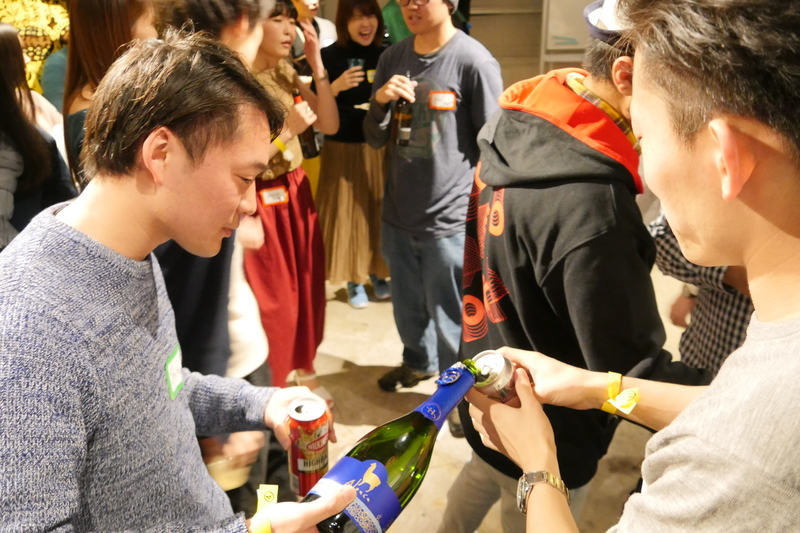
● Eating and drinking
There are many customs in Japan as far as eating and drinking are considered. In Japan, if during the meal you are sharing dishes with others then it is not acceptable to eat from the communal plate, instead, you should serve food onto your own individual plate and eat from there. Likewise, if you are out drinking with others, then you are expected to serve a drink in other people’s glass. Someone else will then pour your drink for you. Also, ex-pats should take note that eating on the go is considered rude for non-casual occasions in Japan.

● Chopsticks
Chopsticks are an integral part of food in Japan and you will come across them from time to time. Hence, it is good to remember that you should never play with your chopsticks nor should you use them to point at anyone.
If you are not using them at the moment then you should not hover them in the air instead, you should lay them down on the hashioki. Also, remember to never leave your chopsticks sticking straight into the bowl as it is symbolic of funerals and deaths.
Lastly, never rub your chopsticks to free them of the residue, such behavior is considered rude in Japan.

● Pointing
Pointing at someone with one finger in Japan is considered rude in our culture. Hence, you should use your whole hand while keeping your fingers straight when giving directions or gesturing toward something.

● Feet and shoes
When you are entering someone’s home, remember to take off your shoes. Moreover, some businesses also follow this etiquette and require you to remove your slippers before entering. Pay attention to signs in order to understand what you should do or not do.

Is it difficult to score a job in Japan?

It was difficult to get a job in Japan in the early 2000s, but now with the changing times and growing international companies scoring a job in Japan for foreigners is not as difficult as it used to be.

So, if you will apply in the early springs or late summers which are the prime hiring months, there is a good probability that you will succeed in getting a job.

How to get a job in Japan as a foreigner?

The following are the tips to get a job in Japan.

● For getting a job in Japan consider moving to Japan, as that increases your chances immensely. This is because if you are already in Japan then the company will not have to pay to move you.

● It is easy to get a job in Japan if you have a university degree or if you have 10 years of working experience in your field.

● You should know the Japanese language in order to get a job in Japan. Most employers will require you to pass a minimum Level 2 of the Japanese Language Proficiency Test to offer you a job.

● You should have your references ready.

What are the minimum wages and average salary in Japan?

The average minimum salary in Japan is 4 million JPY (37,800 USD) per year while the average minimum wage here is 874 JPY (8 USD) per hour.

What is the business culture in Japan like?

Just like the business culture in any other part of the world, the business culture in Japan is also very formal. There are some norms and traditional customs that one is expected to abide by, lest you offend your employer. It’s recommended to get yourself familiar with Japanese business culture in advance of actually moving into the nation. Now some of the common work business culture etiquettes here include-

● In Japan, privacy is valued. Hence, avoid asking too many personal questions about family or work history at the beginning of a working relationship.

● While meeting a business partner or colleague, greet them by bowing down and wait for them to offer their hand.

● Hierarchy is respected in Japanese business culture too. This can also be observed in their seating arrangement.

● Japanese traditional working culture favors politeness. Hence, try to remain as quiet and as unobtrusive in a meeting as possible.

Social security and benefits in Japan

A social security number is a 12-digit number that is issued to all Japanese residents who have registered with their local government and have lived in Japan for at least 3 months. This social security contributes towards-

● Public assistance
● General public health services
● Maternity leaves and child allowances
● Public housing
● Old age benefits like retirement pension, etc.

How does healthcare work in Japan?

Japan has a public healthcare program and a foreigner living in Japan can use it just like a Japanese citizen. Moving to Japan and stay in the nation may mean that you would be in need of having healthcare service to maintain your own health condition. There are 2 schemes under Japanese healthcare-

● First is the Japanese National Health Insurance, available to unemployed people who are working for less than 30 hours a week or are students.
● Another is the Japanese health insurance which is available to full-time employees.

Under both these schemes, the individual is required to pay only 30% of their healthcare costs, while the rest 70% is paid by the government.

An overview of private health insurance

There is not much difference between private and public health insurance in Japan, unlike other Asian countries. In fact, most private health insurance plans in Japan are either opted by people who have a terminal illness or by those who are foreigners. However, there are some benefits of having private insurance as well. These include-

● There are some plans that cover the 30% co-pays that are usually the responsibility of individuals.
● For those with long illnesses, this 30% can mean a lot.
● Private insurance is more extensive and covers many things that public insurance doesn’t.

How to find a doctor or dentist in Japan?

General practitioners in Japan are not common. Hence, for finding a doctor you would have to visit a clinic. Even though walk-in appointments are common, but still it is better to check online before physically paying a visit.

However, for getting a dental check-up it is mandatory to get an appointment beforehand. You can do so by calling their office or by booking online.

Public transportation in Japan

Public transportation in Japan is efficient and reasonably priced. The network is well-connected and it takes you to your desired location in a very small time.

People in Japan typically use buses or trains as favorable modes of commutation. However, one can also use ferries or domestic flights to travel.

The average cost of transportation ranges from 170 JPY (1.50 USD) of a single fare ticket in Tokyo’s metro to 20,000 JPY (185 USD) for one way ticket on the bullet train.

What types of Visas are available?

The types of visas you can apply for include-

● Work permit visas
The type of work permit visa you can apply for depends upon your job. Japan has nearly 30 different work visas like for artists, instructors, entertainers, etc.

● Self-employed visas
Expats who want a self-employed visa will need to apply for an investor or business visa. Though getting this visa will offer you more flexibility, but the process to gain it is not easy.

● Residency permits: temporary and permanent
For getting a residency permit, you will first need to figure out whether you intend to stay for a long or short period. If your stay is for a short duration (15 to 90 days) then you might be allowed to come to Japan visa-free. However, for a long-term residency, you will have to apply for a long-term residency visa, for which you will need a certificate of eligibility and residence card.

● Cultural activities visa
Cultural visa is the common route for martial arts students. For this, you will need a list of normal documents along with proof of your cultural activities.

● Volunteer visa
Under an agreement between the UK and Japan, UK citizens can volunteer in Japan for 1 year. For this, you must work with a registered charitable organization.

How to find a house when moving to Japan?

Finding a house to buy or rent in Japan is fairly simple. Here is how you can do it.

● Renting a house or apartment
If you are looking to rent a house in Japan, it should be easy. The landlords here do not treat the foreign tenants any differently from the Japanese citizens. The average rent here falls between 50 to 70,000 JPY (470-650 USD).

● Internet and mobile phones
In order to get a Japanese phone number, you should know that here we have three main phone providers: Softbank, Docomo, and AU. Now for getting a Japanese number, don’t forget to take your Passport, Japanese stamp, and a form of payment along with you.
As for popular internet providers, the names include KDDI, Asahi Net, Fusion Gol, etc. The average cost of getting internet lies between 3,000 to 9000 JPY.

● Sharehouse
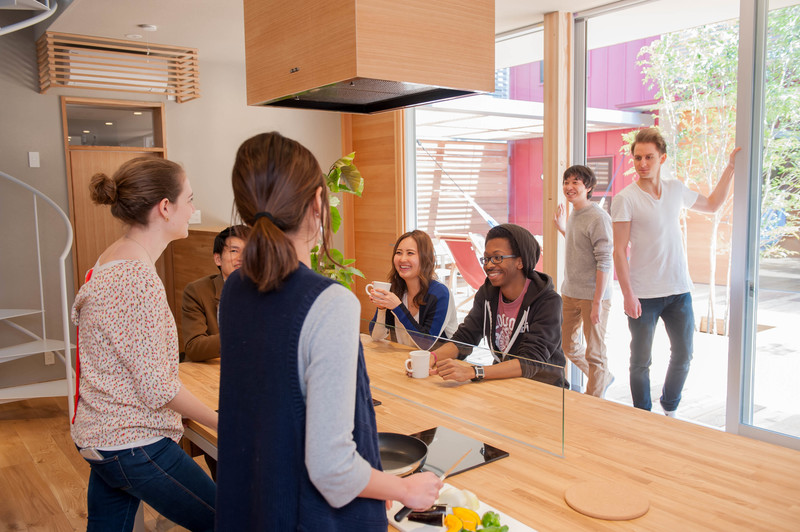
At the BORDERLESS HOUSE, one can live under the same roof with other locals and foreigners. This gets you a chance to interact with people belonging from diverse language and culture groups. It also creates an opportunity to learn. For searching for accommodation with the BORDERLESS HOUSE, just check out our website

How to set up financial establishments in Japan?

As a new resident of Japan, it becomes important for you to learn to manage your finances. Here is how you can set them up!

Which bank accounts should you open in Japan?

There are two banks that are very popular with the ex-pat community in Japan.

● Japan Post
To open an account with this bank you neither need a Japanese phone number nor a Hanko. You can just need to give your work number and sign the documents.

● Shinsei bank
At this bank also you won’t need a Japanese phone number, but you will need a Hanko. Another benefit this bank offers is that here you can fill all the forms in English here.

However, if a Japanese phone number is not an issue for you then you can choose to open an account with Japan Post bank, Mitsubishi UFJ financial group, Norinchukin bank, etc.

So, this is all you need to know about moving to Japan if you are an ex-pat who has newly shifted here!

【Ridilover x Borderless House】We held a study tour to learn multiculturalism in our international share house

Hi ! This is Yuya of Borderless House, and I am in charge of this blog .

Today’s story is about high school student who come to Borderless House for class trips.

The main mission of this trip is to break down the unconcern to society.

We held this trip with Ridilover, a general incorporated foundation who held a lot of study tour business to high school students and adults.

This time, 30 students from Hiroshima and Nagasaki came to Borderless House and we did 2 study tours.

I am going to explain the Nagasaki student trip.

Borderless House become a destination of school trip !? ~ We have thought about multiculturalism~

Why we have to do some experience of social challenges in a share house?

think some people have this question in mind.

Borderless house is a place in which ” Youth people from everywhere in world live together and experience different cultures together“.

and our goal is to make a society which ” regardless the country you came from, everyone is respecting multiculturalism.”

“Do you want to try to hold a study tour about multiculturalism at a sharehouse ?”

It was a 2-hour tour.

During the tour, we have first a discussion and a workshop about “multiculturalism in Japan” with our foreigners tenants.

First, let look at the house ! The first time to enter in a share house!

For highschool student who is living with their parents, sharehouse is an unknown area.

They all know about it because of TV but they don’t know about life in it. So, we invite them to have a house tour at the beginning.

We calculate the interior of the house to be able to promote communication.

For example, in Hounancho house, you have to pass over the living room to get access to your room. So people interact naturally in the house and greeting like “welcome back” or “I am back!” happen.

and by making an atmosphere that communication is usual, the interaction between Japanese tenants and foreign tenants become easier.

When we are explaining the concept and the interior, some students said that they wanted to live in this house.If you are planning to move to Tokyo or Kansai area, we are welcome to receive you!We are waiting for you !

What are you going to bring to a deserted island ? Let have a international communicatio by workshop

After the house tour, let have a workshop.

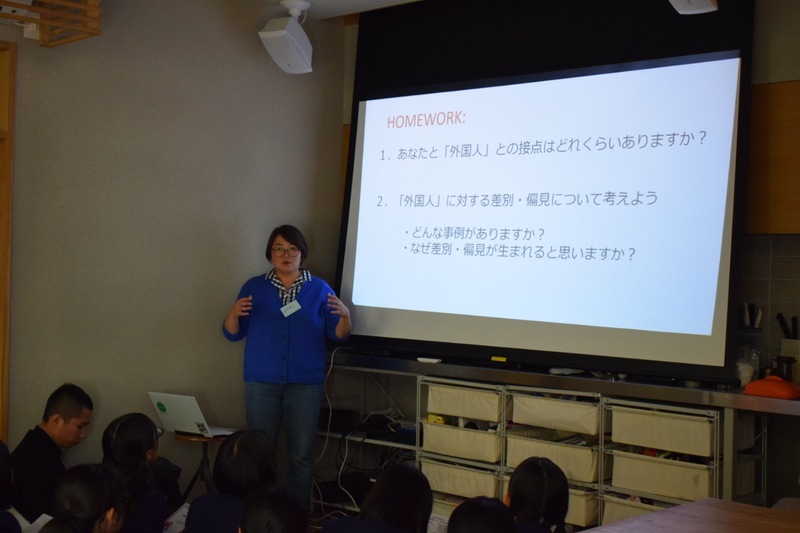
Before the study tour, we have asked our student to prepare some answers
The question was: think about every contact you have with foreigners.

The answers of highschool students were: the shopman of a convenience store, exchange student, teacher of ELT, tourist, etc…

If we put attention, foreigners are everywhere in our life.

However, when we ask them if they talk to them, most students say no.

We have asked them the reasons. They cannot talk about the language or they don’t have the opportunity to meet them.

But the main reason is that they feel scary to not be able to understand each other by not having the same values.

But do you think the way to think is going to differ from the country you have born?

We cannot understand each other if we don’t talk the same language?

As a student do not have interaction with foreigners, it is not easy to have an answer to this question. So, we invite some tenants of Borderless House to create interaction.


The theme of the workshop is easy.

If you have to go to a deserted island, and you can bring 3 items, what are you going to bring?

Have a talk with your team and decide it!

All our tenants were people who just have come to Japan and everyone can speak only English or another language.

In the beginning, the student has some difficulties to tell the name of the item they want to bring. But they start to communicate by easy word, some imitation and by drawing.

By seeing the effort of our high school students, our tenant did also some effort to communicate by using easy English word or the Japanese word they know
In the beginning, they were a distance between tenants and students.

However, after they have finished the workshop, they were all became friendly.

” It was not easy to tell the item or group our idea. but everyone was so kind that I wanted to talk to them more.”

We could get some good comment from highschool student.

Neighbor from foreign country is grworing up ! Do you want to know more about each other ?

In 2018, 31million people come to Japan. And in 2020, the year of Olympics, we expect that more than 40 million people are going to visit Japan.

In addition, they are 26.3 million of people living in Japan, which mean 1/50 of people in Japan are foreigners.

And because of the aging population, Japan is planning to recruit 30 thousand to 14.5million of foreigners to fill the lack of workforce in the domain of nursing care and healthcare.
Interaction between foreigners is important for Japan and the Japanese people.
However, governmental support in the domain of language and public administration are not in good condition yet. So for foreigners, it is not easy to live in Japan.

In our usual life, it is difficult to find an opportunity to meet and make foreign friends.

I am too bad to make a wall because of the country or difference od culture even if we are living in the same country.

They are not people from a different country, we are and they are our neighbors

We want to make our city, and our country better all together

This is how Borderless House think about coexistence.

They are no wall of language. The most important think is the sentiment that you want to tell to this person.

” When I sit down on the train, nobody wants to sit next to me.”

“When I go to Udon or Soba restaurant, the staff serve me some spoon and fork instead of the chopstick.”

” I can speak a little bit of Japanese. However, even I ask the road in Japanese, they just say: sorry I don’t speak English and avoid us.”

These are the answers to our tenants when we ask them if they have ever experienced prejudice in Japan.
” I think the Japanese are very kind and friendly, and Japan is an interesting country easy to live in. You know, we really like to live in Japan and we really want to interact more with Japanese.

About the chopstick, I think it is the kindness of the staff, so I feel happy.
I really want to communicate more, Like that, we can understand more each other. “

After they listen to the voice of our tenants during the workshop, students left us these comments ( image ).


When we live in Japan, we are not trying to avoid or foreigners.

I think, our shyness and our over-kindness keep away from foreigners and the distance between us has increased.

Thanks to this tour, we had this feeling to be able to create more opportunity to meet people from diffenrent background.

What is the multiculturalism that Borderless House want to spread to the society?

Borderless house has started 12 years before.

At this time, the number of foreigners was not like today. And many problems like people could not borrow a room or get some social security. In the hospital, as they were not a translator, it was not easy to get good healthcare.

In addition, because we have different culture, we believe in a different religion, we talk different languages, they were many Japanese who have a prejudice toward foreigners.

We wanted to change this society, we wanted to take all the distance and the misunderstanding between Japanese and foreigners. This is why in order to know each other, we have started an international interacting share house business.

Since we have started the business, the number of foreigners has increased and Japanese society became more globalized.
In our sharehouse, we have some trouble between tenants because of language or culture.
but by having a face to face communication and the action to try to solve the problem with patience, lead us to find new values.

And coexistence between people who have different backgrounds is not as difficult as you think. Just small respect for people who have different backgrounds and enjoy differences is needed.

We think this is the way to our ideal multicultural society

Borderless house will continue to try to create a multiculturalist society!

This study tour help to our high school students to understand and experience multiculturalism.

In 2020, we are going to try to hold 10 study tours with Ridilover, and we will continue to tell about multiculturalism, understanding different cultures and diversity to the society.

We are also doing a lecture and discourse about how multiculturalism is appearing from Borderless House. or how Japanese and foreigners can live together in the future?

We are looking forward to be able to meet you soon !

About BORDERLESS GROUP

About BORDERLESS HOUSE

Tokyo share house list

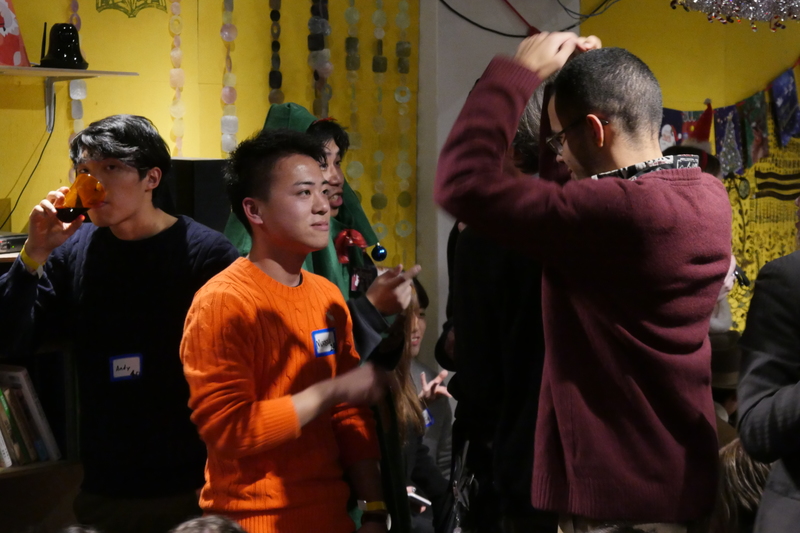
Hyper international interaction ! Borderless Christmas with more than 120 people was held on the 7th of December !

December is the Christmas season!

All the street is illuminated and we see more and more chicken advertisement on TV and in the city! Don’t you think that the enhancement of the city increases our desire to have a Christmas party? Because it is Christmas!

To satisfy your desire, we held a Christmas Party like every year!

We rent a space in Jinbo-Cho called “EDITORY” and more than 120people came to our party! What kind of party it was?

In this blog, we are going to show the content!

The person who is going to do the Christmas Party tour is me, Pakuchi!

I am working at Borderless House as a student worker and I am in charge of the event!

So, CHECK IT OUT !!

International interaction and Christmas Party represent so much Borderless House !


In Borderless House, we organize twice a year a party with 80 to 100 people who are living in our sharehouse!

Christmas wich I am going to explain to you is one of the big events! Every year, a lot of our sweet tenant is joining the party. However, this year was not the same year as usual.

MORE than 120 people come to our party. What is going to happen to this memorable party? All the staff was surprised at the beginning!

When we start the reception, a HUGE line of people was in front of us.
and the event space becomes full in a second!

The receptionist, the bar, and the cloak were full of person and everybody was an assembly into the room.

We could hear people in many spaces starting to cheers because they could not wait for the beginning of the party. That represents our tenant so well!

They could not wait to start to interact with people and start to enjoy the conversation. Their communication skills are so remarkable!

And the sweet cute person who was charged to do the facilitator is our tenant!

Yes, this year also, our tenant help us for the Christmas Party!

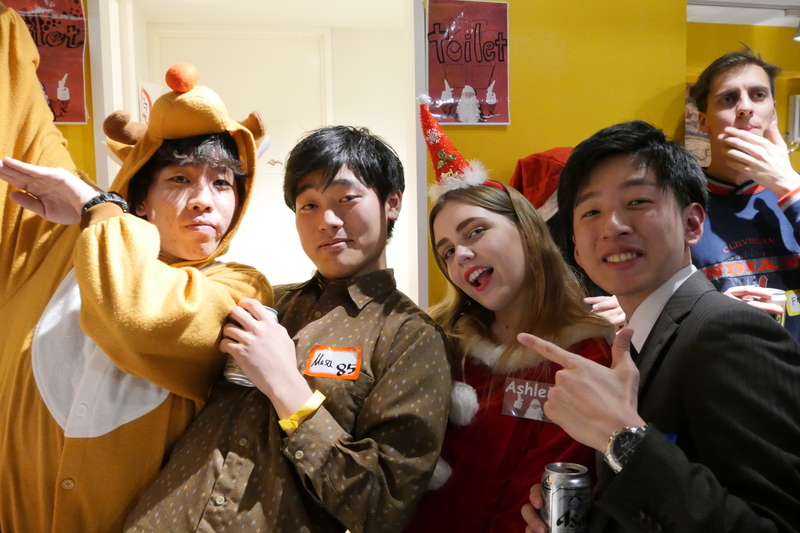
The cute Santa Claus is Ashley, she is living in Itabashikuyakusho-mae House!

She is like a mother of the house and makes the community warm-up!

She is a big fan of Borderless House and she also help up for the event “Borderless Olympics”!

Thank you always, Ashley !!

The facilitation of Ashley, gives a tremendous boost to the atmosphere of the party!

You cannot say that you are shy! A very close linkage program heat the party!

The theme of this year’s Christmas party is “extends beyond the house, the nationality and the connection !

This year, we invite tenants, people who reserve a room of Borderless House, people who are interested in international interaction and people’s friends!

The fact that a lot of people with different backgrounds can come is one of the characteristics of the party.

This is the reason why we always prepare some good programs in order to make the com munition between people easier! So, even you are a little shy, it is completely okay!

You will become quickly socialize with people around you! Let’s enjoy it!

You are my man of destiny ?! Number and color matching!

The first program is called number and color matching!

Everyone gets some wristband with a number and a color. You have to find the person who has the same color and number and form a group.

It is quite simple but fateful. In this huge universe, we all grew up in a different country, and we all gather in Tokyo and find together by coincidence.

Is it not fantastic ?!

Is it destiny ?!

All the groups did an introduction of themselves and the voltage of the room was in high gear! Everybody was so excited to find their fateful! People make some high-touch when they find they’re fateful!

 This meeting is forever!

We don’t need language, what we need is an only passion! Let’s do the gesture game!

The next program is a gesture game!

After we all find our fateful, let start the game! The winner of the game can get some luxury prizes!

Everyone thought that gesture game is easy, but it is not the case!

Even if it is difficult, cooperation leads us to win! Everybody makes their own gesture and express the theme.

The first theme was the one of the difficult ones!

“zoo” Everybody did some gestures about the gorilla, monkey, etc. and people answered the name of animals. However, the word “zoo” is not appearing.

The floor is in chaos.

I know, we are vicious that we make this theme. When almost every team finished answering, only 2 teams didn’t finish to answer.

Even they could say that they have finished even if it is unfinished, they did so much effort to do it properly!

All of our staff were touched by their passion.

We really wanted to give them some gifts!

In the floor mix of passion and chaos, the 2nd theme is … “Disney Land”! This is also a difficult theme! Everyone answered “mouse” or “Mickey”.

At the moment we regret a little bit that we make so much difficult theme, a team who answer 2 right answers appeared!

As is it a team made by only fateful, the heart-to-heart communication is working very well!

They get the luxury price !! We didn’t expect that the gesture game reaches a fever pitch!

Are you interested in the content of the gift?

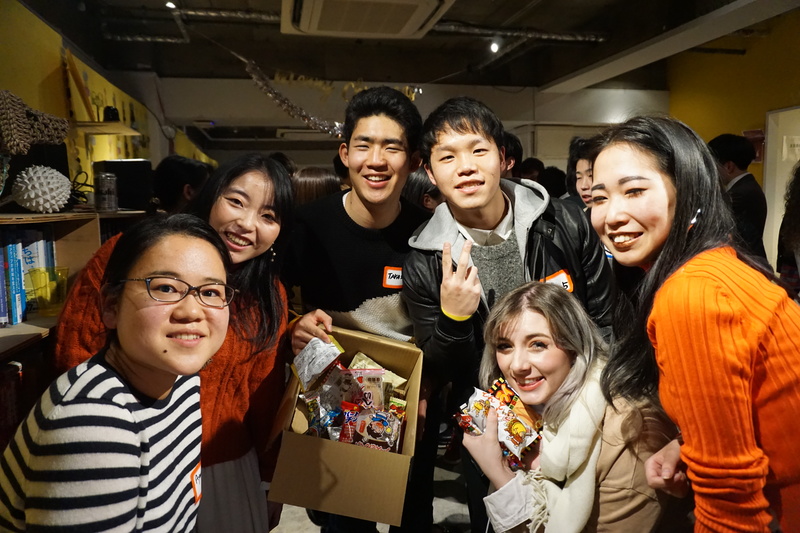
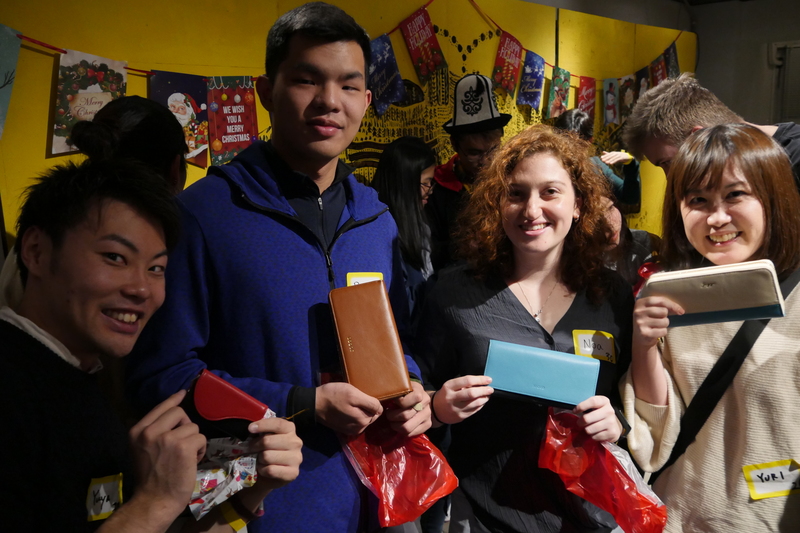
A set of world craft beer AND Order-made leather products from JOGGO AND AND a huge box of different sweets etc. Some presents from Borderless Santa!

We all envy….

Who are going to get the next prizes ?! The exciting bingo game!

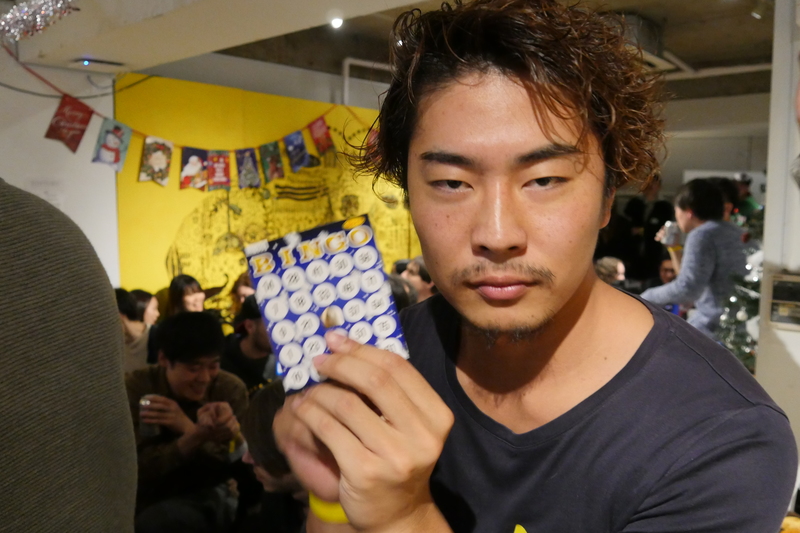
We cannot forget the face Bingo game of Borderless House!
It became an annual event but let me explain the rule!

Borderless bingo is not a normal bingo game.

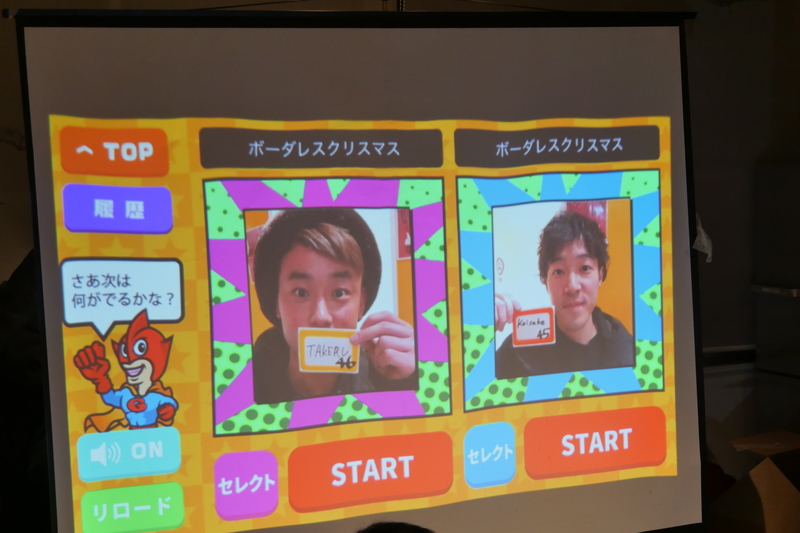
The face of each people who are coming to the Christmas party is becoming a number!

Thanks to you we can play the bingo game and thank to you someone can get the prize ! It is a very special bingo game.

Let start the bingo!

Everybody is paying attention to the face of people turning around!

This year, we choose as a prize: Amazon card, Borderless T-shirt, as a small present,  land of Moon which gets famous in Terrace House and A5 rank ( higher quality ) Matsuzaka-beef!

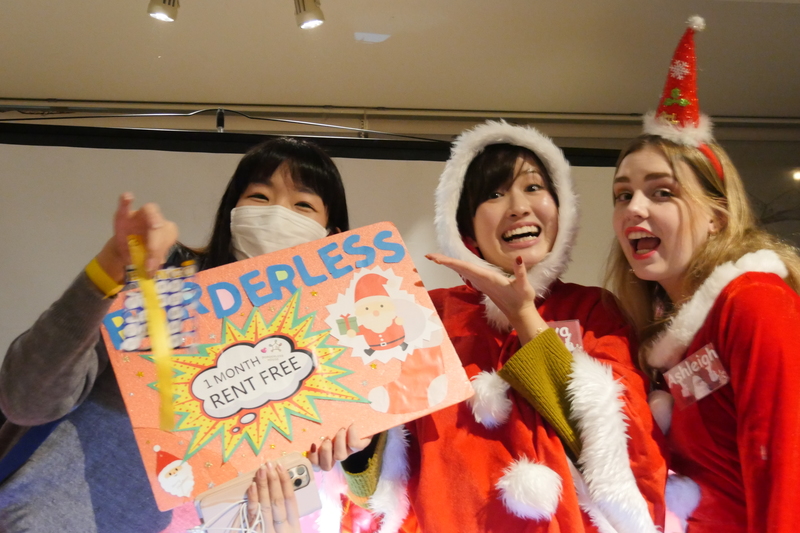
And finally, don’t forget … 1-month free fee ticket !!

The happy girl who gets the 1-month free fee ticket is…


The tenant of Shinjuku-Nakano 3 !!!

Congratulation!

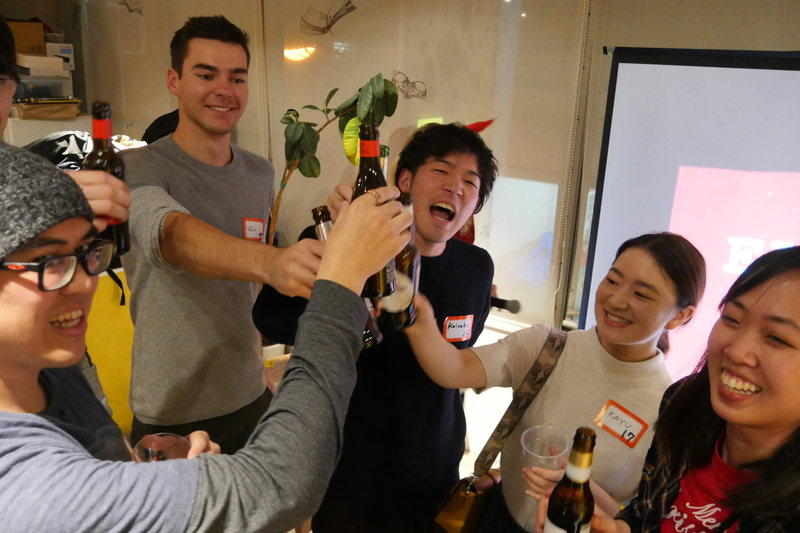
All the people you cheers are your family! It doesn’t matter which share house you are living in!

The party approach to the end.
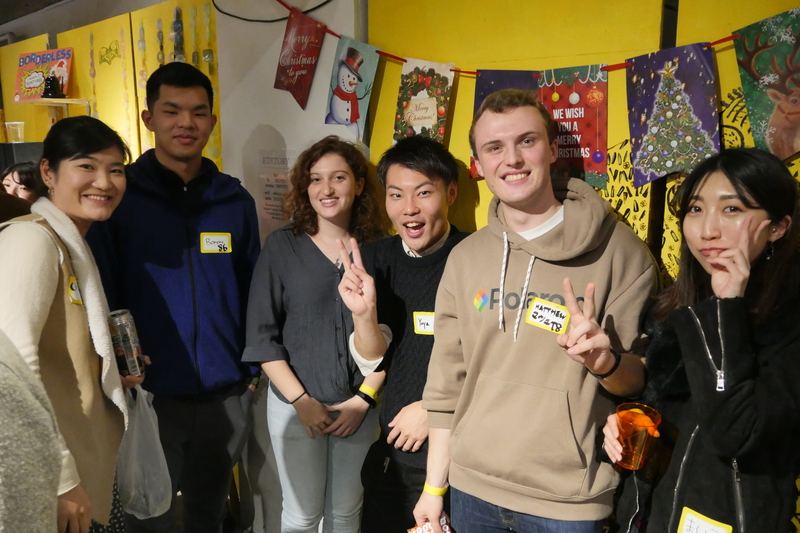
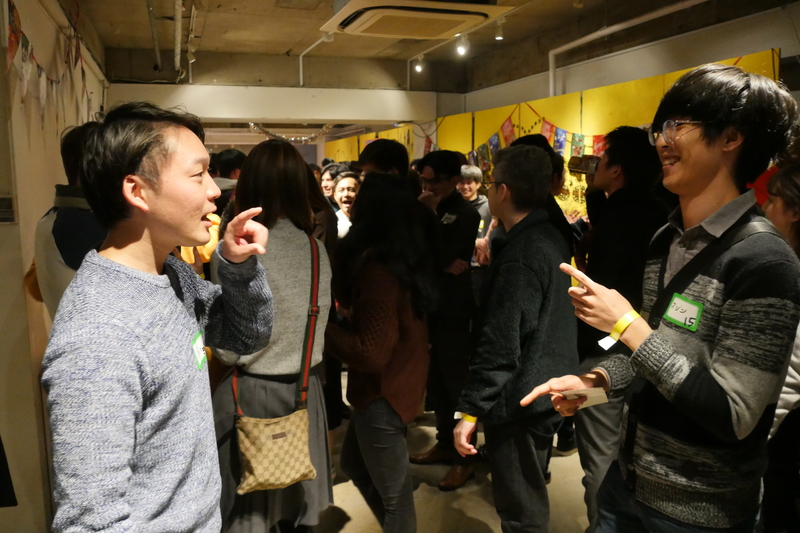
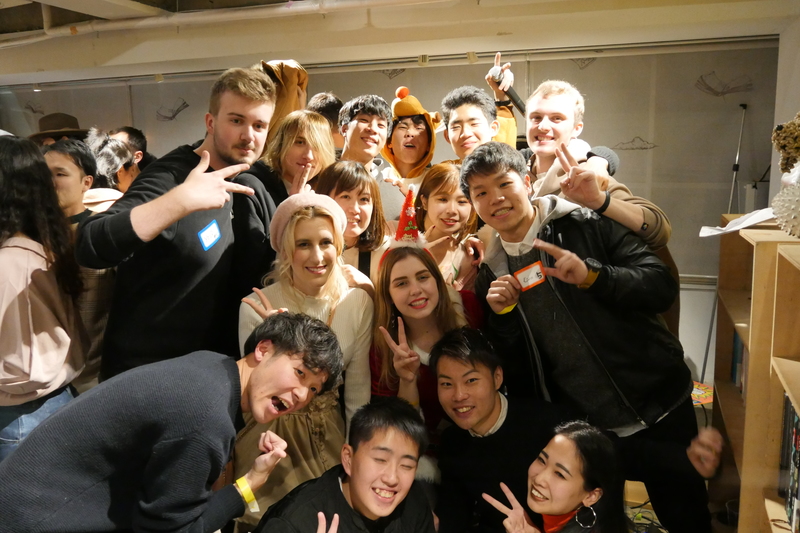
People who came with their housemate of a friend were enjoying communication with people they just have met at the party. This is one of the pictures!

The nervous face at the beginning just go away at the end of the party! Everyone was at the party and enjoy their time.

We can conclude as the floor was on over-capacity, it makes the relation between people physically and psychologically more close. 

The atmosphere filled with excitement doesn’t end even after the Borderless Christmas !

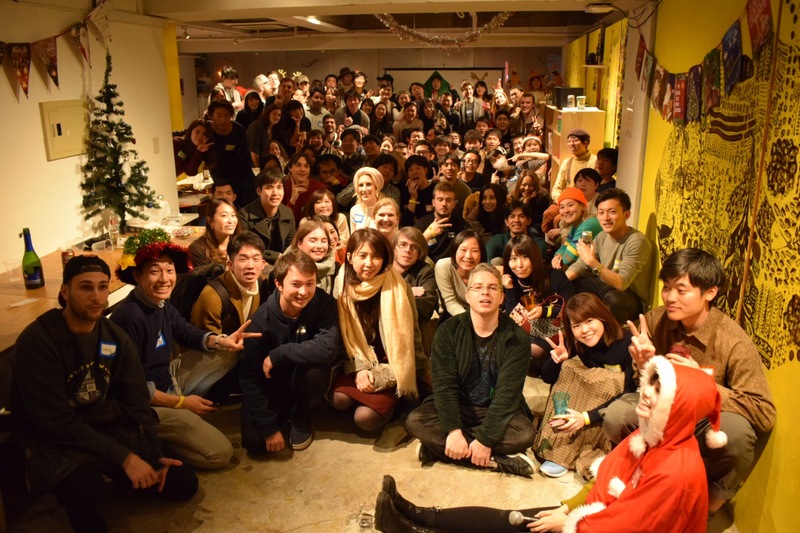
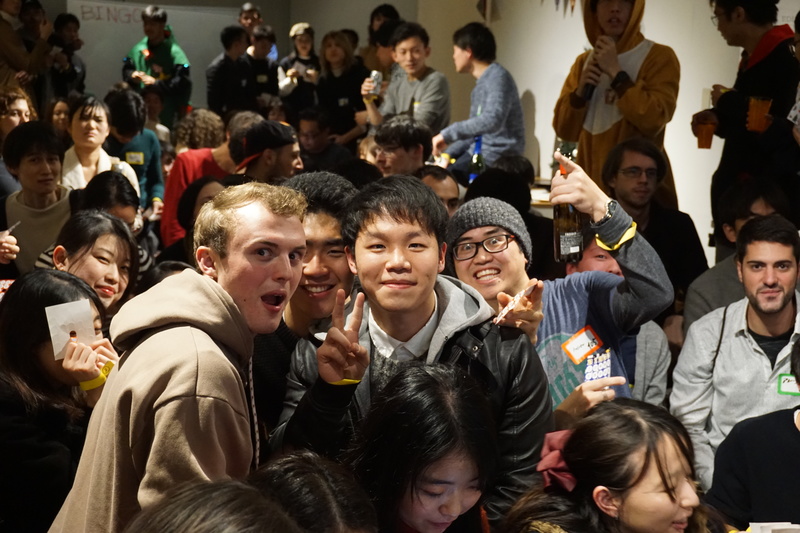
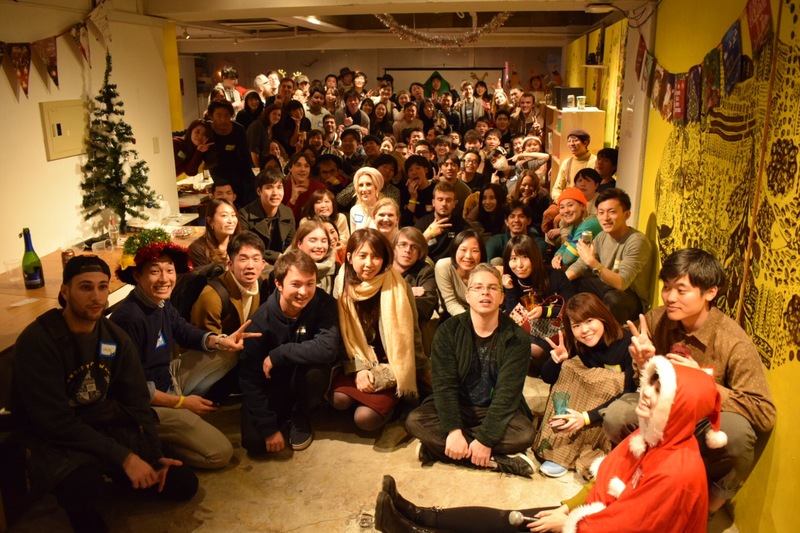
Good time end so quickly, we took a souvenir picture at the end!

See the close relationship between people! It looks like a family picture!
We cannot imagine that they are all just met a few hours before.

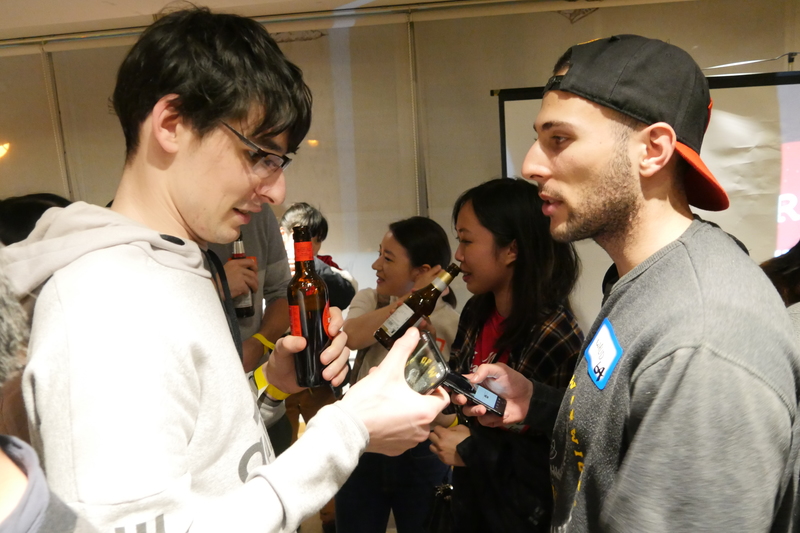
Even after the Christmas party, people cannot forget the atmosphere of excitement and they all went to an Izakaya ( casual Japanese restaurant).

This is a picture of the people who were gathered naturally after the party.

In this picture, we can]j see, a Japanese, a Korean, an Italian, a Russian, a British, and an American.

It completely represents this year’s theme: “extends beyond the house, the nationality, and the relation!”

By our Borderless party, a lot of emotional ties beyond nationality and language have arisen!

YOU, who wants to learn English or make international friends, YOU who are interested in a share house!
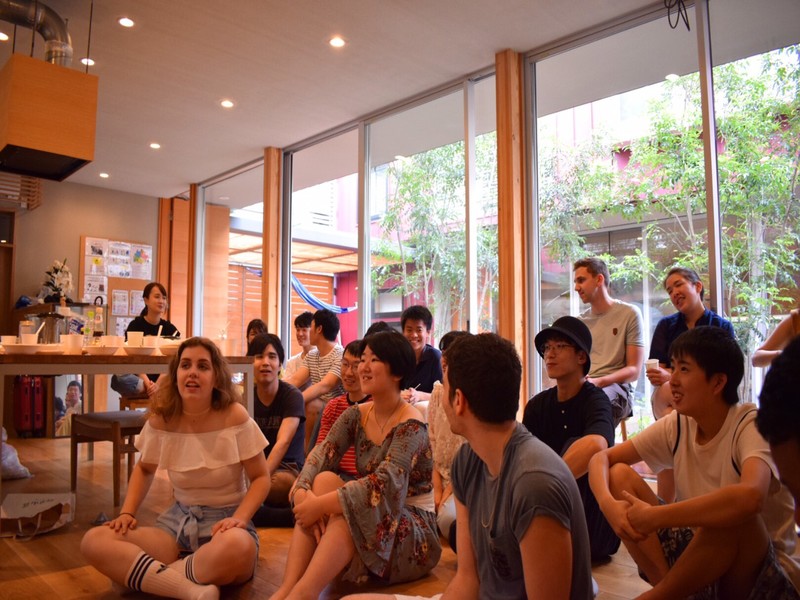
Borderless House is making many events that can maximize the connection between people.

Borderless House is a place that more than 50 countries are gathering. You can experience English but also so many other languages and cultures. It is a place that you can try national-oversea-experience!
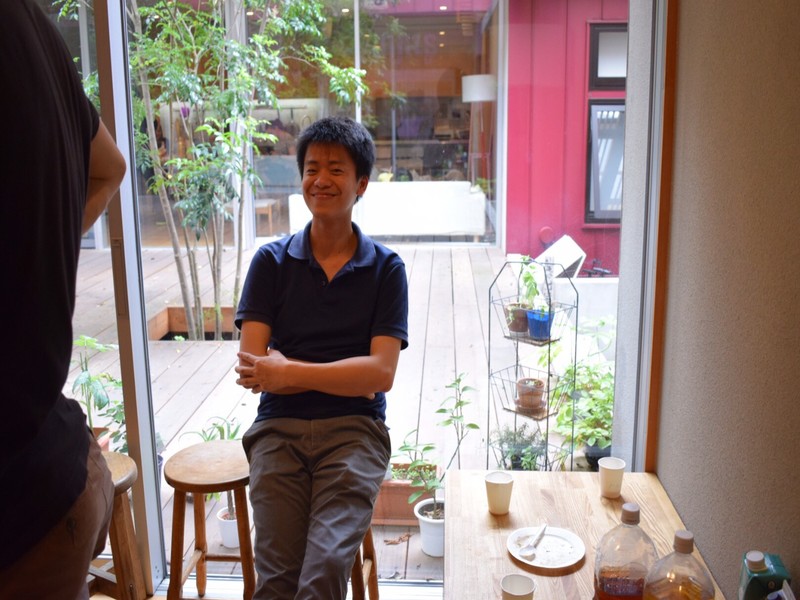
Each sharehouse is made of 50%of foreigners and 50% of Japanese so you can surely experience international interaction!

You are always welcome to experience national-oversea-experience!

The next event is in May 2020 ! We are all waiting for your visit!

Merry Christmas and Happy New year everyone!

Tokyo share house list
Only Tenant program
BORDERLESS Event Review

【Enjoy World Cuisine】Amazing Exotic Cambodian Food Experience!

សួស្តីទីនោះ!Hello, this is Yuya!

『BORDERLESS DINERS~Experience international restaurants and travel around the world~』

It’s been 6 months since we have started this program!

This is a hands-on program that you can enjoy the international exchange with
your five senses and enjoy different cuisines in restaurants or catering in Tokyo!
Let’s Eat, Talk and Think together!

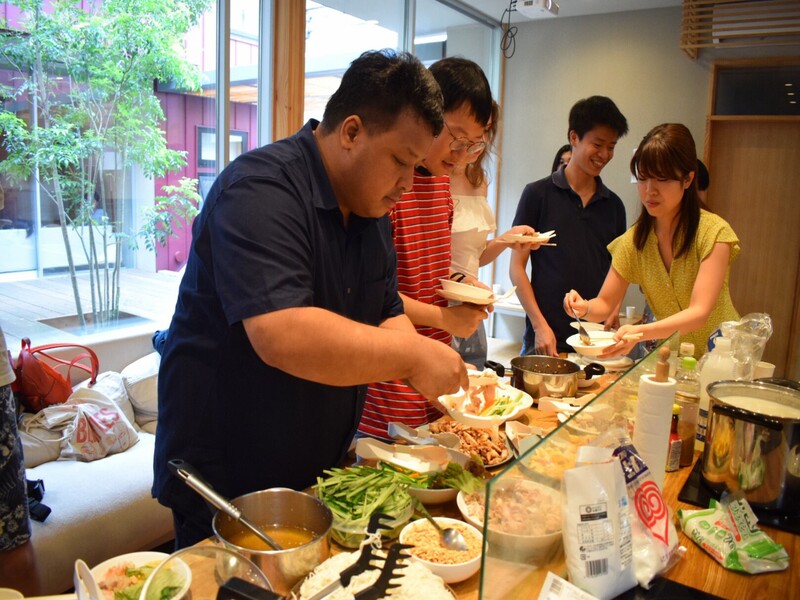
We are having Cambodian cuisine in July!

Let me introduce you the exotic BORDERLESS DINERS which served by Cambodian locals.

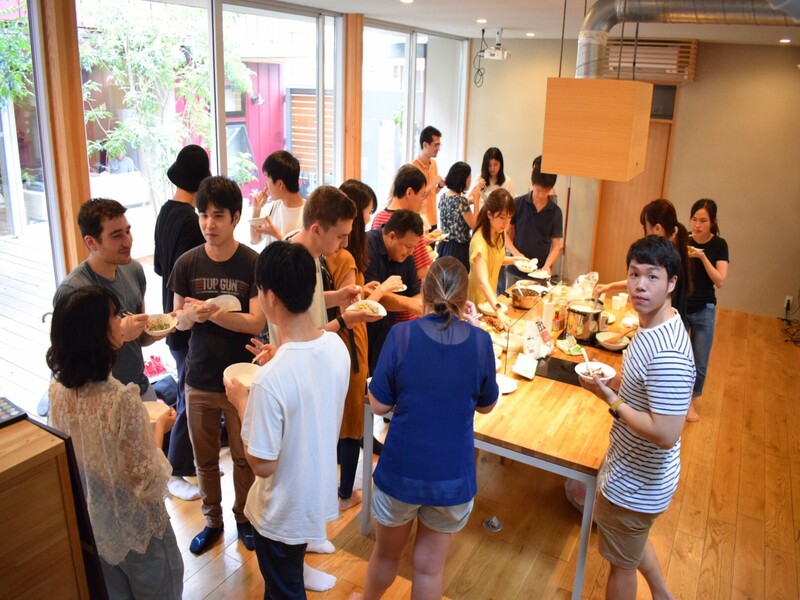
Delicious Cambodian cuisine cooked by Cambodian students, Seam and Srun!

This time, the food is cooked by Vice President of the Cambodian International Students Association in Japan, Seam and the cooking assistant is Srun who is an interesting engineer from Cambodia! He also did a Cambodian presentation for us.

They hold some occasional events of Cambodia culture or Cambodian food to let more people know about this country from time to time.

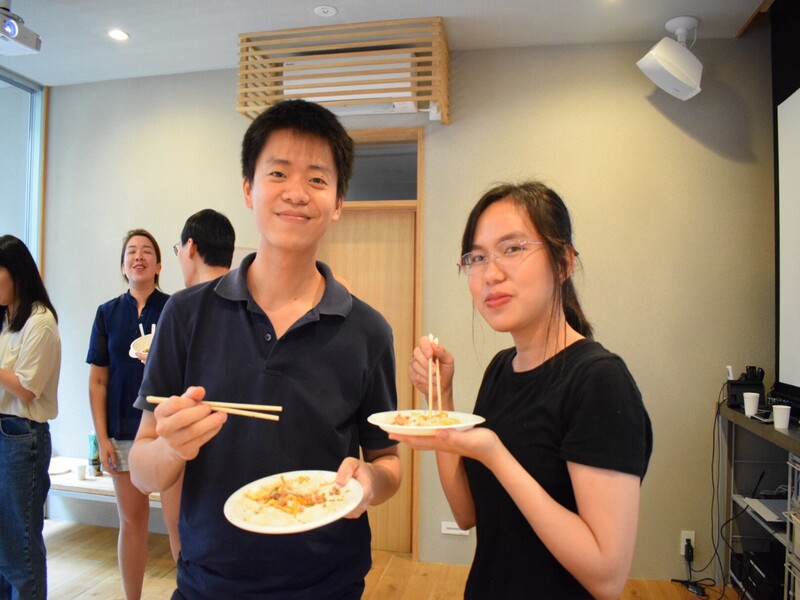
Srun who was supposed to cook overslept on the day, luckily, all the participants helped us to start the journey to Cambodia by cooking together.

Exploring a taste for ethnic and exotic flavors!

Cambodian food has evolved a unique cuisine based on the influence of French, Chinese, Thai and Vietnamese cuisine.

Speaking of ethnic cuisine, we tend to think it with pungent taste, but in Cambodian food culture, you can add any spices that you like, so it’s not spicy at all!

Cambodian food is highly recommended for people who wants to try some ethnic food for the first time, as they usually don’t put coriander in it and it’s very easy to get used to the taste.

Having delicious breakfast for the morning! A traditional breakfast with a lot of meat!

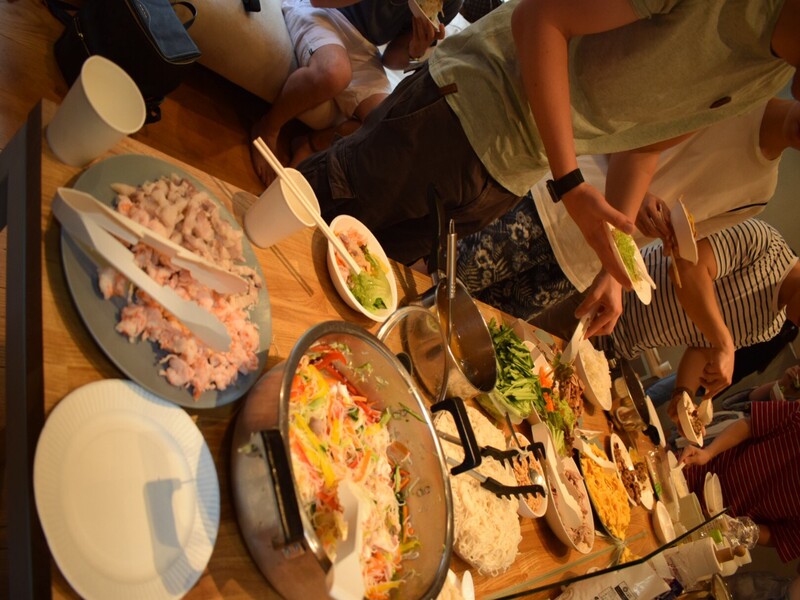
Speaking of Cambodian cuisine, pork rice bowl (បាយសាច់ជ្រូក) is absolutely the one! which is also the most popular Cambodian breakfast.

Seam told us that this is a Cambodian food that every Cambodian must eat at least once in their lifetime.

The pork is cooked with fish sauce and sugar. It’s delicious to eat it with marinaded veggies.

While enjoying the fantastic taste of Southeast Asian cuisine, let’s also have some tasty fried eggs with ground pork sauce.

To start your day with good feelings by having fat pork and rice, it also makes you feel energetic! !

A mysterious drink with beans and jelly? ! Unique Tapioca milk!

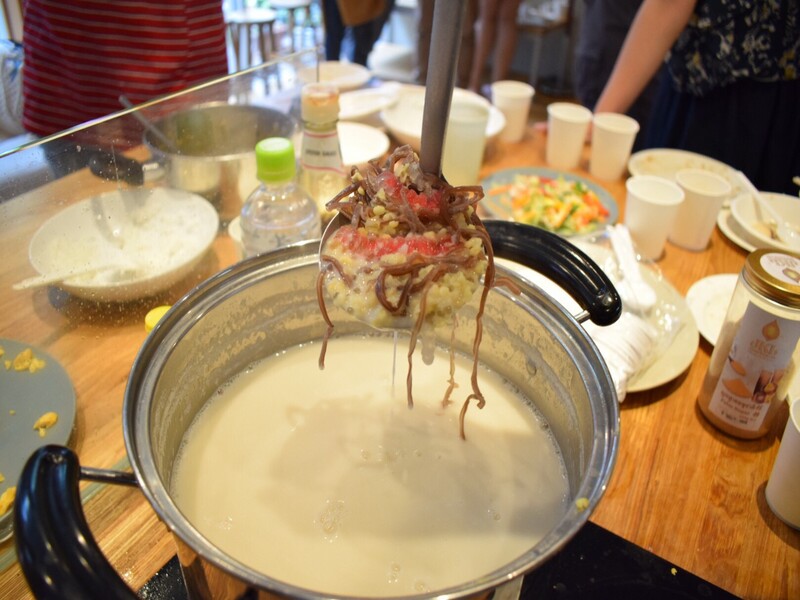
I’d like to introduce another Cambodian food to you, which is Tapioca Milk!

Tapioca is now a big hit in Japan, but Cambodian tapioca milk has a different taste.

First, even though it’s tapioca milk, beans play the most important role.

This kind of beans is not common in Japan, however, it’s a classic element for Southeast Asian dessert, It is a dessert with a lot of mung beans, jelly, etc. and boiled in coconut milk.


Even the participants who were hesitating to try it out at the beginning loved it.

Welcome to visit Cambodia! The weather is warm as well as the people

After enjoying delicious rice and desserts, Srun introduced Cambodia deeply to us.
Cambodia is known as the birthplace of Angkor Wat and pumpkin, but there were still many of us didn’t know what this country is, so everyone was very curious about Srun ‘s story!

Extremely friendly and warm-hearted Cambodian people

Then, Srun would like to talk about the personalities of Cambodian people!

“Cambodian are very kind to tourists. I think people are gentle everywhere in Southeast Asia, but I can say Cambodians are really friendly. So don’t be afraid to visit Cambodia, since there is always someone would help you if there is any problem! Every Cambodian is just as kind as me!” Srun said.

All of the participants were wearing a big smile while listening to his introduction.

Even this is the first time to meet Seam and Srun, they were very kind and friendly,  also very easy to talk that made me feel that I have known them for a long time.

A small and historic town – Phnom Penh

Cambodia has a short history of Pol Pot massacre (Cambodian genocide), and there are places in the country where the grief remains.

“The capital Phnom Penh a city has a proper size and it is very convenient to live there. It’s also centralized.  It’s also safe to travel in Phnom Penh, there are many restauants, hotels, and sightseeing spots. It is highly recommended to go there by Tuk-tuk. Of course there are still places where you can see the signs of the genocide such as Killing Field, but there are also many beautiful temples and royal palaces. It’s a city with historical cityscape characteristic and energetic people who live a positive style, regardless of the past. It’s a lively country, a lively city. I hope everyone can visit there some day. “

Srun said. And this is the current situation of Cambodia.

Here is the special points of Cambodia recommended by our Japanese tenant who has lived there for a year.

This time, there is also a Japanese resident who has worked in Cambodia for a year sharing some good things of Cambodia and her recommendations to us.

She said that Cambodians are very dexterous! Especially the handwoven silk is very beautiful.

It takes about an hour or so from Phnom Penh to silk island where you can see the amazing Cambodian handwoven silk.

Also, she was shocked by eating frogs and insects which they were considered as an important source of protein for Cambodian.

While introducing us the beautiful silk scarves and showing us photos of tranditional costumes, many beautiful memories of her stay in Cambodia came flooding back.

It was a wonderful experience for us of getting to know Cambodia from a foreigner’s perspective.

Next time is Mongolia! Experiencing the nomadic ethnic culture in Shinjuku! ?

BORDERLESS DINERS~Experience international restaurants and travel around the world~』is a monthly event only for tenants at Borderless House!

The next event will be held on August 22 (Thursday) in a Mongolian restaurant in Shinjuku!

In a restaurant that reproduces the Mongolian nomadic house, you can learn about culture and enjoy the delicious cuisine with Mongolian couples in a fun way!

What kind of experience would that be?

Please look forward to our presentation next month’s!

About sharehouse

About BORDERLESS HOUSE

【Enjoy World Cuisine】Hand-made Bosnian food! Let’s eat! Amazing International Experience!

Dobar dan!Hello, this is Yuya!

『BORDERLESS DINERS~Experience international restaurants and travel around the world~』
Eat! Talk! Think! This is a hands-on program that you can enjoy the international exchange with your five senses and enjoy different cuisines in restaurants or catering in Tokyo!

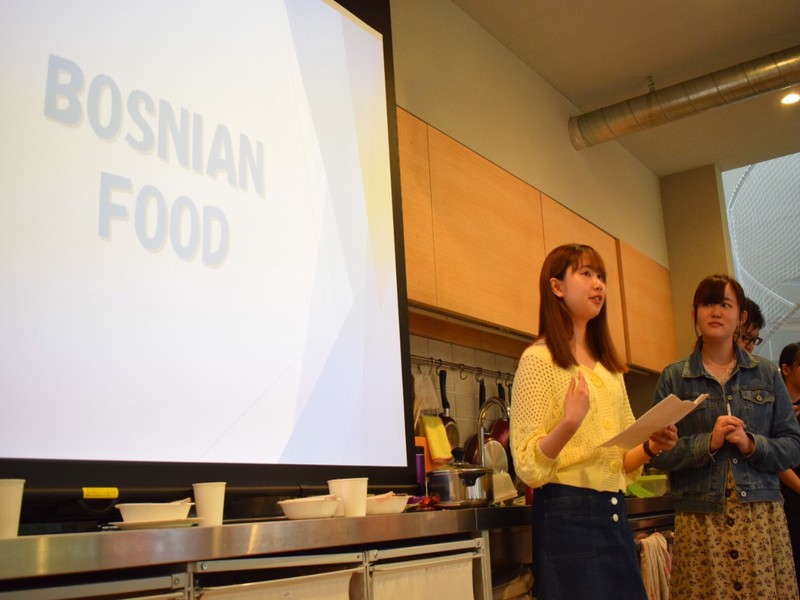
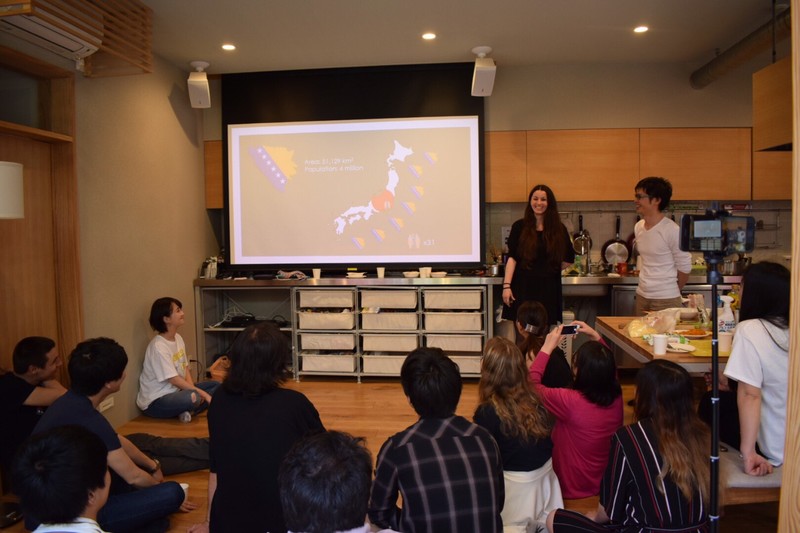
The 4th time is Bosnia! This time we have done this event with “Japan-South East Europe Business Association.”

I would like to give you an update about the event we held on May 20th!

Enjoy the international vibe of Bosnia with your five senses!

BORDERLESS DINERS is an event which we would like our tenants to be interested in that country through eating their cuisine

and would like to enjoy the different culture of various countries. The “Japanese-South East Europe Business Association”

sympathized with the feeling we have towards this program and had given us a suggestion that they would be happy in sharing stories of the beautiful country Bosnia, to our tenants.

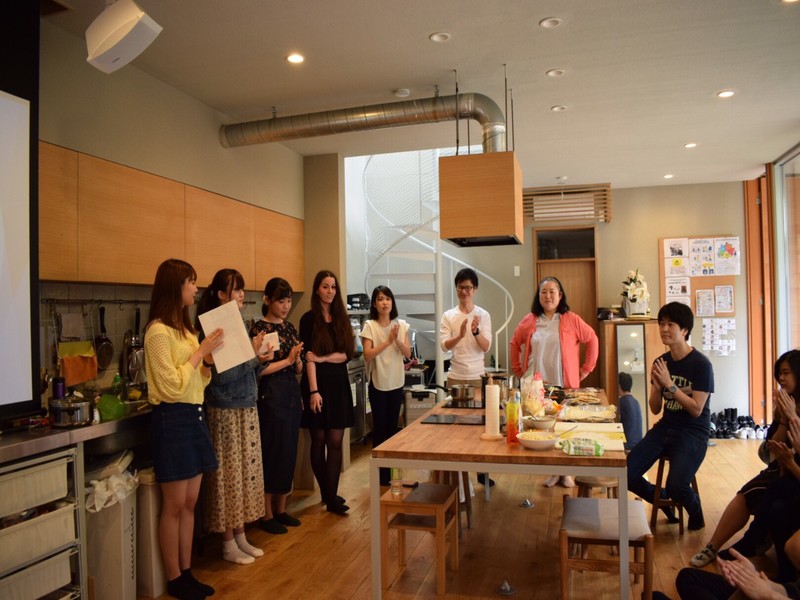
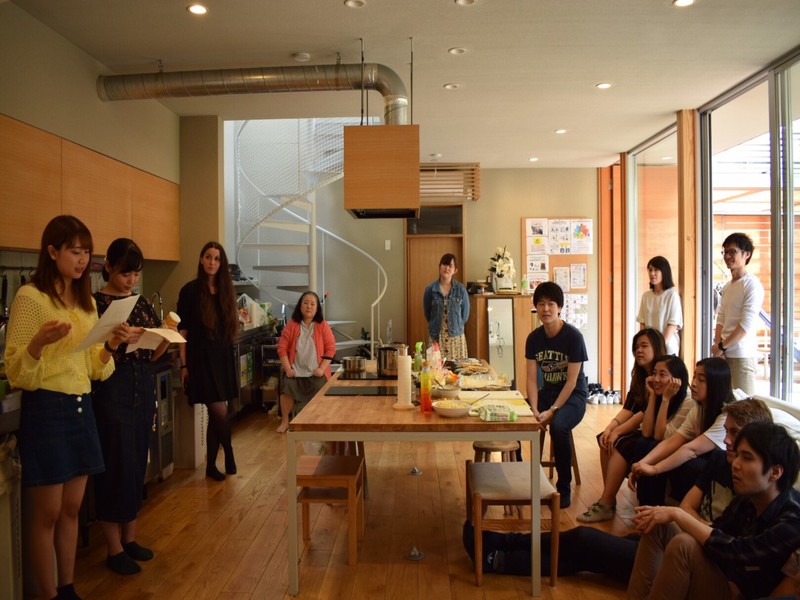
For this time, not only eating but we have also tried cooking Bosnian cuisines by ourselves.

As you may know already, Bosnia is a well-known country where the World War 1 had broke out and has a strong image that they are still facing raciall conflicts.

On the other hand, Bosnia as a unique culture which has been cultivated from the Ottoman era and they have a beautiful, maginificent nature landscape!

This time, let’s travel in Bosnia together!

The taste of the ancient orient from the 3rd century BC

Sarajevo, the capital city of Bosnia, there is line written as “Sarajevo meetings of cultures” on the Ferhadjia pedestrian street.

As it says so, the line is indeed a border for cultures and the atmosphere of the city is completely different on the east and west side.

On the east side of the street, you can enjoy the scenary of the ancient orient. Compared to that, modern europe cityscape spreads on the west side of the street.

Moreover, Bosnia have country border lines with 7 different countries such as Italy, Austria, Hungary,

Romania, Bulgaria, Greek and Albania. The culture of each country had fused together at Sarajevo.

As a result, the food culture of Bosnia has become a great mixture which is beyond description.

A perfect dish would make you a good husband/wife? Tranditional Home-made dishes in Bosnia

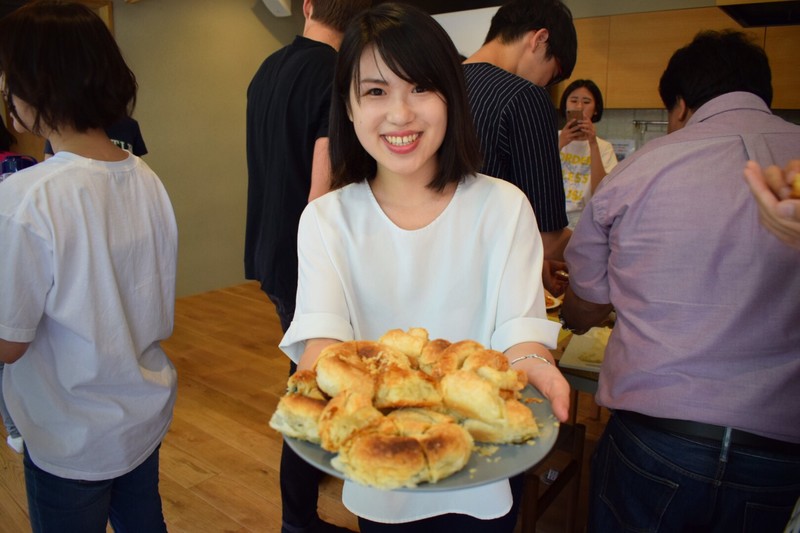
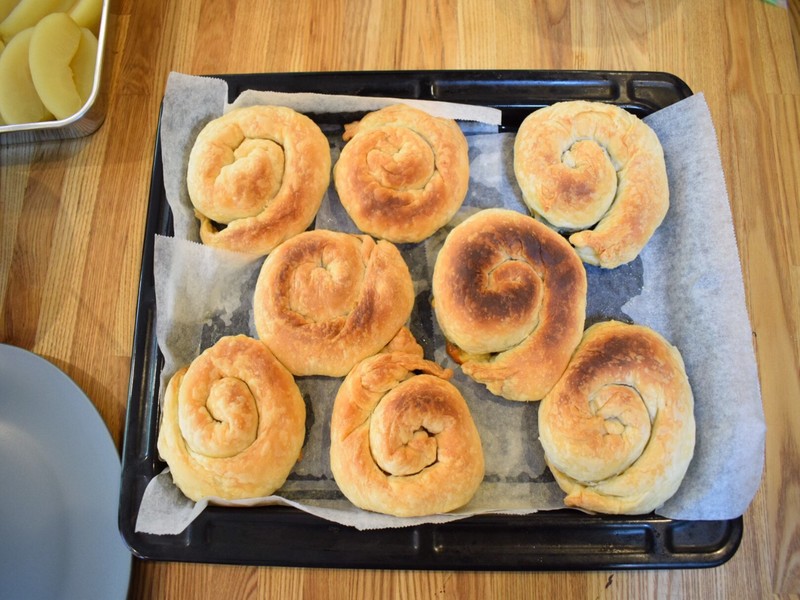
This is essential when it comes to Bosnian cuisine. Yes, it’s Burek (Burek)! It is called Pita in the Balkans region,

It is a widely-packed pie-packed food filled with various ingredients, and its name changes depending on the ingredients.

In Bosnia, it is called Burek, and it is characterized by stuffing meat and spinach etc. in a swirl round shaped thin pie dough.

Burek from Bosnia is the most delicious pita among all the pita foods in the Balkans region, said by Ines.

Since it is difficult to make Burek in a beautiful shape with all ingredients evenly stuffed and to swirl it cleanly,

in Bosnia, they say if people who can make a perfect Burek must be a good companion!

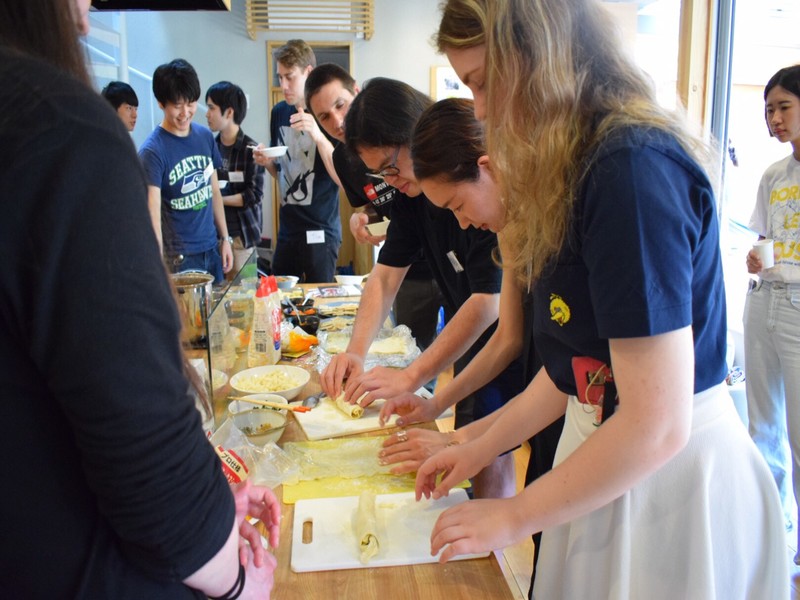
Let’s aim to be a good husband and good wife! We had a challenge to make a Mini Burek!

Stuffed, stuffed … It seems easy but also hard.


Lots of unique Burek were made! The taste of Burek was extra tasty as we did our best to make them.


Forbidden fruit!? Let’s enjoy the God’s dessert!

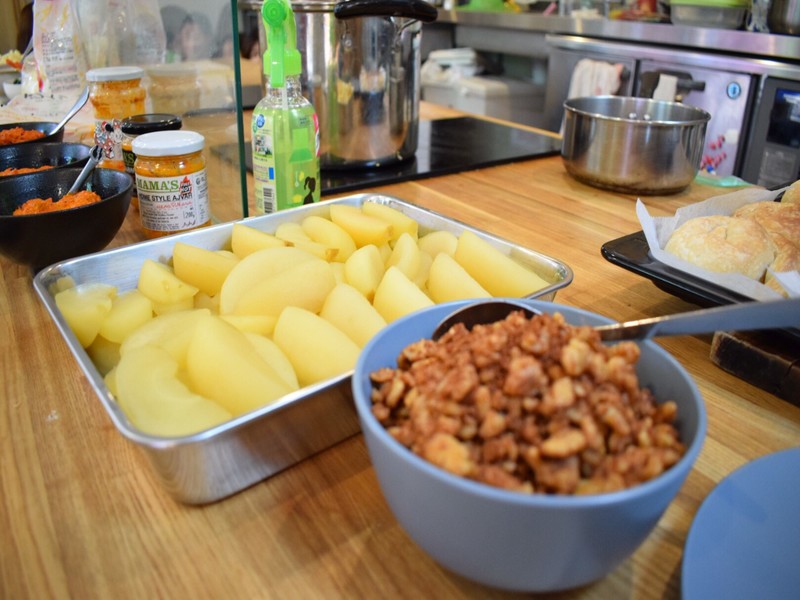
Next, I would like to introduce you guys a Bosnian grilled apple dish, Tufahije (Tufaje).

Simmering the apples with plenty of sugar and lemon until the apples are fully covered with them, adding plenty of walnuts and hazelnuts as well.

Finally, eating them with the fresh cream and cinnamon powder!

It was fantastic!

Ines said that apples are considered to be God’s food according to the mythology in Bosnia,

so Tufahije seems like a dessert of the fruit of God. Even though it is an easy-to-make Bosnian home-cooked dish, with the myths combined to it just made us immerse in a fascinating taste.

As you can see, there are a lot of delicious dishes with interesting culture in Bosnian cuisine! You must try Bosnian food!

There is no war but only Tourism in Bosnia

Bosnia is a cosmopolitan country with a mix of cultures, but its appeal is not only food.

The Sarajevo incident that triggered World War I, and the Bosnia-Herzegovina conflict involving the entire Balkans.

“Bosnia, a land of historical conflicts and wars.
Even after the war is over and 20 years have passed, the image still remains solid.
Bosnia has the image of war, but I want to change it. The history cultivated from Ottoman Turkey.
Vast and rich nature, and abundant food culture. It is a wonderful country where you can go everywhere for sightseeing.

The war has already ended long time ago. Please see a new image of current Bosnia. “

Ines said.

The front line of cross-cultural coexistence, a country has wonderful people, nature and culture

“Bosnia is a front-line country of cross-cultural coexistence. After the war, we have created a unique culture to coexist with various ethnic groups and religions other than Islam. It is also the cityscape seen from the cultural border in Sarajevo,
The feature in our presidential system. We must be select three presidents each from the Bosnjak, Croats and Serbs.Our beautiful country where culture coexists. Please come for sightseeing. “

A country where we are not familiar with but it is actually not too far from Japan, Bosnia.

It is a beautiful multicultural country where nature and tradition coexisted.

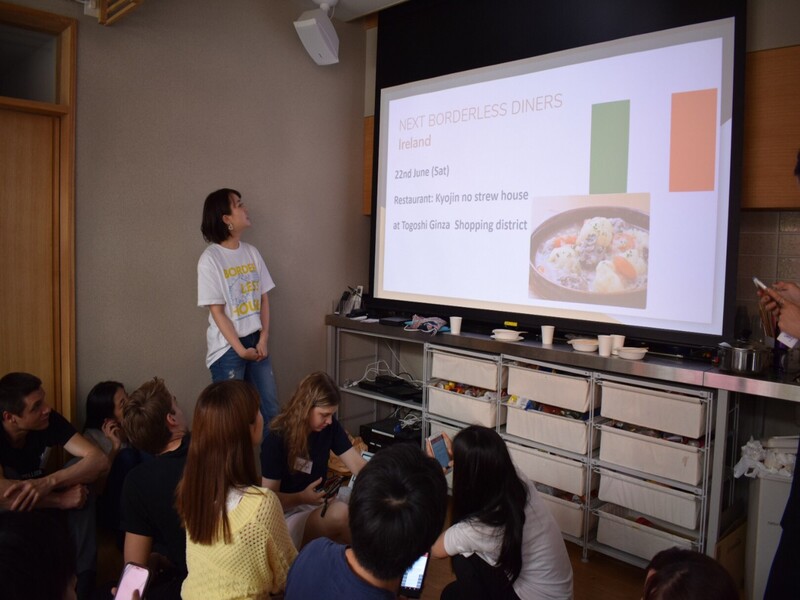
We are going to Ireland for the next time! Let’s travel around the world every month!

『BORDERLESS DINERS~Experience international restaurants and travel around the world~』is a monthly event only for tenants at Borderless House!

Next time, the event will be held at an Irish restauant in Shinagawa Togoshi Shopping street.

You can enjoy Irish food made by a cheerful and talkative chef who loves Ireland.
Well, what kind of experience would you expect for the next?

We are looking forward to seeing you next month!

Japan-South East Europe Business Association

BORDERLESS HOUSE LIST

BORDERLESS DINERS REVIEW LIST

International experience with world food! Know more about Syria through Middle Eastern food!

As-salamu alaykum!

This is Yuya from Borderless House who is in charge of the program!

『BORDERLESS DINERS~Experience international restaurants and travel around the world~』

Eat! Talk! Think! This is a hands-on program that you can enjoy the international exchange with your five senses and enjoy different cuisines in restaurants or catering in Tokyo!

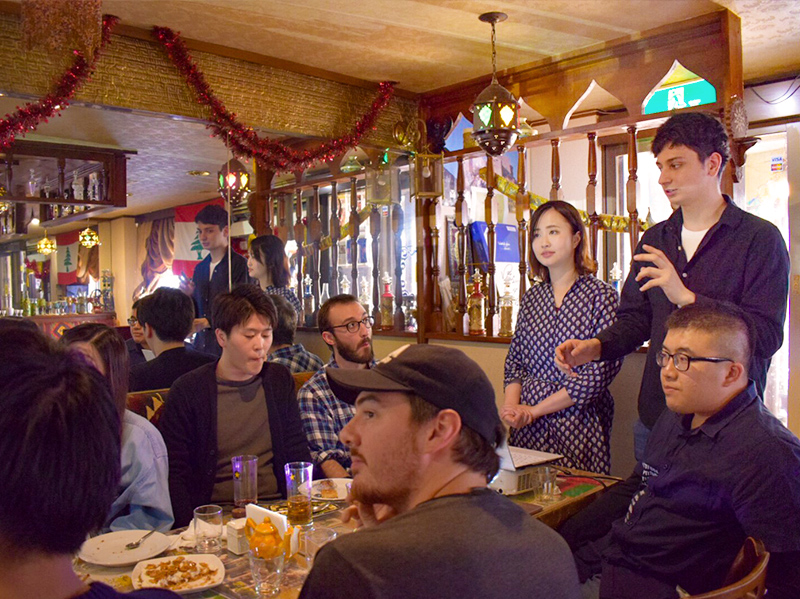
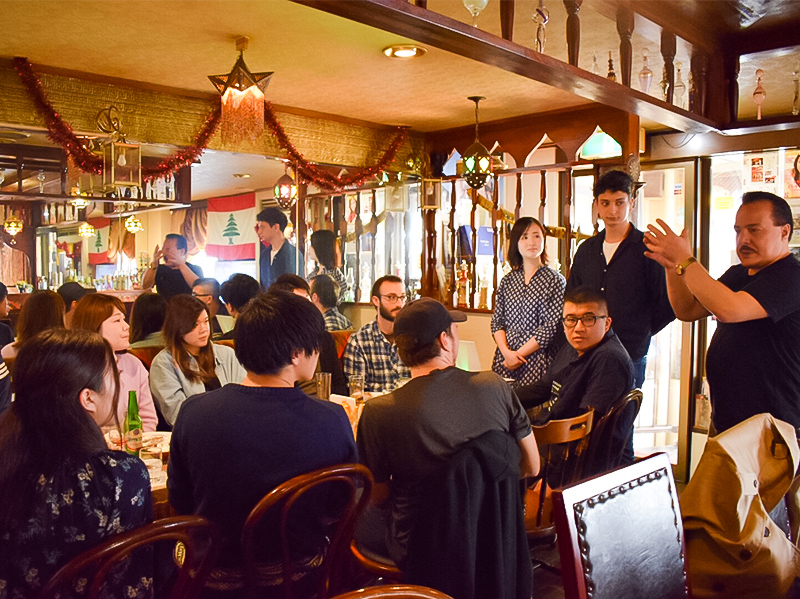
The third time is Syria! I report the BORDERLESS DINERS which was held on April 20th.

Trip to follow memory, a beautiful hometown Syria

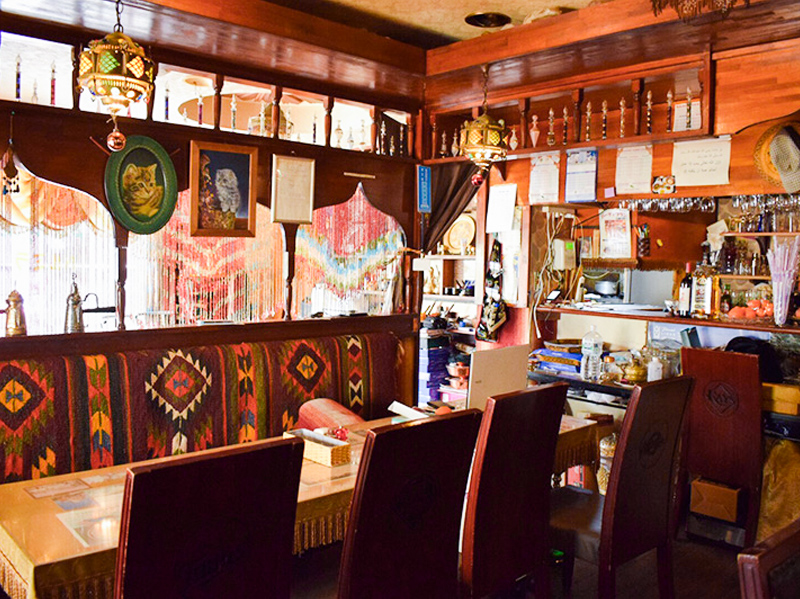
An Arabian Restaurant Palmyra is located on the second floor of a building, a 6min walk from Ikebukuro Station West Exit.

We held this event and reserved whole this restaurant that runs by a Lebanese owner at this time!

Guest speaker is our tenant Mr. F who is from Syria.

“Syria has not been stable yet, and the civil war has continued since 2011.
I think most of Japanese associate Syria with refugees and war.”

But He said
“I only lived in Syria when I was little, so I don’t remember much, but all my families say the same thing; we want everyone to know that Syria is such a beautiful country. “

BORDERLESS DINERS Syria began with such his words. Let’s travel to the beautiful hometown of Syria through Syrian cuisine!

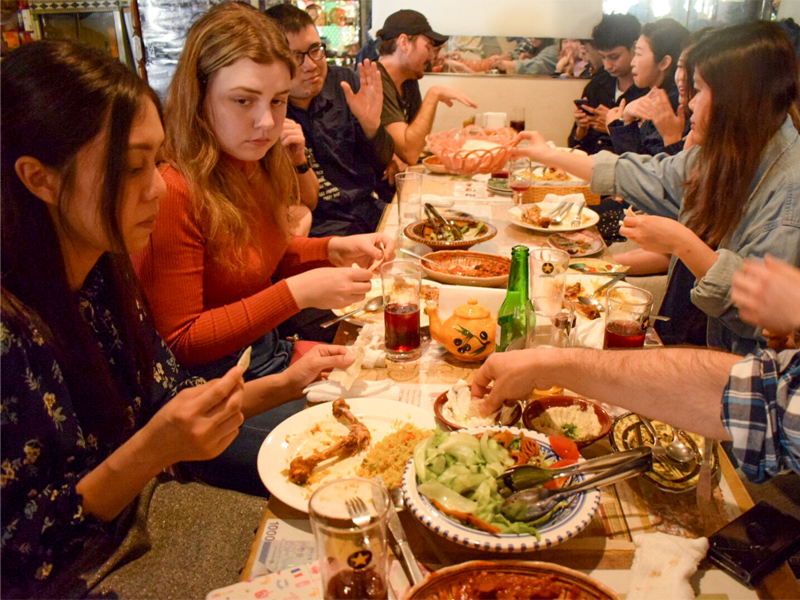
Experience a refreshing sour Middle Eastern cuisine with grazing culture

I said Syrian cuisine, but there is not really a clear difference between Syrian food and Lebanese food. Because Syria and Lebanon were one and the same country a long time ago.

Of course, there are also unique dishes from each country, but the main food culture of vegetables is the same. There are many cultures in Syrian cuisine, such as the hummus(mashed chickpeas) as a staple food, Turkish kebabs and Islamic food such as baklava.


Sesame and lemon, olive oil, herbs, many dishes using tomato in yogurt, but it is refreshing, but sour very fresh flavor in the mouth!
And there are also refreshing drinks of salted yogurt called hibiscus juice or ayran. Since Syria was a grazing culture, there were not many choices of ingredients. It is a simple and sophisticated food culture that uses naturally grown crops and livestock milk.

Dynamic taste! Extremely sour, sweet, rich! Syria!

Syrian food is dynamic taste! For example, the sourness of the ayran is not slight, it is VERY sour!
The coffee is so rich that the powder precipitates. And the hibiscus of the national drink which also has a light laxative effect is too much sour!
Of course, there are also meals and dessert with a dynamic taste to eat with such a thick drink.
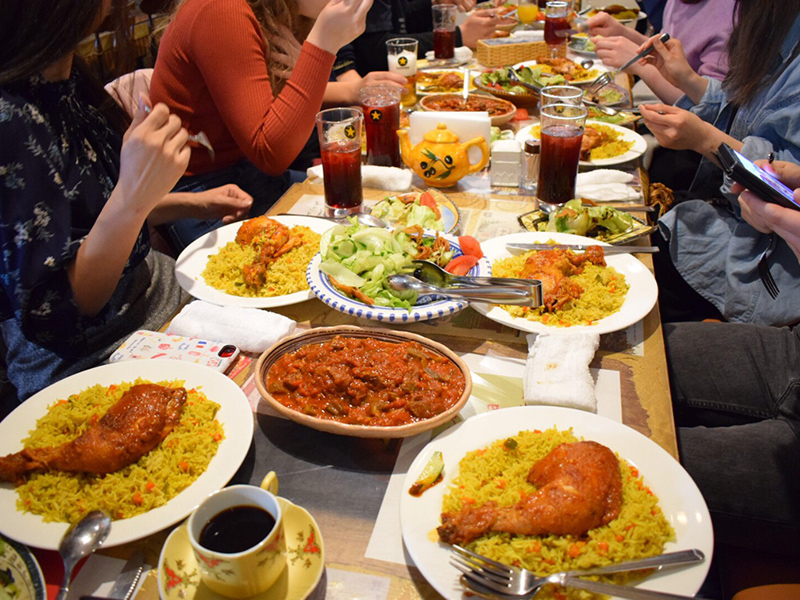
Okra tomato stew is very sour, and dessert bakrawa and basbusa are very sweet!
Middle Eastern cuisine was like a great adventure.

Syrian young people are in all over the world. What made him come to Japan?


Well, after enjoying Syrian food, it is time for a Syrian story.
Currently, Mr. F has lived in Japan for about one year. He is a naughty teen boy who loves Japanese comedy and speaks Kansai dialect very fluently.
Also, he was born in Syria and raised in Saudi Arabia.

The last time he returned to Syria was just a year before the civil war began, when he was 10 years old. Since then, he has never been back in Syria.
Although now he is good at speaking Japanese and loves Japanese comedy, in fact, he didn’t think he would come to Japan.

“At first, I tried to go to a university in the US and I needed to have VISA to stay outside Syria because I am Syrian. Unfortunately, Just after VISA in Saudi Arabia ended, it became Trump’s administration at the timing in the US, and VISA for that suddenly dropped. I can no longer enter Saudi Arabia, and if I go to Turkey, where my parents stay, I have to make a refugee application. Then I decided to make a visa application to Japan.
Fortunately, Japan’s Visa went down and I decided to stay in Japan.
From there I knew how wonderful Japan is. “

Currently, Syrian young people are drafted when returning to Syria and must join the army. Much Syrian youth cannot return to their hometown to avoid recruiting. In addition, they cannot go around the world freely.  Most of Syrians don’t have choices and they have to stay temporary in various countries as refugees or immigrants.

“Syria is a really beautiful country. The beautiful geometric pattern of the mosques, and the world’s oldest city, Damascus.The most romantic and beautiful Syrian-like Arabic language in the world. Now I met Japanese comedy and love Japan, but I hope to return to Syria someday. And I want the housemates and everyone I met to know more about Syria someday. Syria is a really beautiful country.

The feeling from Lebanon that was divided country from Syria


This time, the venue is the restaurant Palmyra, the owner Mr. Suriman who usually teaches Arabic culture at a university and he sells Syrian goods in the place to help Syrian children.

Mr. Suriman said,
“The Syrian people are not chemical weapons test subjects, they are humans with emotions.”
The neighboring country Syria with similar culture since it was the same country. And there are many Syrian refugees in Lebanon.

Mr. Suriman believes Syrian and Lebanese people are brothers, and this motivates him to support Syria. He hopes that one day they will be able to come and go free again and create a society for Syrians to live their dreams. Dreaming of such a day tells stories about Syria in restaurants here in Japan.

BORDERLESS DINERS is a program where you can experience the country through meals. It was a moment that we can feel Syria close.

The next program is for Bosnia! You can touch a different culture every month!

『BORDERLESS DINERS ~ Experience international restaurants and travel around the world ~』

This is a hands-on program which is held every month!

Next time, we will invite beauty chef in Borderless House Shinjuku Honancho!
Bosnian food! Well, what kind of experience can you make next?”

Looking forward to the next report!!

Restaurant information

BORDERLESS HOUSE share house list

BORDERLESS DINERS BLOG