Lunar New Year is a traditional festival calculated according to the lunar calendar and is one of Taiwan’s important holidays. During the Lunar New Year holiday period, people typically return to their hometowns to reunite with family and friends, celebrating the arrival of the new year together. Customs and traditions vary from region to region. In Taiwan, for example: on New Year’s Eve, families perform rituals to honor ancestors, gather for dinner, and stay up late into the night; on the first day of the new year, people pay a New Year’s visit; the second day is for married daughters going back to their own family to visit parents, relatives, and close friends; the third day is for going to bed earlier; the fourth day involves rituals to welcome deities and ensure good fortune for the coming year; and the fifth day marks the resumption of business activities after the holiday
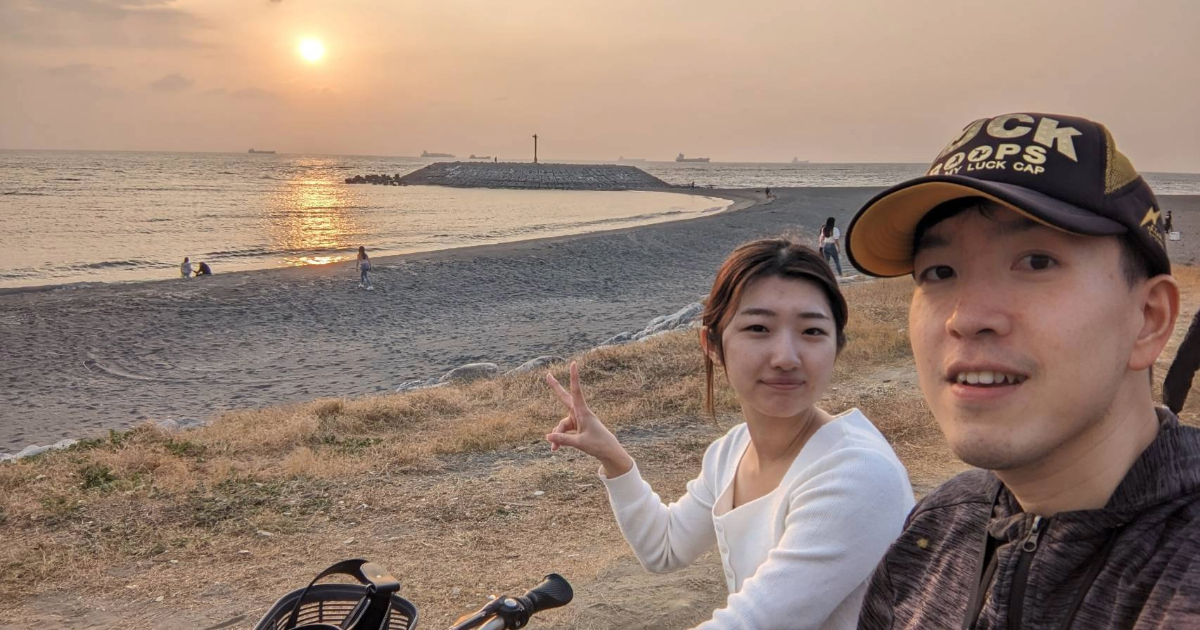
This year, our Taiwanese housemate, James, brought our Japanese housemate, Azusa, back to his hometown (Kaohsiung and Tainan) to celebrate the New Year. During their visit, he introduced Azusa to Taiwanese customs, allowing her to immerse herself more deeply in the atmosphere of the Spring Festival. Let’s follow in their footsteps and explore the sights of southern Taiwan during the Lunar New Year!
Let’s start the trip from Kaohsiung! Dome of Light, Cijin, Cijin Lighthouse, and The Pier-2 Art Center✨
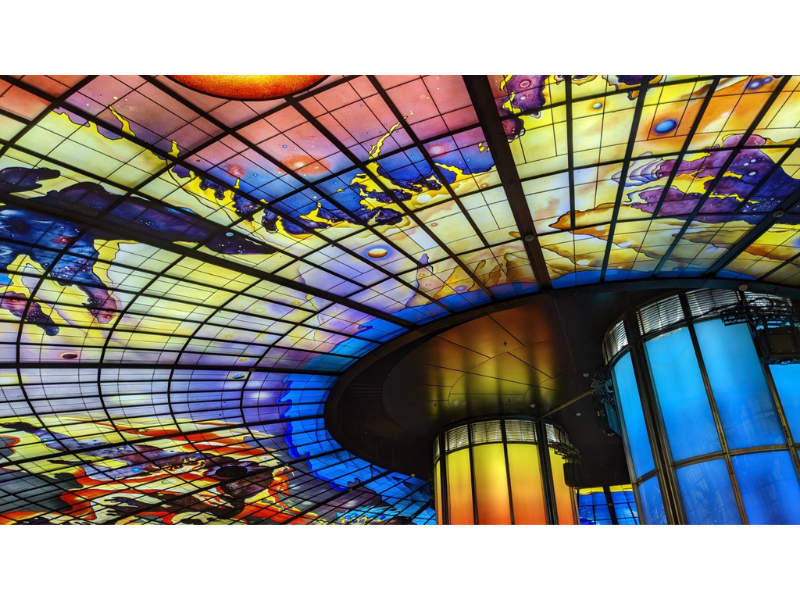
Our first stop was the renowned landmark at Kaohsiung’s Formosa Boulevard Station—the Dome of Light. The dome tells the story of human life in four chronologically arranged themes: Water: The Womb of Life; Earth: Prosperity and Growth; Light: The Creative Spirit; and Fire: Destruction and Rebirth, with an overall message of love and tolerance. Whenever new friends visit Kaohsiung for the first time, I always take them here.
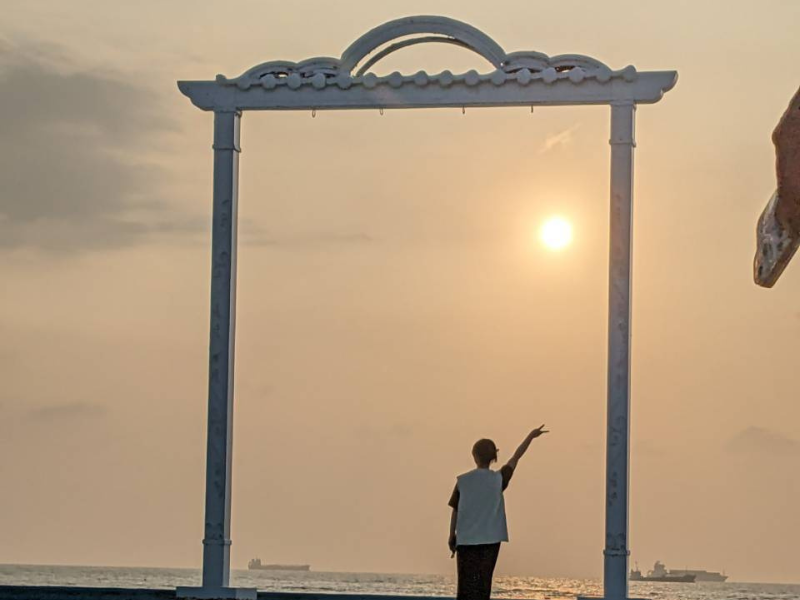
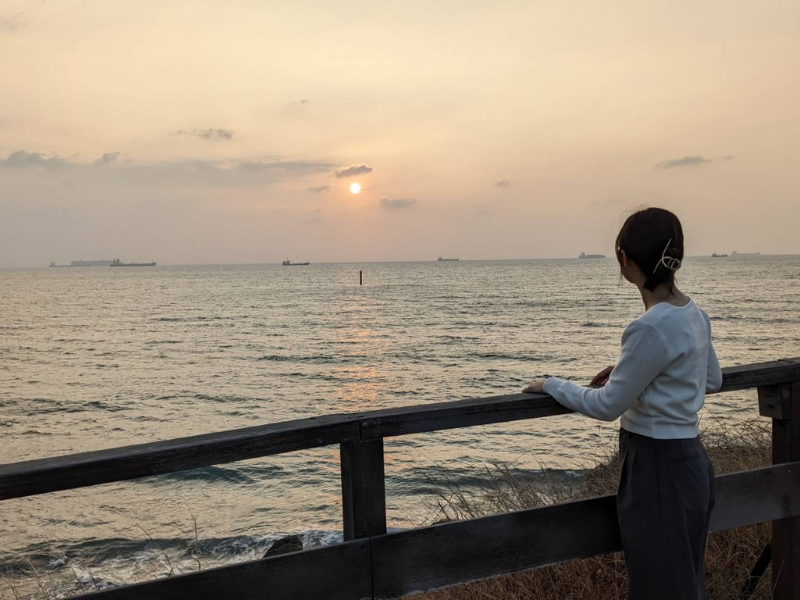
Our next destination is Cijin, where we hopped on bicycles and rode along the seaside bike path, soaking in the coastal scenery. I noticed Azusa’s excitement as she witnessed the sunset by the beach. It seemed that in Taiwan, there were fewer opportunities for her to appreciate such beautiful landscapes while cycling, which made the experience even more special for her.
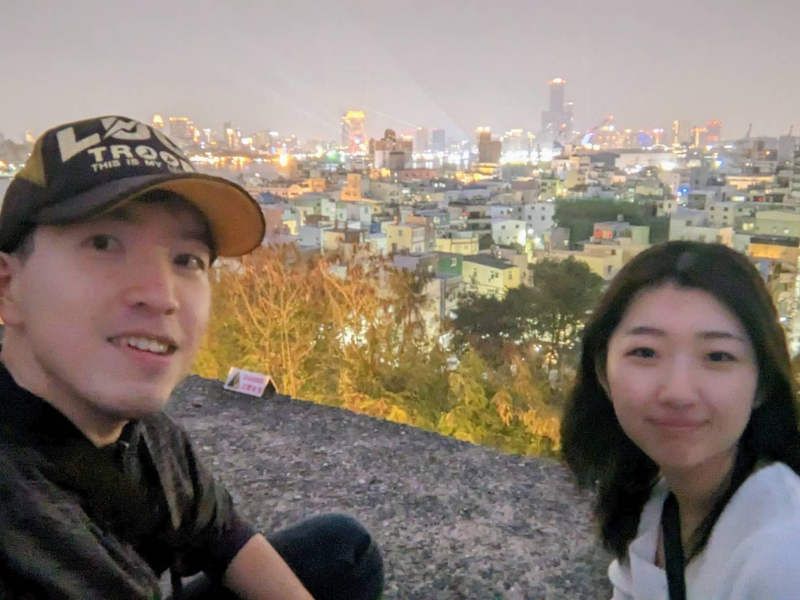
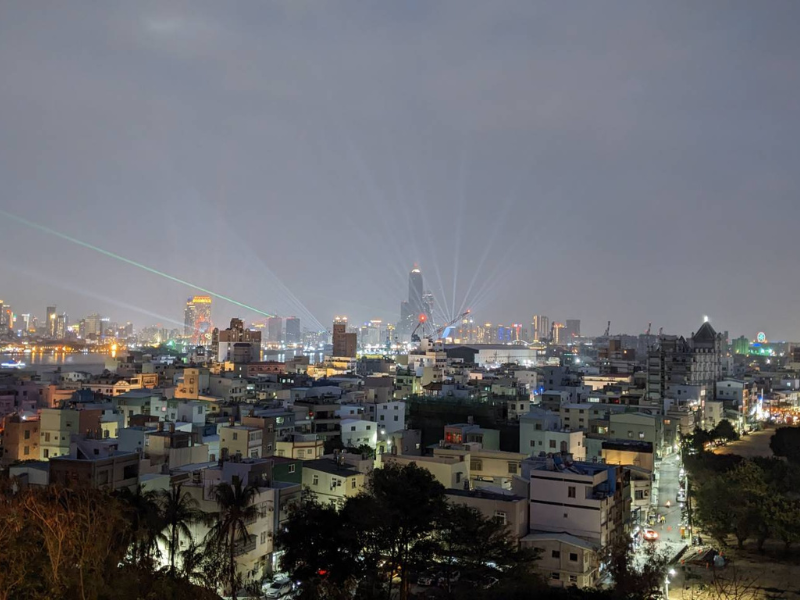
Afterwards, we visited the Cijin Lighthouse to enjoy the night scenery. This location offers a fantastic view, overlooking Cijin Beach and Kaohsiung. Surprisingly, it’s not widely known, so there weren’t many people around. We lingered here for quite some time, relishing the tranquil moments in the peaceful ambiance.
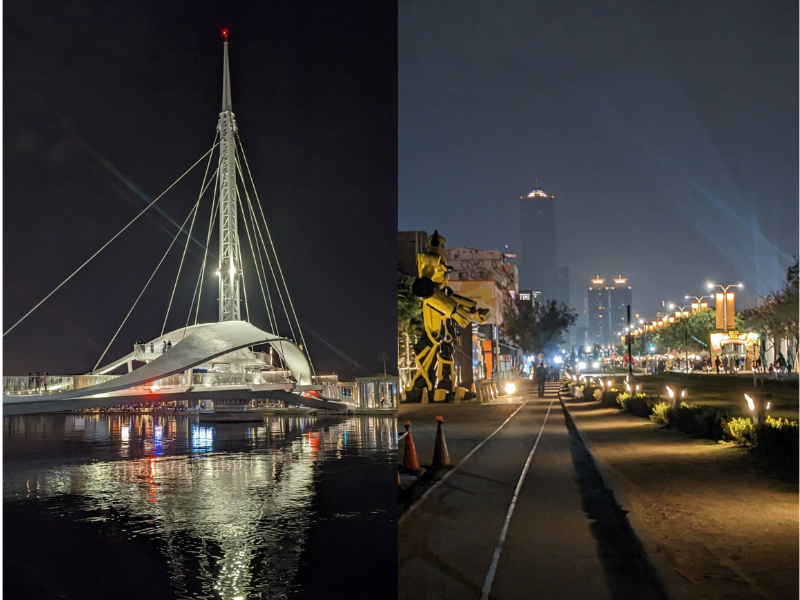
Finally, we took a boat back to Kaohsiung and strolled along the Pier-2 Art Center. Along the way, we encountered numerous art installations and food trucks. I explained to Azusa that Kaohsiung is a port city, historically centered around import-export trade, hence the frequent presence of cargo ships. The buildings at Pier-2 used to be warehouses for storing goods but have since been transformed into an artistic hub.
Fo Guang Shan, lion and dragon dances, and head to Tainan!
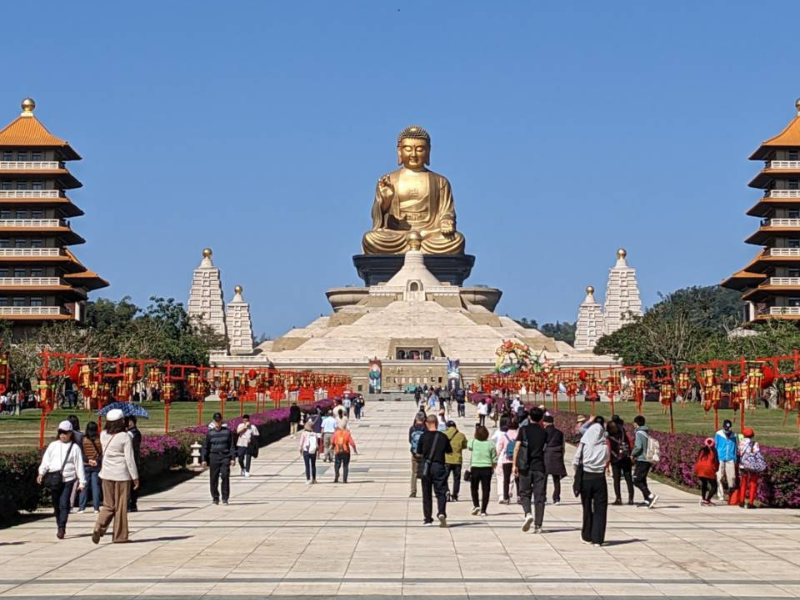
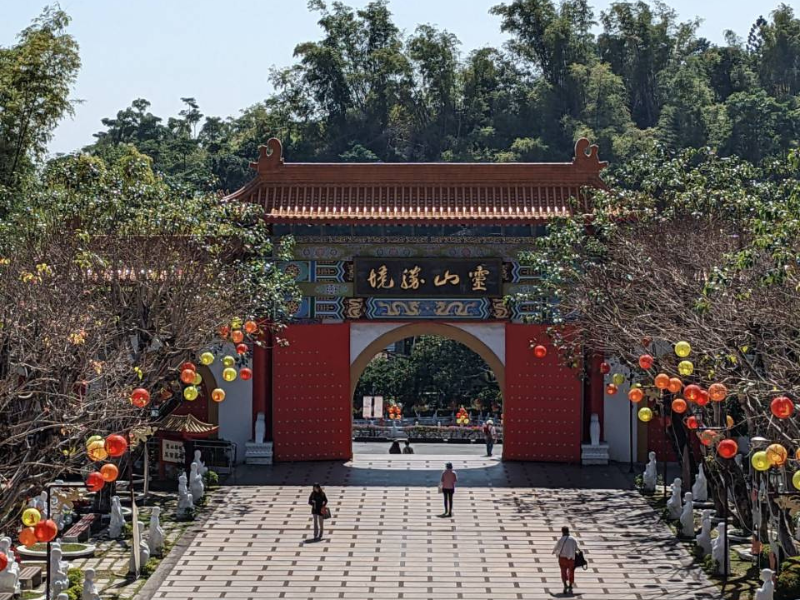
The next day, we visited Fo Guang Shan, a Buddhist monastery, to experience the spring festivities and offer prayers. As Taiwan’s largest Buddhist monastery, it attracts many visitors every year who come to pray for peace and prosperity. Besides the prayers, the monastery also offers a variety of unexpected vegetarian dishes, such as vegetarian chicken made from soybeans and mushrooms, as well as international cuisine. Along the way, we encountered the traditional lion and dragon dances, and lively performances that celebrate the arrival of the new year and add to the festive atmosphere.
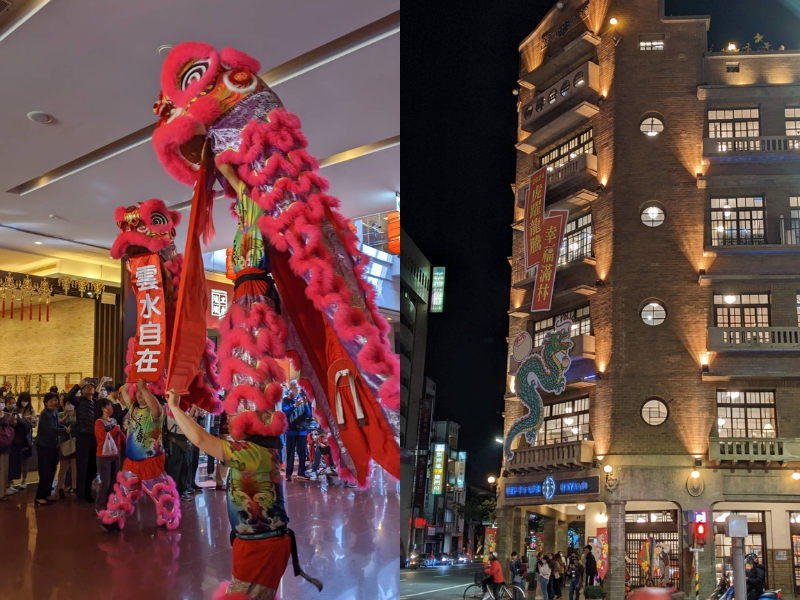
Afterward, we headed to Tainan, arriving after dark. We visited the renowned souvenir shop, Hayashi Department Store, which opened during the Japanese colonial period in 1932, becoming the second department store in Taiwan and the first in southern Taiwan. After undergoing renovation, it reopened in 2014 as a “cultural and creative department store,” while still preserving many early artifacts. Here, you can find Taiwan’s famous specialties such as nougat, tea leaves, pineapple cakes, as well as clothing and unique cultural and creative products from the early Japanese colonial period. The packaging of these items is exquisitely cute, blending traditional Japanese patterns with local Taiwanese styles, making it worth a visit for everyone!
Experience the Lantern Festival atmosphere and eat delicious Tainan food.
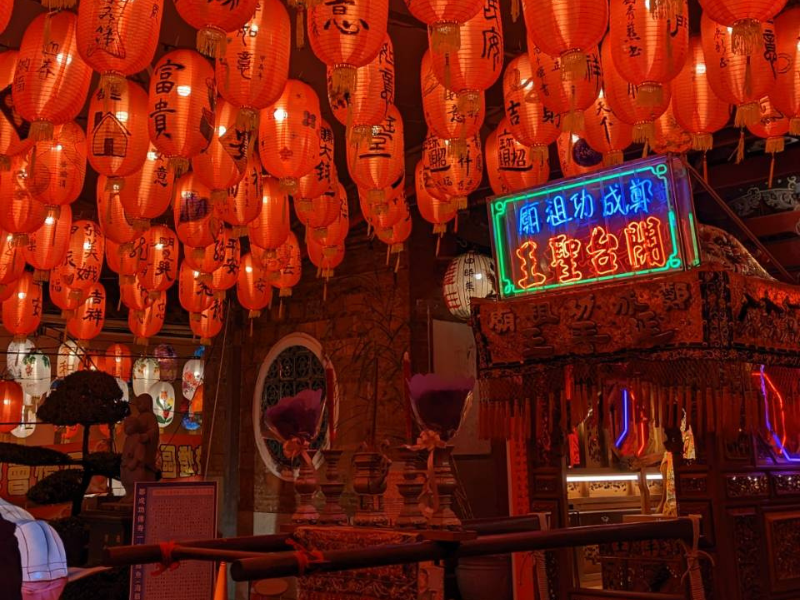
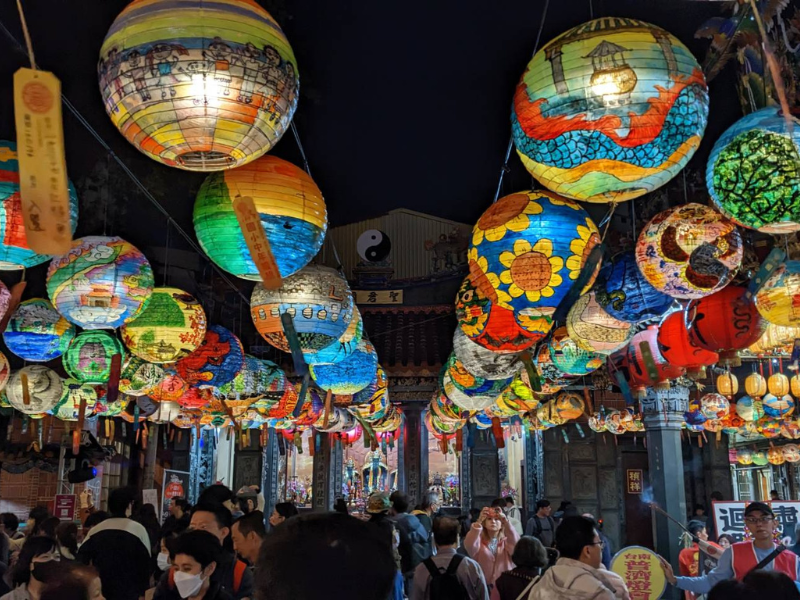
During the Spring Festival, as it approaches the Lantern Festival (the fifteenth day of the Chinese New Year), lantern festivals are held as part of the celebrations. This year is no exception. Not only are the streets of Tainan adorned with lanterns, but temples also display characteristic lanterns, creating a festive atmosphere. Moreover, there are some artistic paintings or small shops hidden along the streets, often attracting passersby to stop and explore.
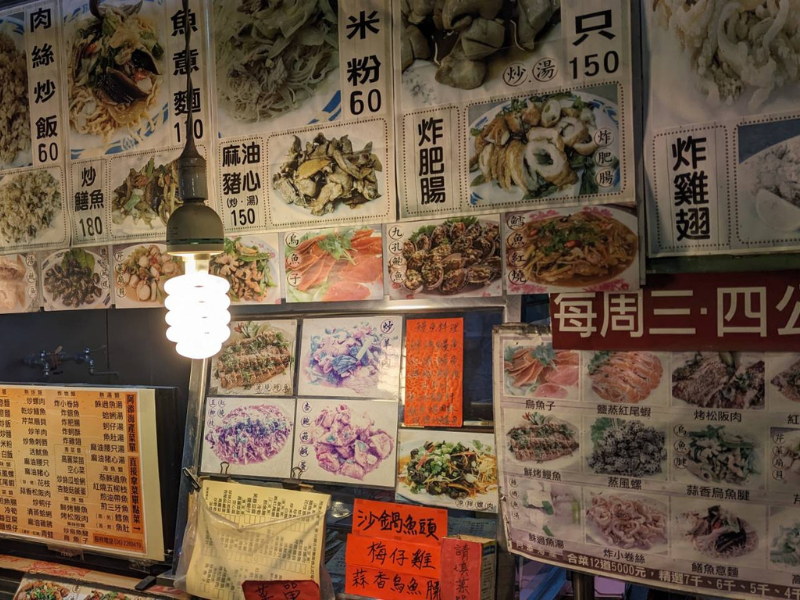
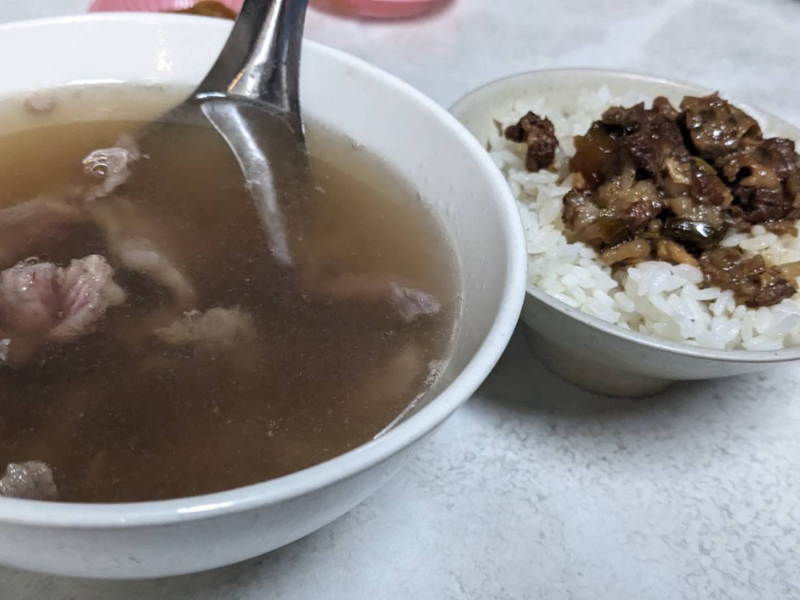
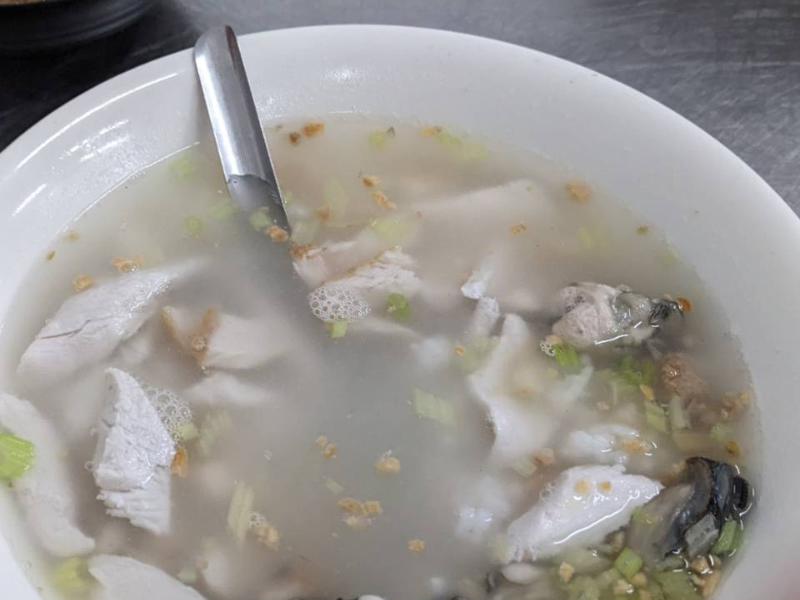
If I were to describe Kaohsiung, I would say it’s a bustling port city that never sleeps, becoming more beautiful as the night deepens. On the other hand, Tainan can be described as a capital of food. Traditional breakfast in Tainan is seafood congee, reflecting the city’s early reliance on fishing for livelihoods, necessitating a hearty meal to sustain energy for work. Another famous delicacy is Tainan beef soup, which I highly recommend trying if you have the chance. The broth is rich and smooth, and the beef is tender yet flavorful! Additionally, prices in Tainan are relatively lower than in Taipei, so I believe you can enjoy your meals with great satisfaction there.
When it comes to must-try desserts in Tainan, we can’t forget about tofu pudding (douhua) and fruit shaved ice. During the summer, you can enjoy mango shaved ice, which foreigners highly favor, while in the winter, you can enjoy seasonal strawberry shaved ice.
The above is the three-day, two-night trip back to my hometown with Azusa. If there’s a chance, I’d also like to experience the local New Year culture in Japan:)!
Want to experience wonderful international friendships? Let’s join BORDERLESS HOUSE!

BORDERLESS HOUSE offers accommodation environments akin to studying abroad, allowing you to feel the charm of a global community right at home. If you aspire to such a lifestyle, why not take action now?
We are now launching the Summer Early Bird campaign, allowing you to start preparing for your journey early! Don’t miss this opportunity and join us!
Start your exciting new adventure by clicking the links below!
▶️RESERVATION PROCESS
▶️SHARE HOUSE LIST
▶️FAQ