Find Your Favorite Share House Staying Abroad

Traveling is a favorite hobby of a lot of people. Many people look at it as an opportunity to grow and to get to know oneself better, while others look at it as a chance to learn more about other cultures and traditions. But as we all know, traveling is a time consuming and a little expensive hobby. Not all people can actually afford to just pack their bags and to disappear from the radar for a very long time to roam the foreign lands, and to explore the foreign cultures.

But such people do not need to lose heart because there are many cheap and inexpensive ways of learning more about other traditions and cultures as well. Wondering what they are? Well, one easy method is to meet new people who belong from different cultures and traditions. Through them, you can learn more about foreign customs and traditions. Now, you must be thinking how and where are you going to come across foreign people and how are you going to befriend them. Well, there is yet again a simple answer to this. You can meet them at share houses.

Yes, share houses which are rental spaces that accommodate people from different backgrounds and offer them shelter, are a good place, to begin with. So, for example, say if you are in Japan, South Korea, or Taiwan for a business project or maybe you are living there for your studies, then instead of finding a hostel or renting a flat, a better strategy is to rent a bed in a share house. This will give you an opportunity to live with the natives and other foreign people which will aid you in learning more about their culture and in saving you some money in case you actually decide to travel to someplace in the future.

But apart from these benefits, living in a share house incurs some other big advantages as well. So, for example, by living in a share house in say, Taiwan or Japan, you don’t just get the opportunity to learn more about the local food and language of that place by interacting with natives, but you also get to enjoy the special benefits (like gardens or music studios) that some of these share houses offer. Now, if we have piqued your interest and you are excited to know in detail about the benefits offered, then read our next section!

How do share houses help in cultivating old interests?

Living in a share house is a different and a must-try experience. While there, you learn to relish your independence, you increase your knowledge about new countries and traditions and you also get a chance to re-kindle your old habits. While getting the native experience of the place, living in a share house will also help you in cultivating your personal interests as well.

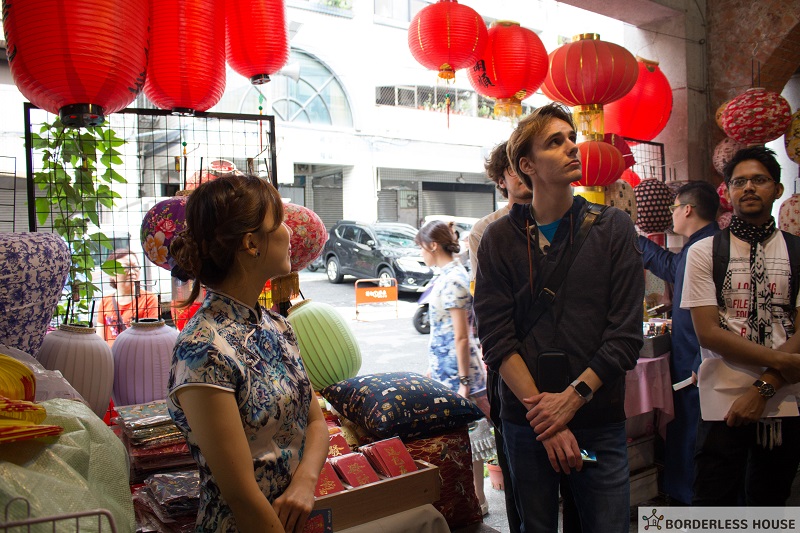
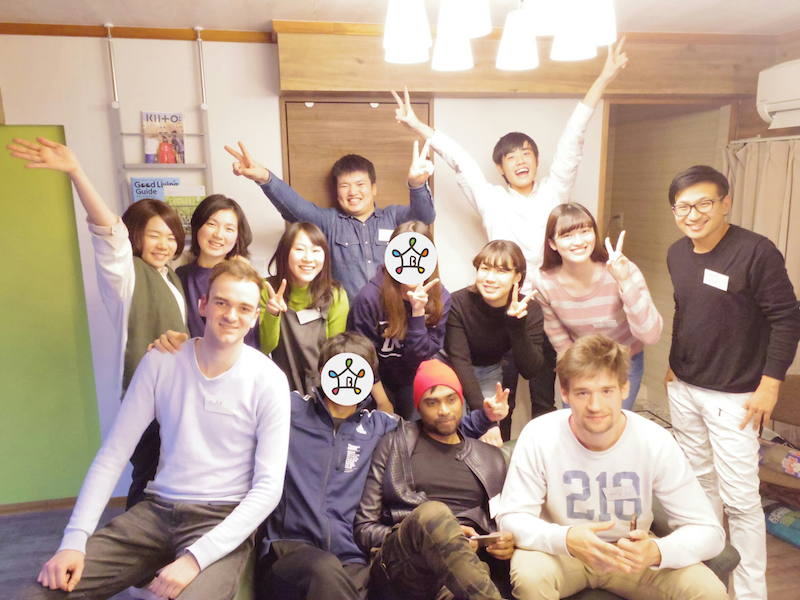
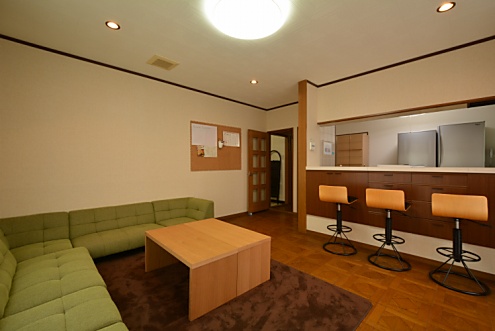
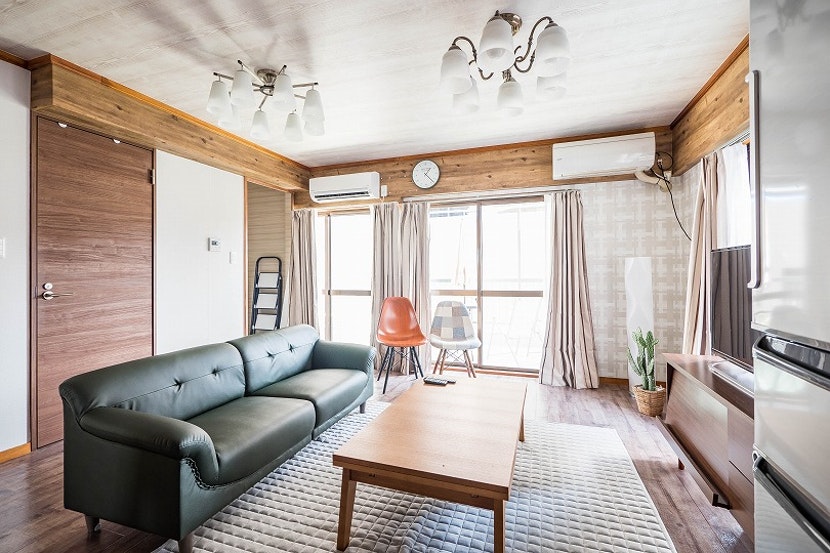
*Photo from <BORDERLESS HOUSE KYOTO-SAIIN1>

There are many other hobbies and interests that can be re-kindled while living in a share house have special facilities. Some of them are as follows-

● Share houses with Terrace or garden

Share houses typically accommodate many people. As a result of which they are spread across many meters of land and their sizes and areas are generally wide. This, in turn, means that such properties, a lot of time, have some free space that they utilize for other purposes like for construction of a terrace or for creating a garden. This is a great drawing point for renters who are looking for shelter.
Now, if you are also one of those people who occasionally like to soak in the rays of the sun, or who have a soft corner in their heart for gardening, then the prospect of living in a share house with a terrace or garden should make you extremely happy. This is because if you could find yourself such a place while living in a foreign land, then your hobbies like sunbathing or gardening will never let you feel alone or bored. Plus, during your stay you will likely come across other like-minded people, who will make living here more fun for you!

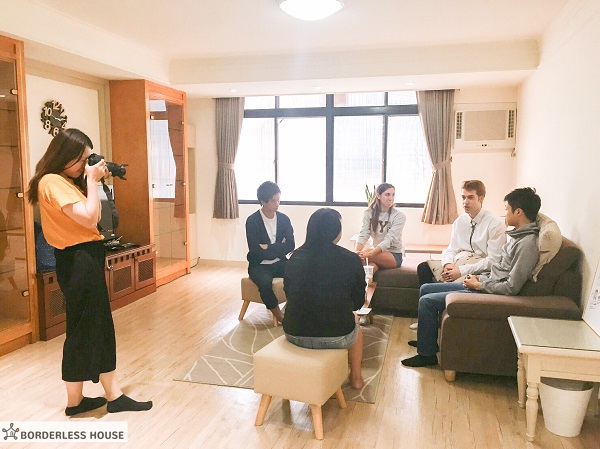
*Photo from <BORDERLESS HOUSE SHINAGAWA-OIMACHI1>

● Private water supply in rooms

If you have always had a private bathroom since you were born, then it can become difficult for you to share one with other people whom you barely know. Also, from the point of view of hygiene and cleaning, it is usually a good idea to have a private bathroom at your place. Now, the good news is that at some share houses you can get this condition fulfilled.
Yes, some share houses have installed water supply in the rooms. This way the residents are never forced to share their toilets or showers with other housemates. This count for a whole lot when you are living in a foreign space and it can make your life potentially easier.

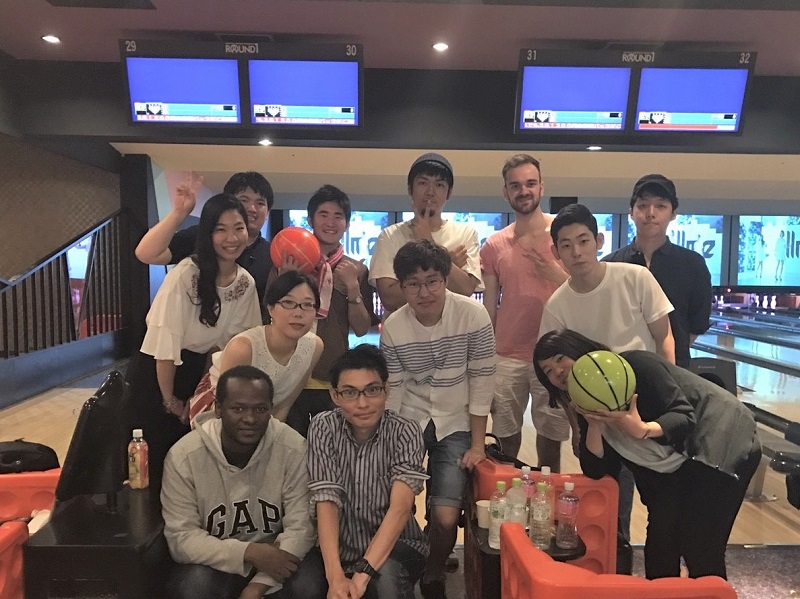
*Photo from <BORDERLESS HOUSE UNOKI3>

● Properties that offer rooftop

Sometimes maybe because you are feeling dull or because you need some alone time with yourself you seek a place where you can be away from people, maybe somewhere in an open space. Now, if you are living in a hostel or a flat, finding such an open and alone space can be a little troublesome with so many people around. But that is not the case with some of the share houses that you can locate in Japan, South Korea, or Taiwan.
This is because some share houses have special facilities where they offer their residents a rooftop that they can visit at any time. So, if you are feeling the need for some me-time while you are living in a share house you know where to head to. Plus, in the comfortable and light weather, a rooftop is a good place to be as it soothes and nourishes your soul. Lastly, with an amazing rooftop, you also get the chance to organize a small get together with your housemates and friends where you can dwell with a drink in your hand and occasionally strum a tune or two on your guitar while singing along to the lyrics with other people.

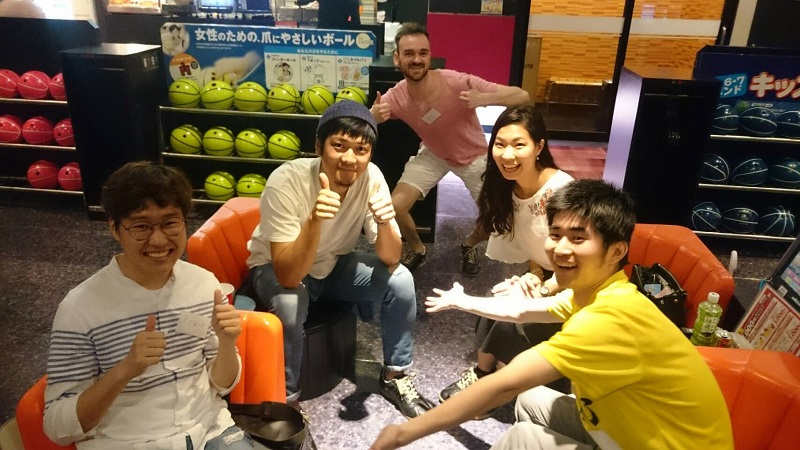
*Photo from <BORDERLESS HOUSE OMORI2>

● Properties with music studios

If you love music and you know how to play an instrument or two, then you should probably search for a share house that comes with a music studio. Even for newcomers and unpractised musicians who love music, but do not have much understanding of rhythms or tunes, such a place is a nice residence option as it offers them shelter and a platform to learn. Plus, it also costs very less.
Share houses with music studios are also a very good option for a place of residence because here music lovers get a chance to reside with like-minded people. This means that if you like music and you love discussing it with other people then living in a share house with a music studio will be akin to the experience of a book lover who just got permitted to live in a library! Also, living here would mean unlimited musical jam sessions and bonfire strumming where no other residents or neighbors will complain. It is amazing, isn’t it?!

*Photo from <BORDERLESS HOUSE KOENJI2>

● Property with a movie theatre

Some people are outgoing and friendly by nature, while some others are introverts and they prefer spending their time alone in their room or maybe with their closely-knit circle of friends. And to pass their time such people either like to rely upon their books or they love watching movies with their beverages in hand.
Well, we have good news for such people, which is that some of the new share houses in South Korea, Japan, and Taiwan have decided to offer their residents a place to live that has small movie theatre equipment. This means that if you are not a very outgoing person but you prefer spending your weekends while watching a fun movie and munching on your popcorn, then now it is not necessary for you to dress up and to head out for living this experience because now this experience comes to your home!
So, whether it is movies, video games, video calling your friends, or having dinner in an online meeting with someone whose company you cherish, the task has become quite easy.

*Photo from <BORDERLESS HOUSE KOENJI2>

Conclusion

Thus, we can see that share houses are a very preferable means of shelter as they are not only cheap and comfortable but because they provide many opportunities to the residents to rekindle their old hobbies and talents as well. So, if you are soon going to be moving to a new place for your studies or a business project, then try finding yourself a perfect sharehouse for staying abroad. We promise that you will absolutely cherish this experience!

Share House Photos from BORDERLESS HOUSE


House Sharing Will Be A Good Way Of Living To Save Money

When moving to a new country, people have to start their lives out. They have a new job, must meet new people, make some friends, and they live in different surroundings. As exciting as it sounds, it can also be exhausting to adjust to everything new at once. It will also undoubtedly be expensive.

According to most foreigners that have moved to foreign countries, the biggest challenge that they faced after the move was finding accommodations. Some people end up at expensive studio apartments due to a lack of choice, others have to compromise on the locality of the apartment or pay high rents to enjoy a comfortable stay.

Not every house owner in east Asian countries is willing to rent their place to foreigners, and even then most of them ask for a local cosigner to guarantee on behalf of the tenant. The language and the cultural gap make local people feel that foreigners won’t understand them or get along with them. This is why they make no compromises on security money and ask for higher rents from foreigners.

Making a move can be an extensive and lifechanging task, which often disheartens people. Without friends and family around, they find it difficult to conduct an apartment search.

The solutions to all of the problems faced during apartment searching are offered by share houses. Share houses are rental houses with multiple rooms available for rent. While people have separate rooms, they also have common areas like the living room and kitchen. Share houses are mostly found in cities where the number of foreigners living in the city is high. The primary goal of a share house is to make sure that foreigners do not find it difficult to adjust to the new country.

Compared to apartments, share houses are a cheaper alternative for a comfortable accommodation. Along with clean rooms and basic amenities, share houses provide an opportunity for foreigners to make friends in the city.

People living at share houses are able to save money and have more flexibility in terms of the contract. If you’re on a small budget and are considering a move to countries such as Japan, South Korea, and Taiwan, you might want to go through this article on how house-sharing could be a good way of living to save money.

Avoid Long Contract Periods

Most apartment rental contracts are signed for one year. The tenants have not experienced life in those apartments before signing the agreement. This is why when they experience some challenges living there, they are unable to move as they are bound by the contract. If they have to move by breaking the contract, they might have to pay a penalty.
Moreover, if you are required to move back to your country or some other place due to unexpected circumstances, then you will have to break the contract and will be charged.

Living in a share house is more flexible in situations like these. When living at a share house, if you do not like the place you are at, you can easily move out. Share houses are rented for shorter periods of time, so if you’re moving to a foreign country only for 6 months, staying at a share house could be your best money-saving bet.

Most share houses offer a room for the minimum stay of 1 month. Even if you are asked to sign a yearly contract, it will include a clause that if you give 30-45 days notice before moving out, then you will not be charged a penalty for moving out with less than a month’s notice. This offers relief to tenants who are unsure about the period of their stay in the nation.

Fully-Furnished Rentals

When having moved to a new apartment, you will need to furnish it as soon as possible for normal life to begin. Some of the furniture and appliances that you will need during your stay include a bed, table, cupboard, refrigerator, washing machine, water heater, air conditioning, etc. Buying furniture and appliances is a big investment. These items will likely cost you around one month’s rent.

Share houses are fully-furnished to ensure comfort. Every room has a bed and cupboard, whereas the common rooms, kitchen, and bathrooms are equipped with all the required furniture and appliances. The bed, pillows. cupboard, etc. are offered at a one-time fee that is below 10000 Yen.

When someone moves to a share house, they only need to carry their everyday personal belongings. They do not need to spend money on furniture or decor and therefore are able to save money. They are able to use appliances that they might not have purchased themselves if they were to rent a private apartment. For example, a dishwasher.

When they move to another country, they do not have to worry about selling or transporting furniture and appliances. This takes a lot of cost load that they are already bearing, off of their shoulders.

Many share houses even offer luxury amenities like a home theatre and fitness studio for the housemates. This is done to attract people to the share house and provide value for their money.

Free Internet

Whether you are a student, working professional, or tourist, the internet is a necessity for everyone. It helps people stay connected, updated, and entertained. To enjoy seamless internet connectivity, most people have Wi-Fi installed at their apartments.

Setting up the internet at your apartment will be some cost to you. You will also have to pay some extra cost in the beginning. There are not many landlords that will provide free internet to their tenants. However, share houses offer free internet connectivity to all its housemates at no extra cost.

The cost of the internet is already included in the monthly rent. The internet connectivity is strong and the housemates can enjoy smooth surfing. Access to the internet is limited to the housemates to avoid usage by outsiders which would cause poor connectivity.

Less Initial Fees

Share house managers do not expect you to pay a few month’s rent as security or downpayment. The initial fee is comparatively much lower than what is charged by apartment landlords. This enables most people to expand their budget and rent a room at a luxury share house. They are even able to spend money on sightseeing around the new country.
The initial fee at the BORDERLESS HOUSES is more reasonable compared to a typical apartment or condominium.

It does not matter which country you move to, the brokerage costs are usually high. While brokers are quite efficient at finding accommodations, they are often working in their best interests rather than yours. When renting a share house, you can eliminate the need for hiring a broker. Share houses are easy to find as they usually have an online presence. When renting a room at a share house, you will not have to hire a broker and can directly contact the manager. This will help you save some money.

Lower Rents

With the increase in the number of foreigners coming to east Asian countries and local people moving to industrial areas, cities are getting crowded. This has led to a hike in rental prices in the city. For example, on average, renting an ordinary apartment in a good Japanese locality will cost you somewhere between 97000 Yen to 200000 Yen per month. The rent will depend on the city that you live in, the size of the apartment, proximity to the market or train stations, and the amenities offered.

The monthly rent of staying a share house is lower than that of renting an apartment. If you have a low budget, you can also rent a bed in a shared room or dormitory. This way, you will be able to use all the house amenities, without having to pay for a private room.

The downpayment is lower at share houses and the maintenance fee is reasonable. What’s more, most share houses are located near train stations and in low-crime localities. They offer easy connectivity to most places in the city and do not empty the tenant’s pockets.

Conclusion

Quite evidently, the process of finding an accommodation in Japan for reasonable prices can be an exhausting task. Add to that the expenses that come with moving to a new place, like buying home appliances and paying maintenance costs. However, worry not, because you can always rent a room at a share house and save yourself some money.

BORDERLESS HOUSE is a share house company with many share houses in Japan, South Korea, and Taiwan. The ratio of local people and foreigners at these share houses is kept equal. The motto of the company is to welcome the people that stay there and ensure their comfort. At BORDERLESS HOUSE, the rooms are rented at affordable prices, and the company offers shared rooms and dorms for people with lower budgets.

If you have recently moved to Japan and are looking for accommodation to ensure a comfortable stay, you can reach out to us at BORDERLESS HOUSE.


【Borderless residents】At the age of thirty, I decided to move into this international shared house to work abroad in the future

Borderless house is a multicultural ‘community’ share house in which young people from all over the world cultivate international cultural exchange by gathering and living under one roof.

This cross-cultural share house provides not only an opportunity for improving your English skills but also a chance to create a great community of locals and foreigners, as well as an opportunity to learn new perspectives.

Many of our tenants from all over the world have a unique sense of humor and experiences that you could never imagine.

From this, we started a new project called “Borderless tenants”, which consists of interviewing tenants about how they have changed or grew as a person through their experiences at Borderless house.

The second interviewee of this series is Mr. guhee, a tenant of Borderless house for the last year and a half. He chose to live here because he decided to start studying English before he turns 30 years old.

We asked him about his great progress in his English skills and his change from a Japanese to a foreign company.

My big change before turning 30.Start your preparation for working abroad at Borderless house.

ーThank you for joining us. Please introduce yourself.
My name is Gohee. I will turn 32 years old this year. My housemates call me ‘Gohee or Gucchi’.

I have been living in the Shinagawa-oimachi house since October 2018, so for almost one and a half years. I love sports and play tennis and go bouldering quite often. Before COVID19, my housemates and I used to go play sports together once a week.

I like cooking as well, so I would sometimes cook for my housemates or we would cook together.

ーWhat made you move into Borderless house?
Just before turning 30 years old, I was looking back on my career and thought that I would like to try working abroad. Then I decided to start studying English to achieve this, and that is why I decided to move into Borderless House.
When I asked my friend for advice, he said ‘quit your job now and go study abroad’

However, I didn’t want to quit my job at the time, so I was looking for a better option. This was when I decided to study English on my own.

I started looking for a share house that would allow me to live with people from other countries and

found Borderless House.

ーSo you decided to move into a share house at the age of 30! Were you living alone until then?
Yes, I have lived by myself for 7 years in Tokyo and this was my first time living in a sharehouse.

The most impressive moment for me was my housemates threw a birthday party for me on the day I moved in

ーDid you have any problems whilst living with others?
A lot of things left an impression on me, rather than actual problems.
The day that I had moved in may have left the biggest impression on me.

That day happened to be the day of housemate’s birthday party.

I was invited to go to see the fireworks by my housemates. So I went with them in the afternoon without even unpacking and celebrated his birthday at a Yakiniku restaurant.

On my first day…even though I didn’t know their faces and names yet, my housemates didn’t mind at all and took me with them. I still remember the feelings of surprise and confusion I felt that day very clearly.

ーGoing to see fireworks with your housemates on your very first day… That’s quite a unique experience! Are there any other memories that stand out for you?
My birthday party that was held 2 weeks after I moved in is also quite a good memory.
I was never able to show off my talent of “making nigiri sushi” until then, but it finally came in handy and it was a great hit.

I served my handmade Sushi to everyone and my housemates, especially my non-Japanese housemates were very impressed with how people can make Sushi by themselves!

At the Oimachi House, we always hold birthday parties and farewell parties for everyone and each of them is very good memories for me.

(手巻き寿司パーティーの時の様子)

ーIt is fantastic that a tradition of celebrating and sending people off has been built already in your Sharehouse. Do you go out together often?

We go out together often. We’ve been to Roppongi and Yoyogi-park to have picnics, we’ve attended a glass-making workshop, etc.
I like planning events and asking people to join, so last summer I made my own Nagashi-somen and it was a big hit!

Sharehouse is a place for practice; I learned English through my daily life

ーIs there anything you decided to try out after moving in the sharehouse?
My main objective behind living in Sharehouse was learning English, so I mainly tried studying and improving my ability to communicate in English.
When I moved in, I didn’t speak English so it was hard to communicate with my housemates, especially for the first 2 months. I just studied every day.
Other things that I tried to do besides studying by myself are going out with housemates, as well as attending parties and events to communicate with them more on my day off. Because of this, after a while, my English started to improve.

ーWhat else did you do to learn English? Please give us more details.
One of my housemates works at an English conversation school, so I studied with the textbooks and vocabulary books that he/she recommended.
One of the good aspects of living in an international share house is how I was able to try using new words and phrases in conversations with my housemates right after learning them.

ーHave your housemates helped with your studies?
As there were 10 non-Japanese residents in my share house at that time, and most of them didn’t speak Japanese, I was able to learn English by just being with them.
My housemates also helped me by giving me vocabulary quizzes when I was studying in the living room.
When I was studying for the TOEIC exam, they helped me until 2 in the morning.

ーHow much did your TOEIC score improve?
My score was in the 400s when I first moved in, but after a year at the share house, my score improved and went over 800. The fact that my score improved even though I didn’t study exclusively for the test and was only studying the basics made me realize how much my English improved. It made me really happy.

Was the greatest change you saw in yourself since moving in the improvement of your English skills? 
While this is true, I think making friends from all over the world and experiencing first hand the differences in our ways of thinking was a larger change for me. I’d never had friends from foreign countries so it was very new to me.

For example, even though I knew that different countries have differences in education, there was never a chance for me to ask what kind of education they grew up with. It was interesting to learn what was different from Japanese education.
ーHas this change been useful in your daily life?
Since I live with housemates who have different perspectives, it became easier for me to accept different perspectives that people of different generations have.

My coworkers range from those in their 20s to those in their 50s and their perspectives are very different. Now I’ve changed and started to think “it’s normal for people to have different opinions, so how do we go about this?” whilst working.

There are more career options for me as my English has been improved

ーWhat made you decide to change your job?
Because my goal was to work abroad when I moved to the Borderless House, I thought my first step was to find a job where I can use English.

When I first moved in, I needed time to get used to the share house and study English. After about 6 months after moving in, I had become more confident in my English skills and then decided to look into changing my job more seriously.

ーWhat were your criteria when you were looking for a job? What did you prioritize?
As I had no experience using English in my career, I knew it would be difficult for me to work for a company that uses English as its official language. Therefore, I started by applying for Japanese companies, because I thought there would be a higher chance of me getting hired. However, it became possible for me to apply to foreign companies after my TOEIC scores improved and I had more options available to me.

ーWhat made you decide to work at your current company?
First of all, the company has offices in 15 countries worldwide, so it allows opportunities of getting transferred to foreign branches. Second of all, while the company’s official language is English, most of the company’s clients are Japanese businesses, so I am able to use both Japanese and English for communication. I think this is a good work environment for me, as I have just been studying English for a year.

ーBesides learning English, were there any other advantages in living in Borderless house whilst looking for a job?

It was good that I was able to get inside information on foreign companies that I didn’t know about. After I started applying for foreign companies, I realized how few foreign companies Japanese people knew about.

Before applying for the job, I wasn’t aware of the company I work for now. My British housemate gave me information and advice about it, and that was what made me apply.

I am grateful for being able to learn about various foreign companies from housemates who are from the county the company originated in.

ーWhat are your future goals now that you’ve experienced living in Borderless House?

My goal when I was 30 years old was to work abroad, but now my goal is to move to a foreign country by the time that I am 40.

The first step for me now is to be transferred to a foreign branch.

ーYou had said before that you didn’t know which country you would like to live in. How about now? Do you have a certain country in your mind?
I would like to try living in an English speaking country first.

However, I would love to live in Germany eventually. Before changing jobs I had the opportunity to go see a past housemate and traveled across 4 countries in Europe for the first time. I was very drawn to Germany then.

There is more than one way to learn English. However, being able to make friends from all over the world is the greatest benefit to stay at a share house

ーFinally, please give one piece of advice to our future tenants!
There are many ways to learn English. You can go to a language school, using on-line English conversation classes, YouTube, etc.
But, if you live in Borderless house, you will not only learn English. You will also be able to learn different values and perspectives. The best part about living in Borderless house is that it allows you to make friends from all over the world!

ーYour story of setting goals, taking measures towards achieving that goal will surely be helpful for future tenants thinking of joining with the intention of learning English! Thank you so much for your fantastic story Guhee-san!

Editor’s Note

What did you think about Higuchi-san’s story?

Please refer to Higuchi-san’s notes when thinking about life at the sharehouse or finding a new way to learn English. He has shared his specific methods of studying and his process of finding a new job.

gooheeさんHiguchi-san’s Notes

Meeting new people will definitely lead to a great change.

Borderless house is filled with unique and diverse people from all over the world.

Why don’t you join us and experience “change”?

House Sharing Will Bring You Socializing Opportunities

A house is much more than just a roof over your head which protects you from the sun or rain. Instead, it is also a sanctuary, a comforting, silent, and safe space and at times also an investment. A house is a place where you stay protected from all the physical, intellectual, and emotional troubles and where you grow independently from the outer world. The facilities that your home offers determine your living standards and your quality of life. Hence, maybe now, you can get an idea regarding how housing decisions are significant and why such decisions should be made with utmost care.

But finding a house in a new space is a tricky process. When you move or shift to a new city or country, housing becomes a bit of a problem. It is so because now you have on your hand, the task of finding a living space, that fits your budget, is situated in a nice locality and which has all the essential facilities and services available. And you have to accomplish this task in a place that is completely foreign to you. So, now you can probably see why some people think of seeking a house in a new country as a daunting task.

However, the good news is that now, with the people and techs changing at a rapid pace, housing issues are getting resolved. Plus, the concepts of renting today have also modified. Unlike earlier, when a tenant was required to rent a whole space for him, today one can rent and share a house with others. Thus, by practicing house sharing one can reduce his expenses while at the same time score some exciting socializing opportunities. So, now if you are interested in knowing more about the share housing system and you want to learn about its socializing and other benefits, then come let’s begin the discussion. Here it goes!

What are share houses?


Share houses are an excellent option to find a living space when you have moved into a foreign country. These houses are especially the right option for people who are in abroad for educational purposes and can’t afford to spend much on housing or for people who have come to the foreign landscape on business and won’t be staying there for too long. For both these people, share houses turn out to be a welcome option as some of them are foreigner-friendly renting spaces that both help in saving money and in meeting new and interesting people.

To facilitate easier understanding, one can think of share houses as homes where a group of people live together under the same roof. Now while living in a share house means you cannot decide who you share the space with, still the choice to decide your room is your own. You can opt from a variety of options like a single room, a double room, a room with three or more tenants, or even an apartment styled room where you have an attached toilet and shower. There are tons of available options!

How does share housing offer socializing benefits?


When you move into a new country or a new city one problem that you face is socializing. Even though the world is now a very global space still at some places you may find residents reluctant to bond with the foreigners at least initially. Add to this the issue of a language barrier in case you don’t speak the local language fluently and you can pretty much imagine yourself living in isolation for the first few months. When you are away from your friends and family who act as your support system, this might feel depressing.

But with share houses, this problem gets resolved naturally. This is so because in share houses you can find dozens of people who are in a similar condition as yours. They are there in a foreign land trying to work or study while fighting the feelings of isolation and loneliness. They miss their families and they are eager to make new friends. Now since you are living with them and spending a lot of time together you will discover that befriending such people is actually quite easy! All it takes is to find a common ground and socializing is no more a problem.

However, if you are still not convinced and have some doubts about the socializing benefits of a share house then in our next part all your doubts will fade!

How does share housing help in socializing?


Staying in share housing can make it easier to make friends because …

It houses a large number of people

When you are living in share houses there are so many people around who belong from different cultures and different traditions. Now at the first glance, you may find it as a con, but if you are one of those social people who love to interact with new buddies and who like to learn about different cultures then living at a share house will mean having the time of your life!
This is so because now you will have so many people to learn from about different cuisines, different languages, different traditions and what not! Hence, if you are a social butterfly and you love to gather and hang around then this big space will be a perfect home for you. Plus, if you ever get bored here then all you have to do is to literally just walk out of your room and you will be surrounded by people!

You find mutual hobby friends

Because share houses are big spaces with a bunch of different people living together, hence it is always a possibility that you will come across someone who will share mutual interests with you. You can never imagine who that person might be, which just makes this process of making ‘new’ friends all the more fun!
Also, once you will have your mutual hobby friends at your side, then you will never be alone. This is so because now you will be able to always seek them out to spend some time together in order to chat non-stop about your common interests or to discuss new developments. On the off days, you will even get a chance to practice your hobbies and interests together and to enjoy some relaxing downtime!

Opportunity for international exchange

At some share houses, they offer residence to both the local and international people. This is a great opportunity for the international people as now they get a chance to mingle with the local folk and to learn from them about their language, food, and culture. Can there be anything better than that? I mean you can practically think of this as a ‘culture tuition’ class minus the expensive fee.
Hence, at share houses, you get a chance to enjoy the taste of the local life without any fears. You can now hang around the new places with your brand-new local buddy without being anxious all the time about doing something inadequate or stupid. This experience is just having your own guide-cum-close friend.

Living in student only properties

If you are a student and you are in a foreign landscape to learn then you have the choice to seek the share housing spaces that only offer residence to foreign residents. This will be great for you because living with fellow students will save you from being distracted and from losing sight of your goal. Plus, if you ever need any help with the studies then you would just need to knock on the next door and you will have help. Hence, student share housing properties are a cool way of both studying and living!

Animal lovers and pet-friendly properties

Well, if you love animals but have never gotten around to getting your own pet, maybe because you cannot afford it or because you are afraid of taking over the big responsibility, then living at a pet-friendly share housing property is your chance! Yes, imagine living around all those cute fluffy animals! Aren’t you already tempted?
Plus, living under the same roof with the friendly pet owners is in your favor too, because now you will get to learn about taking care of the pet animals from the experienced people without even paying! It is like getting access to the theoretical and practical lessons of pet caring until you feel ready and confident to get your pet.

Music lovers and properties with music studios


Now if you love music and enjoy humming or singing songs then while searching for share houses you can look for the ones that have music studios of their own. This way you will be able to practice and enhance your music skills. Plus, with all the other music lovers you will always have a chance to learn something new from someone. How awesome is that?!

Conclusion

Thus, from the above discussion, we can conclude that share housing is a great accommodation option if the very idea of living with strangers doesn’t scare you off. Living there you will help you in socializing with new people and in making fast friends. Plus, on the off-side, you will be able to learn so much!


What Is A Sharehouse?


A sharehouse is a rental space where people who are living independently, gather to live together. Except for private rooms, all other spaces are shared with fellow tenants. The shared spaces include the lounge area, where tenants can interact with one another, the kitchen, where they can prepare a variety of cuisines and meals, and the bathroom.

Share houses are mainly occupied by similarly aged (young and middle-aged) independently living locals or foreigners who have moved to Japan. Share houses appeal to this group of people due to the diversity, comfort of living, and fun that they offer to its tenants.

In the 1990s, with the increase of the foreigner population in Japan, people were introduced to a new accommodation medium called ‘gaijin houses’ or ‘foreigner houses’. Share houses are the modern version of a gaijin house. Today, these houses have become multicultural environments, providing shared spaces for locals and foreigners to interact with one another.

Popularity Of Share Houses

The increasing focus on shared spaces in television dramas and the collective generational desire to interact with new people and explore new things has led to the popularity of share houses in east Asia.

The Share House Culture

According to a 2015 study, 1.75% of Japan’s population consists of immigrants. Some of these immigrants are foreigners who have moved to the city for work, education, or travel. With the growing population in metro cities, accommodations in Japan are getting harder to find and more costly. Sharehouses offer a fully-furnished space for independently living locals and foreigners, providing both a cost-effective and a multicultural option.

Different companies provide sharehouses with different themes, aiming to bring like-minded people together. Some shares houses are based on similar interests like sports, while there are some share houses that are only for girls or for single mothers, etc.

When living at a share house, one can learn about local culture, taste authentic local food, understand the local lifestyle, and make friends with local residents. BORDERLESS HOUSE is one of the leading share house companies in Japan, South Korea, and Taiwan, as they offer a variety of multicultural shares houses.

After co-living for a period of time, and in some cases even sharing a room, housemates leave their sharehouses with strong friendships with individuals from various countries across the globe.

Share House v/s Room Share: The Better Rental


When moving to another country, most people go for the conventional choice of a rental accommodation i.e. leasing an apartment or sharing a rental house. While the cost of a rental is divided between flatmates in a shared rental, the overhead costs and the money spent during the first month of leasing can empty your pockets.

A rental apartment has to be furnished, the monthly bills for electricity, gas, internet, and water have to be paid, and the cost of repairs, if any, must be shouldered by the flatmates.
By contrast, when renting a space in a share house, the tenants all pay a monthly rent and maintenance fee, and the management details are all handled by the sharehouse company.

A rental apartment or room is generally shared by people who either are friends or have previously decided to group together for the purpose of leasing the space together. While living with someone you already know may sound more comfortable, it leaves little space for learning. If you and your roommates are all foreigners, then it will be increasingly difficult for you to immerse yourself in the local way of living.

What Kind Of Personality Fits Share House Life well?

1. An open heart

Obviously, a share house constitutes communal spaces, which means you’ll share your space with your housemates who come from everywhere around the world. Everyone has their own different backgrounds, personalities and experiences, so, an open heart and mind are important for anyone considering staying in a share house.

2. People who love to make new friends!

Communication is one of the main concept points of BORDERLESS HOUSE. Most of our tenants expect to be placed in an environment where tenants are willing to communicate and interact to each other! So, make an effort not to hide away in your room, and instead, join your housemates, enjoy your time together, and make it memorable!

3. Maintain house cleanliness and environment with other housemates

A clean and comfortable environment requires all the housemates to work on maintaining it together. In BORDERLESS HOUSE, all tenants will need to take turns to do the housework together!

BORDERLESS HOUSE

BORDERLESS HOUSE is an International share house company with 122 share houses and 1285 rooms available for rent in Japan, Korea, and Taiwan. BORDERLESS HOUSE caters to a large number of tenants every month. These tenants are from around 50 different countries and come to the share house with their own cultural knowledge to impart and a lot to gain from other housemates.

The ratio of locals and foreigners in a share house depends upon each share house company. The resident ratio between locals and foreigners at BORDERLESS HOUSE share houses is equal. This guarantees foreigners an opportunity to interact with locals and learn the culture, language, and traditions of the country.

The essence of a share house by BORDERLESS HOUSE is to create a multicultural space, where borders do not matter- where people from different countries across the world live together and share experiences. Residents teach and learn from each other, and become lifelong friends.

The Benefits Of Staying At A BORDERLESS HOUSE

● When you move to another country, you come across a lot of new and unexpected things. The food, the lifestyle, the language, the culture, and people’s perspectives are all new and strange at first. While some people find it easy to adapt into new spaces, others might have trouble interacting with people and making friends. Living together under the same roof, provides an immediate community of friends and a great environment for people to start talking.

● When living together for an extended period, housemates can learn each other’s culture and way of living. Interaction with people from different cultures helps you broaden your perspectives and learn new things about human nature.
Living with locals can help you learn the culture and folklore of the country. You can even celebrate local festivals, i.e. Chinese New Year, Seollal, and Shogatsu with local people!

● If you have moved to either Japan, Korea, or Taiwan for the long term, then knowledge of the local language will certainly come in handy. With the help your local housemates, you can simplify your life by learning the local language. Knowing the local language will help you better navigate around the country and take a step towards being accepted as a resident of your new country!

● When living at a share house, you can benefit from the advice and knowledge of your local housemates. Once you become friends, you can visit popular local restaurants and bars together. If you need to buy something, they can recommend the best shops in the area, or even accompany you to one. Basically, when living in a share house, you will never feel alone despite being in a foreign country.

● While there are many social benefits of living at a share house, it is also economically beneficial for people who are living alone. The monthly cost of staying at a share house is generally cheaper than that of a private apartment. Apart from the rent and maintenance fee, the tenants are not expected to pay for additional facilities like the internet, water, gas, etc. In some cases they can share the cost of cooking with other tenants and save money while making friends.

● Considering that a lot of people are housed together, share houses generally offer better and smarter house appliances. Some share houses even offer home theatres and fitness studios.

● To make the life of tenants at the share house easier, share house companies have dedicated house management staff to oversee the maintenance of the share house. From broken appliances to leaking pipes, every big and small maintenance job is handled by the company staff so that the tenants of the share house have one less thing to worry about.

BORDERLESS HOUSE is located in many different cities, including Tokyo, Seoul, and Taipei, amongst others. These houses are located in areas that are nearby to local markets, stations, and other regularly visited places to ensure maximized convenience and ease of living for the tenants.

We are a customer-oriented rental share house company and provide free special programs for our tenants.

House Exchange Program: We are an international company. When a tenant from BORDERLESS HOUSE is traveling to another country or city, where another BORDERLESS HOUSE is located, then they can stay at one of our other houses without any additional charges. This exchange can last for a week or even a month! The tenants can arrive in a new country, meet local people at the sharehouse and benefit from their knowledge of the city. Who knows, they might even find someone to take them sightseeing!

Language Exchange Program: The Language exchange program enables foreign tenants to learn the local language from other local tenants at our share houses.

BORDERLESS Diners: Every once in a while, there is an international cuisine gathering for our tenants. This gathering is a place for tenants to get to know one another and enjoy delicious delicacies together.

BORDERLESS events: These events are organized for the occupants of multiple share houses to come together. This way, the tenants have a wider networking platform, and can meet new local and foreign BORDERLESS HOUSE residents for a fun time!

All the programs and features offered by BORDERLESS HOUSE are created with the focus of erasing borders at the forefront. Our goal is to create culturally enriched spaces for independently living people in the respective countries.

If you’re looking for a share house rental either in Japan, Korea, and Taiwan, you can reach out to us at BORDERLESS HOUSE.

What Is the Cost Of Living In Japan?

In recent years Japan has witnessed a lot of progress.

The nation has developed on the economic, art and defense fronts while still not losing sight of its tradition and culture. The place offers a calming and serene countryside and is also home to some of the world’s biggest cities.

And not just that, but Japan also offers world-class amenities to its residents, which by far are only familiar to the people of the west. Lastly, the nation also boasts of the best transportation and health insurance services.

Thus, as a result of all these factors this country in the last few years has become a home to many expats.

So, if you are also a foreigner who is considering moving to Japan then here is all you need to know about the cost of living in this nation. Here we go!

What is the average accommodation cost in Japan?

his Island nation which is surrounded by water on all sides is one of the most costly places to live in the whole world. However, if you have a steady job in Japan (finding a job should not be so difficult), then affording the accommodation cost should be manageable.

The cost of accommodation can be a significant part of your cost of living in Japan. Come, let’s get to see it closely!

Below is the list of typical accommodation types with overnight charges!

● Budget hotels
These types of accommodations are meant for short stays and are much cheaper than the other modes. Such hotels typically include accommodations that offer up to 3-star services. These hotels can generally cost anywhere between 8,000 to 50,000 yen per room.

● Business hotel
These hotels are typically meant to host people who visit Japan for business meetings. However, this is not the rule of thumb with business hotels and thus, anybody who can afford the charges can stay in a business hotel. These hotels are typically meant to be comfortable but not luxurious. They usually cost 5000 to 10,000 yen per room.

● Minshuku
These are basically traditional Japanese hotels, which provide Japanese style bed and breakfast lodgings. They usually cost 4,000 to 10,000 yen per person.

● Capsule hotels
These hotels provide very little space for living and thus cost very less. They are typically meant for people who need nothing but a bed. These hotels accommodate their guests in small capsules that have a bed, a TV, a shared bathroom and coin lockers.

● Hostel/Dormitory
Hostels provide accommodations at the lowest budget levels which are 1500 to 4000 yen per person. Such spaces usually offer shared bedrooms.

● Manga café
These are typically cafes that offer their customers a room to read manga comics. Some people use them for overnight stays since they are available at very cheap prices. They usually cost 1500 to 3000 yen per person.
Hence, these are the accommodation costs in Japan for options that involve a short stay. However, if your visit is for a long period then we suggest checking out the rental costs.

What is the average cost of housing in Japan?

The cost of renting a house in Japan differs greatly when you compare the city and countryside prices.

So, if you are considering renting an apartment then here is what you need to know about the costs.

Monthly rent for 900 sqft furnished accommodation in the main city

197,391 yens

Monthly rent for 900 sqft furnished accommodation outside the main city

112,128 yens

Monthly rent for 480 sqft furnished studio in a good neighborhood

119,023 yens

Monthly rent for 480 sqft furnished studio in a normal neighborhood

92,673 yens

Utilities for one month for 2 people in 900 sqft flat

15,296 yens

Utilities for one month for 1 person in 45 sqft studio

11,742 yens

Internet (8 Mbps / month)

3,714 yens

40 flat-screen TV

37,069 yens

Microwave 800/900 watt

10,892 yens

Laundry detergent

749 yens

How much does food cost in Japan?

When you think about the cost of living in Japan, you will never be clear about it without knowing the food costs.

Japan is an island nation and so there is not much that is grown and cultivated in this country. As a result of this, most of the food items here are exported from outside, because of which the cost of food and drinks in this nation is higher as compared to that of other countries. Now if you are wondering about the average grocery bill of an individual in Japan then here is all you need to know about it!

Food Item

Yens

One liter of whole fat milk

215

500 gr. of boneless chicken breast

467

One dozen eggs (large)

287

One kg tomatoes

484

One Bottle of wine

1700

One pound of chicken

470

500 gr of local cheese

1246

One kg of Apples

610

One kg of potatoes

381

Bread for 2 people

242

2 liters of coca-cola

223

Cigarette

477

What is the average cost of eating out in Japan?

If you are residing in Japan and you love eating out, then here is all you need to know about its prices and costs.

If you like eating out and you are looking for inexpensive restaurants in Japan, then you can try eat-outs located at train stations and business areas. Here you can find a dinner meal including noodles (ramen, udon, soda), curry, rice, donburi, hamburgers and much more in only 500 to 1000 yens.

However, if you prefer eating at a more average restaurant then it can cost you anywhere between 1000 to 3000 yens. And when it comes to high-class restaurants then no upper limit can be declared.

Now, another thing you should know about eating out in Japan is that here during the lunch hours many restaurants serve inexpensive set menus at around 1000 yens.

Lunch box also known as bento that you can buy from a convenience or departmental store is another cheap deal. Next, let’s look into how much utility bills are, as an unavoidable part of the cost of living in Japan.

What is the average utility cost in Japan?

Utilities like the gas, electricity, and water are not typically included in the house rent in Japan except for when we are talking about some gaijin houses.

Now, in the utility section, electricity is usually the most expensive utility followed by gas and water.

On average, an expat can expect spending around some 20,000 JPY (190 USD) on the utilities. These costs can vary depending upon what part of Japan you are residing in.

What are the average internet connection charges in Japan?

If you want a household broadband internet connection then you can have your choice between various internet service providers. Some of the popular names amongst ISPs include Asahi net, Rakuten broadband premium, au Hikari, Softbank, Assist Solutions, etc. In general, all these service providers offer you internet speed between 100 Mbps and 1 Gbps and their monthly rates lie somewhere between 4000 to 8000 yen. So, depending upon the internet speed that you require and the minimum contract period that you can sign, you are free to make your own choice.

However, if you are more likely to get yourself a post-paid SIM in order to enjoy mobile postpaid internet at lower costs, then there are three factors that you should consider before choosing your MVNO (mobile virtual network operator) are the amount of data being offered, choice for opting English language support, and contract cancellation fees. We recommend making a choice depending upon these answers. The popular postpaid sim providers include names such as Sakura mobile, Umobile, IIJmio, nuromobile, mineo, etc.

How much does commuting and transportation cost in Japan?

If you are a newbie expat who is tired of using public transportation services in Japan and considering buying a car for himself, then think again. Wondering why we said that? Well, that is because unlike other countries, in Japan passing the car inspection is not easy.

Moreover, having a car is also a costly affair. It is so because in Japan you will find that for parking your car the average fee is about 16,000 yen and even at that cost you have to park your car some 200 meters away from your apartment. Add to this, the cost of gas which is 127 yens/ liter, the cost of cleaning which rounds off to about 400-1600 yens, and the cost of servicing which is about 50,000 to 80,000 per year, and you will understand the meaning of our above-mentioned statement. Hence buying a car is no-go. As owning a car will increase your cost of living in Japan significantly, it’s recommended to consider your commuting style in Japan before you move to the nation.

However, in Japan, the public transport is very popular and well-connected. Here one can find every type of transport like bullet trains, buses, ferries, etc. and that too at affordable rates. The one-way ticket to bullet train in Japan costs only 20,000 JPY, while Tokyo metro single fare is about 170 to 310 JPY.

Also, the taxi standard fare here is again a costly affair. It is about 500-1000 JPY on an average.

Is UBER operational in Japan?

Well, the direct answer to this question is yes. But wait, there is a catch.

In Japan, the government does not allow e-hailing services to function, so basically, no cab service provider can operate in Japan. But presently, the Japanese government has allowed UBER to provide Uber black service, which only sends luxury cars. So, if you are looking for normal cars to drive you to your destination then UBER is not your answer.

How much does the personal care cost in Japan?

Personal care in Japan is not a very costly affair especially when you compare it with the costs in other countries. Here a short visit to the private doctor costs 8,740 yens, but with the healthcare insurance, an individual only needs to bear with 30% of her/his treatment costs. The price of other medical products like cold medicine for 6 days is about 1,406 yens, and that of 1 box of antibiotics is 929 yens.

Other personal health care products, like a box of tampons (includes 32 tampons) cost 554 yens, a bottle of hair shampoo 2-in-1 costs 525 yens, a deodorant or roll on costs 669 yens, 4 rolls of toilet paper costs 218 yens, haircut in an expat area costs about 2654 yens, and a tube of toothpaste costs about 251 yens.

How much does a visit to the doctor cost in Japan?

Falling sick is an unpleasant affair in any scenario, but in case an expat falls sick in a foreign country where he/she has no one to look after him/her then the affair becomes even more dreadful. So, in such a case in order to avoid any mishappening, the best move is to visit a doctor as soon as you can. But how much does it cost to visit the doctor in Japan? Let’s find out!

Japan has excellent healthcare insurance known as NHI, the national healthcare insurance scheme. Typically, it is mandatory to have been registered under NHI, or many hospitals will deny you the treatment. Under this scheme, the patient is required to pay only 30% of his /her treatment costs while the rest 70% of the cost is paid by the government. The insurance can be availed by both the citizens of Japan and the expats who are there for a long haul.

How much does the treatment for an insured cost?

If you are insured under NHI, then as already mentioned above, you will only have to pay for 30% of your treatment costs. Of course, this cost can vary depending upon what kind of treatment you are looking for, but generally, the first visit to the doctor is most expensive. Now, the most common consultation fee in Japan is 3000 to 5000 yens with the follow-up fees being 600 to 1000 yens. However, if you go to a clinic that has English speaking doctors then it will cost you about 10,000 yens even with your NHI card.

How much is the cost of treatment for an uninsured?

But if you are an uninsured resident in Japan because you have come to Japan under a special diplomatic visa or if you are here for a very short time, then we are afraid that your treatment charges will burn a hole in your wallet. They can lie anywhere between 10,000 to 50,000 yens in upfront costs.

In a normal clinic, the MRI can cost you around 40,000 yens, an ECG about 2600 yens, endoscopy about 40,000 yens and even getting a simple x-ray might cost an uninsured patient as much as 3500 to 8000 yens. In order to maintain your cost of living in Japan at a manageable scale, to purchase insurance plans should be considered.

How much would entertainment cost you in Japan?

If you are in Japan for a long stay then you might be interested in knowing about the entertainment charges here. Well, here they are.

In Japan, a movie ticket is between 1000 to 2000 yens, for visiting a karaoke, the hourly rates start from 200 yen, and if you are interested in live performances and concerts of popular international performers then get ready to spend around 6000 yens at the very least. Apart from this, you can also attend theatre performances here, as they are held all year round.

However, if you like visiting attraction sites, then we have provided a list of prices below.

1) In Tokyo
● Tickets for Disneyland for an adult for a day cost 6200 JPY
● For visiting Tokyo tower is it costs around 1420 JPY.
● The entrance fee for nightclub Ageha is 3500 to 4000 JPY.
● Beer in a nightclub costs 500 to 700 JPY.
● The museum admission fee is about 400-600 JPY.

Cost of living in Japan as compared to South Korea

Stat

Japan

South Korea

Average monthly disposable salary

$2,782.23

$2,174.36

Cinema ticket price

$17.67

$8.41

Clothing and footwear costs

$79.42

$102.38

Internet charges

$36.58

$24.75

Price of eggs

$2.09

2.98

Price of milk

$1.81

$2.21

Price of water

$1.41

1.19

Real  estate prices

$ 1,912.91

$2,234.53

How much does it cost to learn the Japanese language?

If you are an expat who has moved to Japan for a long stay then it is a good idea to learn Japanese, as it will make your life easier and inexpensive. But how much does it cost to learn Japanese? Well, for a full-time course of 6 months, the language classes will cost you around 4,00,000 yen, however, if you want a short course in the language school then one month will cost you around 45,000 to 90,000 yens. Apart from these choices, you can also opt for private classes which will cost you about 4000 yens per hour.

What is the average salary in Japan?

The average salary in Japan is estimated to be around 4.14 million ($37,800) annually, according to a survey conducted by the Japanese online job-search website Doda.

Is it easy for foreigners to get a job in Japan?

It is a fairly easy affair to get a job in Japan if you have your degrees and certificates in order. For getting a Job in Japan you either have to have a university degree or you will have to have 10 yearlong work experience in your department. Apart from that, it is usually a good idea to first move into Japan and then begin job hunting, as that increases your chances of landing a job.

Planning to move to Japan? Visit Jobins Global Media for tips on job hunting and working in Japan.

Will Japan be cheaper or more expensive at the cost of living in the future?

As for now, as per the growth reports and the latest data, it looks like rentals and other expenses in Japan will stay the same.

However, an exception to this analysis remains the country’s capital Tokyo which will continue to witness a rise in the prices of rent and other basic necessities in the future too!

So, this was all you needed to know about the cost of living in Japan. you are an expat who is about to move to Japan, we hope that this article answered all your significant queries.

Tokyo share house list

About BORDERLESS HOUSE

【Ridilover x Borderless House】We held a study tour to learn multiculturalism in our international share house

Hi ! This is Yuya of Borderless House, and I am in charge of this blog .

Today’s story is about high school student who come to Borderless House for class trips.

The main mission of this trip is to break down the unconcern to society.

We held this trip with Ridilover, a general incorporated foundation who held a lot of study tour business to high school students and adults.

This time, 30 students from Hiroshima and Nagasaki came to Borderless House and we did 2 study tours.

I am going to explain the Nagasaki student trip.

Borderless House become a destination of school trip !? ~ We have thought about multiculturalism~

Why we have to do some experience of social challenges in a share house?

think some people have this question in mind.

Borderless house is a place in which ” Youth people from everywhere in world live together and experience different cultures together“.

and our goal is to make a society which ” regardless the country you came from, everyone is respecting multiculturalism.”

“Do you want to try to hold a study tour about multiculturalism at a sharehouse ?”

It was a 2-hour tour.

During the tour, we have first a discussion and a workshop about “multiculturalism in Japan” with our foreigners tenants.

First, let look at the house ! The first time to enter in a share house!

For highschool student who is living with their parents, sharehouse is an unknown area.

They all know about it because of TV but they don’t know about life in it. So, we invite them to have a house tour at the beginning.

We calculate the interior of the house to be able to promote communication.

For example, in Hounancho house, you have to pass over the living room to get access to your room. So people interact naturally in the house and greeting like “welcome back” or “I am back!” happen.

and by making an atmosphere that communication is usual, the interaction between Japanese tenants and foreign tenants become easier.

When we are explaining the concept and the interior, some students said that they wanted to live in this house.If you are planning to move to Tokyo or Kansai area, we are welcome to receive you!We are waiting for you !

What are you going to bring to a deserted island ? Let have a international communicatio by workshop

After the house tour, let have a workshop.

Before the study tour, we have asked our student to prepare some answers
The question was: think about every contact you have with foreigners.

The answers of highschool students were: the shopman of a convenience store, exchange student, teacher of ELT, tourist, etc…

If we put attention, foreigners are everywhere in our life.

However, when we ask them if they talk to them, most students say no.

We have asked them the reasons. They cannot talk about the language or they don’t have the opportunity to meet them.

But the main reason is that they feel scary to not be able to understand each other by not having the same values.

But do you think the way to think is going to differ from the country you have born?

We cannot understand each other if we don’t talk the same language?

As a student do not have interaction with foreigners, it is not easy to have an answer to this question. So, we invite some tenants of Borderless House to create interaction.


The theme of the workshop is easy.

If you have to go to a deserted island, and you can bring 3 items, what are you going to bring?

Have a talk with your team and decide it!

All our tenants were people who just have come to Japan and everyone can speak only English or another language.

In the beginning, the student has some difficulties to tell the name of the item they want to bring. But they start to communicate by easy word, some imitation and by drawing.

By seeing the effort of our high school students, our tenant did also some effort to communicate by using easy English word or the Japanese word they know
In the beginning, they were a distance between tenants and students.

However, after they have finished the workshop, they were all became friendly.

” It was not easy to tell the item or group our idea. but everyone was so kind that I wanted to talk to them more.”

We could get some good comment from highschool student.

Neighbor from foreign country is grworing up ! Do you want to know more about each other ?

In 2018, 31million people come to Japan. And in 2020, the year of Olympics, we expect that more than 40 million people are going to visit Japan.

In addition, they are 26.3 million of people living in Japan, which mean 1/50 of people in Japan are foreigners.

And because of the aging population, Japan is planning to recruit 30 thousand to 14.5million of foreigners to fill the lack of workforce in the domain of nursing care and healthcare.
Interaction between foreigners is important for Japan and the Japanese people.
However, governmental support in the domain of language and public administration are not in good condition yet. So for foreigners, it is not easy to live in Japan.

In our usual life, it is difficult to find an opportunity to meet and make foreign friends.

I am too bad to make a wall because of the country or difference od culture even if we are living in the same country.

They are not people from a different country, we are and they are our neighbors

We want to make our city, and our country better all together

This is how Borderless House think about coexistence.

They are no wall of language. The most important think is the sentiment that you want to tell to this person.

” When I sit down on the train, nobody wants to sit next to me.”

“When I go to Udon or Soba restaurant, the staff serve me some spoon and fork instead of the chopstick.”

” I can speak a little bit of Japanese. However, even I ask the road in Japanese, they just say: sorry I don’t speak English and avoid us.”

These are the answers to our tenants when we ask them if they have ever experienced prejudice in Japan.
” I think the Japanese are very kind and friendly, and Japan is an interesting country easy to live in. You know, we really like to live in Japan and we really want to interact more with Japanese.

About the chopstick, I think it is the kindness of the staff, so I feel happy.
I really want to communicate more, Like that, we can understand more each other. “

After they listen to the voice of our tenants during the workshop, students left us these comments ( image ).


When we live in Japan, we are not trying to avoid or foreigners.

I think, our shyness and our over-kindness keep away from foreigners and the distance between us has increased.

Thanks to this tour, we had this feeling to be able to create more opportunity to meet people from diffenrent background.

What is the multiculturalism that Borderless House want to spread to the society?

Borderless house has started 12 years before.

At this time, the number of foreigners was not like today. And many problems like people could not borrow a room or get some social security. In the hospital, as they were not a translator, it was not easy to get good healthcare.


In addition, because we have different culture, we believe in a different religion, we talk different languages, they were many Japanese who have a prejudice toward foreigners.

We wanted to change this society, we wanted to take all the distance and the misunderstanding between Japanese and foreigners. This is why in order to know each other, we have started an international interacting share house business.

Since we have started the business, the number of foreigners has increased and Japanese society became more globalized.
In our sharehouse, we have some trouble between tenants because of language or culture.
but by having a face to face communication and the action to try to solve the problem with patience, lead us to find new values.

And coexistence between people who have different backgrounds is not as difficult as you think. Just small respect for people who have different backgrounds and enjoy differences is needed.

We think this is the way to our ideal multicultural society

Borderless house will continue to try to create a multiculturalist society!

This study tour help to our high school students to understand and experience multiculturalism.

In 2020, we are going to try to hold 10 study tours with Ridilover, and we will continue to tell about multiculturalism, understanding different cultures and diversity to the society.

We are also doing a lecture and discourse about how multiculturalism is appearing from Borderless House. or how Japanese and foreigners can live together in the future?

We are looking forward to be able to meet you soon !

About BORDERLESS GROUP

About BORDERLESS HOUSE

Tokyo share house list

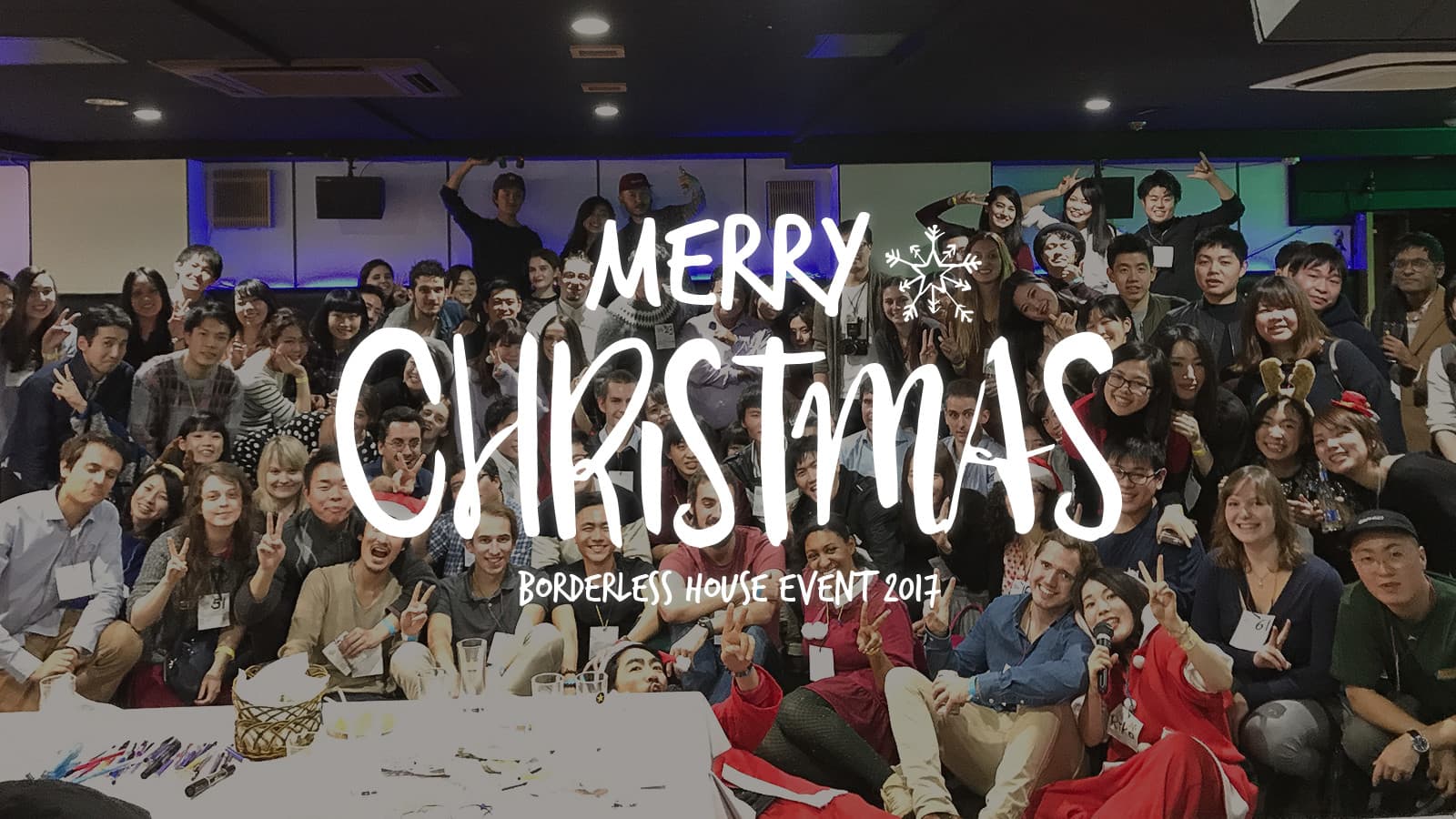
Hyper international interaction ! Borderless Christmas with more than 120 people was held on the 7th of December !

December is the Christmas season!

All the street is illuminated and we see more and more chicken advertisement on TV and in the city! Don’t you think that the enhancement of the city increases our desire to have a Christmas party? Because it is Christmas!

To satisfy your desire, we held a Christmas Party like every year!

We rent a space in Jinbo-Cho called “EDITORY” and more than 120people came to our party! What kind of party it was?

In this blog, we are going to show the content!

The person who is going to do the Christmas Party tour is me, Pakuchi!

I am working at Borderless House as a student worker and I am in charge of the event!

So, CHECK IT OUT !!

International interaction and Christmas Party represent so much Borderless House !


In Borderless House, we organize twice a year a party with 80 to 100 people who are living in our sharehouse!

Christmas wich I am going to explain to you is one of the big events! Every year, a lot of our sweet tenant is joining the party. However, this year was not the same year as usual.

MORE than 120 people come to our party. What is going to happen to this memorable party? All the staff was surprised at the beginning!

When we start the reception, a HUGE line of people was in front of us.
and the event space becomes full in a second!

The receptionist, the bar, and the cloak were full of person and everybody was an assembly into the room.

We could hear people in many spaces starting to cheers because they could not wait for the beginning of the party. That represents our tenant so well!

They could not wait to start to interact with people and start to enjoy the conversation. Their communication skills are so remarkable!

And the sweet cute person who was charged to do the facilitator is our tenant!

Yes, this year also, our tenant help us for the Christmas Party!

The cute Santa Claus is Ashley, she is living in Itabashikuyakusho-mae House!

She is like a mother of the house and makes the community warm-up!

She is a big fan of Borderless House and she also help up for the event “Borderless Olympics”!

Thank you always, Ashley !!

The facilitation of Ashley, gives a tremendous boost to the atmosphere of the party!

You cannot say that you are shy! A very close linkage program heat the party!

The theme of this year’s Christmas party is “extends beyond the house, the nationality and the connection !

This year, we invite tenants, people who reserve a room of Borderless House, people who are interested in international interaction and people’s friends!

The fact that a lot of people with different backgrounds can come is one of the characteristics of the party.

This is the reason why we always prepare some good programs in order to make the com munition between people easier! So, even you are a little shy, it is completely okay!

You will become quickly socialize with people around you! Let’s enjoy it!

You are my man of destiny ?! Number and color matching!

The first program is called number and color matching!

Everyone gets some wristband with a number and a color. You have to find the person who has the same color and number and form a group.

It is quite simple but fateful. In this huge universe, we all grew up in a different country, and we all gather in Tokyo and find together by coincidence.

Is it not fantastic ?!

Is it destiny ?!

All the groups did an introduction of themselves and the voltage of the room was in high gear! Everybody was so excited to find their fateful! People make some high-touch when they find they’re fateful!

 This meeting is forever!

We don’t need language, what we need is an only passion! Let’s do the gesture game!

The next program is a gesture game!

After we all find our fateful, let start the game! The winner of the game can get some luxury prizes!

Everyone thought that gesture game is easy, but it is not the case!

Even if it is difficult, cooperation leads us to win! Everybody makes their own gesture and express the theme.

The first theme was the one of the difficult ones!

“zoo” Everybody did some gestures about the gorilla, monkey, etc. and people answered the name of animals. However, the word “zoo” is not appearing.

The floor is in chaos.

I know, we are vicious that we make this theme. When almost every team finished answering, only 2 teams didn’t finish to answer.

Even they could say that they have finished even if it is unfinished, they did so much effort to do it properly!

All of our staff were touched by their passion.

We really wanted to give them some gifts!

In the floor mix of passion and chaos, the 2nd theme is … “Disney Land”! This is also a difficult theme! Everyone answered “mouse” or “Mickey”.
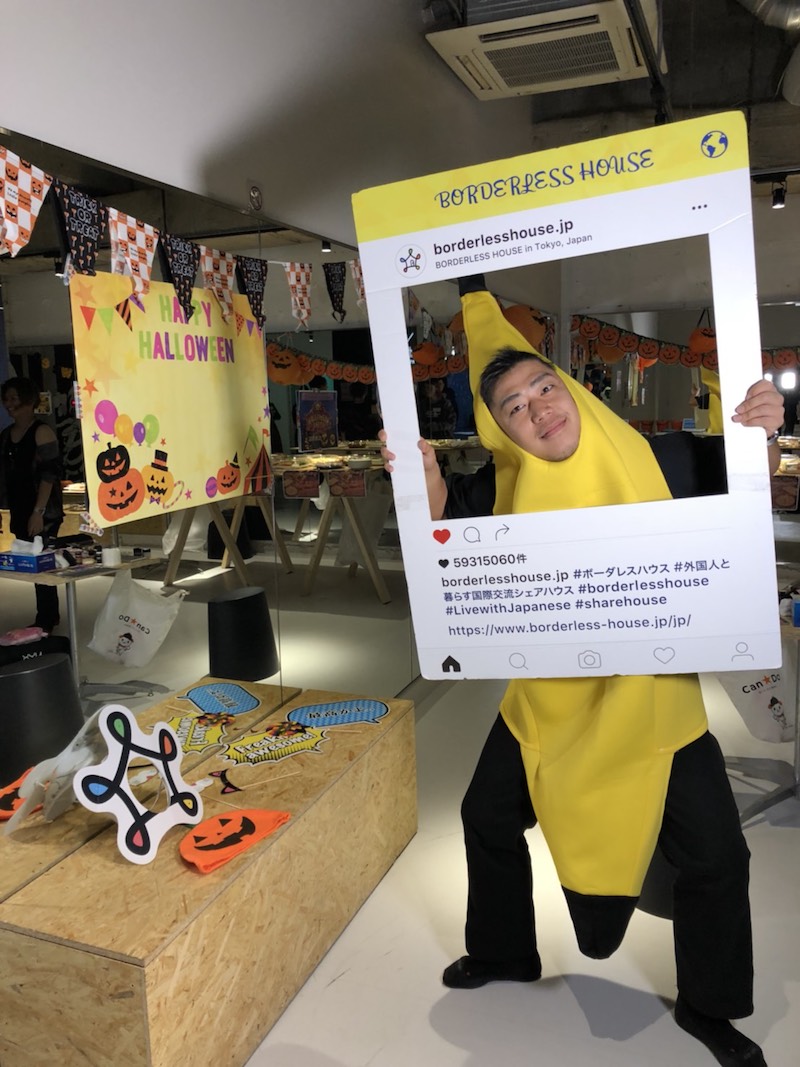
At the moment we regret a little bit that we make so much difficult theme, a team who answer 2 right answers appeared!

As is it a team made by only fateful, the heart-to-heart communication is working very well!

They get the luxury price !! We didn’t expect that the gesture game reaches a fever pitch!

Are you interested in the content of the gift?

A set of world craft beer AND Order-made leather products from JOGGO AND AND a huge box of different sweets etc. Some presents from Borderless Santa!
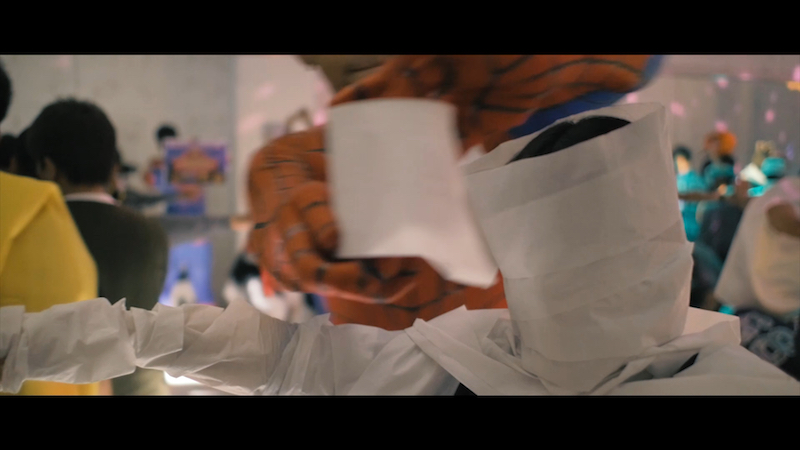
We all envy….

Who are going to get the next prizes ?! The exciting bingo game!

We cannot forget the face Bingo game of Borderless House!
It became an annual event but let me explain the rule!


Borderless bingo is not a normal bingo game.

The face of each people who are coming to the Christmas party is becoming a number!

Thanks to you we can play the bingo game and thank to you someone can get the prize ! It is a very special bingo game.

Let start the bingo!

Everybody is paying attention to the face of people turning around!

This year, we choose as a prize: Amazon card, Borderless T-shirt, as a small present,  land of Moon which gets famous in Terrace House and A5 rank ( higher quality ) Matsuzaka-beef!

And finally, don’t forget … 1-month free fee ticket !!

The happy girl who gets the 1-month free fee ticket is…


The tenant of Shinjuku-Nakano 3 !!!

Congratulation!

All the people you cheers are your family! It doesn’t matter which share house you are living in!

The party approach to the end.
People who came with their housemate of a friend were enjoying communication with people they just have met at the party. This is one of the pictures!

The nervous face at the beginning just go away at the end of the party! Everyone was at the party and enjoy their time.

We can conclude as the floor was on over-capacity, it makes the relation between people physically and psychologically more close. 

The atmosphere filled with excitement doesn’t end even after the Borderless Christmas !

Good time end so quickly, we took a souvenir picture at the end!

See the close relationship between people! It looks like a family picture!

We cannot imagine that they are all just met a few hours before.

Even after the Christmas party, people cannot forget the atmosphere of excitement and they all went to an Izakaya ( casual Japanese restaurant).

This is a picture of the people who were gathered naturally after the party.

In this picture, we can]j see, a Japanese, a Korean, an Italian, a Russian, a British, and an American.

It completely represents this year’s theme: “extends beyond the house, the nationality, and the relation!”


By our Borderless party, a lot of emotional ties beyond nationality and language have arisen!

YOU, who wants to learn English or make international friends, YOU who are interested in a share house!

Borderless House is making many events that can maximize the connection between people.

Borderless House is a place that more than 50 countries are gathering. You can experience English but also so many other languages and cultures. It is a place that you can try national-oversea-experience!

Each sharehouse is made of 50%of foreigners and 50% of Japanese so you can surely experience international interaction!

You are always welcome to experience national-oversea-experience!

The next event is in May 2020 ! We are all waiting for your visit!

Merry Christmas and Happy New year everyone!

Tokyo share house list
Only Tenant program
BORDERLESS Event Review

【International Exchange Program】 Summer is about Somen!? Let’s experience Japanese cuisine that you can feel the season!

Hi! I’m Yuya, in charge of our blog.

The Food Experience Program  “BORDERLESS DINERS ~Experience International Restaurants and Travel around the World~”

It’s been half a year since we started this program! The theme for August was Japanese food to go back to the basics and know about the food culture in the place we live!

Have fun and get full with two of our staff from Shimane and Yamagata, the good old countryside, Takuya and Takky!

Let’s start BORERLESS DINERS!

Happy Half a Year Anniversary for the launch of the program! Satisfying Japanese cuisine that you makes you feel summer!

Japanese cuisine is very deep and has various types of dishes and ways too cook.

One of the best parts of Japanese cuisine is you can feel each of four seasons from it.

There are a lot of dishes which express the beauty of nature or a season and are closely related to the Japanese annual events. 

“So the Japanese menu this time is from the dish with a plenty of summer vegetables to the food for the summer festival.

Let’s enjoy summer in Japan in terms of food!

Flow, Flow and be Flown! Kick-start with Flowing Somem.


There is no summer without Somen!

When we dip the cold noodles cooled by ice in the cold soup and eat it, it feels like we get back the appetite that we lost because of heat.

Flowing Somen (Nagashi Somen in Japanese) is the summer tradition! In Flowing Somen,

Somen is flowing down a bamboo chute with ice-cold water and you catch and eat it!”

Someone just randomly thought “if we throw somen into flowing water, we will feel
summer very much, won’t we?”

As such, Flowing Somen was born in Kyushu and now it is the summer tradition.
So we kick-started with Flowing Somen to feel the absolute Japan.

First, we built the bamboo, then started throwing somen.


The flow was too fast to catch and eat Somen!

But gradually they were getting the tip and able to catch it!

One trouble of Flowing Somen is catching Somen is so much fun and eating it too much.

On the other hand, somen flowing in the bamboo chute looks so elegant and tasteful.


It was supposed to be a kick-start but we were already full.

Tried the traditional food “DASHI” (not the soy sauce dashi) of Yamagata!

The next cuisine is “DASHI”.

It is not about the “Dashi” (Japanese soy sauce beased on fish) but about a traditional food of Yamagata eaten in the summer.

It is a mixture of cucumber, eggplant, and myoga (japanese ginger). It can be use in many way, like put on tofu, on somen etc…

It is also a high nutritional value food so, it is the perfect food when you lose your appetite in summer!

In Yamagata region, DASHI is a soul food which appear in the fridge every summer. And people feel the begining of summer by seing the DASHI.

“DASHI” is highly recommended by our staff Takky !

The french resident who have tried “DASHI” said: ” It is similar to the ratatouille of France!”

Ratatouille is a french cuisine which is a simmered dish of summer vegetables, and it is normally eaten itself but it is also tasteful to put on cheese and meat !
Don’t you think that it is quite interesting that french cuisine and the cuisine of Yamagata region have some similarities ??

Finding similarities between different culture is one of the enjoyable point of this program.

Cucumber and Miso soup is our friend (OR BEST PARTENER) of summer ! Let’s resolve summer weariness!

The second cuisine is Cold miso soup.

It is a typical summer food eaten in different regions like Yamagata, Saitama, and Miyagi.

The recipy is : make some cold miso soup of cucumber and seasoning and put on hot rice. It is easy to make and easy to eat even you have lose appetite because of the high temperature of summer.

In the world, we can find some cold soup like vichyssoise or gazpacho. But in Japan it is not common to eat cold soup, and as we usually eat hot miso soup, for some Japanese, cold miso soup was a culture shock!

“Cold miso soup is delicious so we will made it in our house!” said our residents with their shiny smiles and they all have a refill of it.

Kaki-gori (shaved ice) the typical food of Matsuri (summer festival) was also eaten by Murasaki-shikibu (Japanese novelist) !?


Kagi-gori is the perfect dessert for summer!

Kaki-gori is normally eaten in Natu-matsuri or Ennnichi ( japanese summer festival).

These days, Korean and Taiwanese kaki-gori is famous globally, we all have an image that kaki-gori is a modern food. However, the first time it was eaten was in Heian period (794~1185)!

In the famous book called “Makura-no-soushi”, they is a part that written about the shaved iced with honey. We can understand that kaki-gori is a traditional food with a long story.

It is loved globally even the taste and the form are changing by time.
It is emotional when we think deeply about it!

About the culture of “Washoku” (Japanese food) which is registrated on intangible cultural asset.

Today’s theme “Washoku” is registated in the intangible cultural asset.

The reason is because of it rareness. Indeed, it is globally not common to use diverse type of ingredients and we can also find a strong persistence to the food culture.

The Japanese cuisine change under season and event. We can understand how much Washoku have lived with culture.

Our resident was also very suprised of the fact that Washoku which is very familiar to us was registrated in the intangible cultural asset.

“Itadakimasu” (let’s eat) and “Gochisousama”(Thank you for the meal) are some gretting we can only find in Japan?

The another reason why Japanese food is included in intangible cultural asset is because of it rare greeting.

“Itadakimasu” and “Gochisousama” is a only Japanese gretting which we cannot translate in other language.

This greeting is based on Shinto religion which conciste to believe that god is everywhere. And it become ingrained in our culture to show our respect and gratitude to the ingredients, to the person who cooked the food and to the person who have procured the ingredients.

Thanks to this program, it was an opportunity to find that they are so much thing we don’t know about a culture even if we are living in.

Vietnam this week! The travelling restaurant which we can taste the world every month !


『BORDERLESS DINERS~Taste the world by the travelling restaurant ~』is a experience based program for the residents held every month !

The next country is Vietnam!

Two chefs who are wearing Ao dai ( Traditional Vietnamese costume) are going to cook some festival Vietnam cuisine!

Normally, Pho is a typical cuisine but you can try other food and taste deep Vietnamese culture!

What kind of experience can we do the next travelling ?

Looking forward to the next report !

Tokyo share house list

BORDERLESS DINERS Review

【Let’s travel abroad!】 Your housemates are waiting for you even in other countries!

Hello, this is Borderless House!

Do you like traveling abroad?

Borderless House has share houses in Japan, Korea, and Taiwan. So we have a special program only for our tenants which you can stay in other share houses in other countries for free.

It’s called “House Exchange Program”.

You can stay for 5 nights at minimum and for 1 month at maximum so it is convenient when you go to other countries for travel or short study on vacation!

If you use this program when you travel alone to a country you visit for the first time, how will it be..?

Today, let me introduce Motomu who is living in a house in Tokyo and came to Korea, using this House Exchange Program.

Motomu’s profile

・4th grade in a university in Tokyo
・Going to start working in his hometown from next spring
・Living in Borderless House for more than half a year
・Moved in Borderless House in order to practice English and make friends from other countries
・Likes music, calligraphy, cooking, and Kendo


(↓ Once he moved in, he could get friends at his house! He is on the left.)

What made you use “House Exchange Program”?

That’s because I can have housemates even in the country where I never visited before and I can be a friend of them!

And I don’t need to pay any fee so it was also an attractive point! It is a nice concept for students who don’t have enough money. lol


(↓He could easily get close to his housemates within a few hours!)

Why KOREA?

I decided to visit Korea this time because I’m from Fukuoka which is really close to Korea and most of my friends already had visited Korea.

I had been thinking that I wanted to visit as soon as possible while I have enough time. 

And also I like spicy food so I wanted to try them!

(↓Korean food Motomu tried while he was in Korea,)

How did you spend time with your housemates?

I could enjoy the time with all the housemates!

On my arrival day, one of the housemates Alice cooked food for me. She is a really warm and kind person like a mother for everyone. I was really happy for her warm welcome.

If I go to the living room, I could meet someone so I think I was drinking all the time with my housemates. lol

There were Japanese tenants and they guided me to some famous sightseeing places. We visited some historical places and enjoyed Korean food together.

I ate a lot and drank a lot but it was super fun!


(↓The places he visited.)

What was the most memorable experience?

It was the drinking with a housemate and the housemate’s friend and the friend’s friend. lol  Most of the members meet each other for the first time.

At first, I thought only I was the new person but later I got to know that most of us were the first time to meet and there was a person who lived in Borderless House Kyoto and came to Korea just for a trip.

It was unexpected members but connected with Borderless House so we could be close soon and it was the most fun moment in my stay! 

(↓Eating Korean food together.)

Did you discover any new things in yourself?

The house I stayed in Korea was bigger than the one I live in Tokyo and the house has more members and an at-home atmosphere.

It might be because of the big number of people but everyone was just like a family member and I would like to see them again.

Koenji2 House has really fancy facilities with a music studio. However, some members use the studio just for their own purpose. I hope we can use the place together in order to make our community more active. I thought it was important to change their minds gradually!

I want to tell that to my housemates in Korenji2 House in order to reproduce the at-home atmosphere in my house in Seoul!


(↓At Han River at night.)

Any other things to tell?

I want Borderless House in the United States and Australia, too! lol

(Staff: Oh, yes! We will do our best to realize it !!!!) 

(↓Near the house. All tenants like the neighbor dog.)


Editorial note

In Japan, he usually welcomes housemates from other countries as a local person but in Seoul, he was welcomed by his housemates as a new housemate from another country.

It must have been a new experience for him.

Your housemates are waiting for you in other countries which you never visited before.
Borderless House is such community that you can connect to the world.

Why don’t you try to have an at-home travel experience like this in Borderless House? It must be totally different from the one alone.


Please check it our the detail of House Exchange Program here!