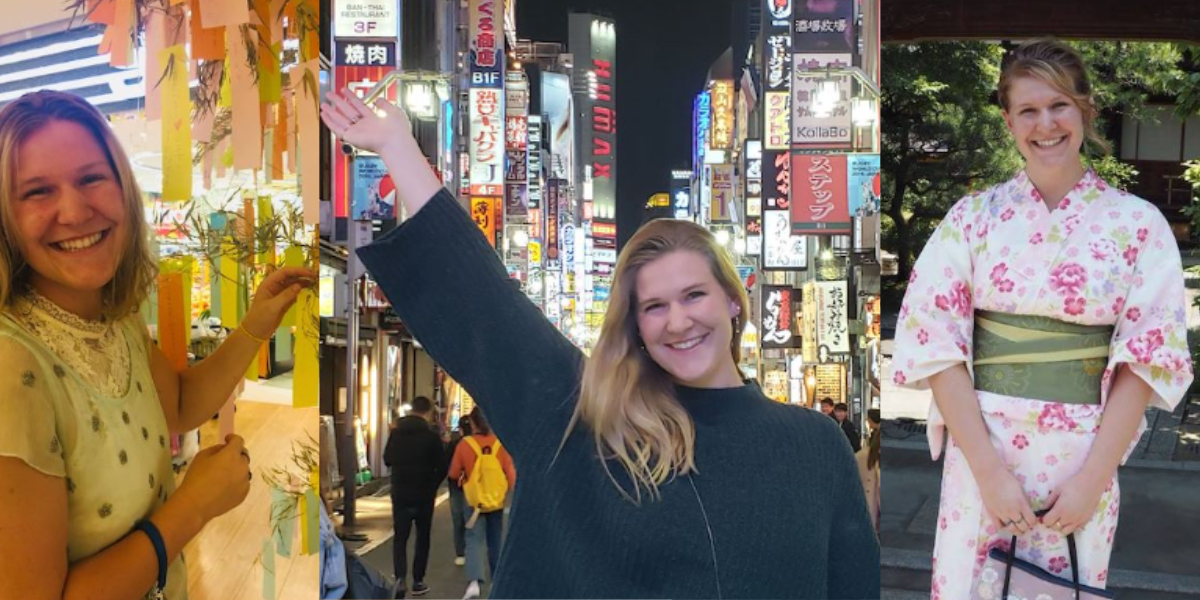
Moving to Japan is a dream for many, but the reality of finding a home and a social circle can be daunting.
In this interview, we dive deep into the journey of Claire, a former competitive swimmer from the U.S. who moved to Tokyo in 2019. Discover how she transformed her life in Japan by finding a ‘home’ that offered much more than just a place to sleep—it offered a family.
Finding a Home (and Family) at Borderless House
-You moved to Tokyo for work. Why did you choose a share house over a private apartment?
To be honest, I originally wanted to live alone! But I couldn’t secure an apartment near my workplace. Looking back, living alone would have been a lonely disaster. I have an irrational fear of going places by myself, and as a social person, I needed a support system.
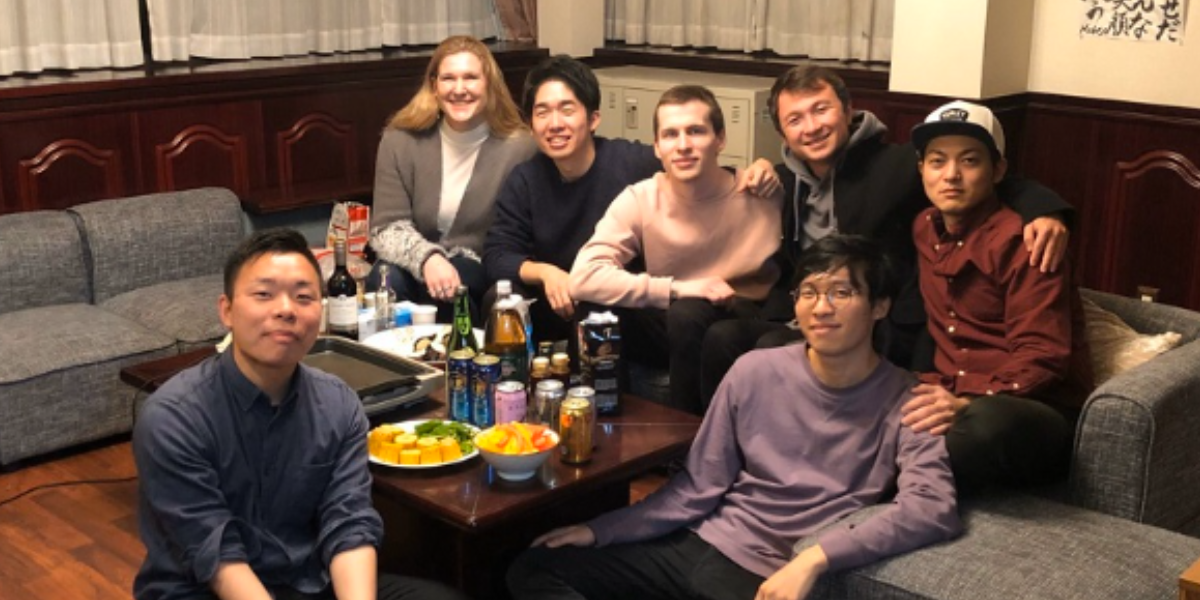
I’ve lived in a share house in Tokyo with 14 others since August 2019. I started in a single room to have my own “quiet zone,” but once I got to know everyone, I actually moved into a shared room with one of my closest Japanese housemates. Now, she’s like a sister to me!
-What makes the “Borderless” community different from other housing?
It’s the 1:1 ratio. Borderless House keeps a perfect balance of Japanese and foreign residents, and men and women. If I lived alone, I probably would have only made American friends. Here, I’m constantly inspired by housemates from all over the world. It’s expanded my mindset and made me a much more compassionate person.
Mastering the Language: Textbooks vs. Reality
-You’ve had a long journey with the Japanese language. What’s your best advice for someone trying to learn?
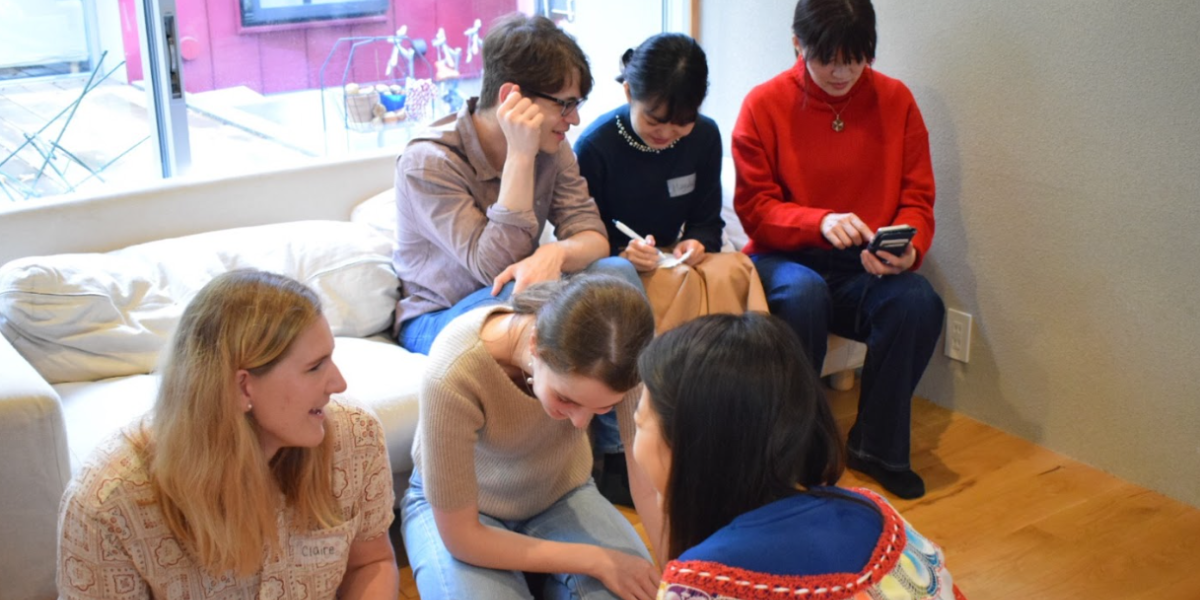
I started with Genki and self-studied for two years while swimming, but I had no one to practice with. My advice? Go abroad as early as possible. Textbook Japanese and colloquial (daily) Japanese are totally different.
In my research job, I had to translate complex psychiatric questionnaires. I had to explain the difference between “force” and “coerce” using rudimentary Japanese to professors! But at home, my housemates taught me the slang and natural expressions that tests like the JLPT don’t cover.
-Any regrets in your language journey?
My biggest regret is quitting my formal classes after one year. Now, my speaking and reading levels are mismatched! Also, if you want to work in Japan (outside of teaching English), take the JLPT. Even if you speak well, companies want that standardized proof (N1 or N2) to give you an interview.
-Do you consider yourself “fluent”?
For a long time, I said “No” because I’m still “illiterate” in many ways and struggle with formal Keigo. But a friend recently told me, “Claire, you express yourself articulately. That is fluency.” You don’t need to be a living dictionary to have deep relationships. If you can share your personality and emotions, you’re doing just fine.
Building a Life Beyond the Share House
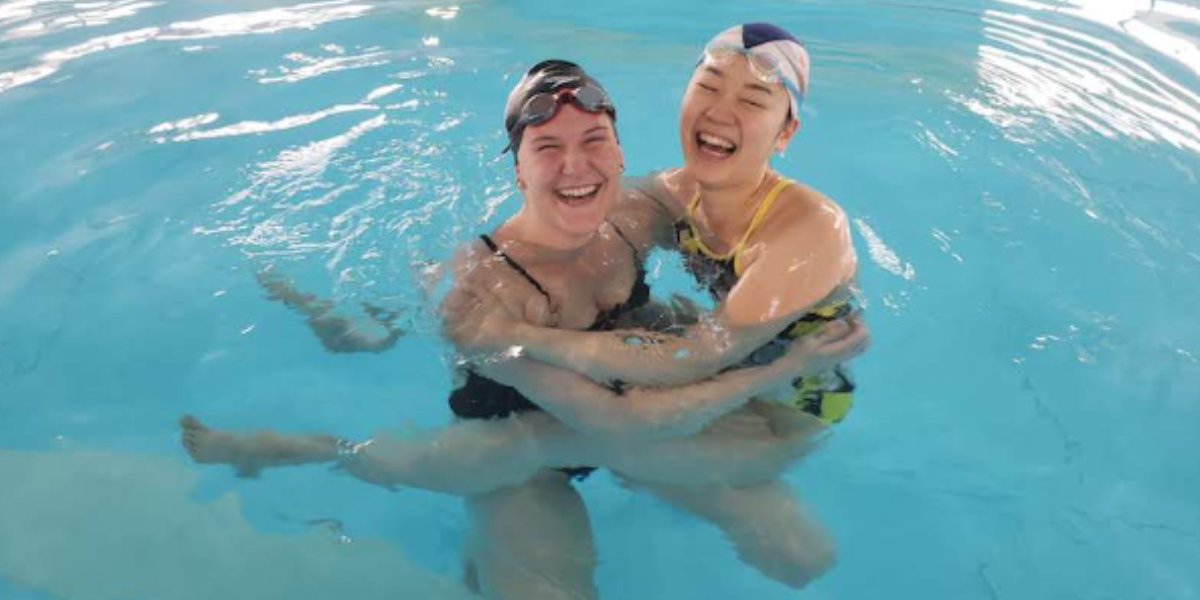
-You’re very active in Tokyo—swimming, dancing, and more. How do you branch out?
You have to find your “comfort zones” but also places that challenge you.
⏺︎Sports: I joined a local swim team. Doing something I was good at (swimming) in a new language gave me the confidence to step out of my shell.
⏺︎Hobbies: I started dance classes from scratch! It was way out of my comfort zone, but now I’m a member of the studio’s club.
⏺︎Networking: Use Meetup for language exchanges or sports. It’s intimidating to walk into a room of strangers, but remember: everyone there is looking for a friend, too.
Advice for the Future “Japan-Enthusiast”
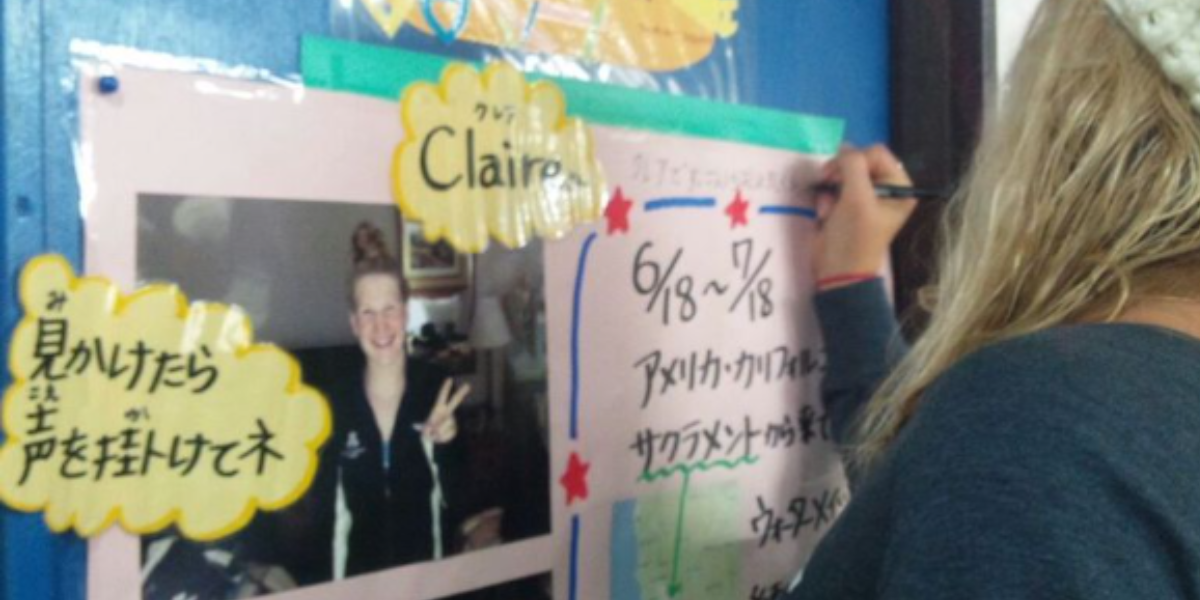
-What is your final takeaway for someone nervous about moving to Japan?
Can you get by with zero Japanese? Yes, absolutely. With Google Maps and friendly locals, you’ll survive. But you’ll have a richer experience if you try to learn.
Be Fearless: If there isn’t a program for your specific hobby, create one!
Don’t Settle: Don’t take a job you hate just to stay in Japan. Try to do what you love in a place you love.
Immerse Yourself: Join a community like Borderless House early. It gives you the resources and courage to reach levels of language and self-growth you never thought possible.
Interviewer’s Note: The Power of Intentional Community
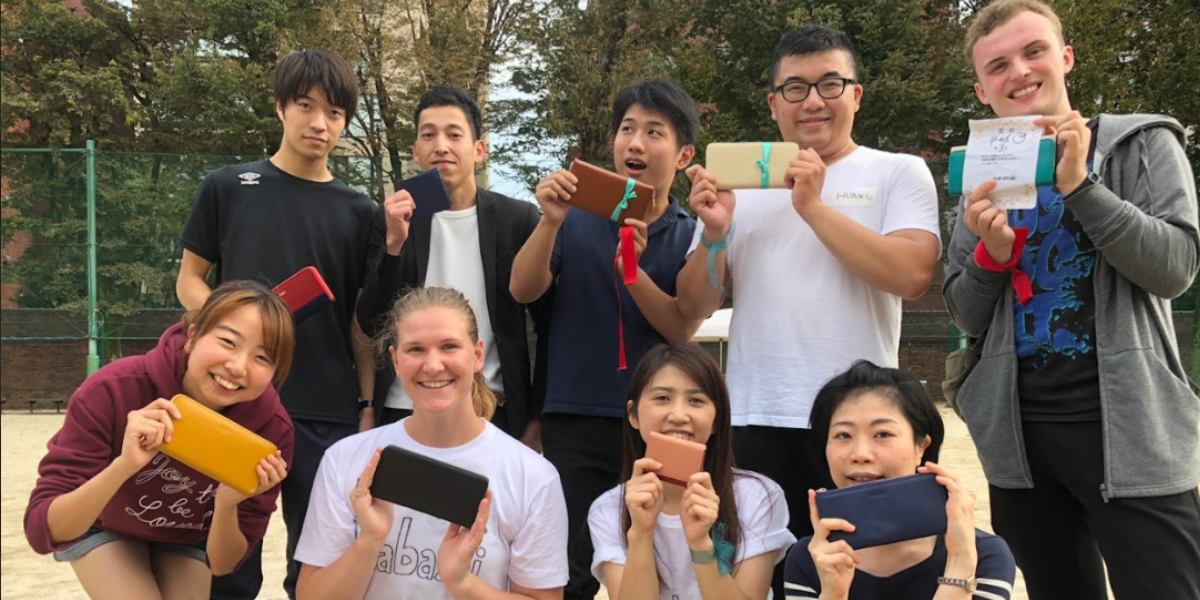
Meeting with Claire, it becomes immediately clear that her journey in Japan isn’t just a story of “staying” in a country, but one of active integration.
Claire’s journey shows us that a share house is more than just a cheap room—it is a support system that helps you grow.
Here are the three big lessons from Claire’s story:
Community > Isolation: Claire originally wanted to live alone. However, she realized that having a “family” at home gave her the confidence to try difficult things, like working in a Japanese hospital or starting dance classes.
The Shared Room Surprise: Many people are afraid of sharing a room. Claire actually moved from a Private Room to a Shared Room because the bond she formed with her roommate was so strong. She found a “sister” instead of just a housemate.
Real-World Language: Claire proves you don’t need perfect “textbook” Japanese to succeed. By talking to her Japanese housemates every day, she learned how to express her true personality—something a classroom can’t teach.
If you are a professional or a student moving to Japan, Claire’s story is your roadmap. She shows that when you have a safe, international “home base” like BORDERLESS HOUSE, you can stop worrying about being lonely and start “living the dream.”
\Explore Claire’s Home in the Heart of Tokyo!/
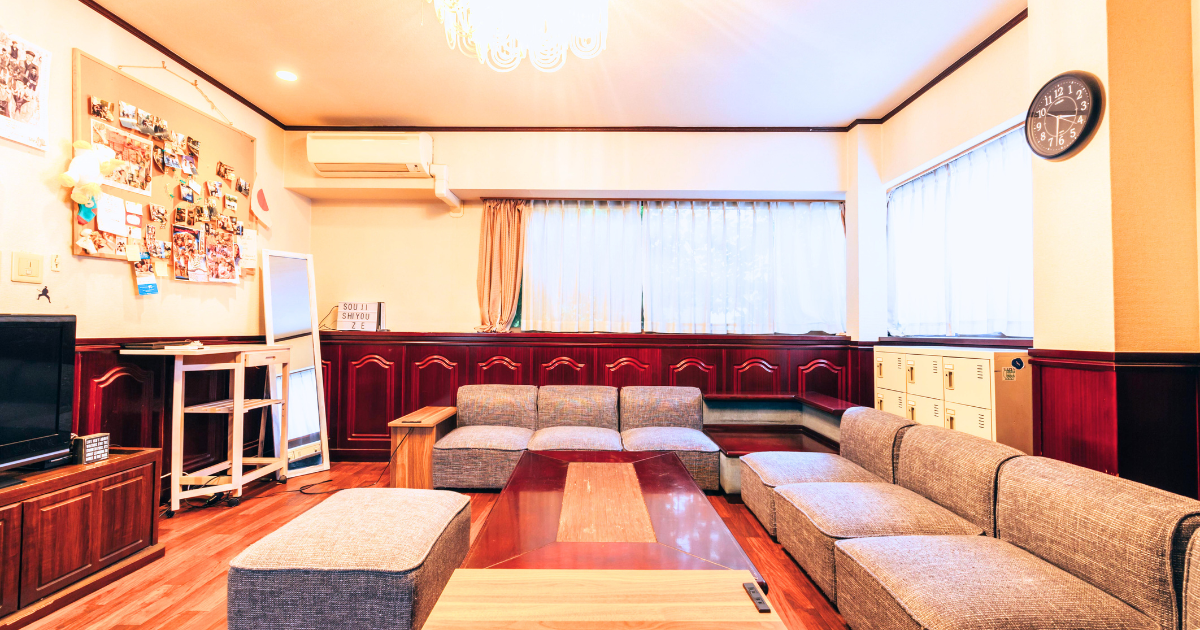
Claire lived at BORDERLESS HOUSE Iidabashi 1. This house boasts incredible connectivity, with access to 6 different train lines and both Korakuen and Iidabashi stations within easy walking distance.
The spacious living room serves as the social heart of the home, providing a vibrant hub for interaction. It is the perfect environment for those who want to balance the convenience of city-center living with meaningful human connections.
Hungry for more real-life stories?
Claire’s journey is just one of the hundreds of unique paths our residents have taken. Whether you are a student, a digital nomad, or a professional, there is a community waiting for you.
Check out more “Life in Japan” articles:
▶️My Experience Living in Sendai as a Foreigner: Shared House Life, Food and Hidden Gems
▶️Discover the vibrant heart of international living at Ikebukuro Oyama House!